
Loading, please wait...
LOT 0625
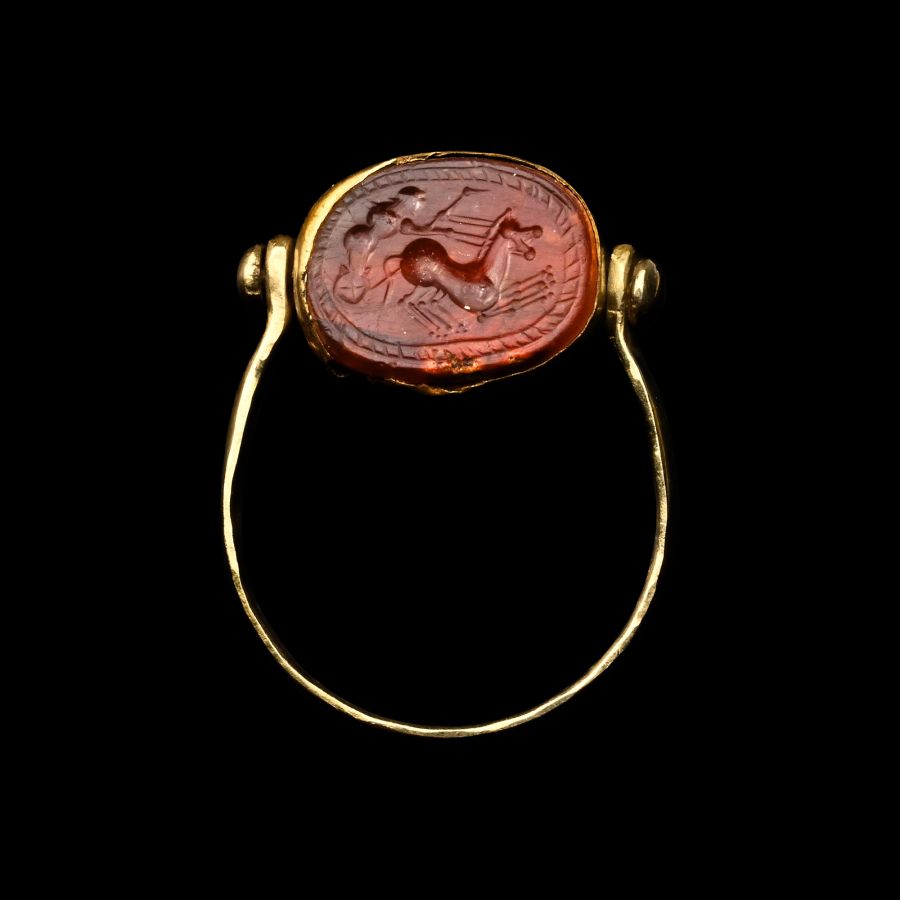
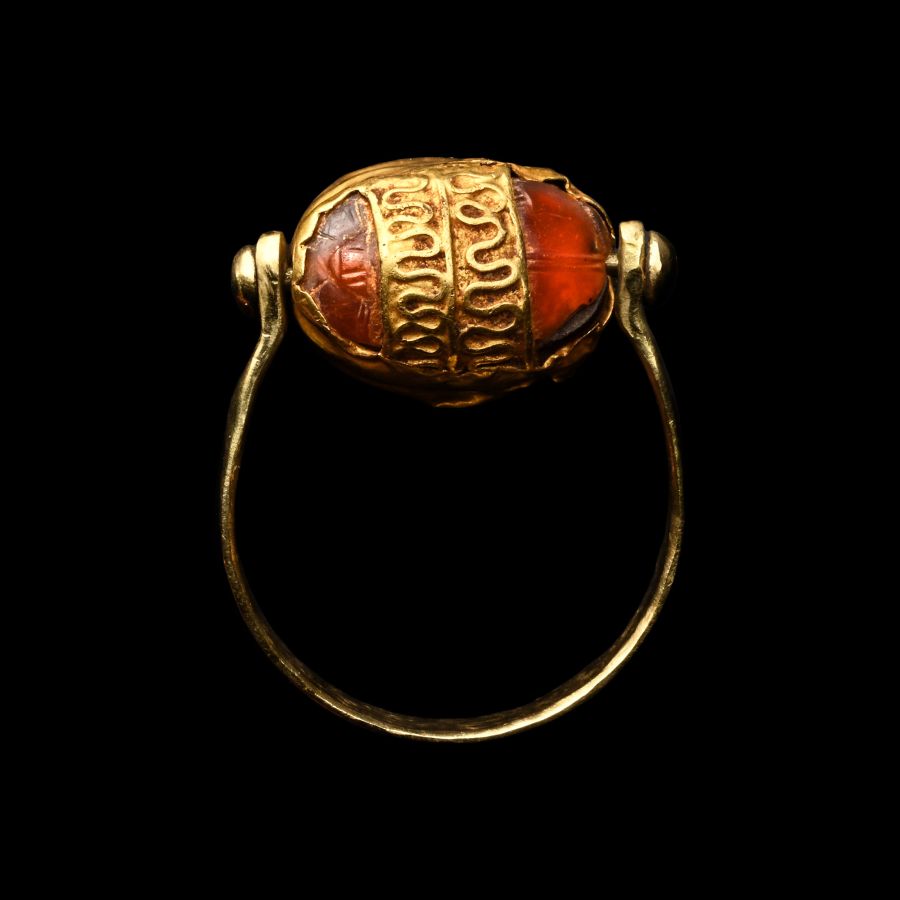
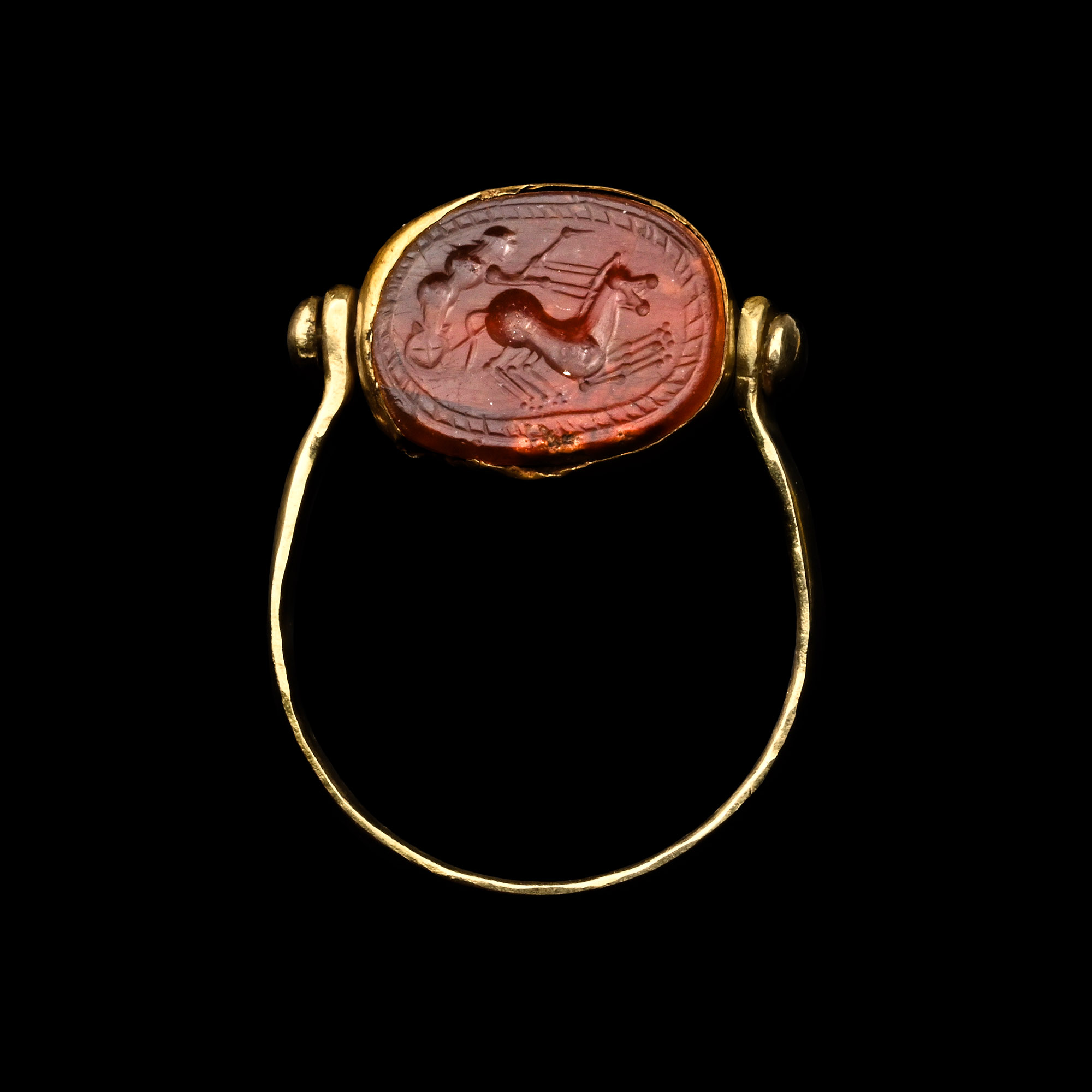
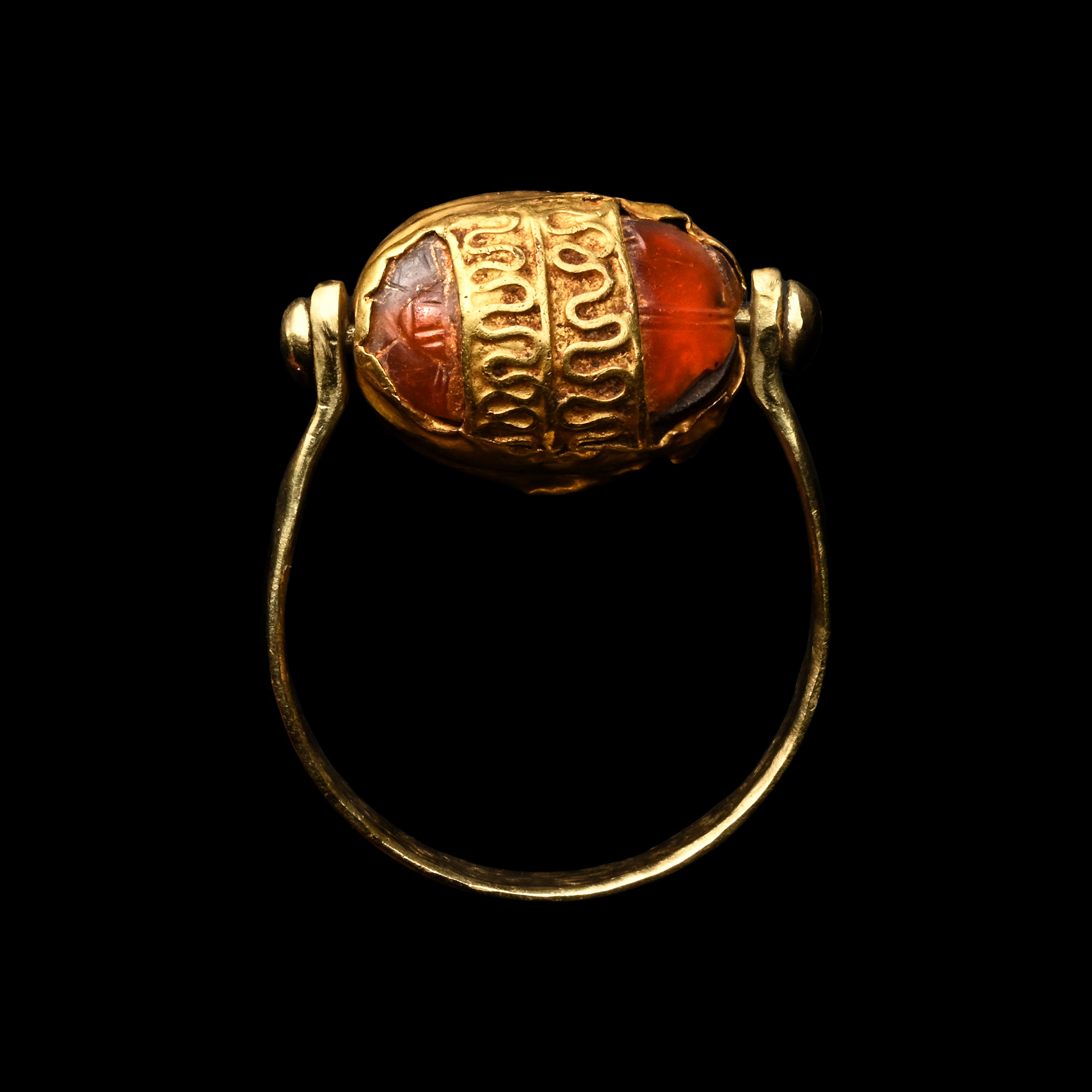
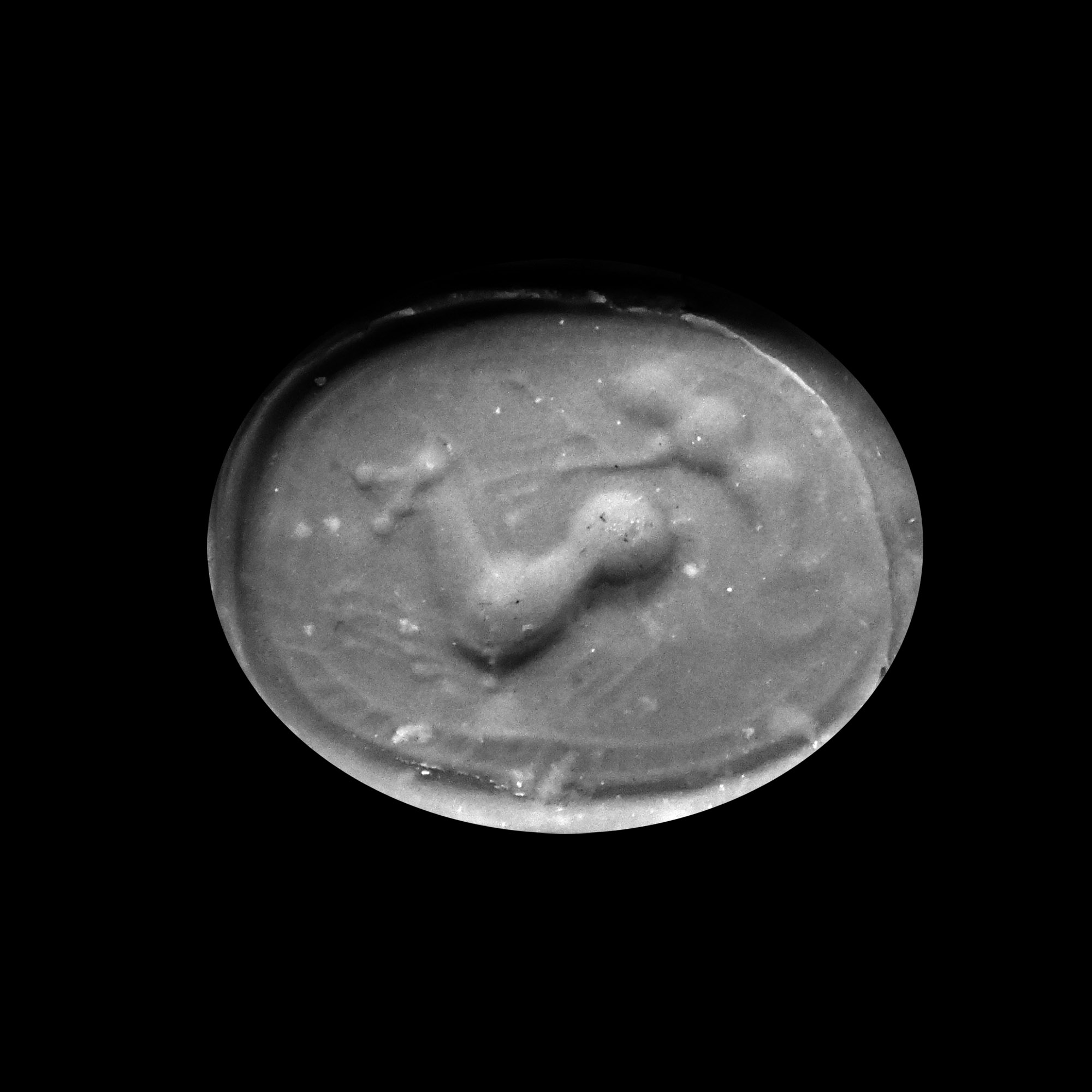
Etruscan Carnelian Scarab of a Charioteer in Gold Ring
3RD CENTURY B.C. AND LATER
1 in. (4.26 grams, 25.07 mm overall, 17.77 x 16.22 mm internal diameter (approximate size British O, USA 7, Europe 14.98, Japan 14)).
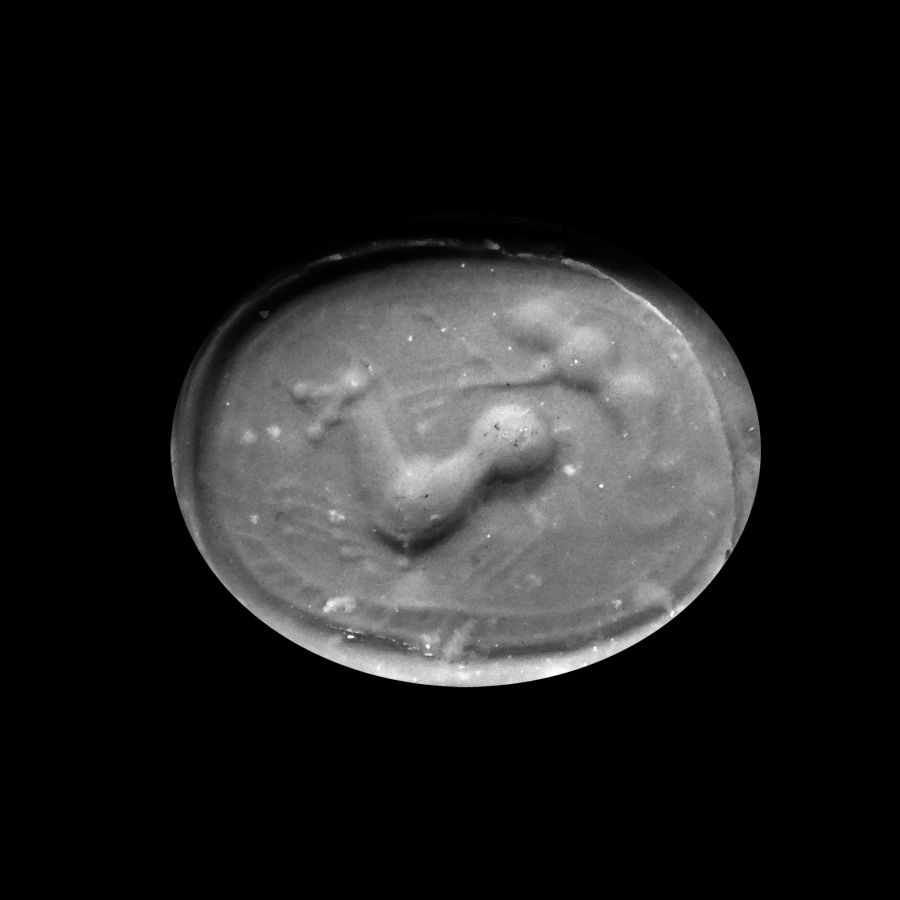
Opaque scaraboid engraved with a dynamic scene of a charioteer driving a biga with his whip raised; set in a sheet-gold mount and a later swivel ring; supplied with a museum-quality impression.
ProvenancePrivate English collection, formed between the late 1970s and early 1990s.
Private collection, UK.
This lot has been checked against the Interpol Database of stolen works of art and is accompanied by search certificate number no.12948-245985.
See The British Museum London, accession no.1872,0604.33, for a similar scarab, also retaining its original gold casing.
CONDITIONTimeLine Auctions follows a vetting process to ensure the authenticity and legality of all items, reinforcing our commitment to integrity and responsible trading. Each antiquity, antique, and coin lot undergoes thorough examination by a vetting committee of at least ten external specialists, professional trade association members, scientists, and archaeologists: Our Vetting Process
AUCTIONS:
TimeLine is a leading auction house specialising in antiquities, ancient art, collectables, natural history, coins, medals, and books. Our auctions offer museums, collectors, historians, and enthusiasts the opportunity to acquire unique and historically significant pieces.
LOT 0625
Etruscan Carnelian Scarab of a Charioteer in Gold Ring
Estimate £3,000 - 4,000€3,480 - 4,640 (for guidance only)$4,050 - 5,400 (for guidance only)
-
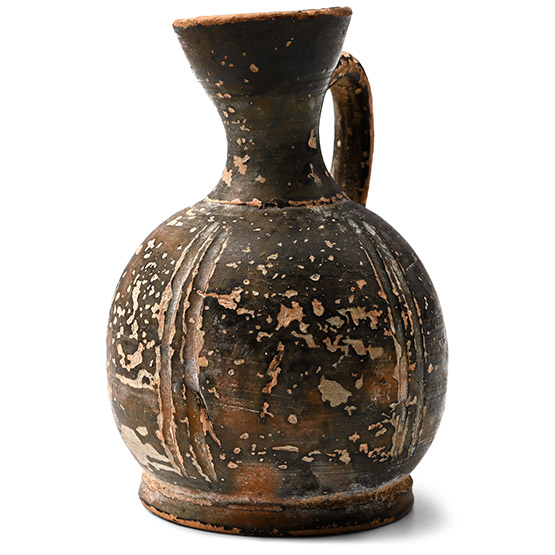
Greek Terracotta Handled Lekythos
4th-3rd century B.C.Sold for (Inc. bp): £124
Ovoid in profile with trumpet-shaped spout and strap handle, incised vertical bands to the bulbous body. 44.3 grams, 64 mm
From a Scottish gentleman’s collection, Glasgow, formed from the early 2000s. -
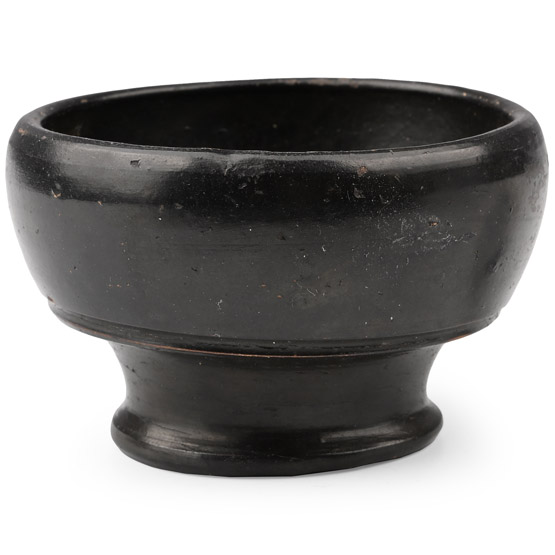
Greek Black-Glazed Dish
Apulian, 4th century B.C.Sold for (Inc. bp): £143
Squat body with carination and socle base. 57.8 grams, 64 mm
Acquired on the art market between the late 1990s and mid-2000s. Estate of the late Barry Paul Buxton (1944–2024), Oakham, Rutland. Acquired on the UK art market, 2025. -
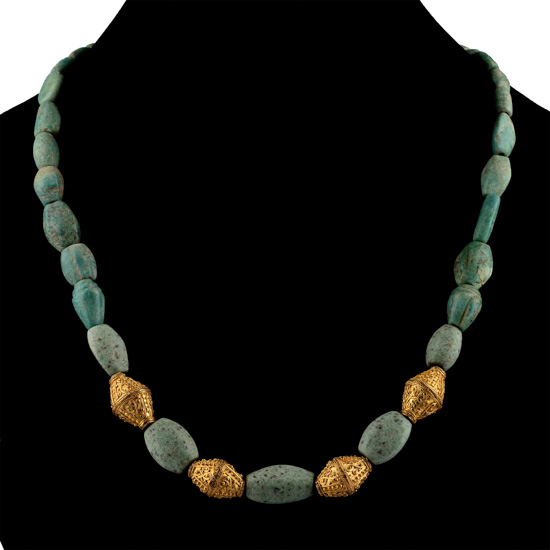
Greek Turquoise Bead Necklace with Gold Beads
Hellenistic, circa 2nd-1st century B.C.Estimate: £2,500 - 3,500 (+bp*)
Opening Bid: £1,250
Composed of twenty-nine oval turquoise beads and four bicone sheet-gold beads with granulation, decorated with spirals and vertical lines, with beaded wire collars and equator, with later openwork clasp. 72 grams, 55.5 cm
Acquired on European art market, 1990s. Private collection of Mr K.A., France. with Kallos Gallery, London, UK. This lot has been checked against the Interpol Database of stolen works of art and is accompanied by a search certificate number no.13011-246750.
The use of turquoise and carnelian cloisonné inlay would be more expected in the Ptolemaic or earlier periods than from the Roman period. However, the love of coloured stones increased during the Roman period. In about A.D. 200, Clement said that 'the stones which silly women wear fastened to chains and set in necklaces' included emerald, amethyst, peridot, jasper and ceraunites. Clement's list of stones is closely paralleled by a tariff list of c. A.D. 200, and a list of jewellery from Spain. Both of these sources also include sapphire (hyacinthus) and callaina, which was probably turquoise.
