
Loading, please wait...


LOT 0805
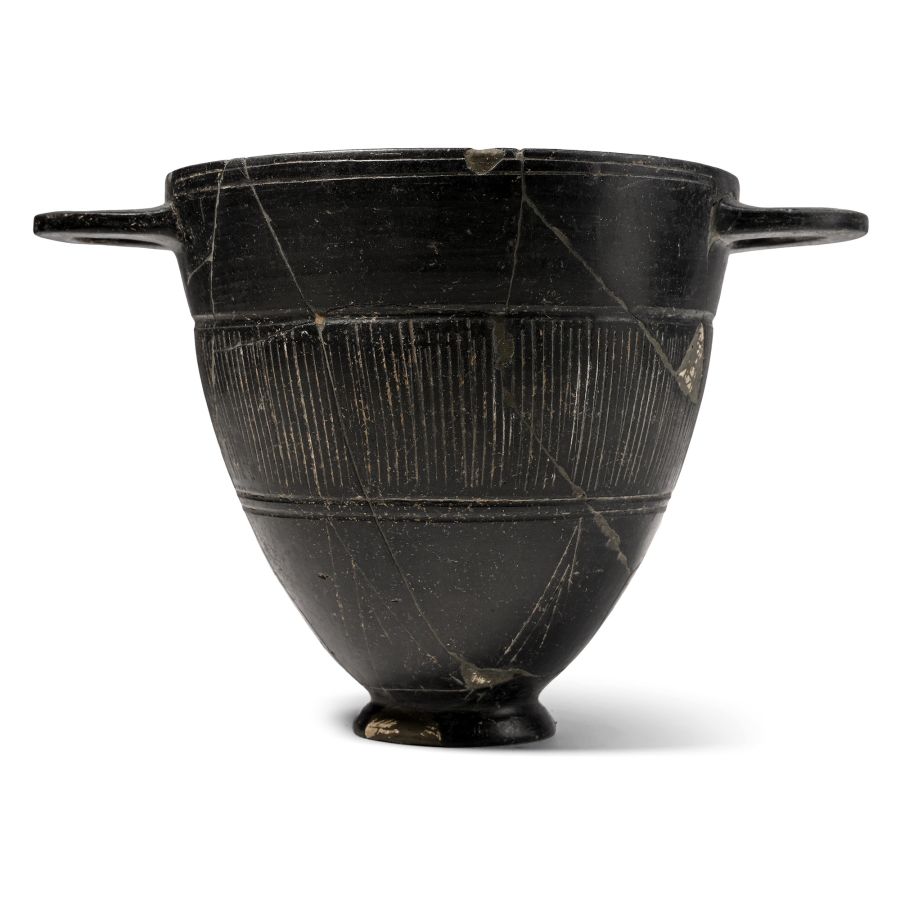
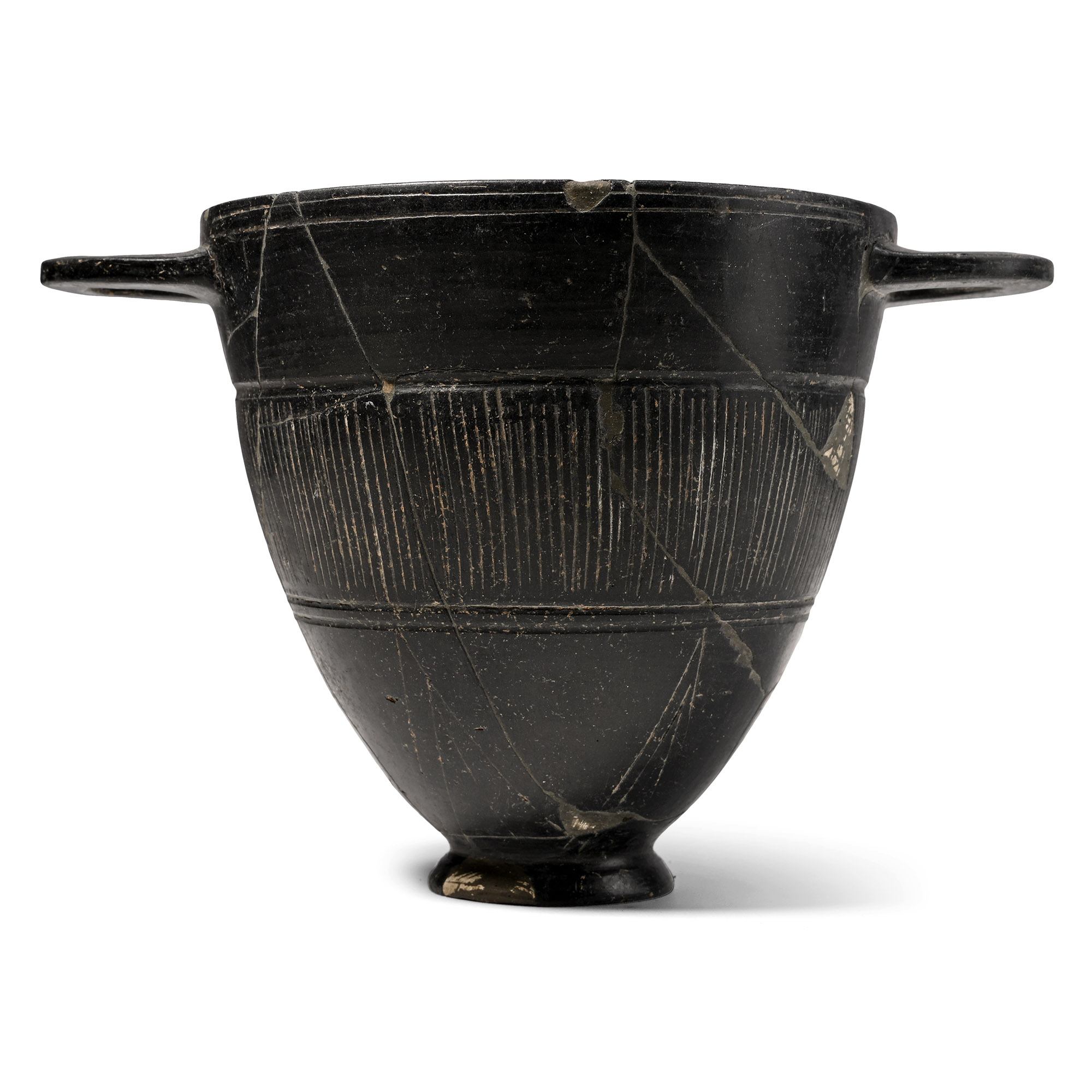
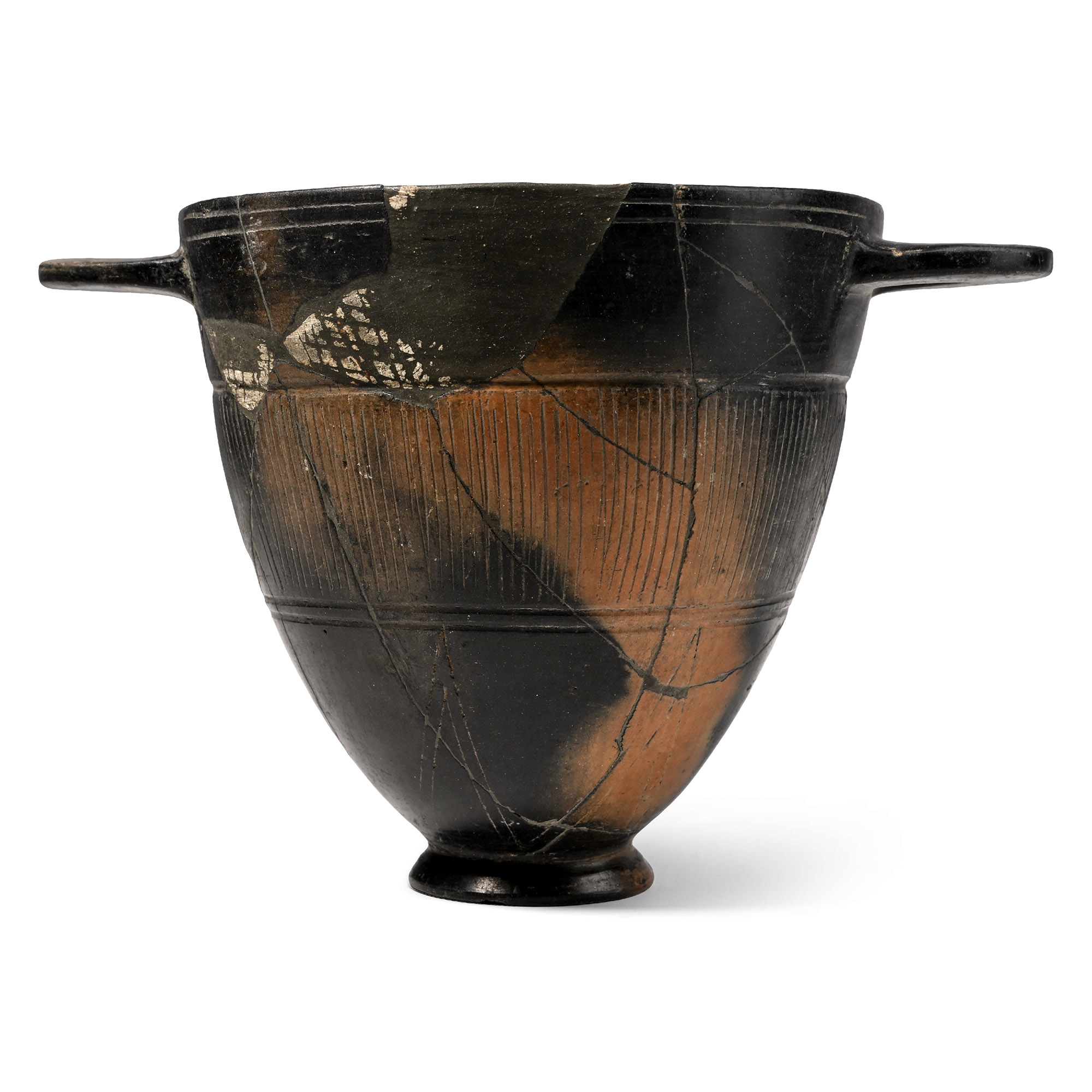
Etruscan Bucchero Terracotta Skyphos
7TH-6TH CENTURY B.C.
6 3/4 in. (235 grams, 17.2 cm wide).
Fluted body tapering to a narrow foot, frieze of fine vertical lines around the body, zigzag band below, a pair of wide flat handles; restored.
Provenancewith H.A.C. AG, Basel, until 1999; thence by descent.
LiteratureCf. The World Museum, Liverpool, item 1981.1112.26; The British Museum, museum number 1839,0214.89.
CONDITIONTimeLine Auctions follows a vetting process to ensure the authenticity and legality of all items, reinforcing our commitment to integrity and responsible trading. Each antiquity, antique, and coin lot undergoes thorough examination by a vetting committee of at least ten external specialists, professional trade association members, scientists, and archaeologists: Our Vetting Process
AUCTIONS:
TimeLine is a leading auction house specialising in antiquities, ancient art, collectables, natural history, coins, medals, and books. Our auctions offer museums, collectors, historians, and enthusiasts the opportunity to acquire unique and historically significant pieces.
LOT 0805
Etruscan Bucchero Terracotta Skyphos
Estimate £400 - 600€460 - 700 (for guidance only)$540 - 810 (for guidance only)
Opening Bid
£180 (EUR 209; USD 243) ‡+BP*
-
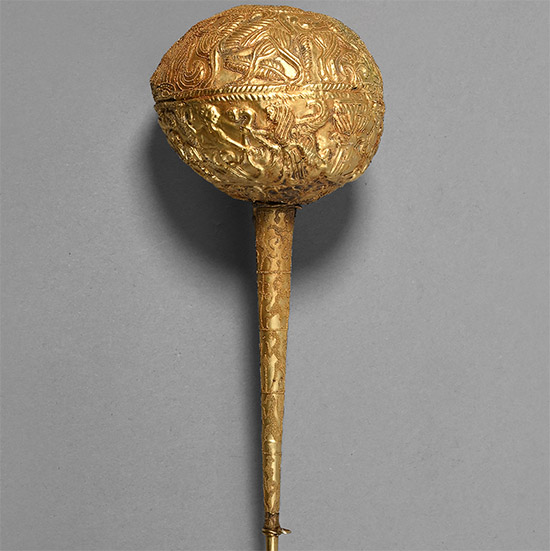
Large Greek Gold Repoussé Dress Pin with Figural Scenes
Archaic, circa 6th century B.C.Estimate: £5,000 - 7,000 (+bp*)
Bids: 16 | Current Bid: £1,600
Composed of a round-section stem tapering to a point (chipped), the upper section with five figural panels separated by horizontal bands of granulation; each panel with figures executed in granulation including opposed pairs of rearing lions, perching bird, dancing humans, two-headed figure with fronds; below these panels, an applied gold wire loop with recurved end; above, a hollow-formed bulbous finial with a repoussé frieze in two registers: below - winged heroes grappling with gryphons and other beasts in a landscape with granulated detailing, with ropework bands to the equator; above - opposed gryphons flanking a facing master of beasts with head turned, and horsemen advancing towards an anguiped; disc finial to the apex with three repoussé swans in profile. 71.1 grams, 28 cm
Acquired at auction in Geneva or Basel circa 1989. From the private collection of a Swiss gentleman collector, thence by descent 2018. Accompanied by an academic report by Dr Raffaele D'Amato. This lot has been checked against the Interpol Database of stolen works of art and is accompanied by search certificate no.13409- 259878.
Since Greek clothing was not sewn, straight pins and fibulae (safety pins) were used to fasten a garment at the shoulders, the sleeves, over the chest, and at other critical points. Pins were already in use in the Early Bronze Age, but highly decorated pins were in use from the 7th-6th centuries B.C., when vertical incisions, grooves and mythical figures appeared on the spherical beads, pendants and heads of the pins. Gold pins with disc-shaped terminals and spherical heads have been recovered from the archaic tombs of Macedonia, where the decoration was developed on the surface of the spheres in filigree and repoussé techniques. -
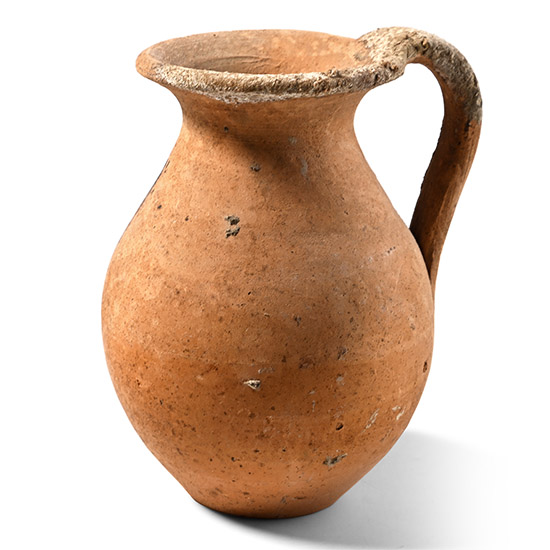
Greek Pottery Oil Jug
Hellenistic, circa 3rd-2nd century B.C.Estimate: £60 - 80 (+bp*)
Bids: 1 | Current Bid: £5
Bulbous body with a tapering neck and a flared rim, a strap handle to the rear. 146 grams, 10.2 cm
From a private Derby antiquities collection. Acquired on the UK art market since the 1990s. From the property of a late Lincolnshire, UK, gentleman; thence by descent. -
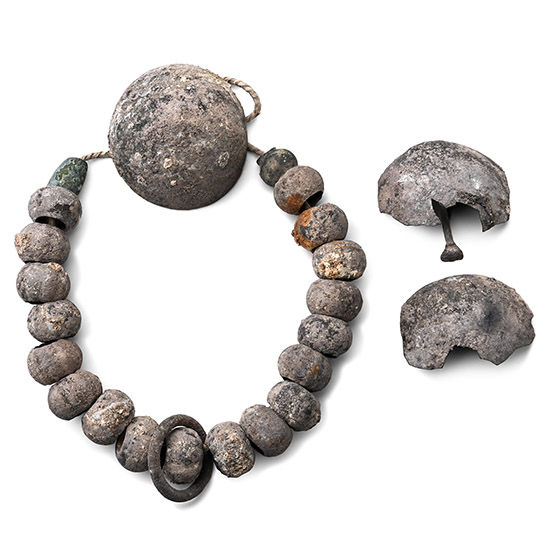
Western Greek Silver Bead Necklace
5th-3rd century B.C.Estimate: £500 - 700 (‡+bp*)
Opening Bid: £275
A restrung necklace composed of annular beads with one tubular and one vase-shaped, a round-section ring; with a hollow conical pendant with an attachment loop to the underside, the same pendant broken included separately. 121 grams total, 4.5-31 cm
Private collection, Switzerland; thence by descent.
