
Loading, please wait...
LOT 0543
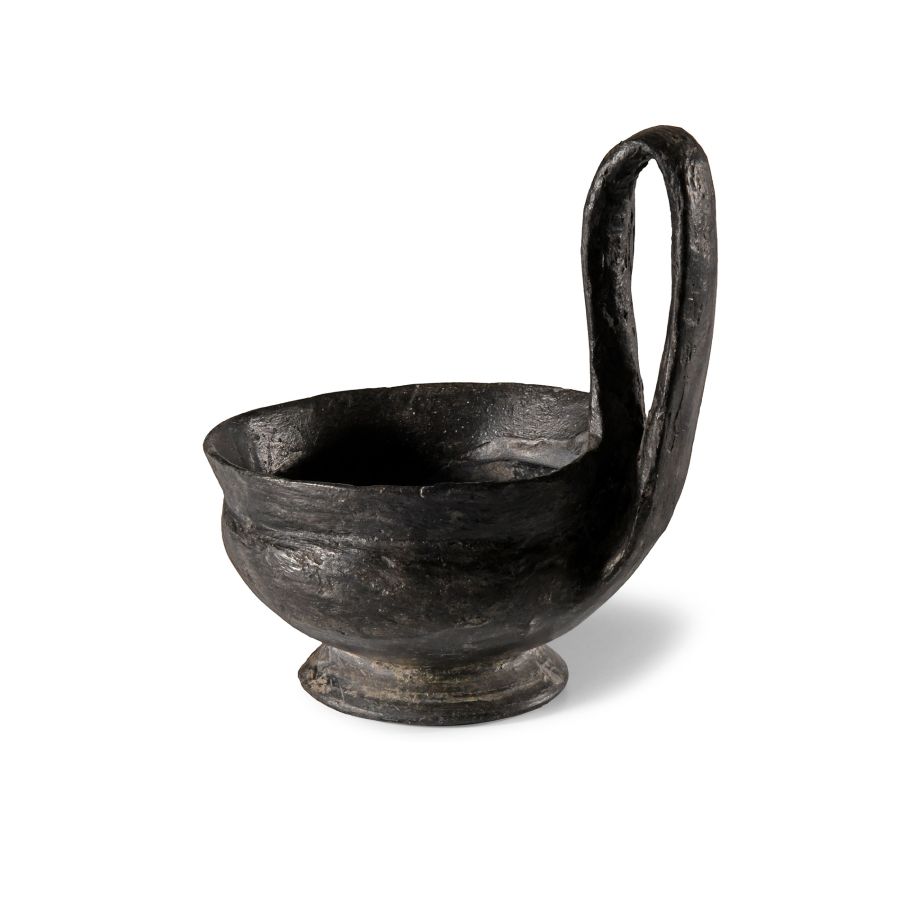
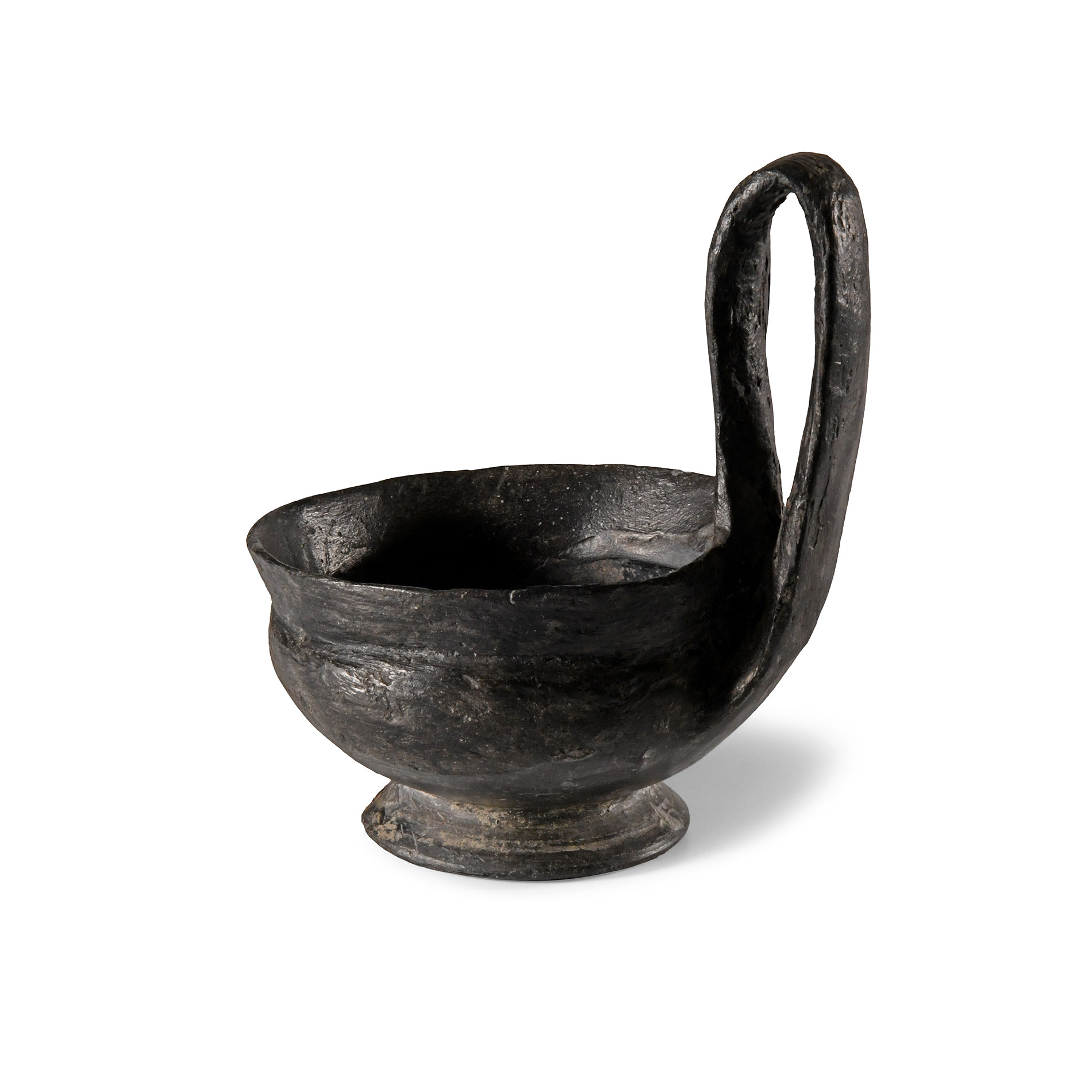
Etruscan Bucchero Kyathos
CIRCA 6TH-5TH CENTURY B.C.
5 3/8 in. (180 grams, 13.5 cm high).
Blackware vessel with carination to the body, deep flared rim,low foot, single upstanding strap handle to the rear; restored.
ProvenanceFrom the Steel family collection, 1950s-late 1990s.
CONDITIONTimeLine Auctions follows a vetting process to ensure the authenticity and legality of all items, reinforcing our commitment to integrity and responsible trading. Each antiquity, antique, and coin lot undergoes thorough examination by a vetting committee of at least ten external specialists, professional trade association members, scientists, and archaeologists: Our Vetting Process
AUCTIONS:
TimeLine is a leading auction house specialising in antiquities, ancient art, collectables, natural history, coins, medals, and books. Our auctions offer museums, collectors, historians, and enthusiasts the opportunity to acquire unique and historically significant pieces.
-
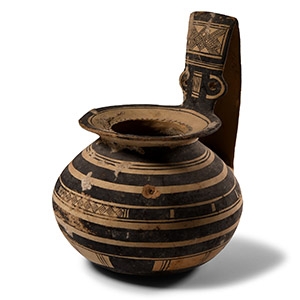
Greek Daunian Painted Ceramic Vessel
7th-5th century B.C.Sold for (Inc. bp): £468
With squat bulbous body, short neck, slightly dished flared rim and high strap handle to the rear with pierced lobes; bands of geometric painted ornament. 888 grams, 22.2 cm high
From the Steel family collection, 1950s-late 1990s. -
.jpg)
Cypriot Terracotta Figurine
6th-5th century B.C.Sold for (Inc. bp): £780
Modelled in the half-round, the figure wearing a conical hood with open front, detailed facial features and ribbed beard, left arm bent, right arm drawn across the body in the folds of a mantle, vertical border to the left chest; mounted on a custom-made stand. 48 grams, 83 mm (69 grams total, 10.9 cm high including stand)
Ex Julien Gréau (1810–1895) who was an omnivorous French collector with a predilection for antiquities. Collection of Louis-Gabriel Bellon (1819-1899), Saint-Nicolas-lez-Arras and Rouen, thence by descent. with Millon & Associes Auctions, Paris, 6th December 2021, lot 41 [Part]. Accompanied by a copy of Collection J. Gréau, Terres Cuites Grecques, by H. Hoffmann, 1891, where this piece is published. -
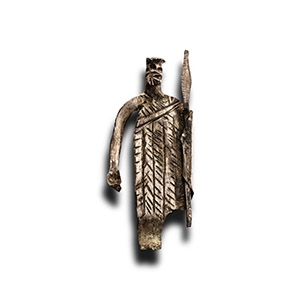
Phoenician Silver Votive Warrior Figure
6th-4th century B.C.Estimate: £400 - 600 (+bp*)
Opening Bid: £200
Sheet-silver figure with vertical banding to the cloak, one curled edge enfolding the shaft of a spear; old collector's label '4' to the reverse. 3.57 grams, 47 mm
Acquired in the late 1980s-early 1990s. Important North West London collection.
