
Loading, please wait...
LOT 0509
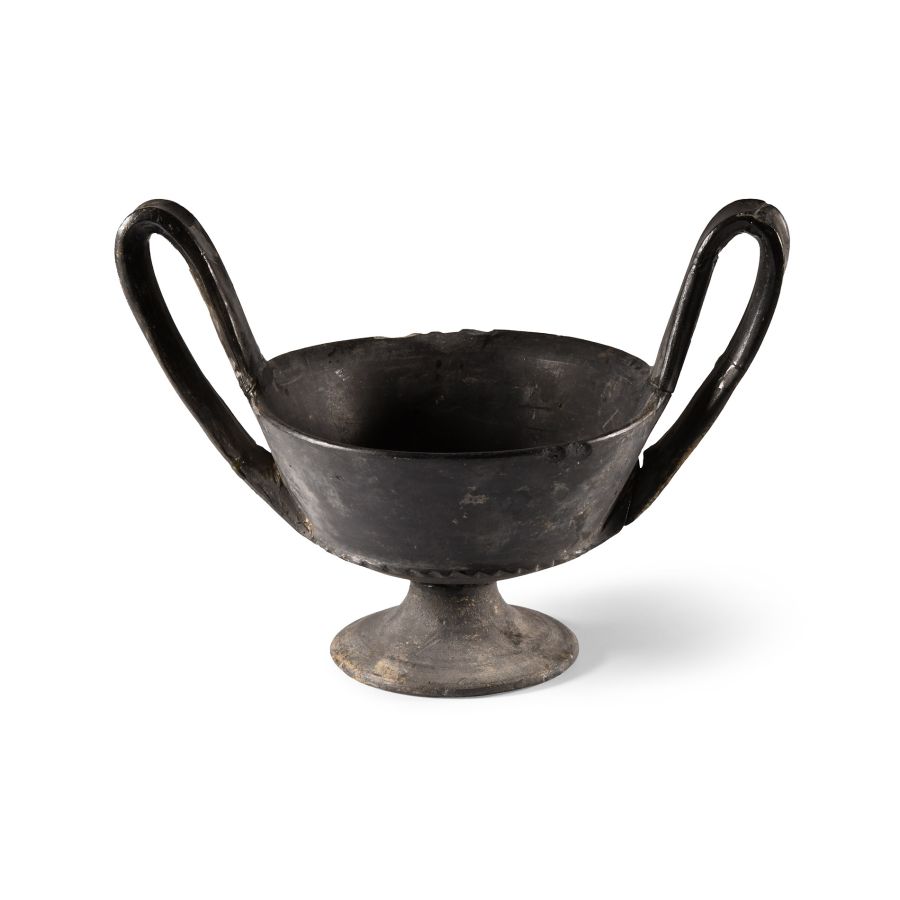
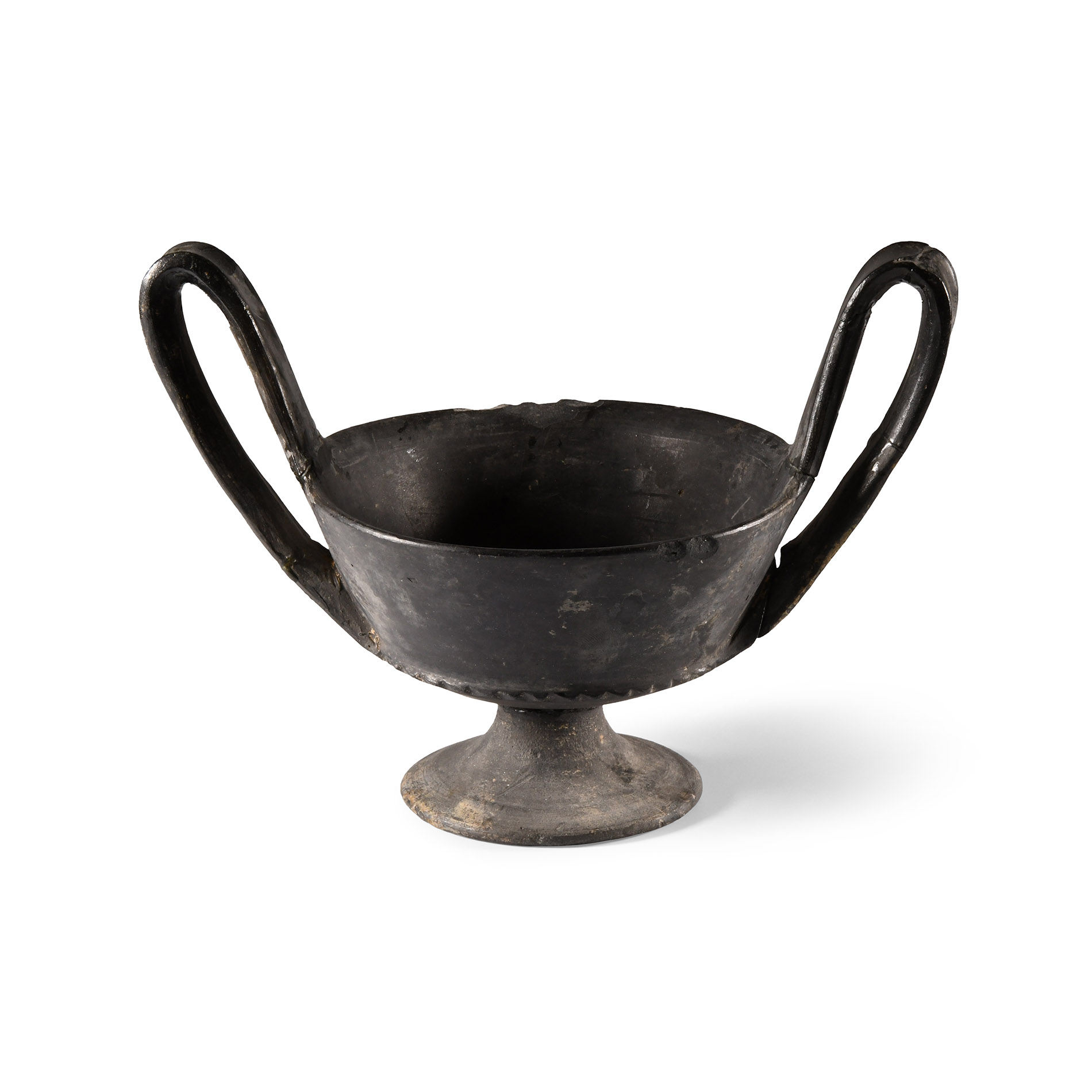
Etruscan Bucchero Kantharos Cup
CIRCA 7TH-6TH CENTURY B.C.
7 1/4 in. (339 grams, 18.5 cm wide).
Black ceramic with broad bowl and two loop handles, short stem and trumpet-shaped foot; bowl with fluted carination; repaired.
ProvenanceFrom the Steel family collection, 1950s-late 1990s.
CONDITIONTimeLine Auctions follows a vetting process to ensure the authenticity and legality of all items, reinforcing our commitment to integrity and responsible trading. Each antiquity, antique, and coin lot undergoes thorough examination by a vetting committee of at least ten external specialists, professional trade association members, scientists, and archaeologists: Our Vetting Process
AUCTIONS:
TimeLine is a leading auction house specialising in antiquities, ancient art, collectables, natural history, coins, medals, and books. Our auctions offer museums, collectors, historians, and enthusiasts the opportunity to acquire unique and historically significant pieces.
-
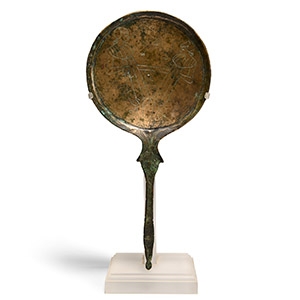
Etruscan Bronze Handled Mirror with Robed Female Dancers
Circa 5th century B.C.Sold for (Inc. bp): £2,080
Disc mirror with handle comprising: slightly dished mirror with thick rim and low-relief image of two females dancing with a sash connecting them; punched crescents in the field; reverse with dentilled border; D-section handle with angled junction and knop finial; provided with a custom-made stand; later engraving. 300 grams, 26 cm including stand
Acquired Sotheby's, New York, U.S.A., early 1980s. Private New York City collection. Acquired from Arte Primitivo, New York City, U.S.A., 7 December 2016, lot 342. Private collection of Professor Kenneth Graham, London, UK. Accompanied by the original catalogue page and a print-out of the online listing. -
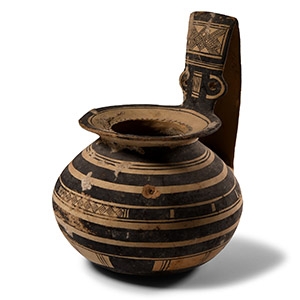
Greek Daunian Painted Ceramic Vessel
7th-5th century B.C.Sold for (Inc. bp): £468
With squat bulbous body, short neck, slightly dished flared rim and high strap handle to the rear with pierced lobes; bands of geometric painted ornament. 888 grams, 22.2 cm high
From the Steel family collection, 1950s-late 1990s. -
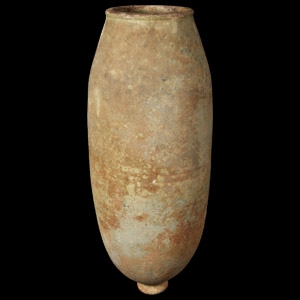
Parthian Blue Glazed Amphora-Type Vessel
2nd century B.C.-1st century A.D. or laterSold for (Inc. bp): £468
The buff, capsule-shaped body with a tapering shoulder and pronounced rim, knop-shaped foot and remains of glaze to the mouth. 4.1 kg, 42.5 cm
London, UK, gallery, 1971-early 2000s.
