
Loading, please wait...
LOT 0070
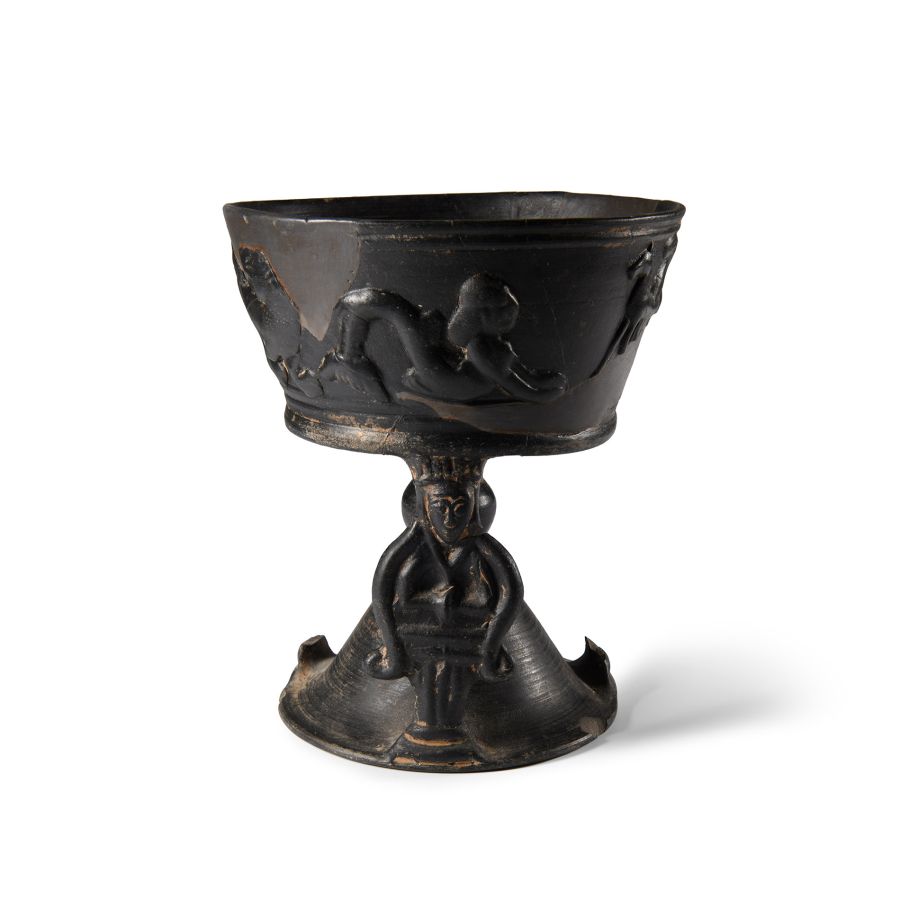
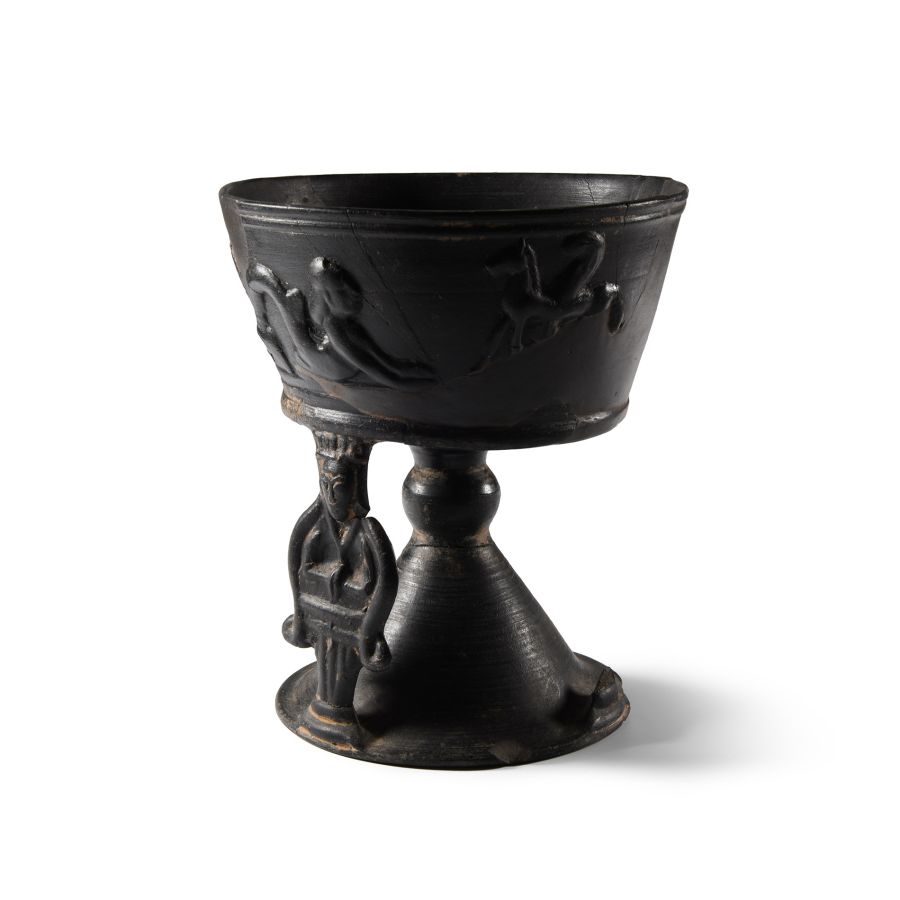
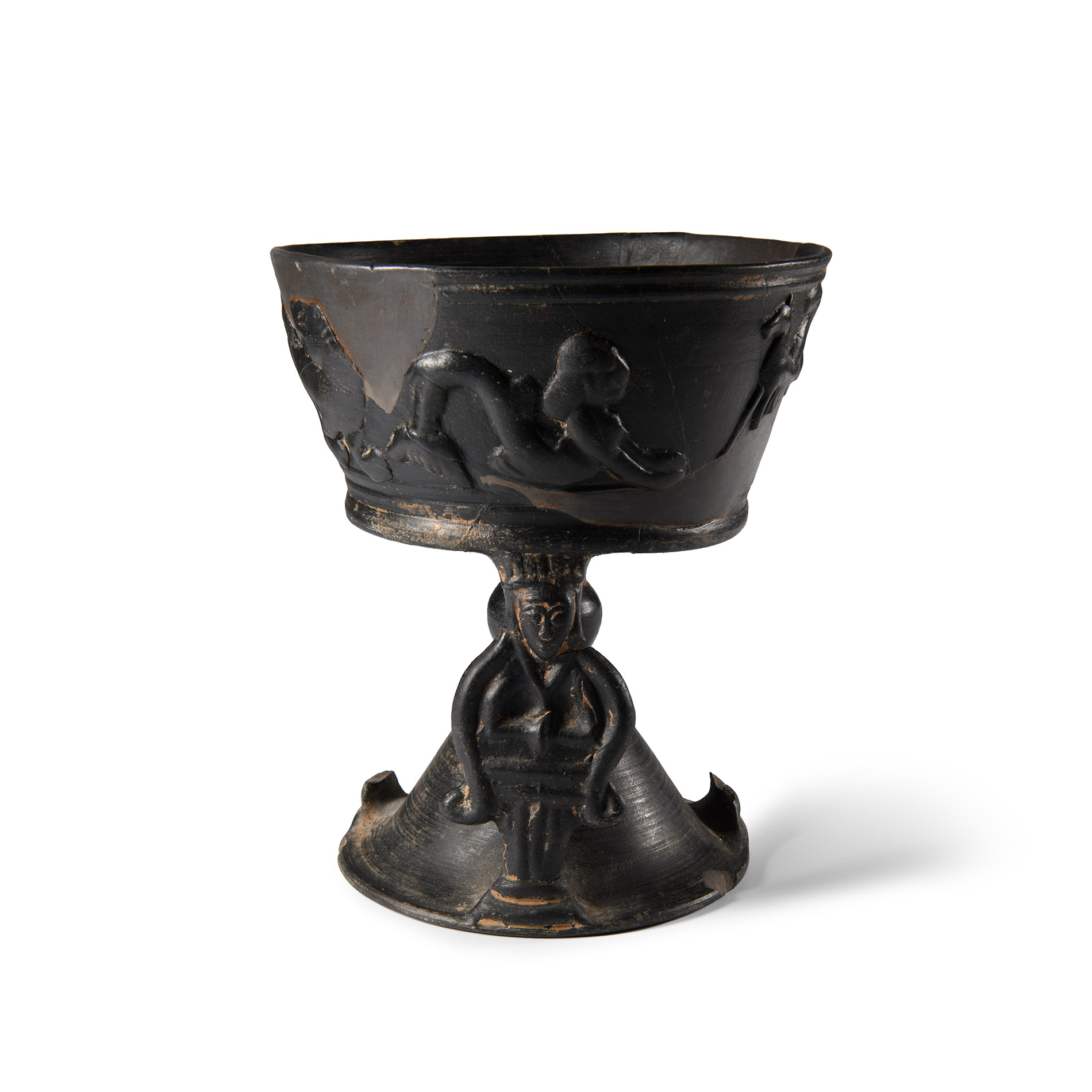
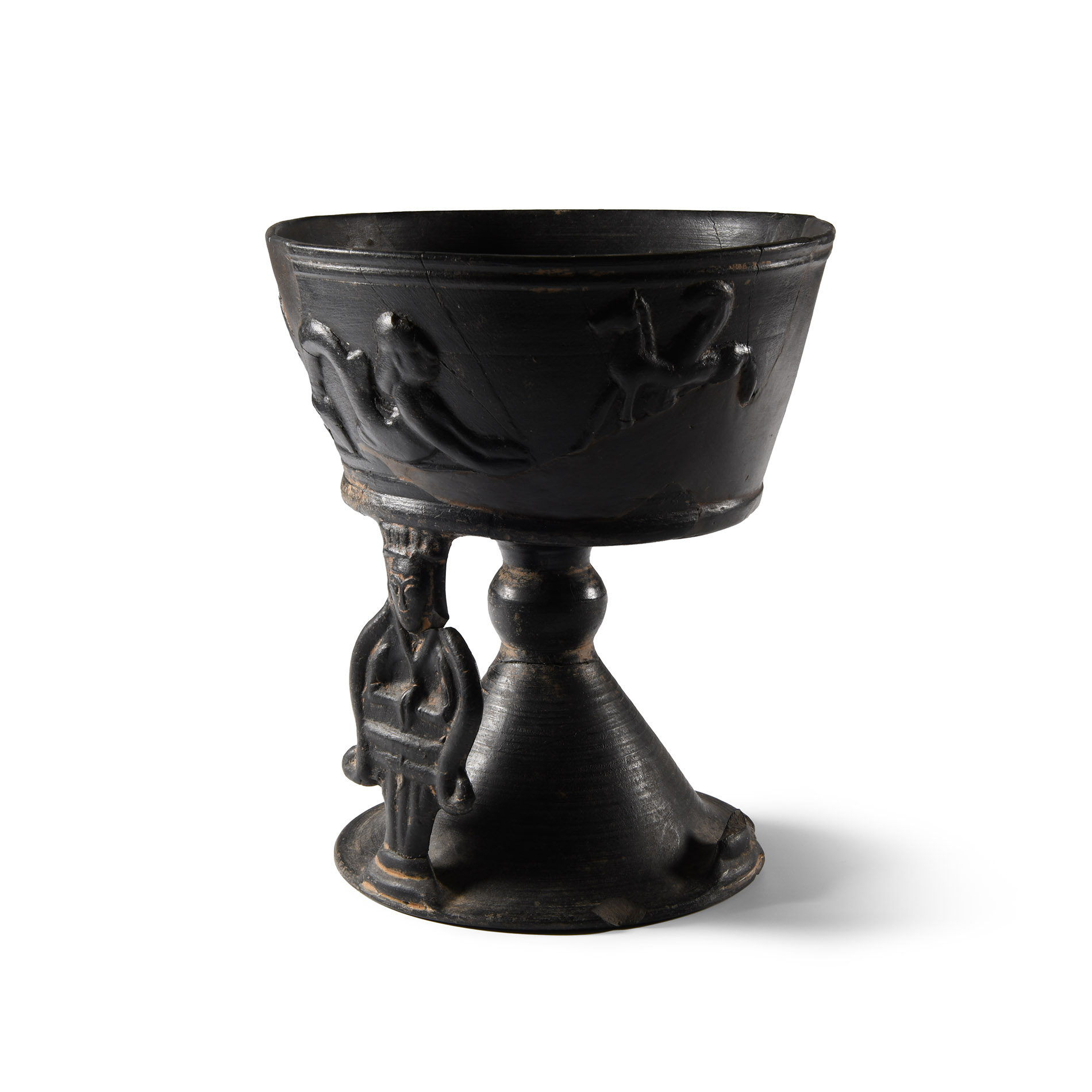
Etruscan Bucchero Chalice with Mythical Beasts, Animals, and Caryatid
CIRCA 7TH-6TH CENTURY B.C.
6 3/4 in. (502 grams, 17 cm high).
Blackware vessel comprising a broad bowl with frieze of animals (boar, lion, sphinx, horse); trumpet-shaped base with supporting caryatid; some restoration.
ProvenanceFrom the Steel family collection, 1950s-late 1990s.
CONDITIONTimeLine Auctions follows a vetting process to ensure the authenticity and legality of all items, reinforcing our commitment to integrity and responsible trading. Each antiquity, antique, and coin lot undergoes thorough examination by a vetting committee of at least ten external specialists, professional trade association members, scientists, and archaeologists: Our Vetting Process
AUCTIONS:
TimeLine is a leading auction house specialising in antiquities, ancient art, collectables, natural history, coins, medals, and books. Our auctions offer museums, collectors, historians, and enthusiasts the opportunity to acquire unique and historically significant pieces.
LOT 0070
Etruscan Bucchero Chalice with Mythical Beasts, Animals, and Caryatid
Sold for (Inc. bp): £650
-
Greek Red Figure Dish with Lady of Fashion
South Italian, circa 380-350 B.C.Sold for (Inc. bp): £611
With pedestal foot, decorated with radiating strokes to the rim, band of leaf ornament surrounding the central profile of a lady of fashion facing left, her hair dressed in a ribboned sakkos with stephane; earrings and necklace in white and ochre. 187 grams, 16.5 cm wide
Acquired by the vendor's father in the 1950s or before; thence by descent 2003. -
Greek Blackware Skyphos from the Choes Group Workshop of The Iliupersis Painter
4th century B.C.Sold for (Inc. bp): £3,120
With rounded loop handles with elaborate palmettes below, pedestal foot; Side A with nude Eros flying left, holding a dish in his right hand; Side B with a standing female (Psyche?) waiting for Eros and offering a wreath with her left hand, dressed in a flowing peplos, a small altar before. 90 grams, 27 cm wide
Ex Barnard & Moore, 2003. From a Norfolk, UK, private collection. Accompanied by an original thermoluminescence analysis report no.N123k4 from Oxford Authentication. Accompanied by an old Moore Antiquities identification card with reference no.1958 and invoice dated 26 July 2003. Accompanied by an academic report by Dr Raffaele D’Amato. This lot has been checked against the Interpol Database of stolen works of art and is accompanied by a search certificate number no.11918-205900.
The Iliupersis Painter was a south Italic Greek vase painter whose name is unknown. The name derives from a represented scene in a volute crater in the British Museum depicting the sacking of Troy (Iliou Persis). The characteristic pillar-shaped monument depicted here can be seen also on the MET hydria, where the closed foot of the woman corresponds in detail to the one on our vase. The Iliupersis Painter was a prolific and innovative artist, active just before mid 4th century B.C., whose work set the standard for the large, ornate-style vases of the second half of the same century: volute-kraters with plastic masks on the volutes, increased polychromy, complex floral ornament, multilevel compositions, mourners surrounding funerary naiskoi and stelei. -
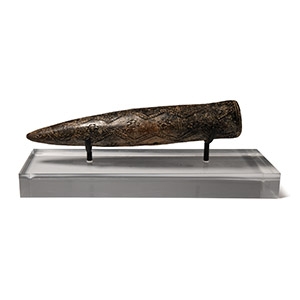
Cypriot Bronze Age Cone
2100-1850 B.C.Sold for (Inc. bp): £520
Hollow-formed ceramic cone withlongitudonal hatched zigzag bands, incised circumferential band, impressed 'cross barby' and lozenge motifs; vertical 'seam' to the reverse with impressed 'stitching'; mounted on a custom-made stand. 1.55 kg total, 26.5 cm (30.5 cm including stand)
US private collection. with DuMouchelles Auction, Detroit, 18 February 2023, lot 1123.
