
Loading, please wait...
LOT 0102
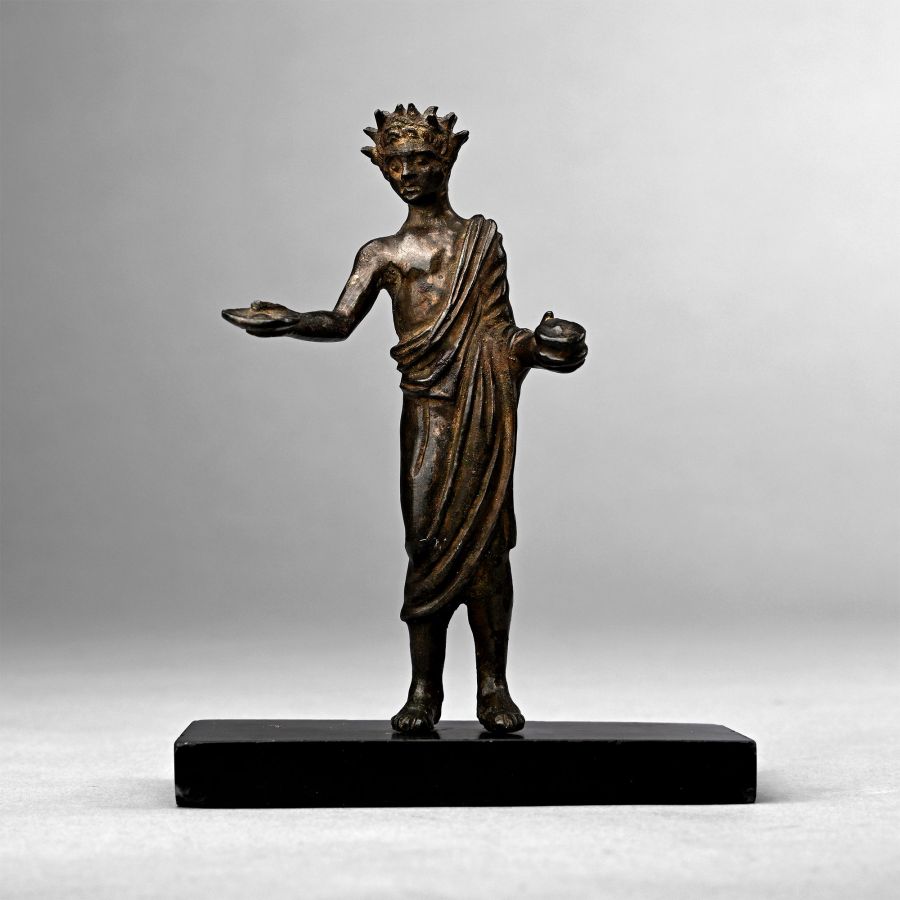
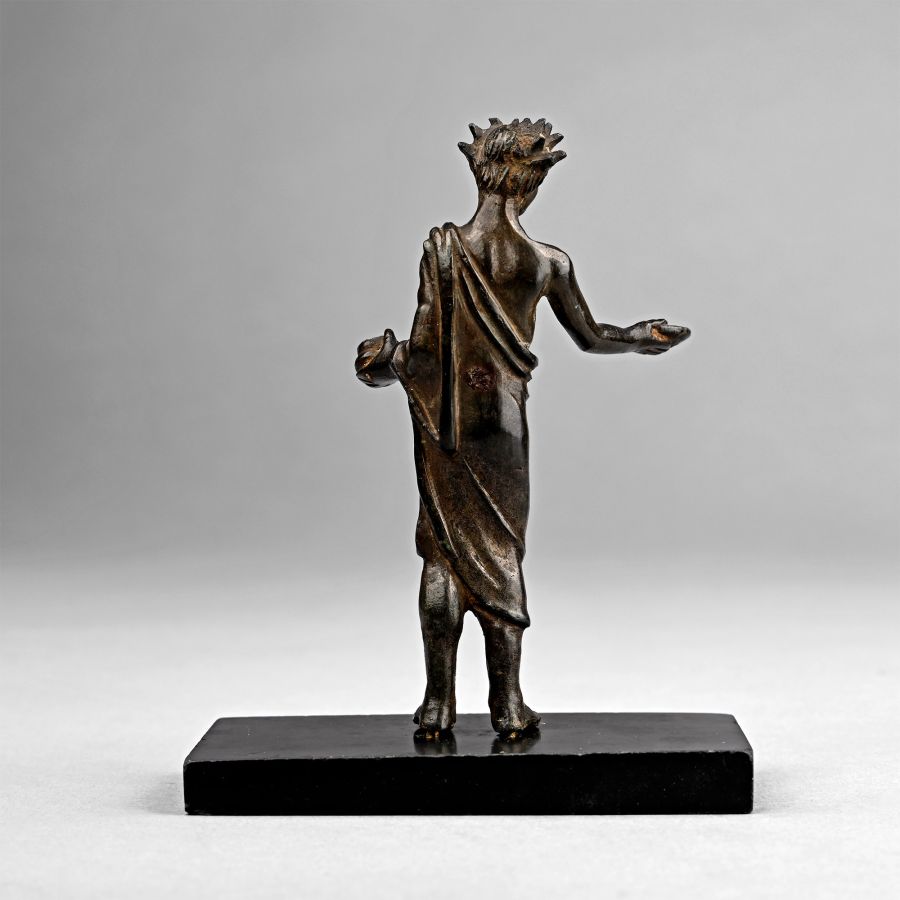
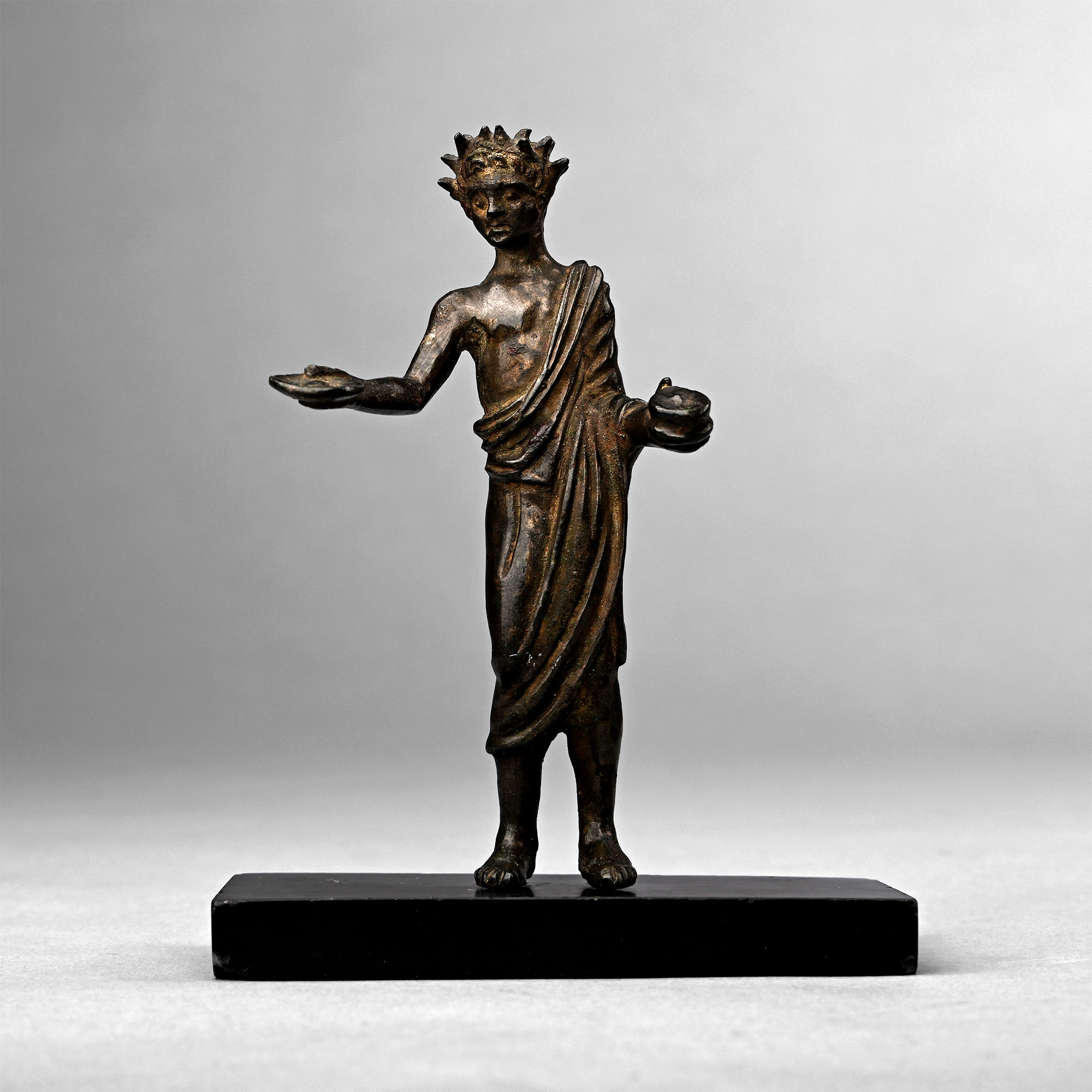
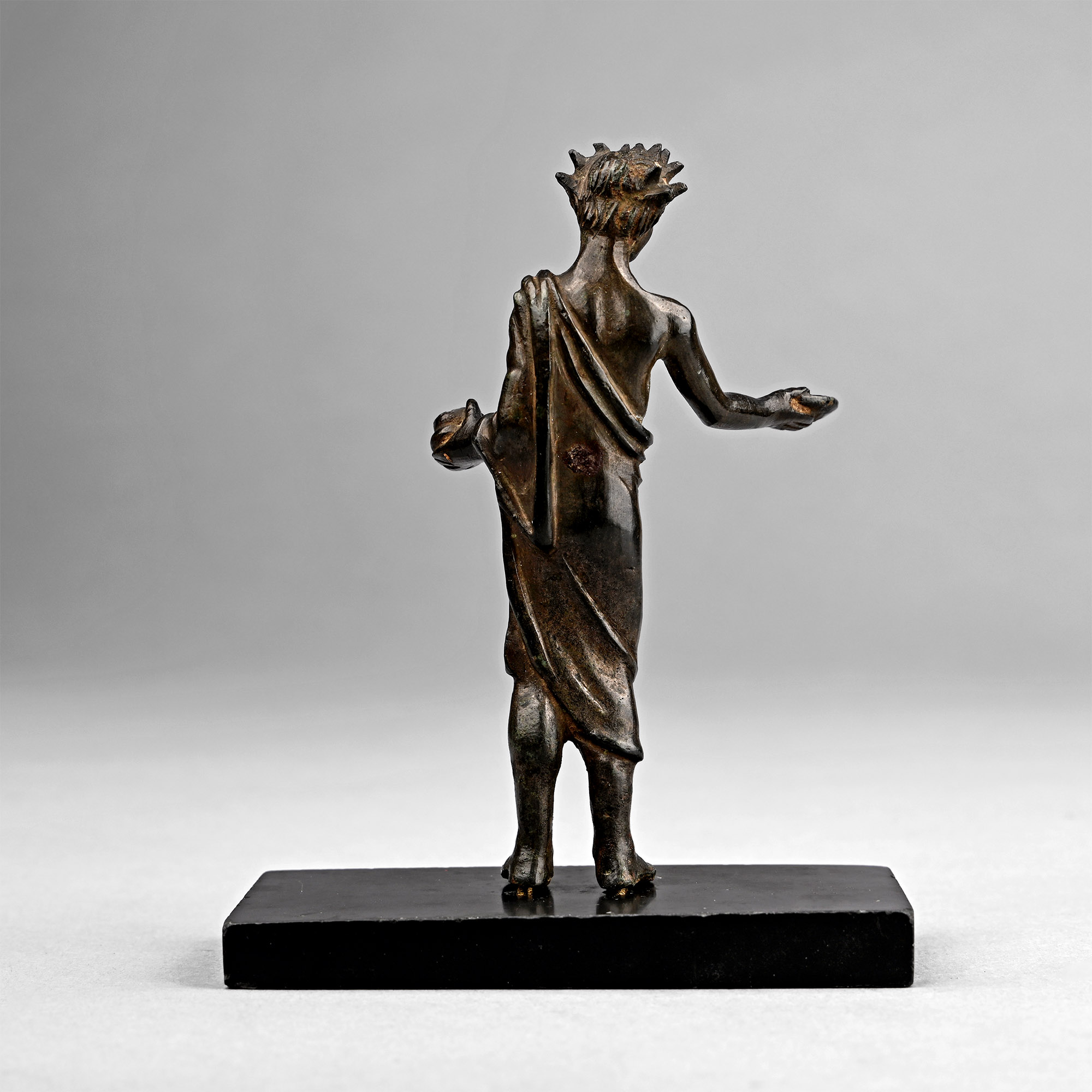
Etruscan Bronze Votive Figure of Genius Sacrificulus
6TH-5TH CENTURY B.C.
4 3/4 in. (5 1/4 in.) (189 grams, 12.1 cm (367 grams total, 13.4 cm high including)).
Depicting a ‘genius’ making a sacrifice, his head surrounded by a radiate crown or a wreath of laurel leaves arranged in rays; bare-chested with a cloak (tebenna) falling over his left shoulder, covering his back and resting on his left arm, enveloping his legs to below the knee; holding a patera in his right hand and an acerra in his left; accompanied by a display stand.
ProvenanceAnne Betgoner, Paris, by descent.
French private collection, acquired in the early 20th century.
Acquired from the above by the present owner.
Private collection, UK.
This lot has been checked against the Interpol Database of stolen works of art and is accompanied by a search certificate number no.13235-251199.
Cf. Cook, B.F., ‘Two Etruscan Bronze Statuettes’ in The Metropolitan Museum of Art Journal, volume 1, 1968, pp. 167-170, fig.4-6, for a comparable example in the Metropolitan Museum of Art.
FootnotesThe figure represents a genius dressed as a priest according to the Etruscan tradition. He is celebrating a sacrifice by offering to the gods with a patera of precious liquids and perfumes, kept in the acerra or pyxis. Acerra was the name given to the casket in which the incense intended for sacrifices was placed (arcula turalis). A servant carried it to the altar, and the granules from the casket were scattered on the flames (acerra libare).
CONDITIONTimeLine Auctions follows a vetting process to ensure the authenticity and legality of all items, reinforcing our commitment to integrity and responsible trading. Each antiquity, antique, and coin lot undergoes thorough examination by a vetting committee of at least ten external specialists, professional trade association members, scientists, and archaeologists: Our Vetting Process
AUCTIONS:
TimeLine is a leading auction house specialising in antiquities, ancient art, collectables, natural history, coins, medals, and books. Our auctions offer museums, collectors, historians, and enthusiasts the opportunity to acquire unique and historically significant pieces.
-
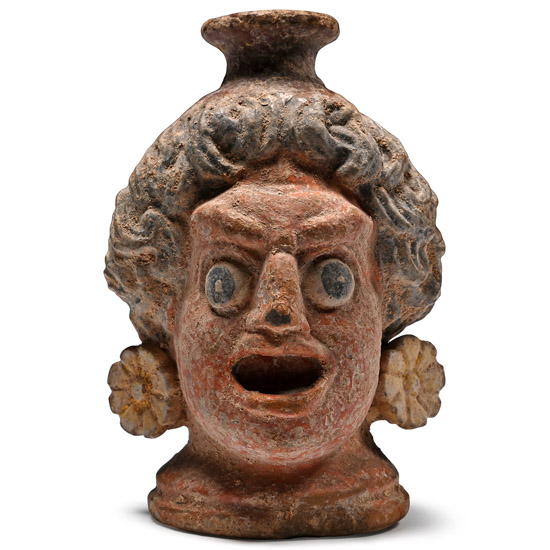
Greek Terracotta Head of an Actor Vase
Circa 4th century B.C.Sold for (Inc. bp): £2,730
An expressive polychrome vase formed as the head of an actor wearing rosette earrings, open mouth and applied pupils, short neck with everted rim above and a small strap handle to the rear. 69.3 grams, 75 mm
Ex Louis-Gabriel Bellon, France, (1819-1899). with Galerie Rhéa, Zurich, Switzerland. This lot has been checked against the Interpol Database of stolen works of art and is accompanied by a search certificate number no.12667-236389.
In Greek theatre, actors wore masks made from materials like linen and leather, which amplified expressions and helped actors take on multiple roles within a single play. Aristotle, in his Poetics, highlighted the importance of masks in conveying emotion and character, especially in large outdoor theatres. This terracotta, representing the satirical mask of a woman, with its lively and expressive features, would have brought both humour and recognisable character traits to the stage, engaging audiences with the playful spirit of Greek comedy. -
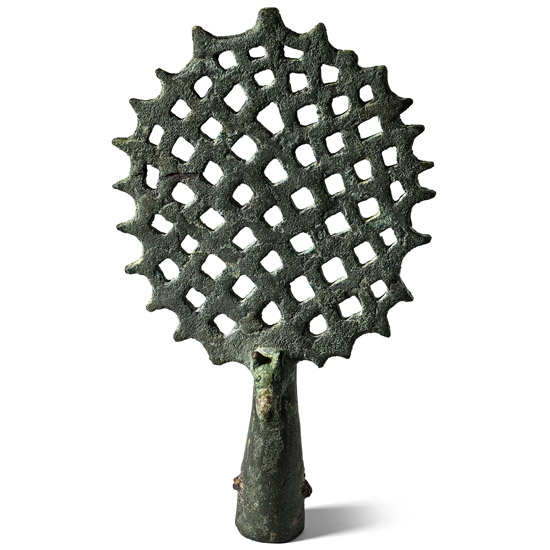
Scythian Bronze Finial with Animal Head
5th-4th century B.C.Estimate: £2,000 - 3,000 (+bp*)
Opening Bid: £1,000
Comprising an ellipsoid panel mounted on a conical socket; openwork lattice design with lozenge voids; socket with horse-head to one face, lateral lugs above the mouth. 570 grams, 24.6 cm
Private European collection, 1990s. Private collection, London, UK. Accompanied by an academic report by Dr Raffaele D'Amato. This lot has been checked against the Interpol Database of stolen works of art and is accompanied by search certificate number no.13278-254311.
Bronze pole tops, together with mirrors and horse trappings, were characteristic of Scythian art. Usually, Scythian warrior burials were accompanied by horses, the number of which corresponded to the status of the deceased (Galanina, 1997, p.54, fig.16). In the famous Chrertomlyk barrow, together with a deposit of 250 bridles, several openwork pole-tops were found, with figures of animals and birds, which could have been mounts for the harness or top of standards. However, they could also have been the upper part of staff poles decorating funeral wagons. Pole tops are one of the most significant objects used by the Scythians, and formed part of the ritual furnishings. -
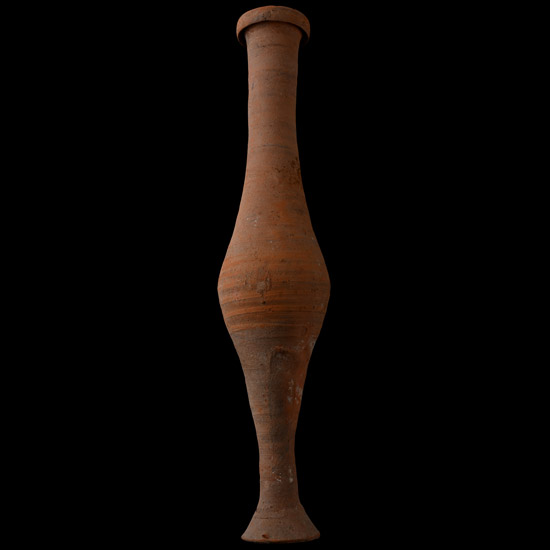
Large Greek Terracotta Spindle Unguentarium
Hellenistic, 4th-3rd century B.C.Sold for (Inc. bp): £104
With a long narrow neck and carinated mouth, developing to a biconical body and flared foot. 184 grams, 23 cm
From the private collection of Mr Brian Edwards, New Malden, Surrey, UK, formed from the late 1970s-early 1980s; thence by descent. Accompanied by the original collector's data sheet with reference no.A112.
