
Loading, please wait...
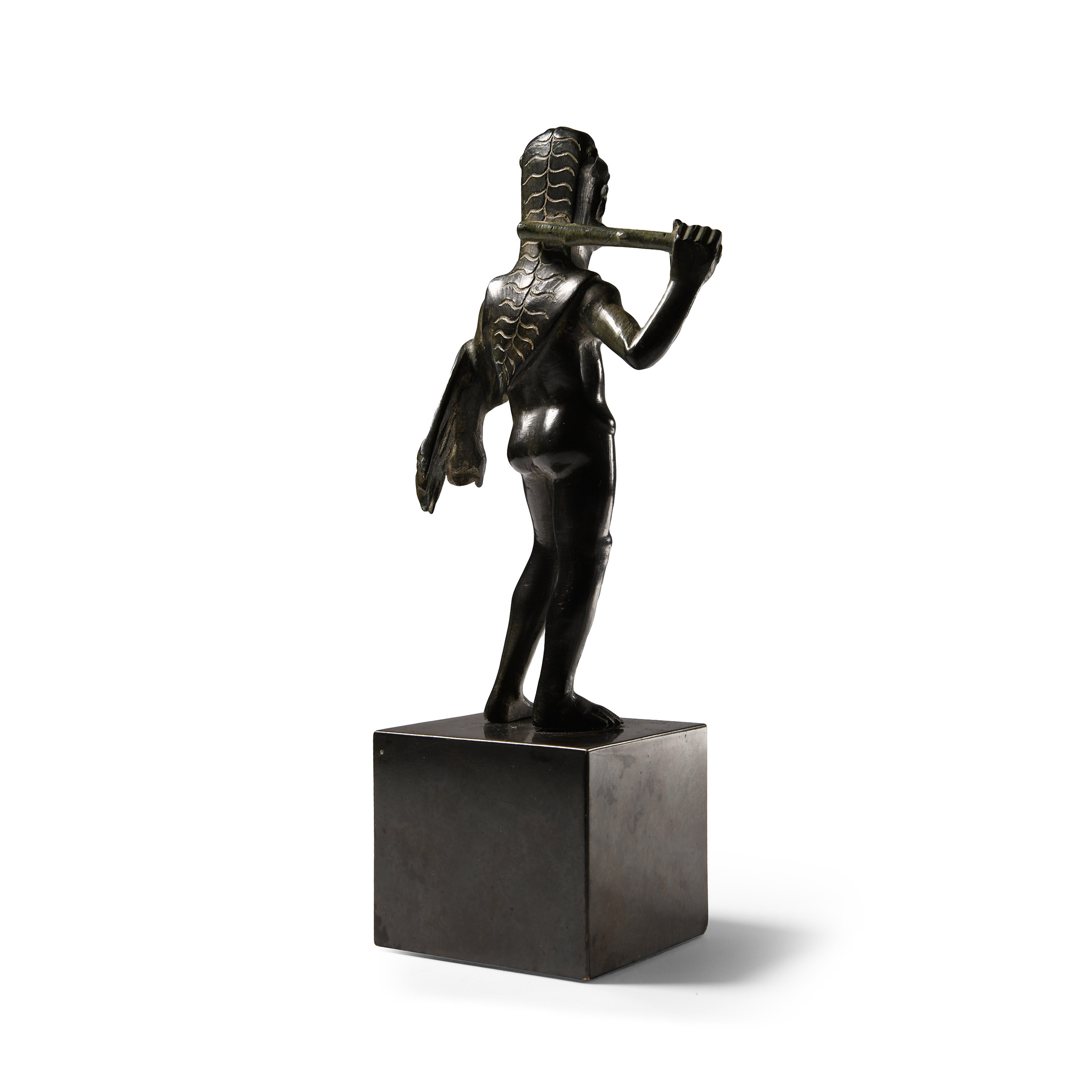
LOT 0072
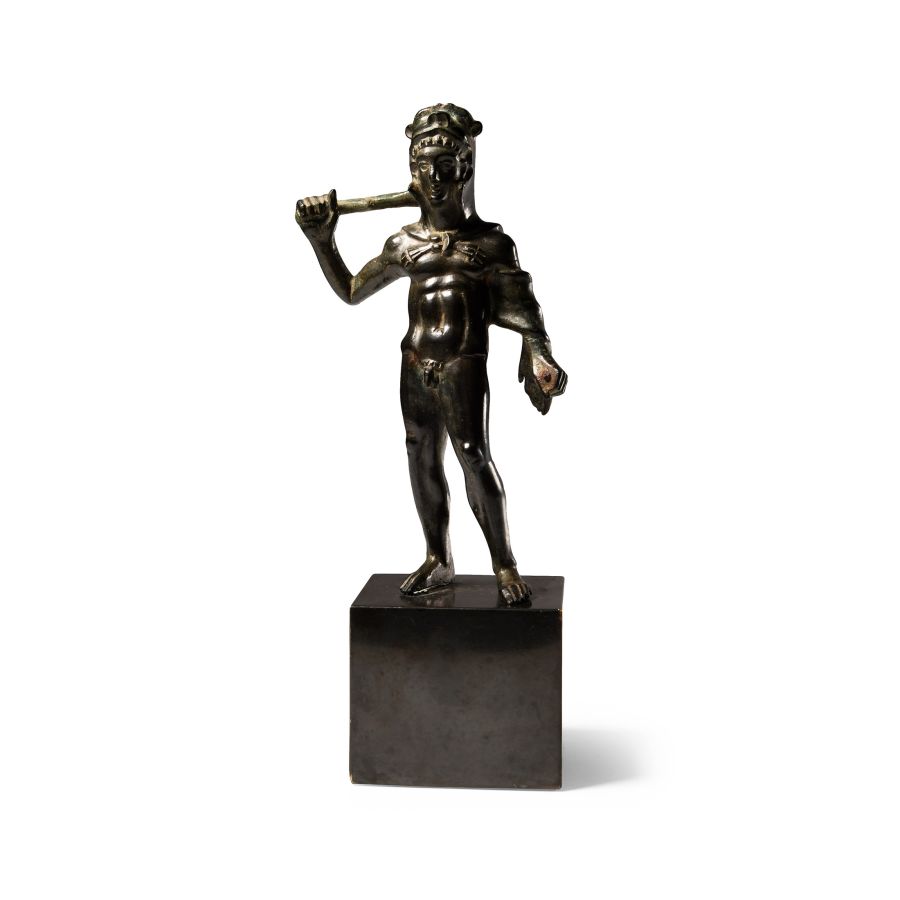
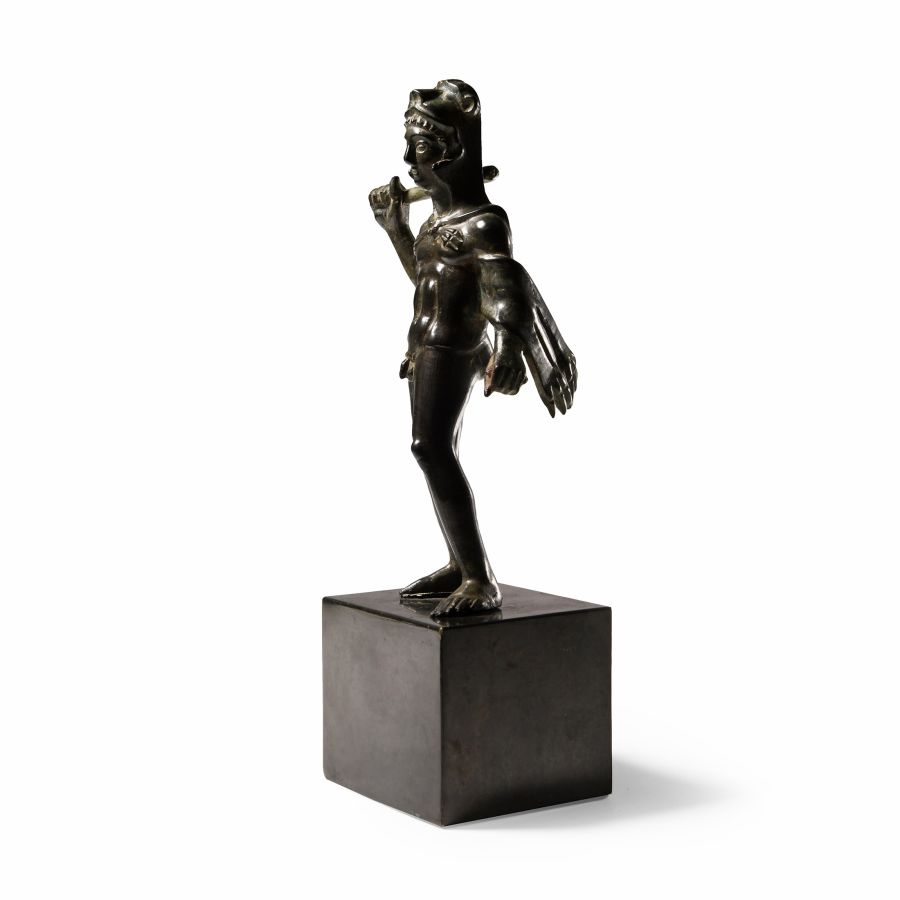
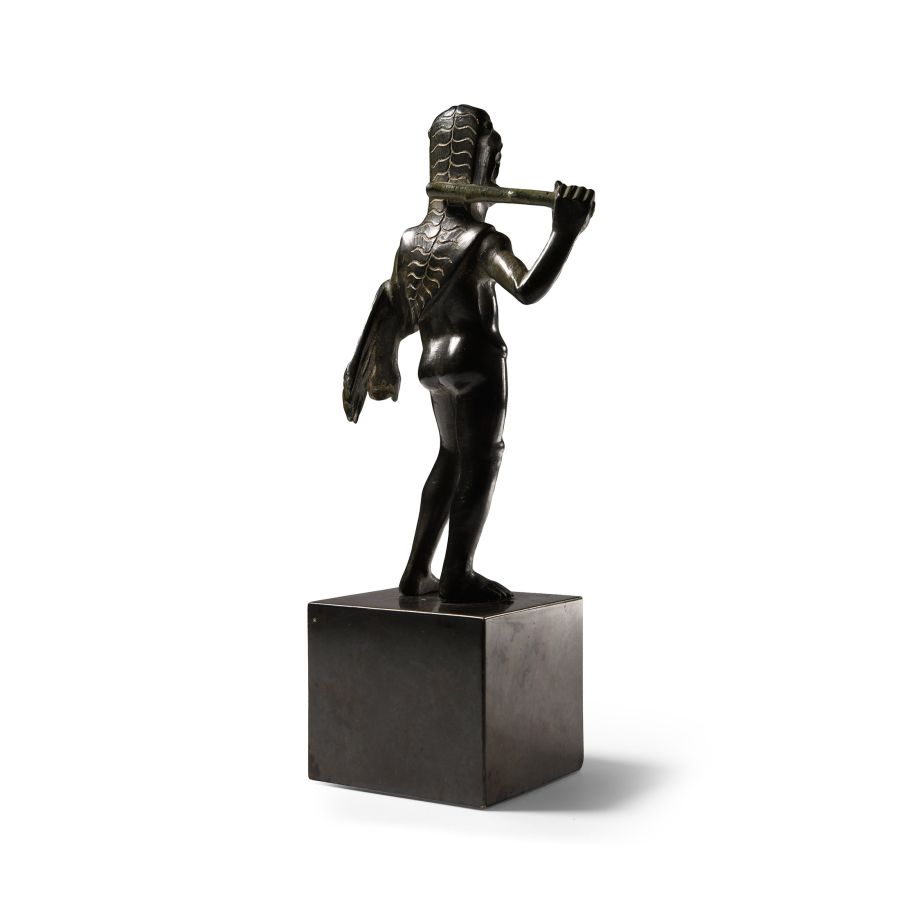
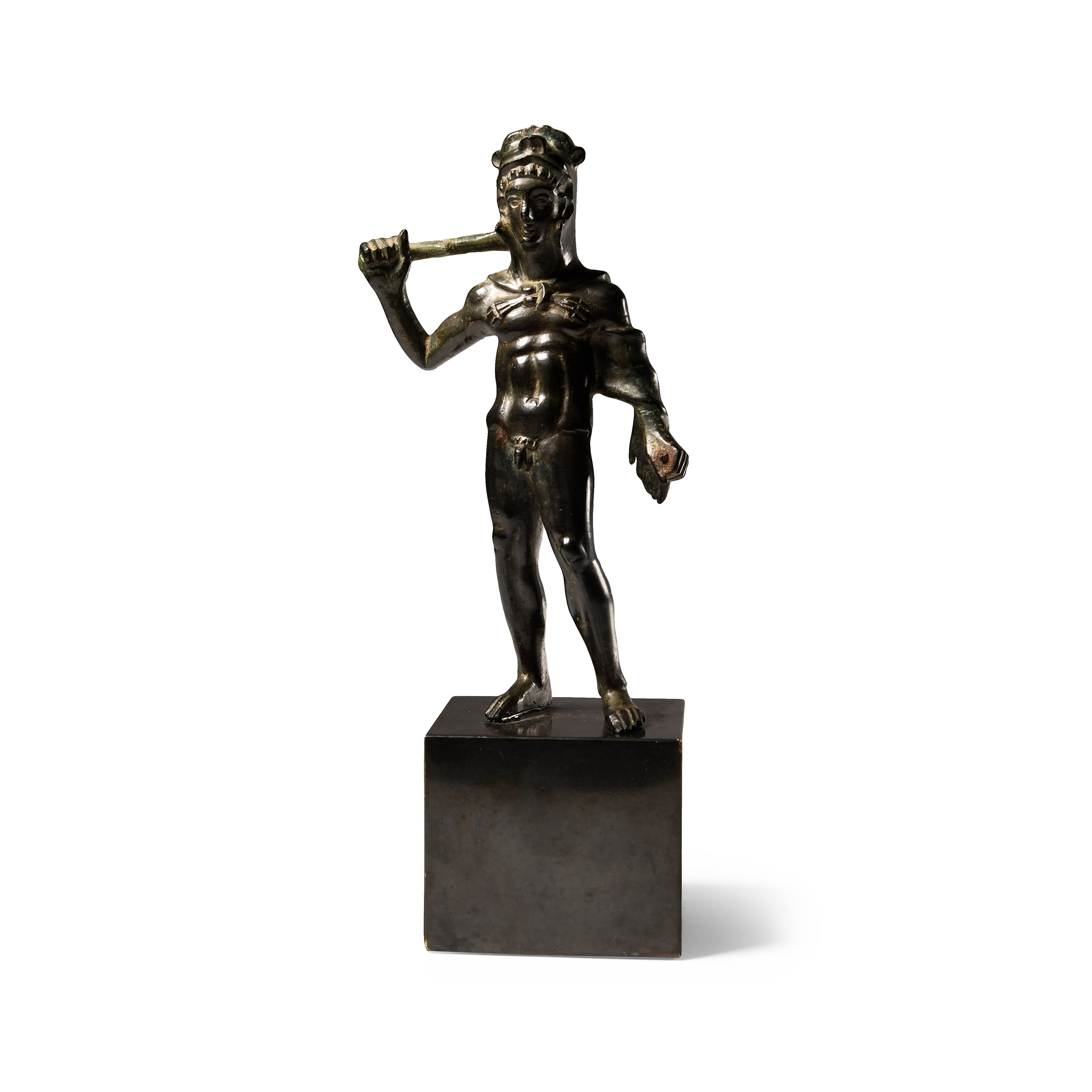
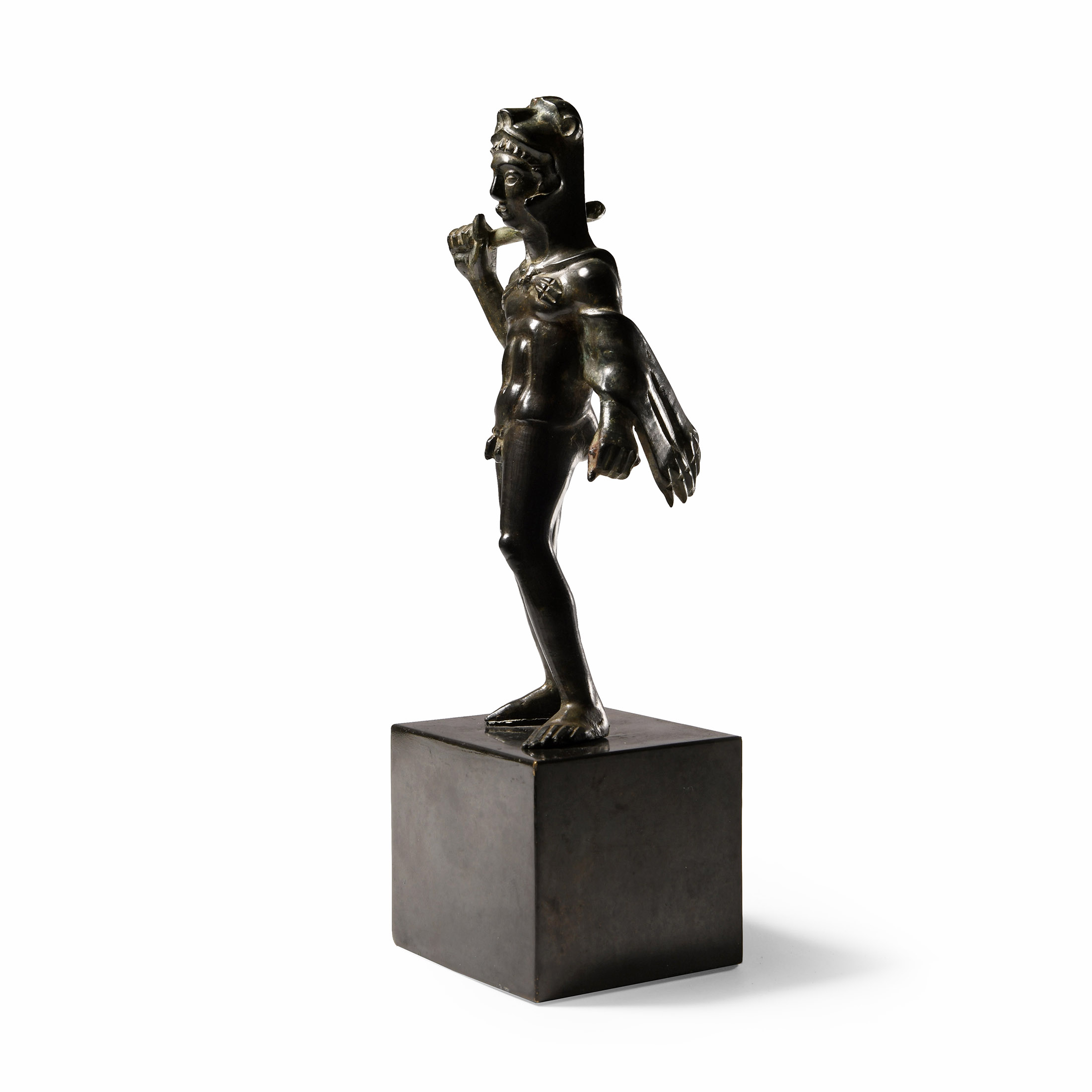
Etruscan Bronze Statuette of Herakles
4TH-3RD CENTURY B.C.
5 3/4 in. (7 5/8 in.) (290 grams total, 14.5 cm high (19.5 cm high including stand)).
Modelled in the round with a muscular nude body, his club lifted in his right hand behind his head, his hair dressed in rows of tight, close-set curls underneath a Nemean lionskin hood with cloak billowing over his left arm, the paws tied across his chest; mounted on a custom-made display stand.
Provenancewith Sotheby's, New York, 21 November 1985, lot 60.
Ex private New York collection.
Accompanied by an academic report by Dr Raffaele D'Amato.
This lot has been checked against the Interpol Database of stolen works of art and is accompanied by search certificate number no.11794-206497.
Cf. Colonna, G., ‘Problemi dell’arte figurativa in età ellenistica nell’Italia Adriatica’, in Atti del I⁰ convegno di studi sulle Antichità Adriatiche, Chieti, 1971, pp.172-177; Adam, A.M., Bronzes étrusques et italiques, Paris, 1984, p.190, nos.291-292; cf. also The Metropolitan Museum, New York, accession number 96.9.297, and the Minneapolis Institute of Art, accession number 66.41, for comparable figures; for the type see the British Museum no.1895,0408.1, in the British Museum Department of British & Medieval Antiquities, Guide to the Antiquities of Roman Britain, London, 1964, p.54, pl.13,7; for Herakles-Alcides in the Etruscan-Latin world see also Lexicon Iconographicum Mythologiae Classicae (LIMC), vol.V., Zurich, 1990, pp.196-253, s.v. Herakles/Hercle.
FootnotesThe statuette assumes the position of the 'attacking Hercules', which characterises numerous Etruscan statues of the hero of the classical era, however, with a less aggressive stance. The type was probably an Etruscan creation of the 5th century B.C., based on Greek models, which lasted until the end of the Hellenistic period, when Etruria was by then incorporated into the Roman world. This statuette, despite certain anatomical stylisation and an impersonal characterisation of the face, is the result of a good artistic and technical quality. The comparison of the artwork with the group identified as ‘Trieste’ from Colonna shows that this specimen is more recent and should be dated to the end of the Hellenistic Age. These small statuettes were probably offered ex-voto by the Romano-Etruscan aristocracy of the period.
CONDITIONTimeLine Auctions follows a vetting process to ensure the authenticity and legality of all items, reinforcing our commitment to integrity and responsible trading. Each antiquity, antique, and coin lot undergoes thorough examination by a vetting committee of at least ten external specialists, professional trade association members, scientists, and archaeologists: Our Vetting Process
AUCTIONS:
TimeLine is a leading auction house specialising in antiquities, ancient art, collectables, natural history, coins, medals, and books. Our auctions offer museums, collectors, historians, and enthusiasts the opportunity to acquire unique and historically significant pieces.
LOT 0072
Etruscan Bronze Statuette of Herakles
Estimate £30,000 - 40,000€34,800 - 46,400 (for guidance only)$40,500 - 54,000 (for guidance only)
-
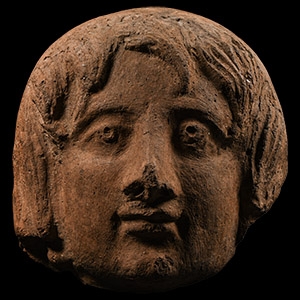
Etruscan Terracotta Head
Circa 4th-3rd century B.C.Estimate: £2,000 - 3,000 (+bp*)
Opening Bid: £1,000
Formed as a youthful figure with semi-naturalistic facial features and short tufts of comb-effect hair falling around the face; hollow-formed. 1.07 kg, 17 cm
Ex S. Amacker collection, prior to 1970. Acquired from the above in 2005. This lot has been checked against the Interpol Database of stolen works of art and is accompanied by search certificate number no.11853-207423. -
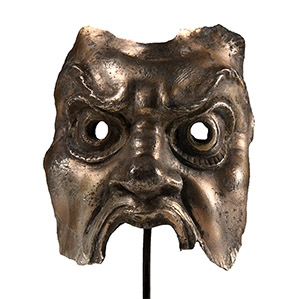
Greek Silver-Gilt Mask of Silenus
3rd-2nd century B.C.Sold for (Inc. bp): £2,470
Naturalistically modelled in repoussé as the mature and frowning face of the god Silenus; accompanied by a custom-made display stand. 9.4 grams, 37 mm (160 grams total, 98 mm high including stand)
Ex old English collection. London art market, 1980s. This lot has been checked against the Interpol Database of stolen works of art and is accompanied by search certificate number no.11849-207741.
In Greek mythology, Silenus was a god of the forest, associated with musical creativity, ecstatic dance and drunkenness. He was also a prophet and a bearer of dire wisdom. When the god Dionysus was born from the thigh of Zeus, Hermes took the infant to live with Silenus, where he was raised together with local nymphs in a cave on mount Nysa. Silenus was frequently present in the train of Dionysus, fought with the latter against the giants, and accompanied him on his adventures. -
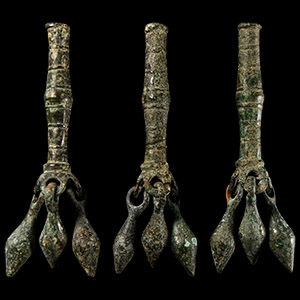
Etruscan Bronze Pendant Group
Circa 8th century B.C.Estimate: £400 - 600 (+bp*)
Opening Bid: £200
Comprising three pendant clusters, each a tube with balustered middle section and ribs, radiating loops at the lower end with suspended biconvex dangles. 90 grams total, 78 mm each
Acquired in the late 1970s. Ex Herr Bernhard Muller collection. with Galerie Ostracon, circa 2015. Accompanied by detailed collector's catalogue pages including description and photograph.
