
Loading, please wait...


LOT 0780
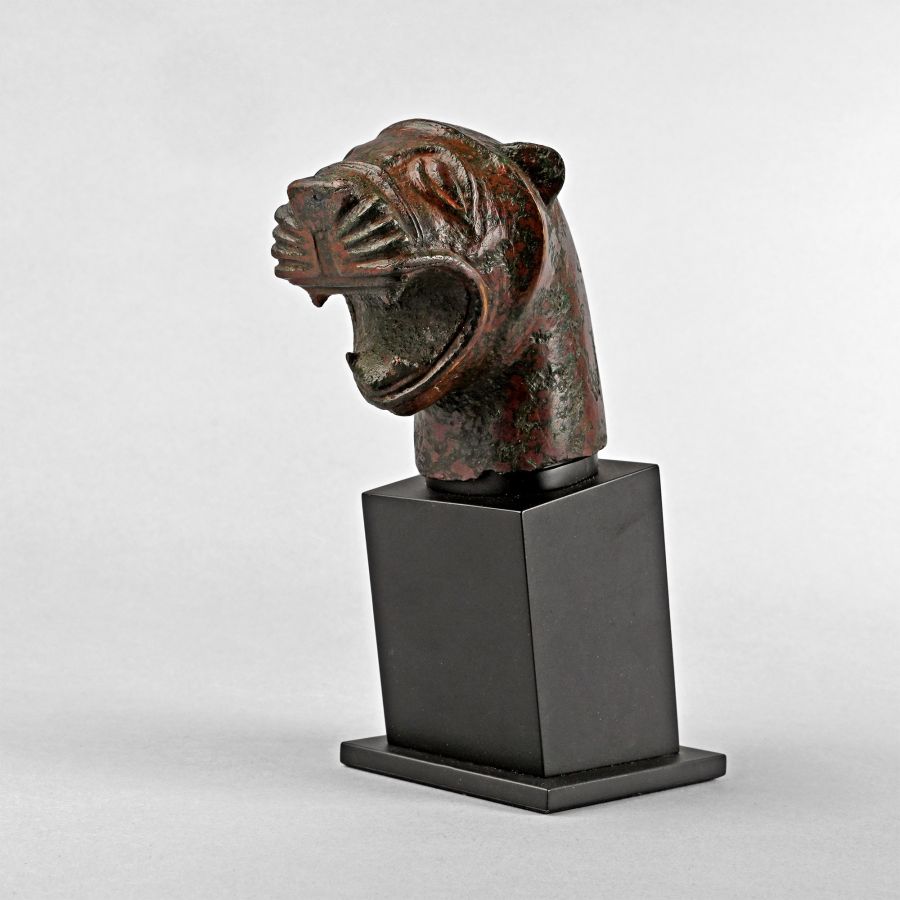
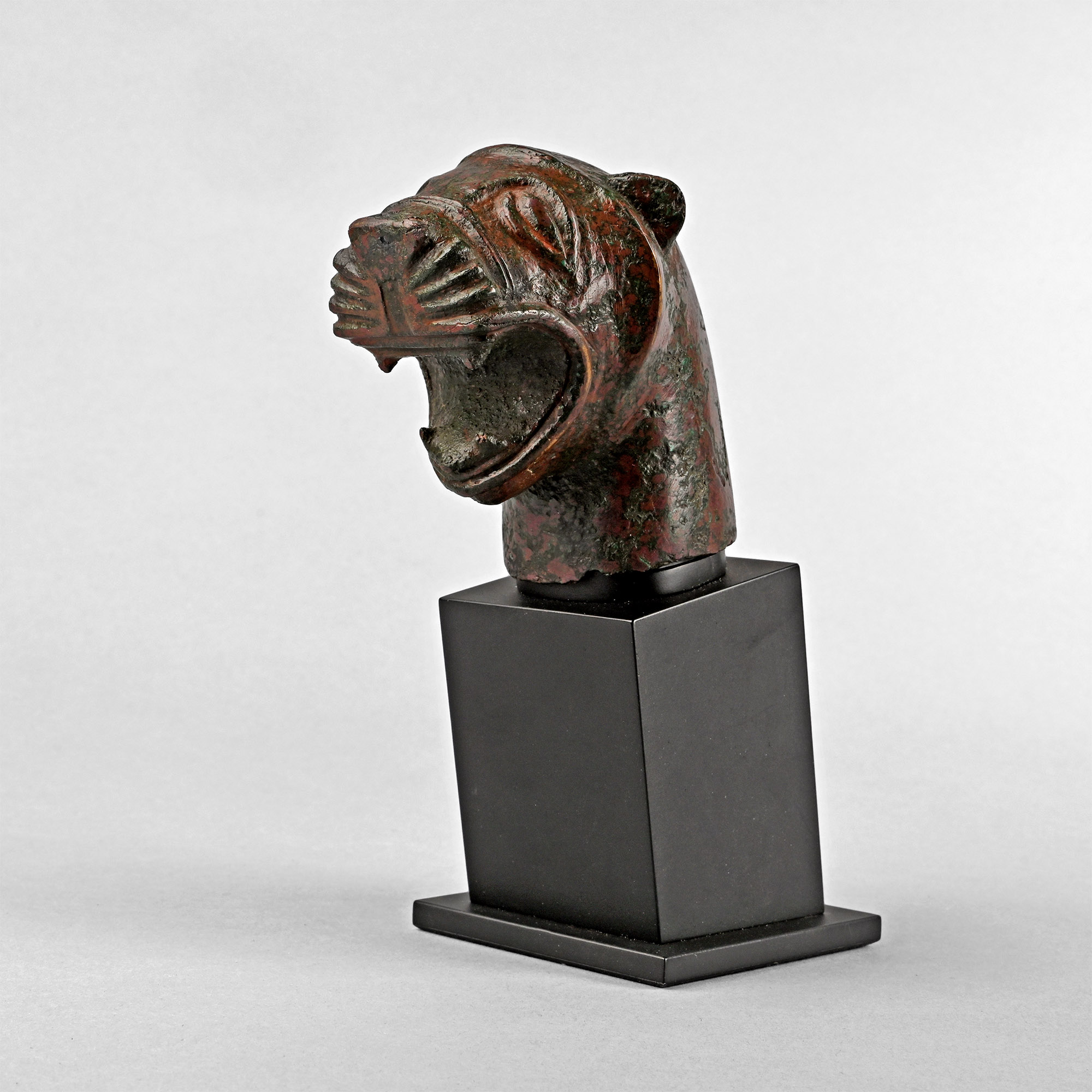
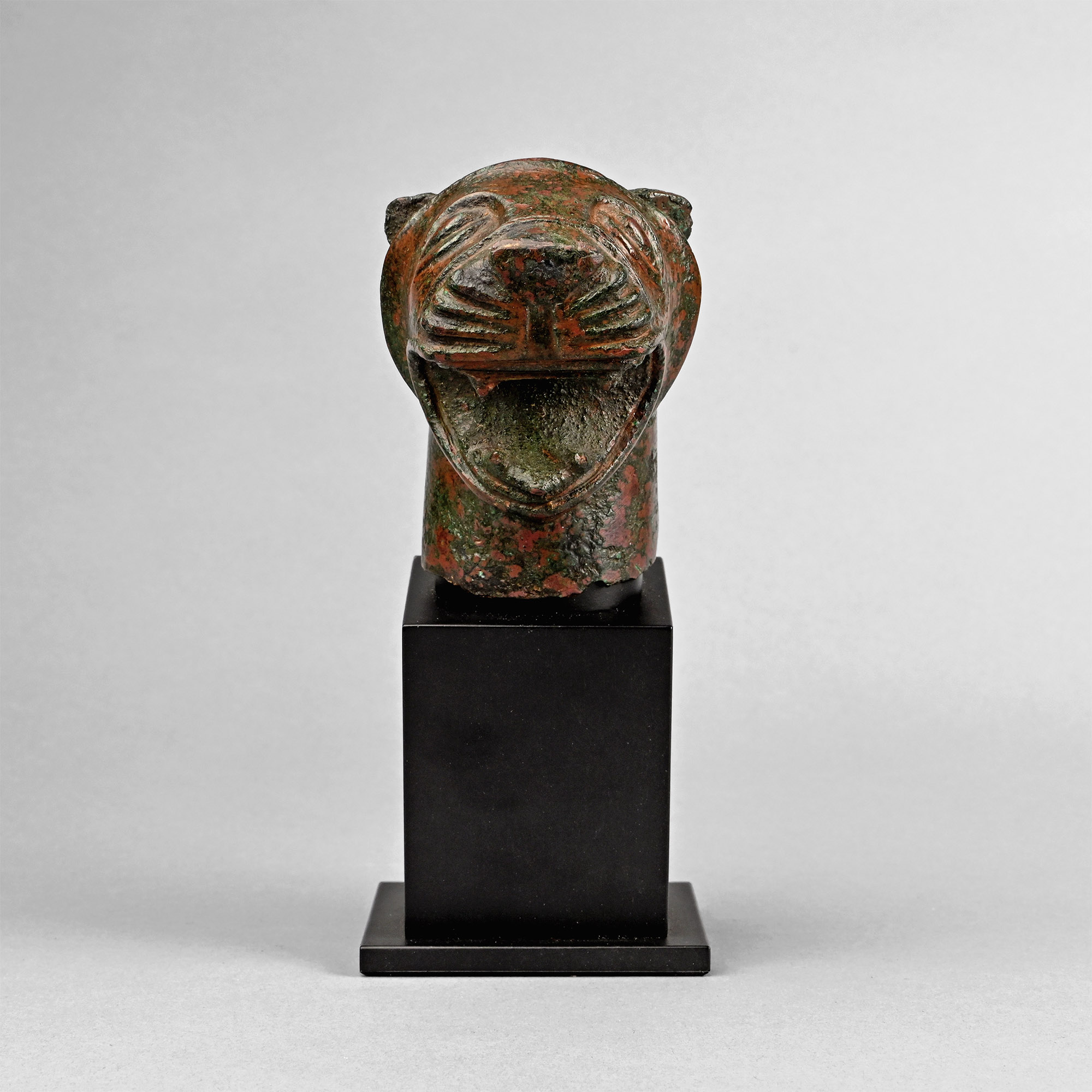
Etruscan Bronze Lion Head
CENTRAL ITALY, LATE 6TH CENTURY B.C.
6 7/8 in. (1.11 kg total, 17.5 cm including stand).
A decorative fitting with roaring mouth and protruding fangs and tongue, the whiskers depicted in raised radiating ridges, with lidded, elongated almond-shaped eyes and small, round ears; mounted on a custom-made display stand.
Provenancewith Christie’s, New York, 8 June 2001, no.58.
Donati collection, Lugano, prior to 1982.
Collection of Banca della Svizzera Italiana, Lugano, prior to 1986.
Formerly in the Bourgknecht collection, Switzerland.
Accompanied by Art Loss certificate no.S00123227.
This lot has been checked against the Interpol Database of stolen works of art and is accompanied by a search certificate number no.13230-249992.
Testimonianze d’arte Etrusca in collezioni private Ticinesi, collection of Banca della Svizzera Italiana, 1986, p.31, no.7.2, illus.
LiteratureCf. Curtis, D., 'The Barberini Tomb' in Memoirs of the American Academy in Rome, 1925, Vol. 5 (1925), pp. 9-52, pl.30, for a similar head of a lion; Canciani, F. and Von Hase, F.W., La tomba Bernardini di Palestrina, Rome, 1979, p.56, no.67; p.57, no.69, for parallels; Jucker, I., Italy of the Etruscans, The Israel Museum in Jerusalem, pp.290-291, no.387, for a head of a lion.
FootnotesThis head was probably, as was the parallel head of the Barberini Tomb, originally attached to a magnificent bronze cauldron. These large cauldrons of hammered bronze were realised with the heads and necks of two lions and two gryphons attached to the rim. The cauldrons were spherical in form and rested on a stand.
CONDITIONTimeLine Auctions follows a vetting process to ensure the authenticity and legality of all items, reinforcing our commitment to integrity and responsible trading. Each antiquity, antique, and coin lot undergoes thorough examination by a vetting committee of at least ten external specialists, professional trade association members, scientists, and archaeologists: Our Vetting Process
AUCTIONS:
TimeLine is a leading auction house specialising in antiquities, ancient art, collectables, natural history, coins, medals, and books. Our auctions offer museums, collectors, historians, and enthusiasts the opportunity to acquire unique and historically significant pieces.
LOT 0780
Etruscan Bronze Lion Head
Estimate £7,000 - 9,000€8,120 - 10,440 (for guidance only)$9,450 - 12,150 (for guidance only)
Opening Bid
£3,500 (EUR 4,060; USD 4,725) ‡+BP*
-
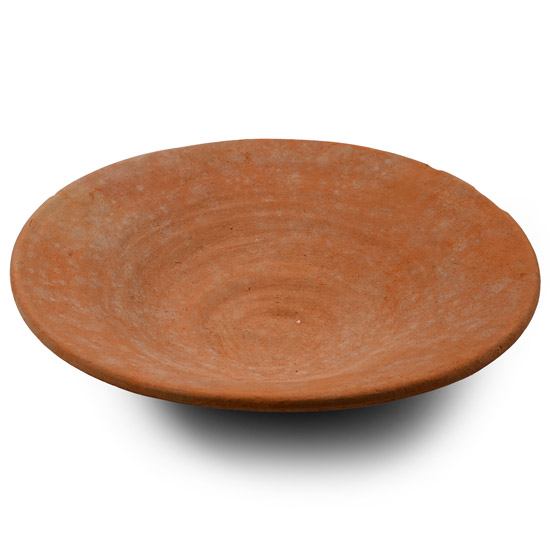
Parthian Terracotta Dish
2nd century B.C.-2nd century A.D.Estimate: £50 - 70 (+bp*)
Opening Bid: £5
Broad and shallow with squared edge to the rim. 501 grams, 20.4 cm
Acquired on the UK art market since the 1990s. From the property of a late Lincolnshire, UK, gentleman; thence by descent. -
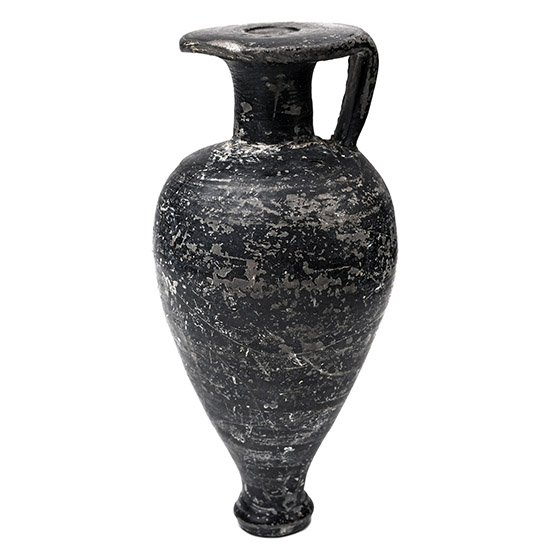
Etruscan Bucchero Terracotta Pointed Aryballos
6th century B.C.Estimate: £400 - 600 (‡+bp*)
Opening Bid: £180
Comprising a piriform body and a tubular neck with a wide rim, a strap handle to the rear; some chips and repair. 80 grams, 10.5 cm
Ex Prof. Kurt Alder, Riehen, acquired in September 1977; thence by descent. -
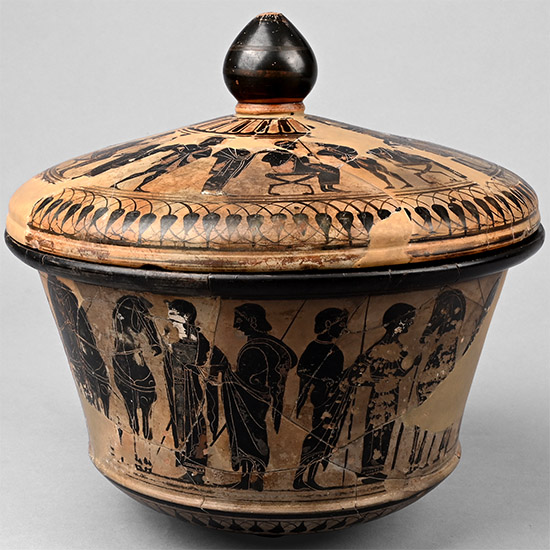
Greek Terracotta Black-Figure Pyxis with Chariot
Attic, 6th century B.C.Estimate: £30,000 - 40,000 (‡+bp*)
Opening Bid: £16,667
Squat vessel with rounded foot and carination with band of tendrils, flared sidewall with carination and rim, broad watchglass lid with central knop handle; blackware frieze to the sidewall, chariot with four horses and attendants carrying spears and dressed in chitons and himatia, among them a noblewoman dressed in a long chiton and chlamys; lid with frieze of profile figures seated on folding chairs with attendants and petitioners, and two women in long robes within a band of coiled tendrils; repaired and restored. 1.05 kg, 22.5 cm wide
Private collection, Mrs Lambelet, Neuchâtel, Switzerland, acquired before 1972; thence by descent. Private collection N.S., acquired in 2012. Accompanied by an academic report by Dr Raffaele D'Amato. This lot has been checked against the Interpol Database of stolen works of art and is accompanied by search certificate no.13223-249242.
Many Athenian vases depict a quadriga, often in racing or military scenes, but in this case, the depicted scene is peaceful and could be linked to a wedding. The painting can be divided into two scenes: the first, on the sides, is the bridal procession, where the bride is conducted in the chariot, which will bring her to the groom, accompanied by her father and relatives; the second, the lid painting, is where the nuptial feast is prepared, and the conversing guests are waiting for the bride.
