
Loading, please wait...
LOT 0649
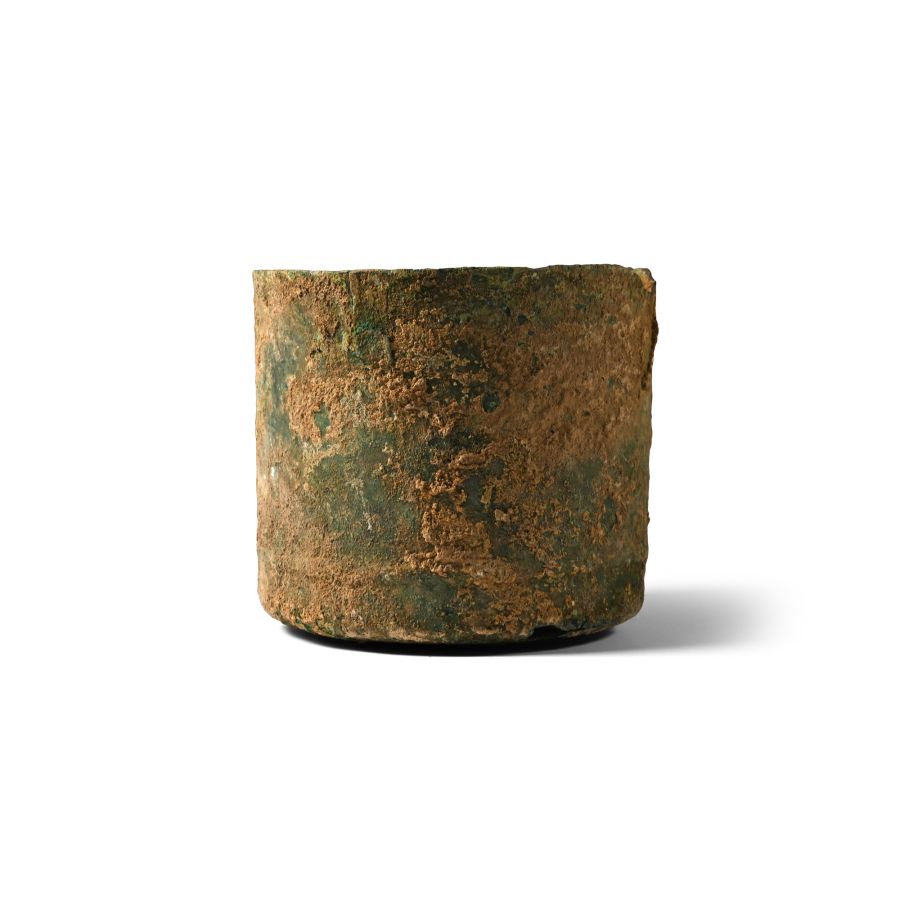
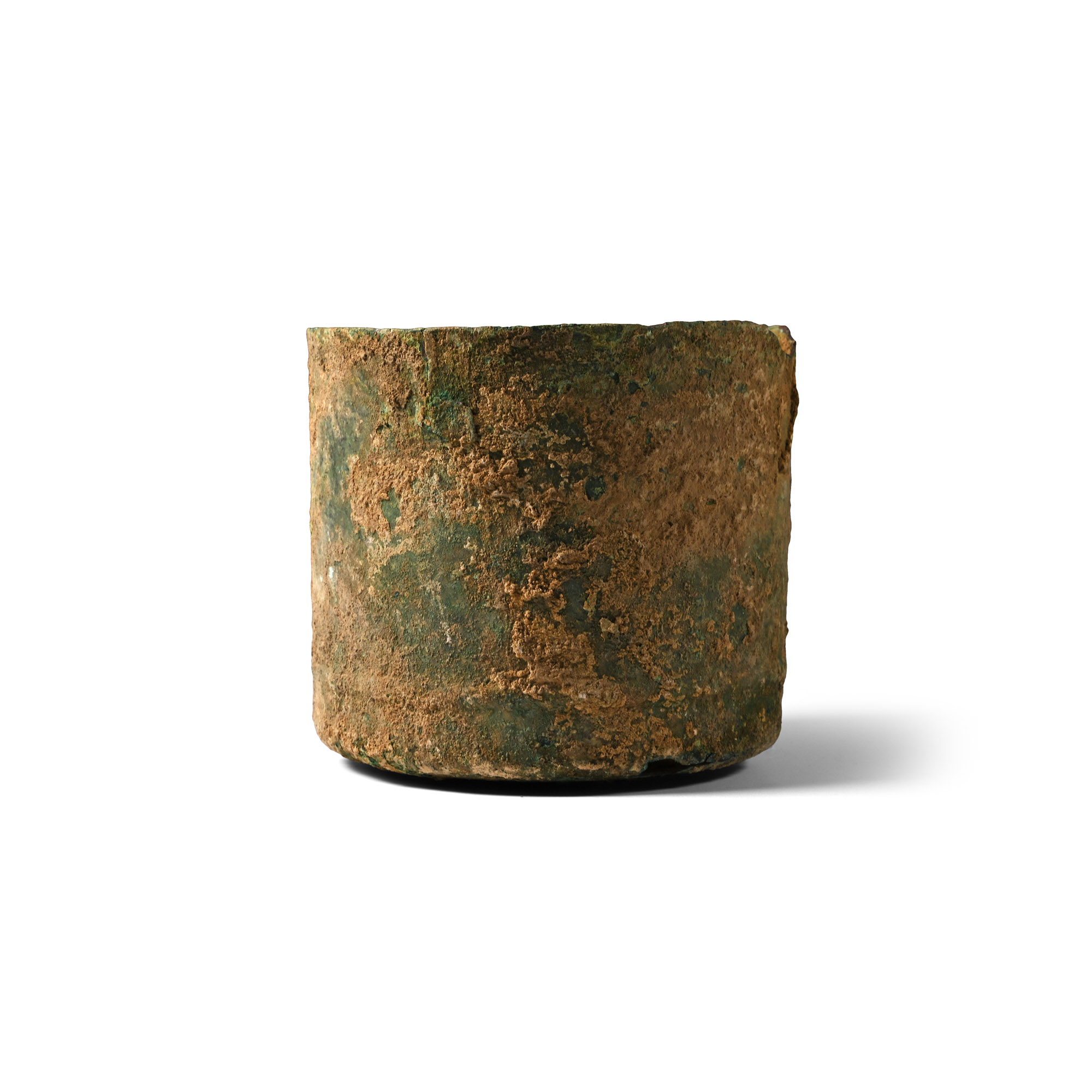
Etruscan Bronze Cup
7TH-6TH CENTURY B.C.
3 3/4 in. (137 grams, 94 mm wide).
With rounded base and cylindrical body gently tapering towards the top. [No Reserve]
ProvenanceEx London, UK, collections, 1990s-2000s.
This lot is accompanied by an illustrated lot declaration signed by the Head of the Antiquities Department, Dr Raffaele D'Amato.
Cf. for similar Richter, G.M.A., The Metropolitan Museum of Art, Greek, Etruscan and Roman Bronzes, New York, 1925, p.204, fig.541.
FootnotesSuch small cylindrical cups were destined for everyday use, and some bronze specimens of the same typology, were often engraved on their outer surface with groups of animals. A large variety of drinking-cups were in use among the ancients; Athenaeus in the eleventh book of his Deipnosophists gives a long list of names of such cups, but his descriptions are not sufficient to identify them with any known shapes; moreover, a great many appear to be fanciful names that had come into favour at the time.
CONDITIONTimeLine Auctions follows a vetting process to ensure the authenticity and legality of all items, reinforcing our commitment to integrity and responsible trading. Each antiquity, antique, and coin lot undergoes thorough examination by a vetting committee of at least ten external specialists, professional trade association members, scientists, and archaeologists: Our Vetting Process
AUCTIONS:
TimeLine is a leading auction house specialising in antiquities, ancient art, collectables, natural history, coins, medals, and books. Our auctions offer museums, collectors, historians, and enthusiasts the opportunity to acquire unique and historically significant pieces.
-
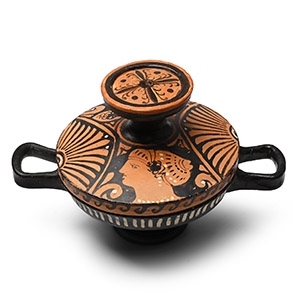
Greek Apulian Red-Figure Lekanis with Ladies of Fashion
South Italic, circa 4th century B.C.Sold for (Inc. bp): £845
With black-glazed body and matching lid decorated with two heads of ladies of fashion, palmettes between, radial lines on the knob handle and a wave-band around the rim; square strap handles at the shoulder. 249 grams, 16.5 cm wide
From the private collection of a Canadian gentleman living in Essex, UK, formed since the 1920s-circa 1990. Property of an Essex lady until the late 1990s; thence by descent. From the private collection of an Essex gentleman since the late 1990s. This lot is accompanied by an illustrated lot declaration signed by the Head of the Antiquities Department, Dr Raffaele D'Amato. -
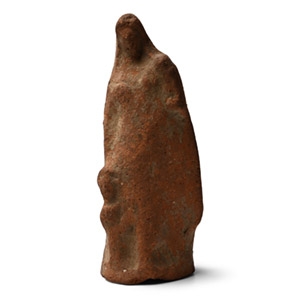
Graeco-Roman Terracotta Veiled Votive Figure
2nd-1st century B.C.Sold for (Inc. bp): £72
Tanagra-type robed female figure with child; vent to reverse, hollow underside. 190 grams, 13.6 cm
Acquired on the UK art market in the 1990s. From the Dr Ince collection, N.W. London, UK. This lot is accompanied by an illustrated lot declaration signed by the Head of the Antiquities Department, Dr Raffaele D'Amato. -
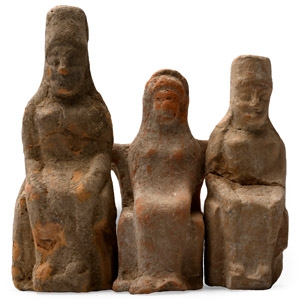
Archaic Greek Terracotta Seated Goddess Group
6th century B.C.Sold for (Inc. bp): £208
Each seated on a high-backed throne, wearing a polos headdress with two long braids falling from underneath the headdress, wearing a long chiton. 266 grams total, 9.5-11.7 cm
with H.A.C., Basel, prior 1999. This lot is accompanied by an illustrated lot declaration signed by the Head of the Antiquities Department, Dr Raffaele D'Amato.
