
Loading, please wait...
LOT 0067
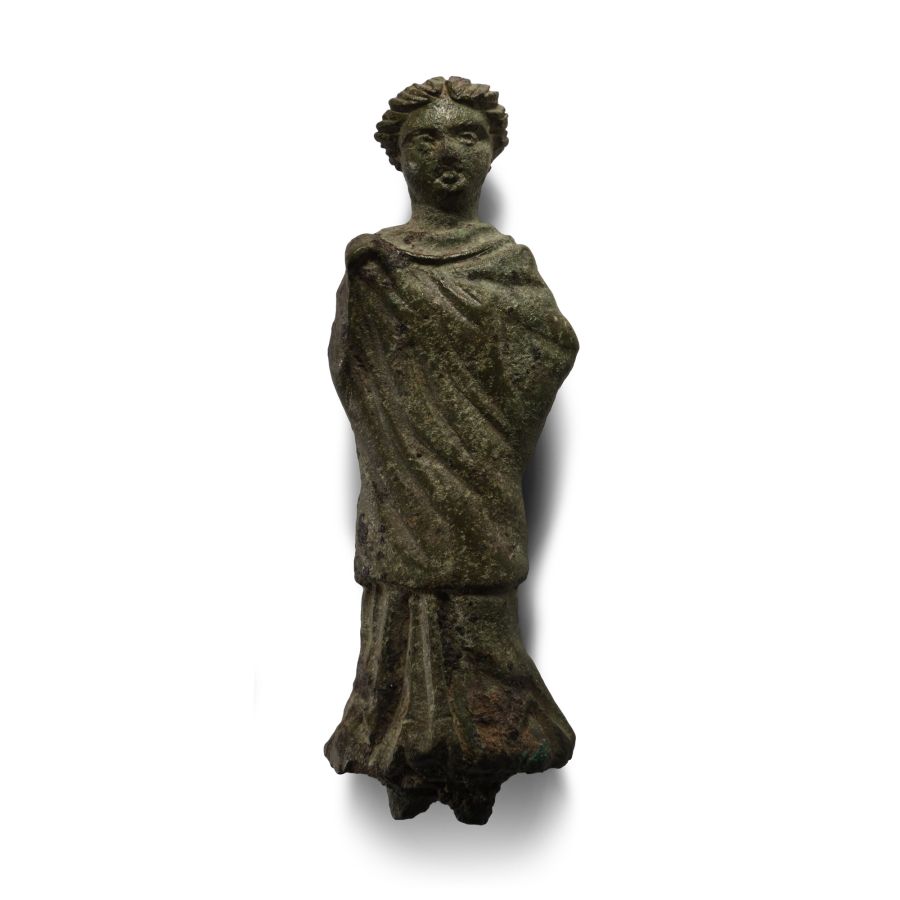
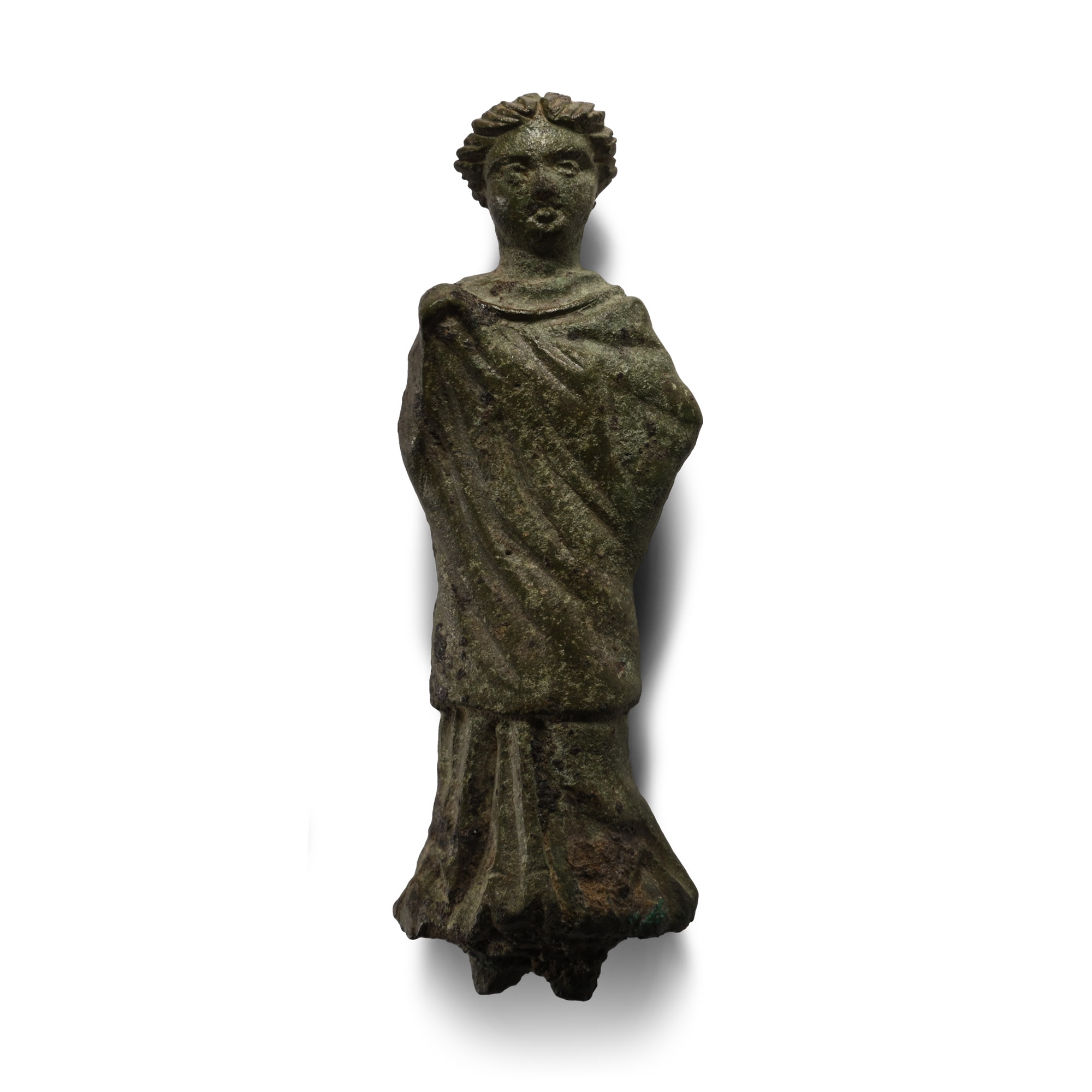
Etruscan Bronze Ceres Statuette
3RD-2ND CENTURY B.C.
2 3/4 in. (86 grams, 71 mm).
Female with hair drawn up in a chignon, palla wrapped tightly around the upper body hiding the right arm bent with the hand at the shoulder, lower hem of robe flared; fixing lug to underside.
ProvenanceAcquired in the mid 1980s-1990s.
Private collection, Switzerland, thence by descent.
Private collection, since the late 1990s.
This lot is accompanied by an illustrated lot declaration signed by the Head of the Antiquities Department, Dr Raffaele D’Amato.
This lot is accompanied by an illustrated lot declaration signed by the Head of the Antiquities Department, Dr Raffaele D'Amato.
Cf. Rolland, H., Bronzes Antiques de Haute Provence, Paris, 1965, item 143 (Fortuna) in similar robe; 203, Ceres or Pomona.
FootnotesThis is a figurine of a deity of difficult interpretation representing an ex-voto. This typology is widespread in the votive offerings of Etrusco-Roman sanctuaries, and by analogy with various statuettes could represent Ceres.
CONDITIONTimeLine Auctions follows a vetting process to ensure the authenticity and legality of all items, reinforcing our commitment to integrity and responsible trading. Each antiquity, antique, and coin lot undergoes thorough examination by a vetting committee of at least ten external specialists, professional trade association members, scientists, and archaeologists: Our Vetting Process
AUCTIONS:
TimeLine is a leading auction house specialising in antiquities, ancient art, collectables, natural history, coins, medals, and books. Our auctions offer museums, collectors, historians, and enthusiasts the opportunity to acquire unique and historically significant pieces.
LOT 0067
Etruscan Bronze Ceres Statuette
Estimate £700 - 900€810 - 1,040 (for guidance only)$950 - 1,220 (for guidance only)
-
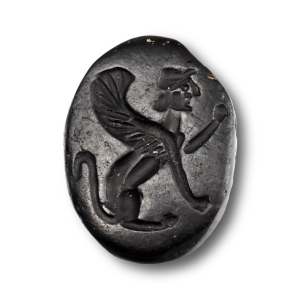
Phoenician Steatite Intaglio with Sphinx
8th-5th century B.C.Estimate: £400 - 600 (‡+bp*)
Opening Bid: £200
Intaglio sphinx sitting with one foreleg raised, arched wing to the back; supplied with a museum-quality impression. 3.52 grams, 17 mm
Acquired in the late 1980s. Private collection, since the late 1990s. This lot is accompanied by an illustrated lot declaration signed by the Head of the Antiquities Department, Dr Raffaele D'Amato. -
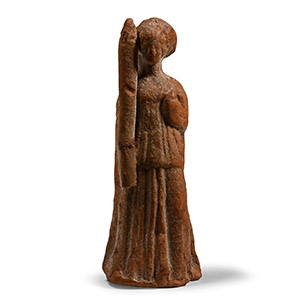
Greek Terracotta Goddess Figure
4th-3rd century B.C.Estimate: £500 - 700 (‡+bp*)
Opening Bid: £278
Tanagra type, hollow-formed with a void to the reverse, standing female in tiered robe wearing a diadem and with her hair drawn back, applied torch in her right hand. 18 grams, 12 cm
European art market. Acquired in Münich in 2012. European private collection. This lot is accompanied by an illustrated lot declaration signed by the Head of the Antiquities Department, Dr Raffaele D’Amato. This lot is accompanied by an illustrated lot declaration signed by the Head of the Antiquities Department, Dr Raffaele D'Amato. -
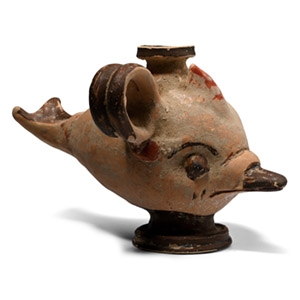
Greek Tarentine Jug in the Shape of a Dolphin
4th-3rd century B.C.Sold for (Inc. bp): £4,680
Hollow-formed as a stylised dolphin with trumpet-shaped filler hole above, ribbed loop handle to one side, socle base and scooped tail forming the spout. 170 grams, 14.6 cm
Acquired in 1992. Private collection, thence by descent. Private collection, since the late 1990s. This lot has been checked against the Interpol Database of stolen works of art and is accompanied by a search certificate number no.12855-241750. This lot has been cleared against the Art Loss Register database, and is accompanied by an illustrated lot declaration signed by the Head of the Antiquities Department, Dr Raffaele D'Amato.
