
Loading, please wait...
LOT 0048
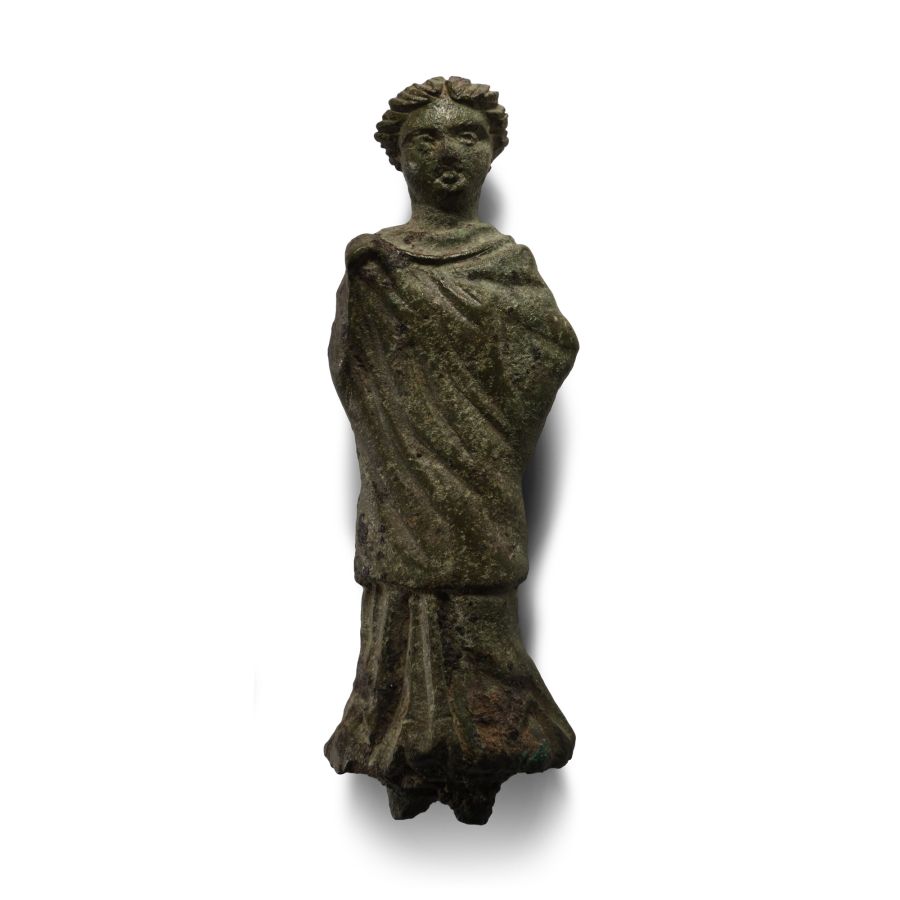
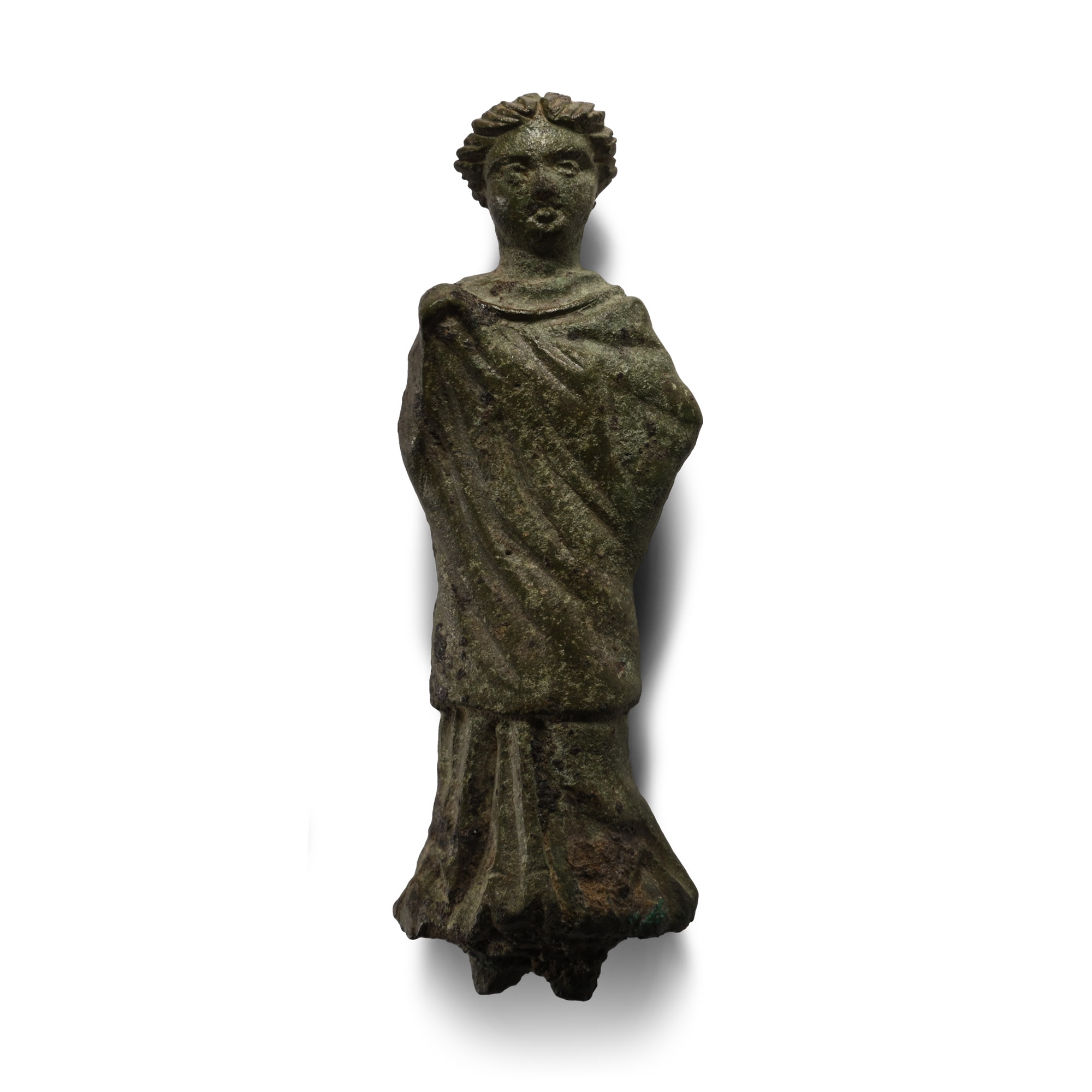
Etruscan Bronze Ceres Statuette
3RD-2ND CENTURY B.C.
2 3/4 in. (86 grams, 71 mm).
Female with hair drawn up in a chignon, palla wrapped tightly around the upper body hiding the right arm bent with the hand at the shoulder, lower hem of robe flared; fixing lug to underside.
ProvenanceAcquired in the mid 1980s-1990s.
Private collection, Switzerland, thence by descent.
Private collection, since the late 1990s.
This lot is accompanied by an illustrated lot declaration signed by the Head of the Antiquities Department, Dr Raffaele D’Amato.
Cf. Rolland, H., Bronzes Antiques de Haute Provence, Paris, 1965, item 143 (Fortuna) in similar robe; 203, Ceres or Pomona.
FootnotesThis is a figurine of a deity of difficult interpretation representing an ex-voto. This typology is widespread in the votive offerings of Etrusco-Roman sanctuaries, and by analogy with various statuettes could represent Ceres.
CONDITIONTimeLine Auctions follows a vetting process to ensure the authenticity and legality of all items, reinforcing our commitment to integrity and responsible trading. Each antiquity, antique, and coin lot undergoes thorough examination by a vetting committee of at least ten external specialists, professional trade association members, scientists, and archaeologists: Our Vetting Process
AUCTIONS:
TimeLine is a leading auction house specialising in antiquities, ancient art, collectables, natural history, coins, medals, and books. Our auctions offer museums, collectors, historians, and enthusiasts the opportunity to acquire unique and historically significant pieces.
LOT 0048
Etruscan Bronze Ceres Statuette
Estimate £800 - 1,000€930 - 1,160 (for guidance only)$1,080 - 1,350 (for guidance only)
-
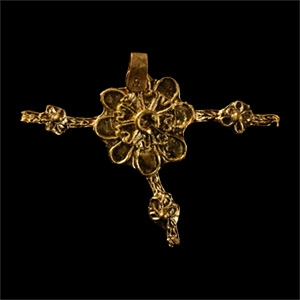
Greek Re-used Gold Filigree Cross Pendant
4th-1st century B.C.Sold for (Inc. bp): £98
A sheet gold pendant formed as an octofoil rosette with applied filigree detailing, three radiating ropework arms each with a rosette close to the end, suspension strap. 1.22 grams, 37.7 mm
Property of a professional collector; acquired before 1990. Property of a Californian, USA, collector. This lot is accompanied by an illustrated lot declaration signed by the Head of the Antiquities Department, Dr Raffaele D’Amato. -
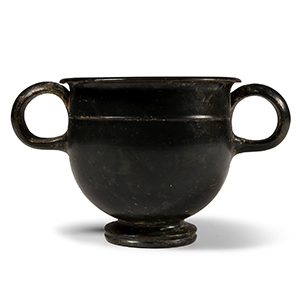
Greek Double-Handled Blackware Wine Cup
5th-3rd century B.C.Sold for (Inc. bp): £650
High-glazed, the body with an inverted bell shape, foot with channelled sidewall, two loop handles with carinated upper faces. 96 grams, 12.8 cm wide
Acquired in Europe before 2001. European collection. This lot is accompanied by an illustrated lot declaration signed by the Head of the Antiquities Department, Dr Raffaele D’Amato. -
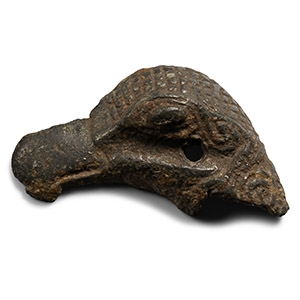
Scythian Bronze Eagle-Head Mount
5th-3rd century B.C.Sold for (Inc. bp): £46
With an almond-shaped eye and hooked beak, hatching above the head and pierced through the cheek. 9 grams, 40 mm
Ex North American private collection, 1970s-1990s. This lot is accompanied by an illustrated lot declaration signed by the Head of the Antiquities Department, Dr Raffaele D’Amato.
