
Loading, please wait...


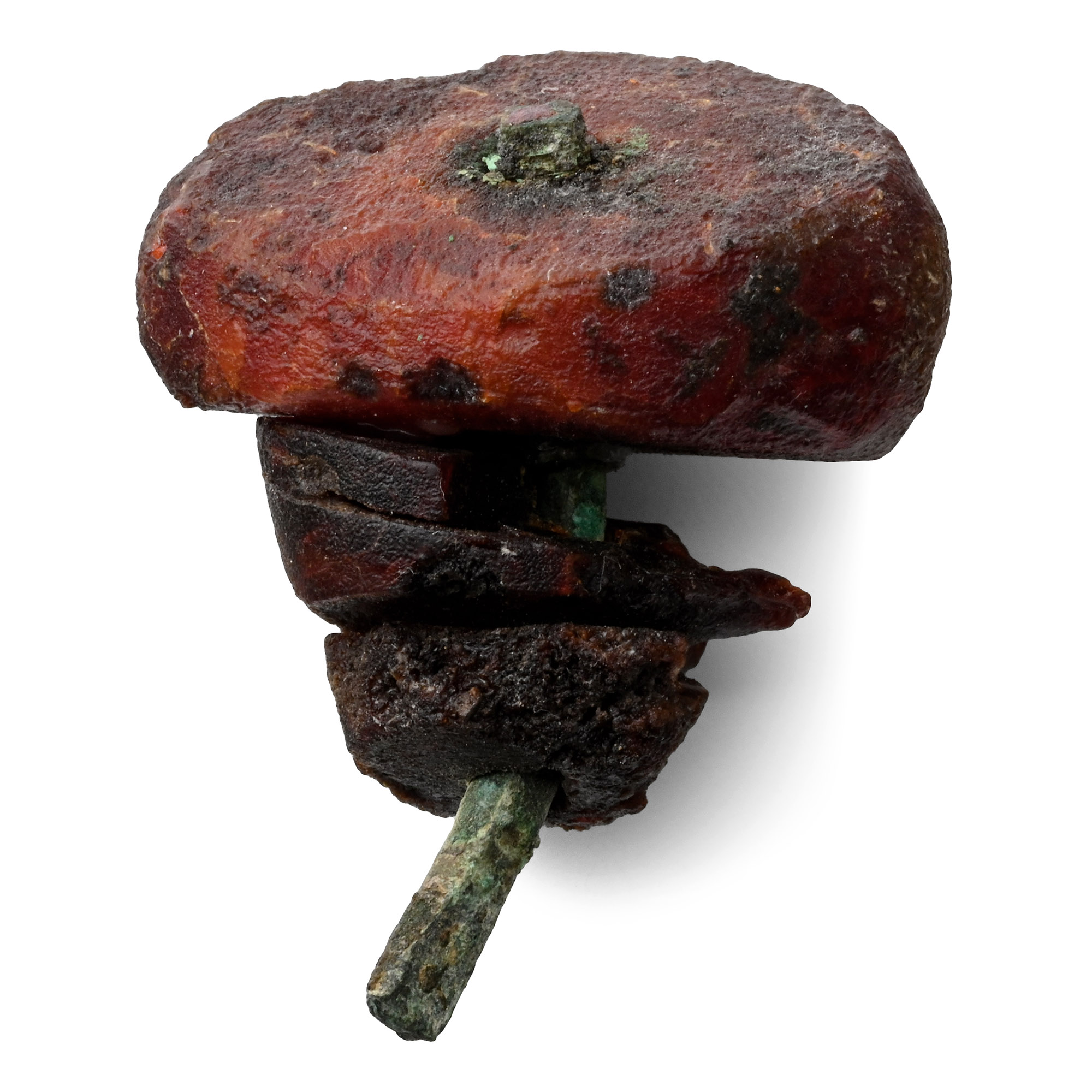
LOT 0779
Etruscan Bronze Bracelet Fragment with Three Amber Beads
ETRUSCAN OR ITALIC, 7TH-5TH CENTURY B.C.
1 7/8 in. (15.65 grams, 48 mm).
Comprising three irregular dark red amber beads on a square-section rod. [No Reserve]
ProvenanceFormerly in the Kuizenga collection, The Netherlands; the collection formed from the 1970s onwards.
Acquired from Helios Gallery Antiquities, Wiltshire, UK.
Property of a North Lincolnshire, UK, gentleman.
Accompanied by a copy of the Helios Gallery Antiquities certificate of authenticity with stock no.H3955x6.
TimeLine Auctions follows a vetting process to ensure the authenticity and legality of all items, reinforcing our commitment to integrity and responsible trading. Each antiquity, antique, and coin lot undergoes thorough examination by a vetting committee of at least ten external specialists, professional trade association members, scientists, and archaeologists: Our Vetting Process
AUCTIONS:
TimeLine is a leading auction house specialising in antiquities, ancient art, collectables, natural history, coins, medals, and books. Our auctions offer museums, collectors, historians, and enthusiasts the opportunity to acquire unique and historically significant pieces.
LOT 0779
Etruscan Bronze Bracelet Fragment with Three Amber Beads
Estimate £70 - 90€81 - 104 (for guidance only)$95 - 122 (for guidance only)
Opening Bid
£5 (EUR 6; USD 7) +BP*
-
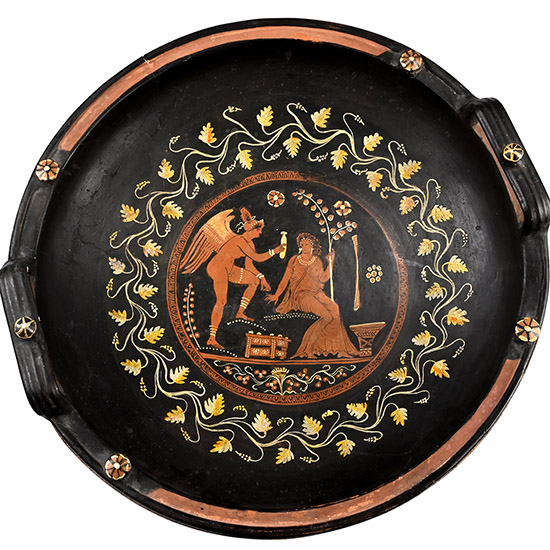
Very Large Greek Terracotta Kylix with Mythological Scene Attributed to the Darius Painter and His Circle
4th century B.C.Estimate: £20,000 - 30,000 (‡+bp*)
Opening Bid: £10,000
Featuring a monumental shallow bowl with two strap handles on the rim and a low foot; the inside of the bowl with a central scene featuring a nude winged male figure offering a lekythos to the woman seated before him; the woman dressed in a chiton and wearing a double-row necklace, large earrings and a diadem indicated by pellets, holding a double branch with leaves in her left hand; a low altar on the foreground and foliate and floral decoration beneath the scene; the scene enclosed within a painted grapevine border; four raised conical bosses on the rim and one on top of each handle; the lower part of the rim decorated with ovules; underside with a band of Greek key motifs and large palmettes on the sides, Side A: mythological scene with a satyr standing on the left, a seated woman at the centre holding a wreath and an open cista, her head turned towards another woman behind her, holding a fan and a ritual object in her hands; Side B: a draped female on the left, holding a stalk and a cista, advancing to the left while gazing back towards an advancing nude winged figure; restored. 3.1 kg, 49.5 cm wide
Private collection, South of France, acquired in 1999. Accompanied by a printed copy of the Spanish cultural export licence no.1775-3178156. Accompanied by a copy of a thermoluminescence report issued by Alliance Science Art, no.612151. Accompanied by an academic report by Dr Raffaele D'Amato. This lot has been checked against the Interpol Database of stolen works of art and is accompanied by search certificate no.13460-261208.
The intricate designs and stylistic features of this kylix suggest it may belong to the followers of the renowned Darius Painter. The Darius Painter, active in Apulia (modern-day Southern Italy) during the late 4th century B.C., is known for his elaborate and finely detailed red-figure pottery. His works often depict complex mythological scenes and demonstrate a high level of artistic sophistication and technical skill. Key features that align this vessel with the Darius Painter and his workshop include the detailed mythological scene in the central medallion, the refined use of additional white and yellow pigments to highlight key elements, and the balanced composition of figures and decorative motifs. The presence of Eros and other mythological elements is also characteristic of the themes favoured by the Darius Painter. -
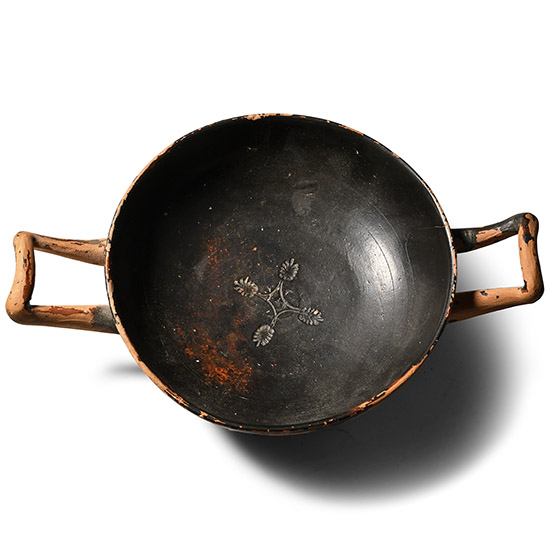
Greek Black-Glazed Kylix with Floral Design
Etruscan, circa 5th century B.C.Estimate: £200 - 300 (+bp*)
Opening Bid: £5
Comprising a low foot of rare profile; four interconnected palmettes to the tondo; concentric rib on the interior; looped handles; old collector's ticket: 'Etruscan black pottery squat kylix with two handles. Incised in the tondo are four vine leaves. Found at Gervetei. Fifth century BC. Bought in Rome, Via del Populo, September 1964'. 169 grams, 20.1 cm wide
From the private collection of Peter Clayton, FCILIP, Dip, Arch, FSA, FRNS, Hemel Hempstead, Hertfordshire, UK; formed since the late 1950s. Accompanied by an old handwritten identification card written by Peter Clayton. -
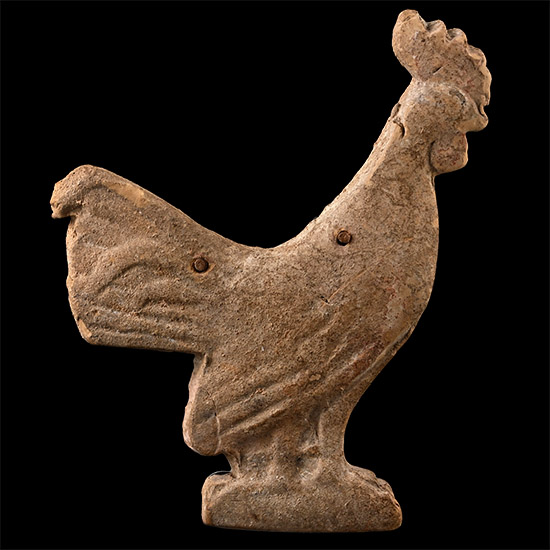
Greek Terracotta Votive Rooster
5th century B.C.Estimate: £300 - 400 (‡+bp*)
Opening Bid: £135
Modelled as a rooster in profile with a curved neck and rich plumage to the tail, incised feather decoration to the body; mounted on a custom-made stand. 66 grams total, 11.4 cm including stand
Ex Belgian collection. with Bonhams London, Auction 16 May 2002, no.570. Acquired by the current owner from the above.
