
Loading, please wait...
LOT 0644
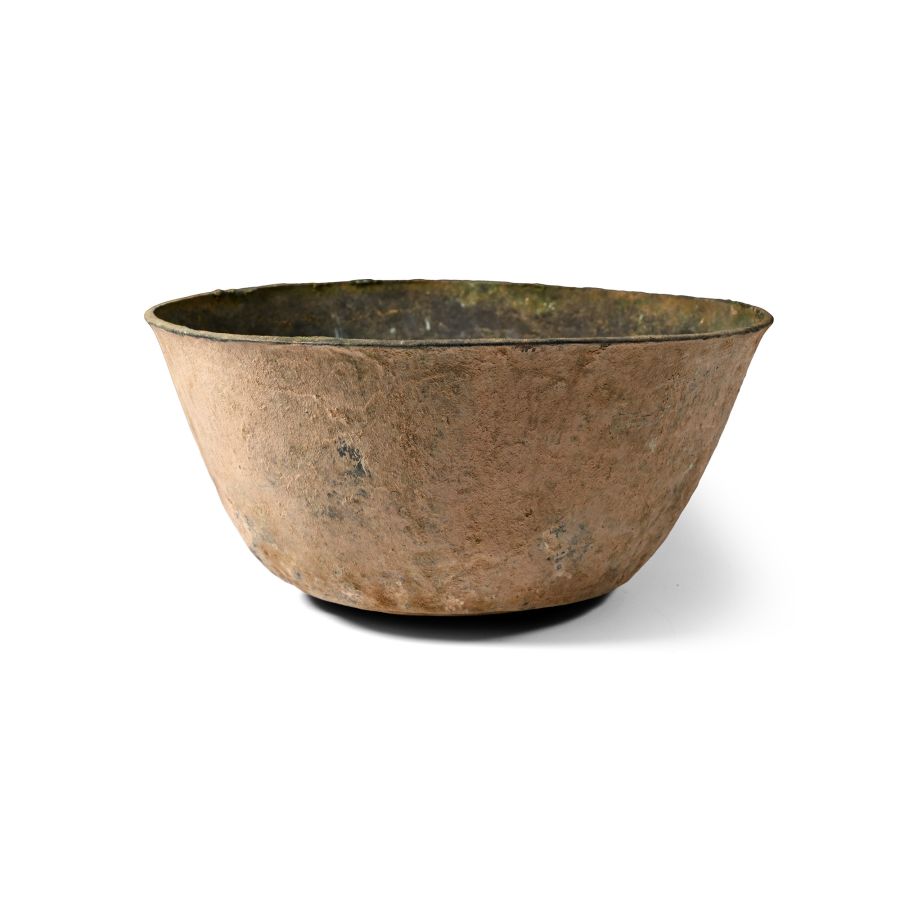
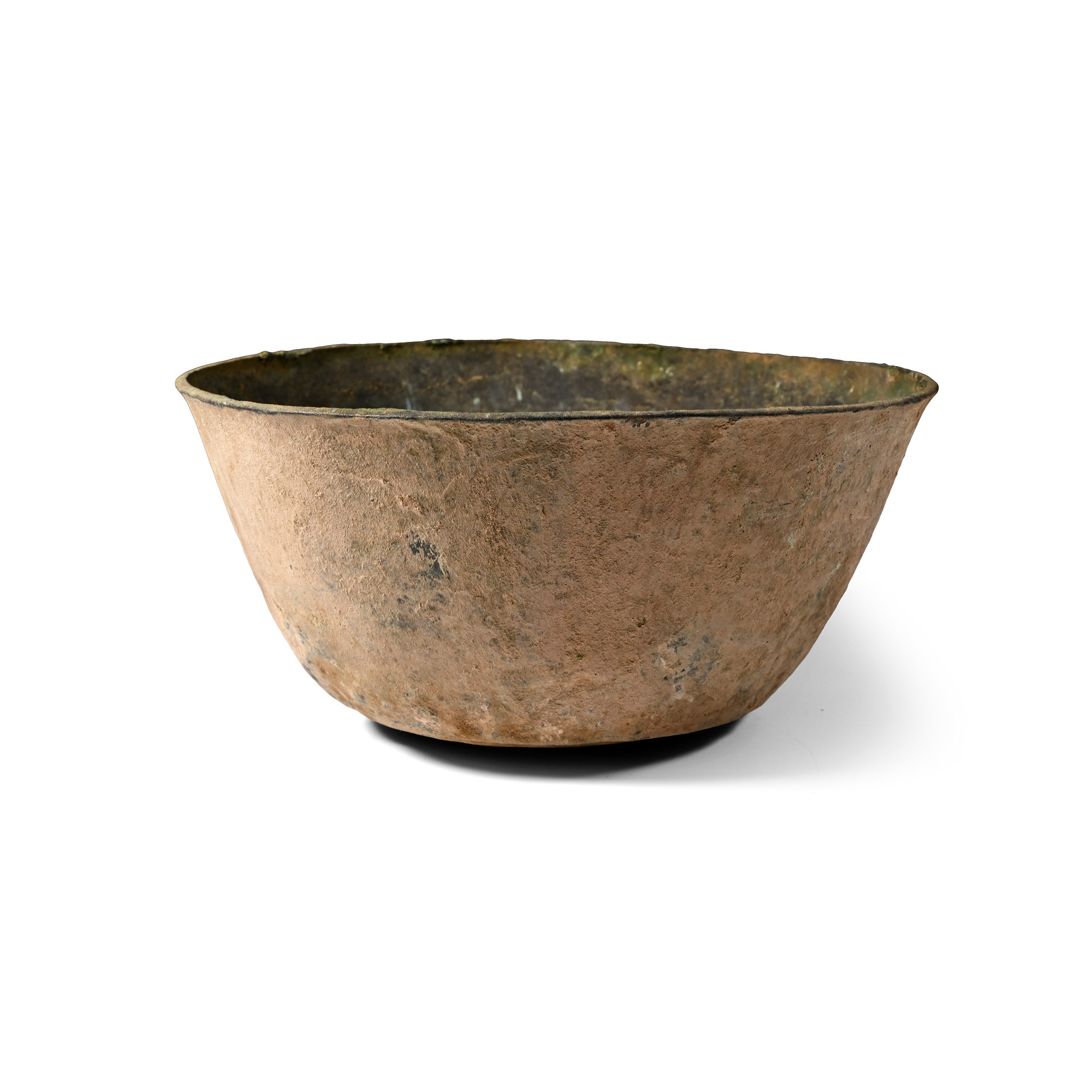
Etruscan Bronze Bowl
750-730 B.C.
6 1/2 in. (197 grams, 16.6 cm).
A deep bowl with out-turned rim, convex base with concentric ring detailing. [No Reserve]
ProvenanceEx London, UK, collections, 1990s-2000s.
This lot is accompanied by an illustrated lot declaration signed by the Head of the Antiquities Department, Dr Raffaele D'Amato.
Cf. for a similar example in silver Torelli, M., Gli Etruschi, Monza, 2000, p.160.
FootnotesIn the necropolises of Southern Etruria, around the second half of the 8th century B.C., new technologies were used, which also involved metalworking. Alongside simple bronze cups intended for everyday use, similar magnificent examples containing a flourish of impressed or engraved geometric motifs were made.
CONDITIONTimeLine Auctions follows a vetting process to ensure the authenticity and legality of all items, reinforcing our commitment to integrity and responsible trading. Each antiquity, antique, and coin lot undergoes thorough examination by a vetting committee of at least ten external specialists, professional trade association members, scientists, and archaeologists: Our Vetting Process
AUCTIONS:
TimeLine is a leading auction house specialising in antiquities, ancient art, collectables, natural history, coins, medals, and books. Our auctions offer museums, collectors, historians, and enthusiasts the opportunity to acquire unique and historically significant pieces.
-
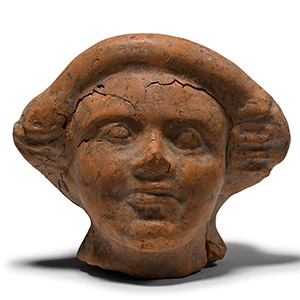
Hellenistic Terracotta Head of a Woman
3rd-1st century B.C.Sold for (Inc. bp): £780
Hollow-formed with flared neck, moulded face with shallow lentoid eyes, snub nose and wide mouth with enigmatic smile; band of hair framing the face. 499 grams, 12.3 cm wide
Acquired in the mid 1980s-1990s. Private collection, Switzerland, thence by descent. Private collection, since the late 1990s. This lot is accompanied by an illustrated lot declaration signed by the Head of the Antiquities Department, Dr Raffaele D’Amato. This lot is accompanied by an illustrated lot declaration signed by the Head of the Antiquities Department, Dr Raffaele D'Amato. -
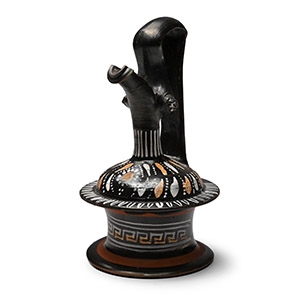
Greek Apulian Blackware Epichysis
South Italic, circa 4th century B.C.Sold for (Inc. bp): £546
With spool base, domed upper face, tall neck with spout and strap handle to the rear; the spool with meander band in cream and white, the upper face with frond pattern in cream and white, parallel vertical strokes to the base of the spout. 183 grams, 14.5 cm
From the private collection of a Canadian gentleman living in Essex, UK, formed since the 1920s-circa 1990. Property of an Essex lady until the late 1990s; thence by descent. From the private collection of an Essex gentleman since the late 1990s. This lot is accompanied by an illustrated lot declaration signed by the Head of the Antiquities Department, Dr Raffaele D'Amato. -
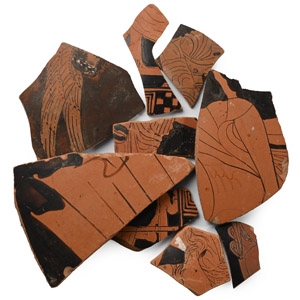
Attic Pottery Collection
4th century B.C.Sold for (Inc. bp): £572
Each showing various decorative motifs including one with the winged figure of Eos, and other images of torsos of men and women. 53 grams total, 26-76 mm
From a deceased estate, UK. Acquired on the UK art market. This lot is accompanied by an illustrated lot declaration signed by the Head of the Antiquities Department, Dr Raffaele D'Amato.
These fragments show the indebtedness or South Italian vase-makers to their colleagues in mainland Greece, which later developed into one of the most dominant shapes in Apulian red-figure while, at the same time, in Athens, these subjects became less popular by 380 B.C.
