
Loading, please wait...
LOT 0539
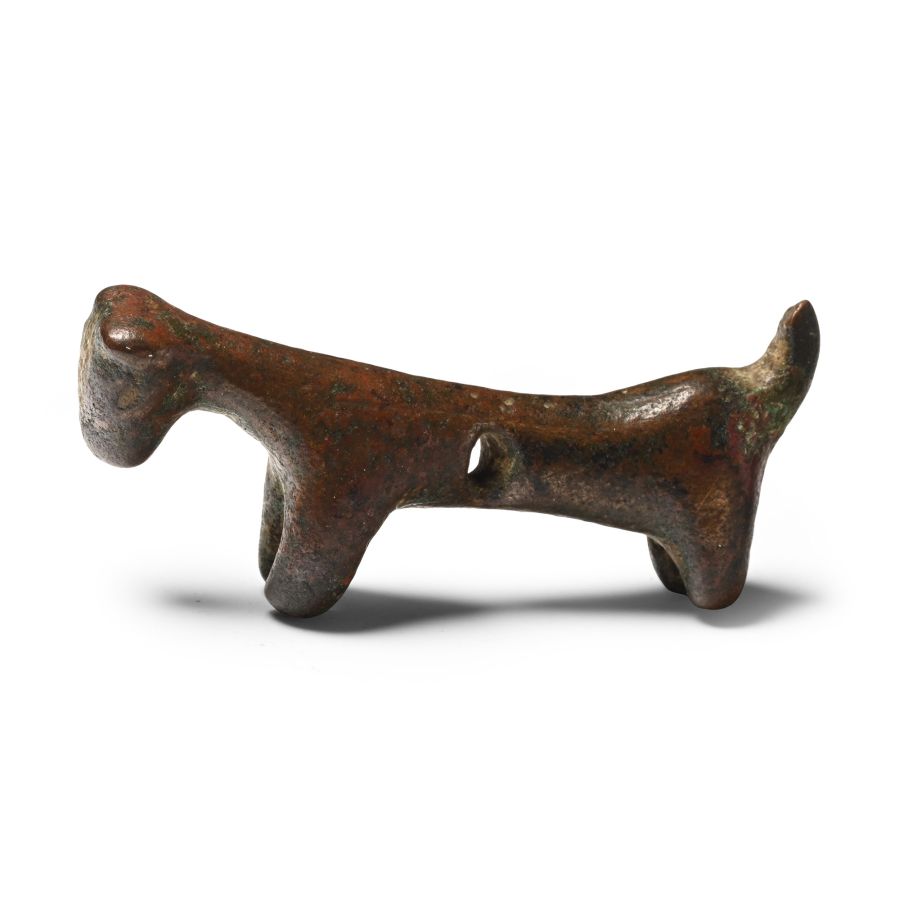
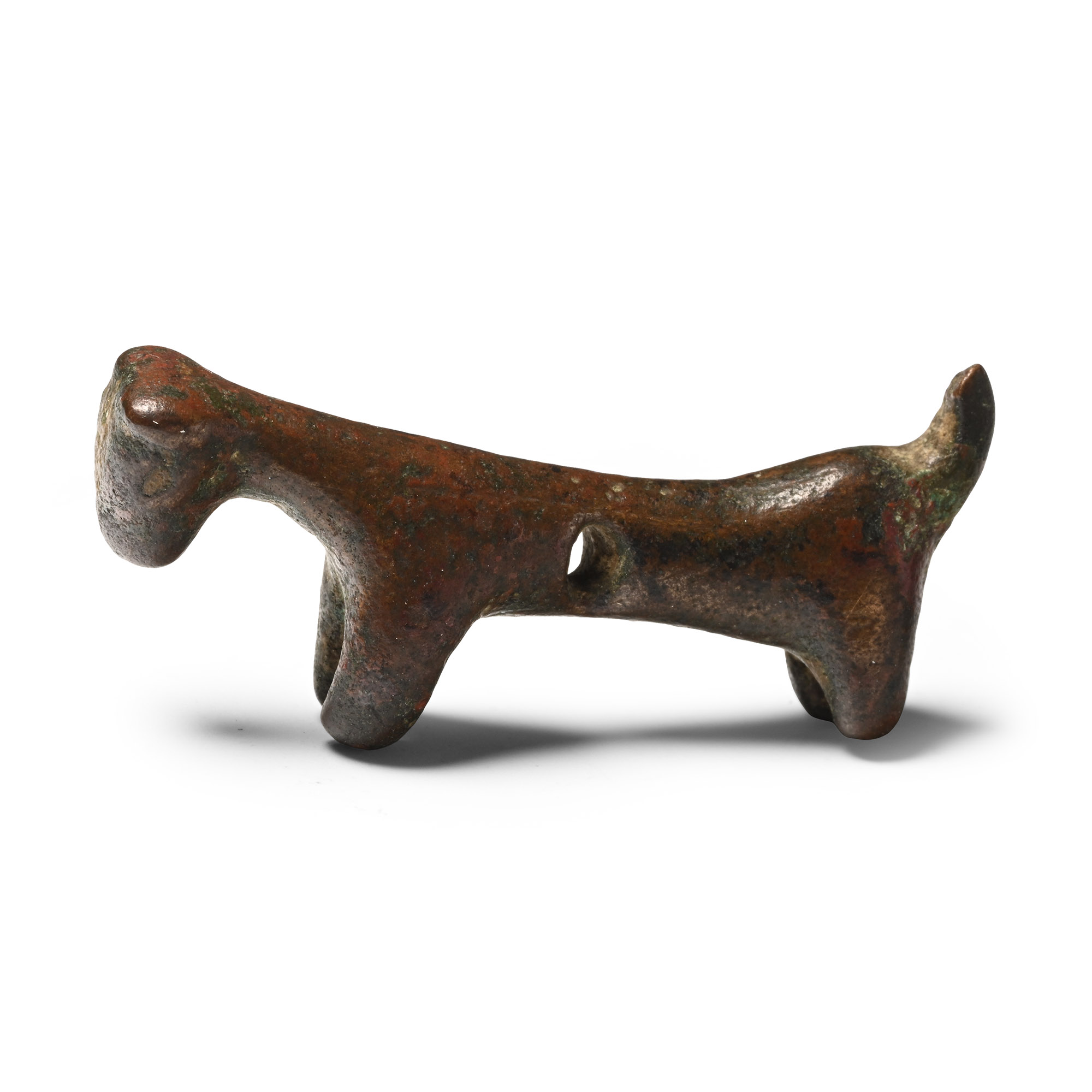
Etruscan Bronze Animal Figure
CIRCA 6TH CENTURY B.C.
1 3/4 in. (17 grams, 44 mm).
Modelled with an elongated body and raised tail, a small head with pricked ears, and pierced through the body. [No Reserve]
ProvenanceFrom the private collection of a European gentleman (1942-2024), formed since the 1970s.
CONDITIONTimeLine Auctions follows a vetting process to ensure the authenticity and legality of all items, reinforcing our commitment to integrity and responsible trading. Each antiquity, antique, and coin lot undergoes thorough examination by a vetting committee of at least ten external specialists, professional trade association members, scientists, and archaeologists: Our Vetting Process
AUCTIONS:
TimeLine is a leading auction house specialising in antiquities, ancient art, collectables, natural history, coins, medals, and books. Our auctions offer museums, collectors, historians, and enthusiasts the opportunity to acquire unique and historically significant pieces.
-
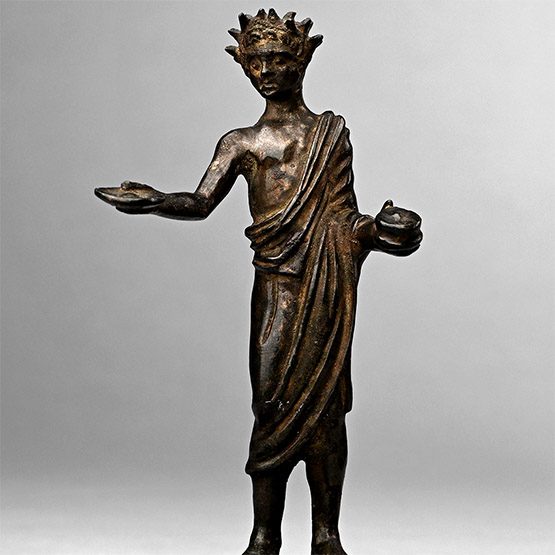
Etruscan Bronze Votive Figure of Genius Sacrificulus
6th-5th century B.C.Sold for (Inc. bp): £1,560
Depicting a ‘genius’ making a sacrifice, his head surrounded by a radiate crown or a wreath of laurel leaves arranged in rays; bare-chested with a cloak (tebenna) falling over his left shoulder, covering his back and resting on his left arm, enveloping his legs to below the knee; holding a patera in his right hand and an acerra in his left; accompanied by a display stand. 189 grams, 12.1 cm (367 grams total, 13.4 cm high including)
Anne Betgoner, Paris, by descent. French private collection, acquired in the early 20th century. Acquired from the above by the present owner. Private collection, UK. This lot has been checked against the Interpol Database of stolen works of art and is accompanied by a search certificate number no.13235-251199.
The figure represents a genius dressed as a priest according to the Etruscan tradition. He is celebrating a sacrifice by offering to the gods with a patera of precious liquids and perfumes, kept in the acerra or pyxis. Acerra was the name given to the casket in which the incense intended for sacrifices was placed (arcula turalis). A servant carried it to the altar, and the granules from the casket were scattered on the flames (acerra libare). -
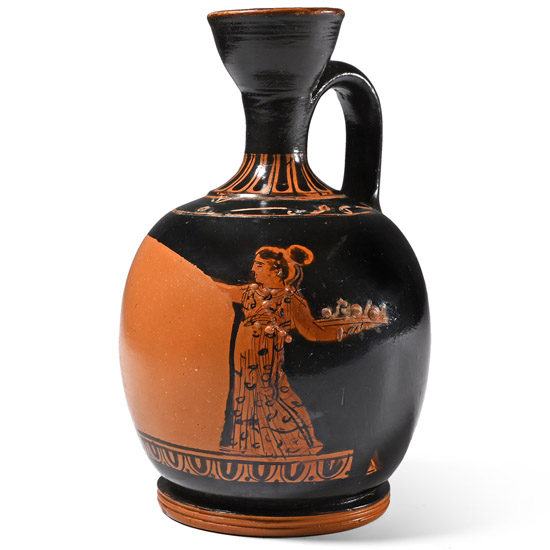
Greek Red-Figure Squat Lekythos Attributed to the Meidian Painter
Attic, circa 420-400 B.C.Sold for (Inc. bp): £715
Comprising a bulbous body with narrow neck and handle to the rear; radiating petals on the neck with a band of volute scrolls below, the body showing a female in a dynamic pose, dressed in an elaborate long dress and holding a plate of fruit with her left hand, a seated female before her; attributed to the Meidian Painter; some restoration. 95 grams, 10.9 cm
Ex Prof. Dr Hans (1918-1984) and Dr Ines (1922-2013) Jucker, classical archaeologists, Bern, Switzerland. with Galerie Rhéa, Zurich, Switzerland. This lot has been checked against the Interpol Database of stolen works of art and is accompanied by a search certificate number no.12645-236462.
Dancing women are a characteristic of the Meidian Painter. They are depicted as young women, wearing Doric costumes, earrings, pearls surmounting diadems, and golden bracelets, holding a patera and (probably originally here too) a thimiaterion. -
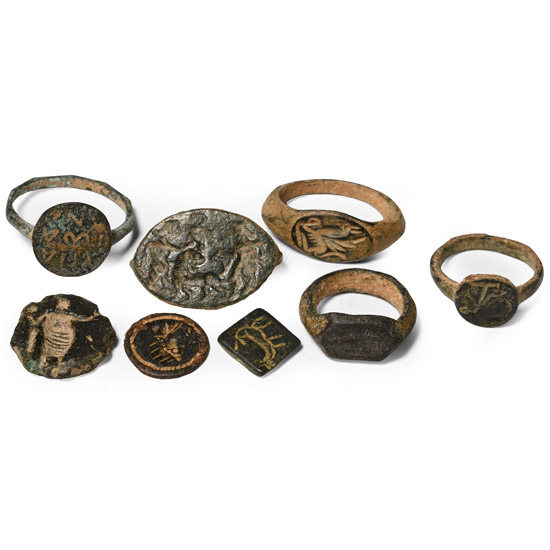
Greek, Roman and Western Asiatic Bronze Ring and Bezel Collection
2nd century B.C.-12th century A.D.Sold for (Inc. bp): £111
Including ellipsoid, discoid and vesica types with various motifs. 24.8 grams total, 10-25 mm
From the collection of a gentleman, acquired on the London art market in the 1990s.
