
Loading, please wait...
LOT 0370
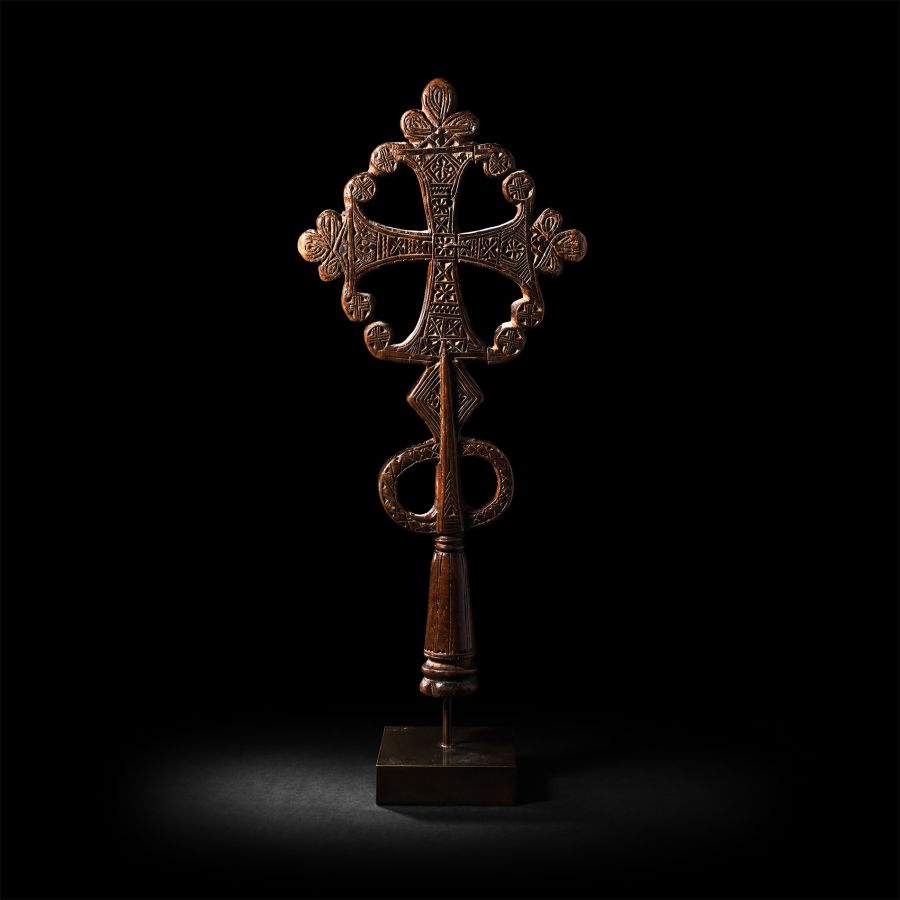
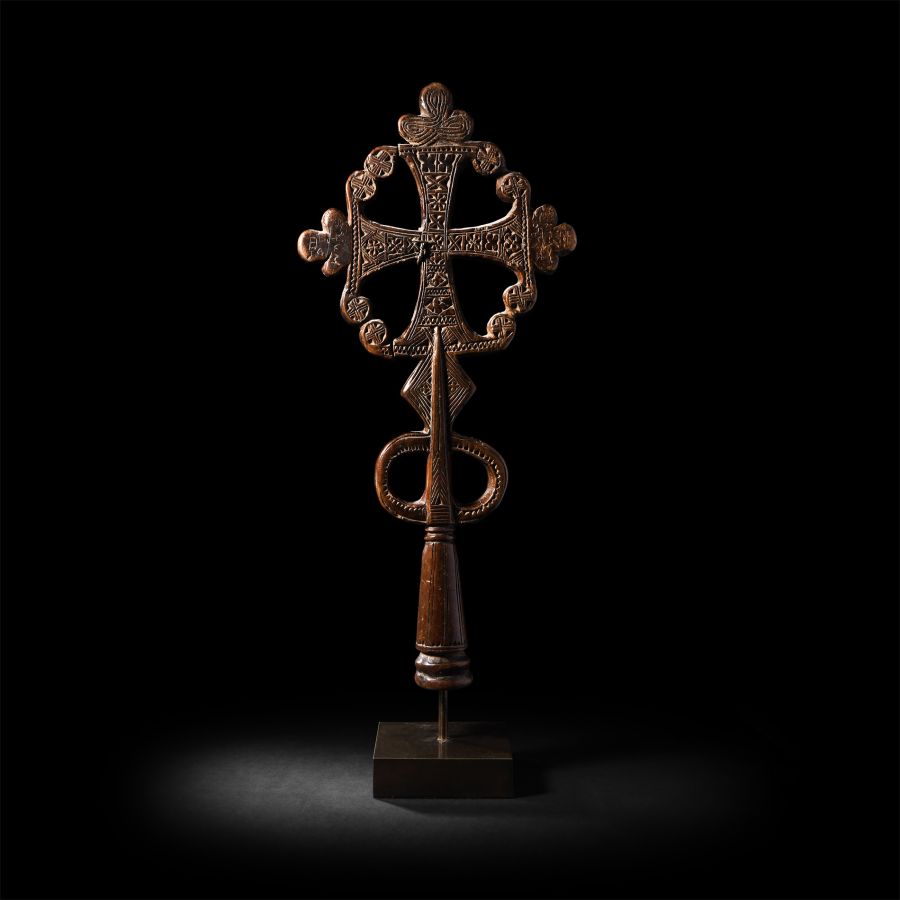
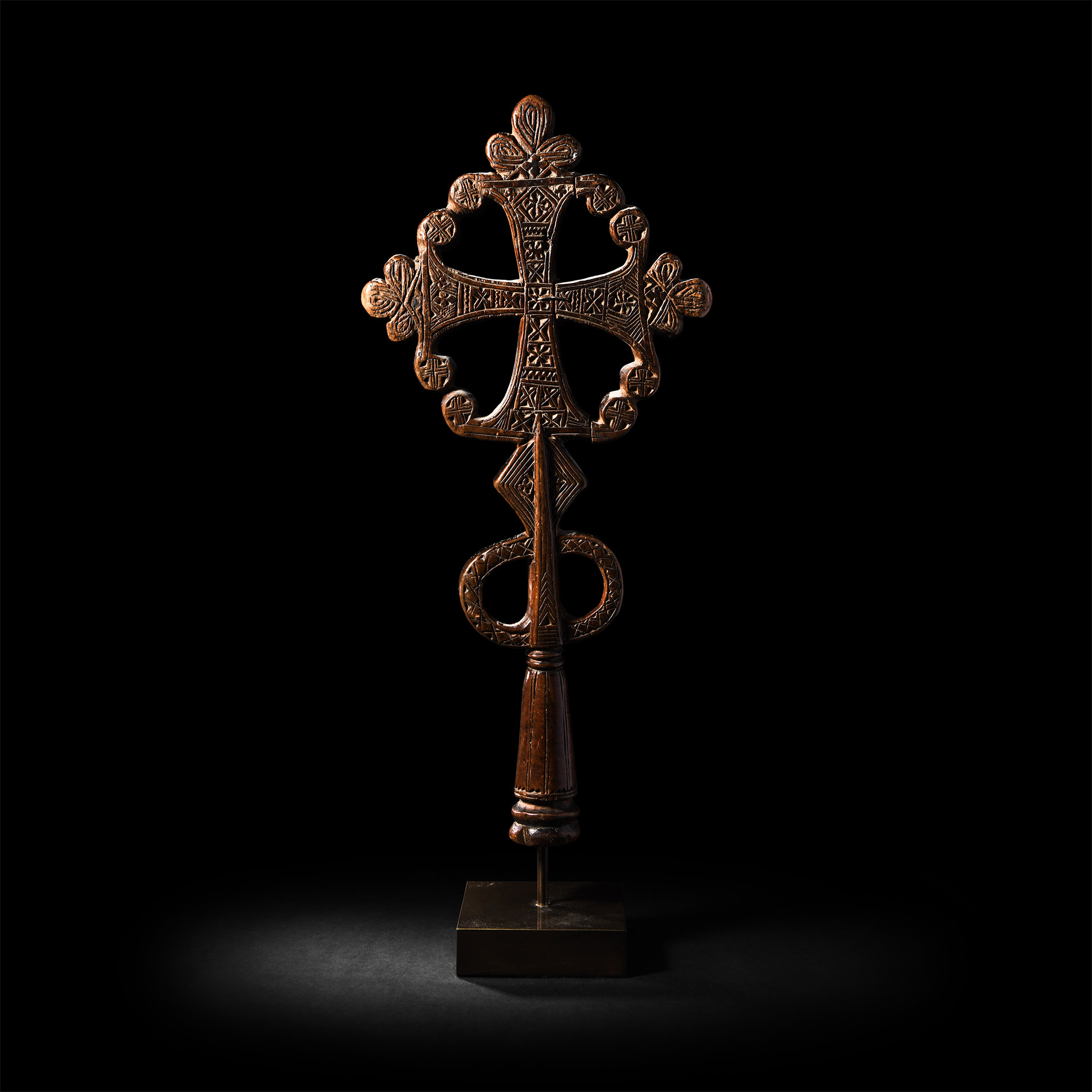
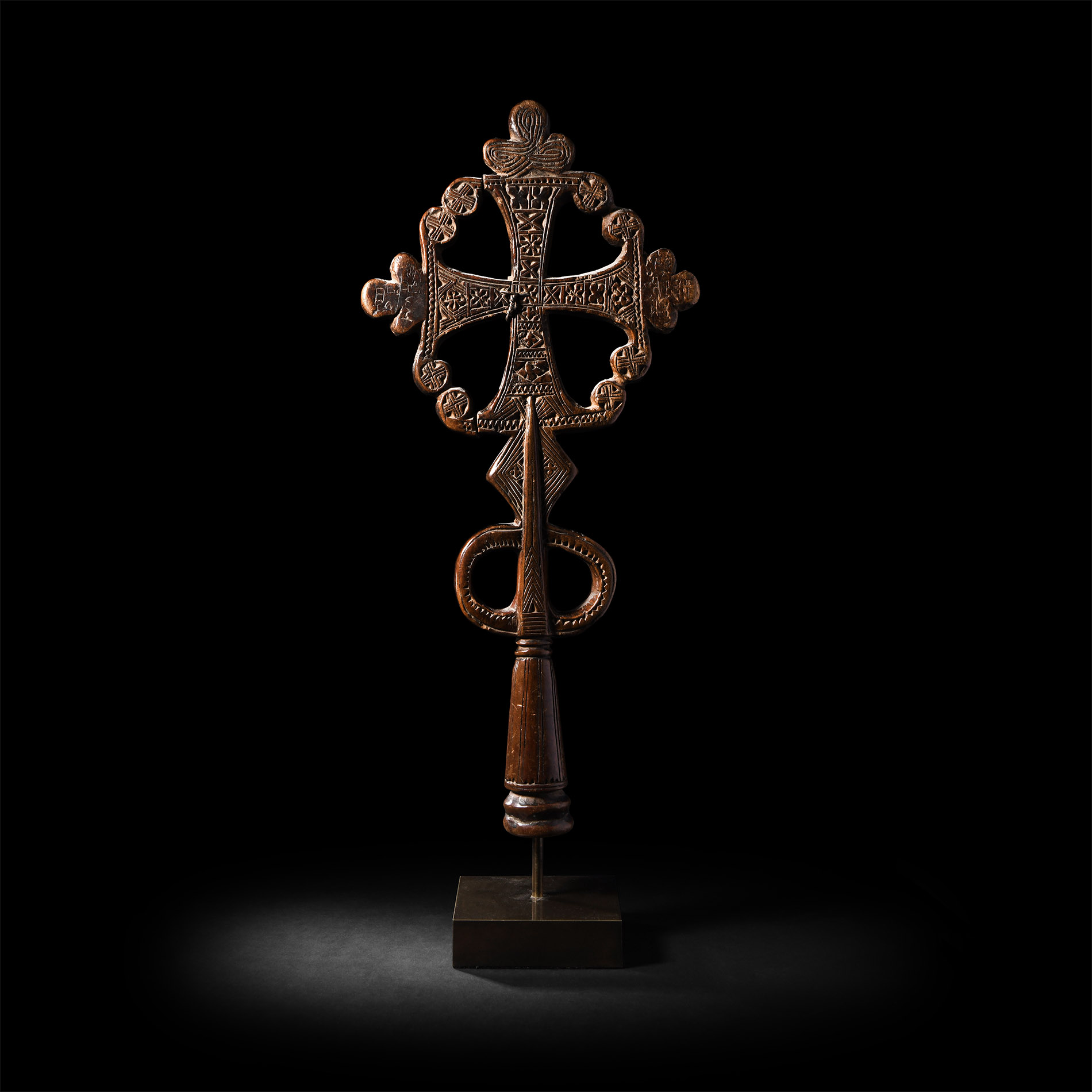
Ethiopian Processional Cross
17TH-18TH CENTURY A.D.
16 1/2 in. (19 1/4 in.) (600 grams, 42 cm high (49cm high including stand)).
A bifacial wooden Qäqwami Mäsqäl processional cross, three-lobed extremities on three sides, decorated with geometric motifs representing crosses of different types, supported by a lanceolate shaft with two round openwork openings; socketted shaft with vertical grooves and fitted with a double horizontal groove; inscriptions on two of the lobed sides of the cross; accompanied by a custom-made display stand.
ProvenanceAcquired on the London art market, 2003.
UK private collection.
See Korabiewicz, W., The Ethiopian cross, Addis Ababa, 1973, fig.102, for similar.
FootnotesThe large wooden crosses are often used by ddbtdras, who are unordained members of the Orthodox Ethiopian clergy, for their liturgical dance. In the countryside, one or two of these crosses are kept on the church window-sills close to the area where the dance is performed, instead of being kept in the church storehouse. Sometimes they are mounted upon a shaft and worn in procession. The characteristic feature of a processional cross is a socketted shaft which serves for mounting them on a strong pole known as masor or handle. Although technically the shaft serves to support the cross, according to the interpretation of Ethiopian church scholars, its real function is to protect the cross from being touched.
CONDITIONTimeLine Auctions follows a vetting process to ensure the authenticity and legality of all items, reinforcing our commitment to integrity and responsible trading. Each antiquity, antique, and coin lot undergoes thorough examination by a vetting committee of at least ten external specialists, professional trade association members, scientists, and archaeologists: Our Vetting Process
AUCTIONS:
TimeLine is a leading auction house specialising in antiquities, ancient art, collectables, natural history, coins, medals, and books. Our auctions offer museums, collectors, historians, and enthusiasts the opportunity to acquire unique and historically significant pieces.
-
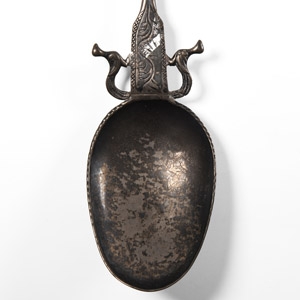
South American Silver Spoon Pin with Birds
18th-20th century A.D.Sold for (Inc. bp): £143
A large silver spoon composed of an ovoid bowl, rectangular neck with tapering upper sides and tapering round-section stem, the neck decorated with geometric and foliate motifs, flanked by a peacock on both sides with wing and tail feather detailing; repaired. 67 grams, 27 cm long
Acquired in 1988. UK private collection. -
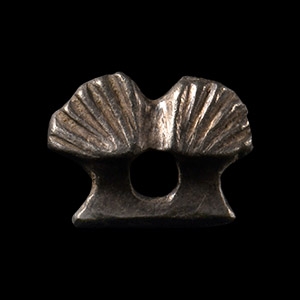
Tudor Silver Saint James Double Scallop Shell Dress Mount
16th century A.D.Sold for (Inc. bp): £59
A complete silver dress fitting or strap mount in the form of two conjoined scallop shells along one edge of a sub rectangular bar with sloping sides, the fitting with central perforation and two slender mounting lugs to reverse. 1.24 grams, 12 mm
Found whilst searching with a metal detector by Kevin Ford on 1st March 2019 in Chinnor, South Oxfordshire, UK. Accompanied by a copy of the British Museum's Portable Antiquities Scheme Report (PAS) number OXON-86C7C3. Accompanied by a letter to HM Coroner for Oxfordshire from the Oxfordshire Finds Liaison Officer (FLO) with treasure reference number 2019 T648.
The scallop shell was associated with St. James and the pilgrimage site of Santiago de Compostela in Spain, one of the most important pilgrimage centres in medieval Europe. The scallop shell became the symbol for pilgrimage more generally in this period. It is an overtly Catholic symbol which could have been worn with freedom before c. 1540, or in the period of the Marian revival of Catholicism from 1553-1558. Pilgrimage to the shrine at Compostela from England would have been interrupted by the English Reformation. The PAS report notes that similar examples have been declared as treasure, including: KENT-FEE744 (2014 T641) and NLM-538148 (2010 T539), both dating to the 16th century A.D. -
.jpg)
Bronze Copy of The Farnese Hermes
19th century A.D.Sold for (Inc. bp): £2,860
A bronze statue modelled on the famous Farnese Hermes (now in the British Museum); the god portrayed naturalistically in the round, youthful and nude, a chlamys draped around his shoulders, winged sandals on his feet; discoid base. 16.3 kg, 82 cm high
French collection, 1960s-early 2000s. From an important Paris gallery, France. with Marion Antique Auction, USA, 8 June 2019, lot 131. This lot has been checked against the Interpol Database of stolen works of art and is accompanied by search certificate number no.11689-199352.
The statue copies a Roman copy of a famous type created in the school of the Greek sculptor Praxiteles in the 4th century B.C. Villa de Papiri. A similar copy exists in the collection of the British Museum, London, under accession no. 1864,1021.1.
