
Loading, please wait...
LOT 1429
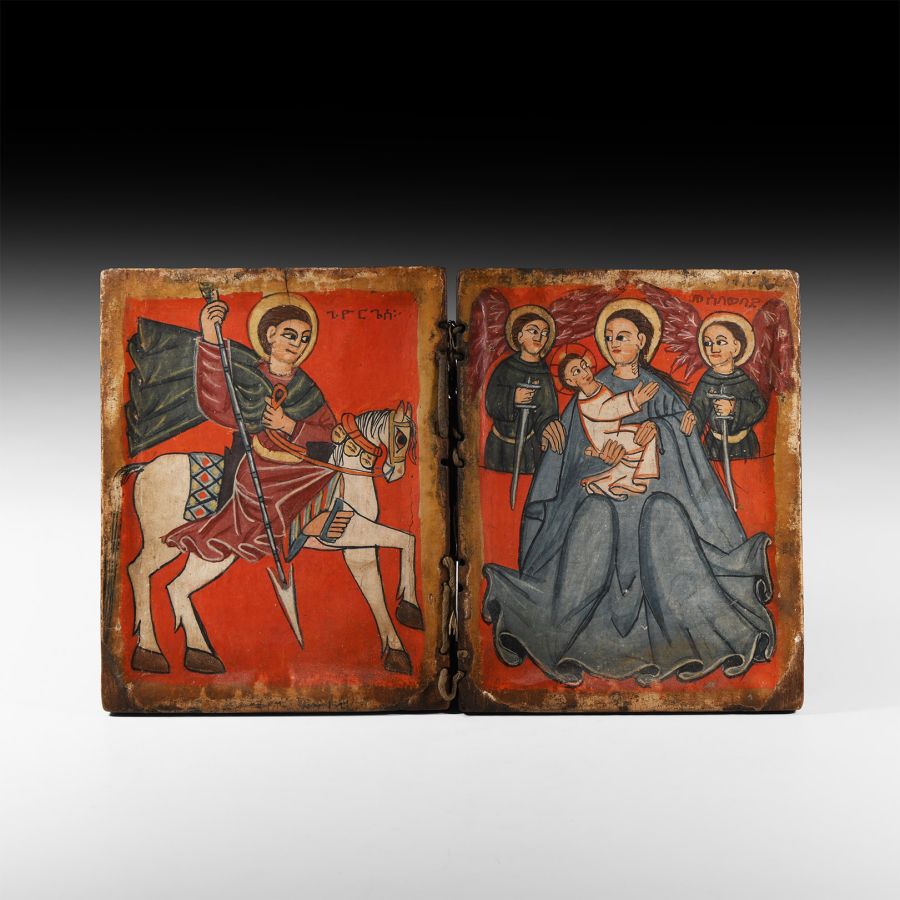
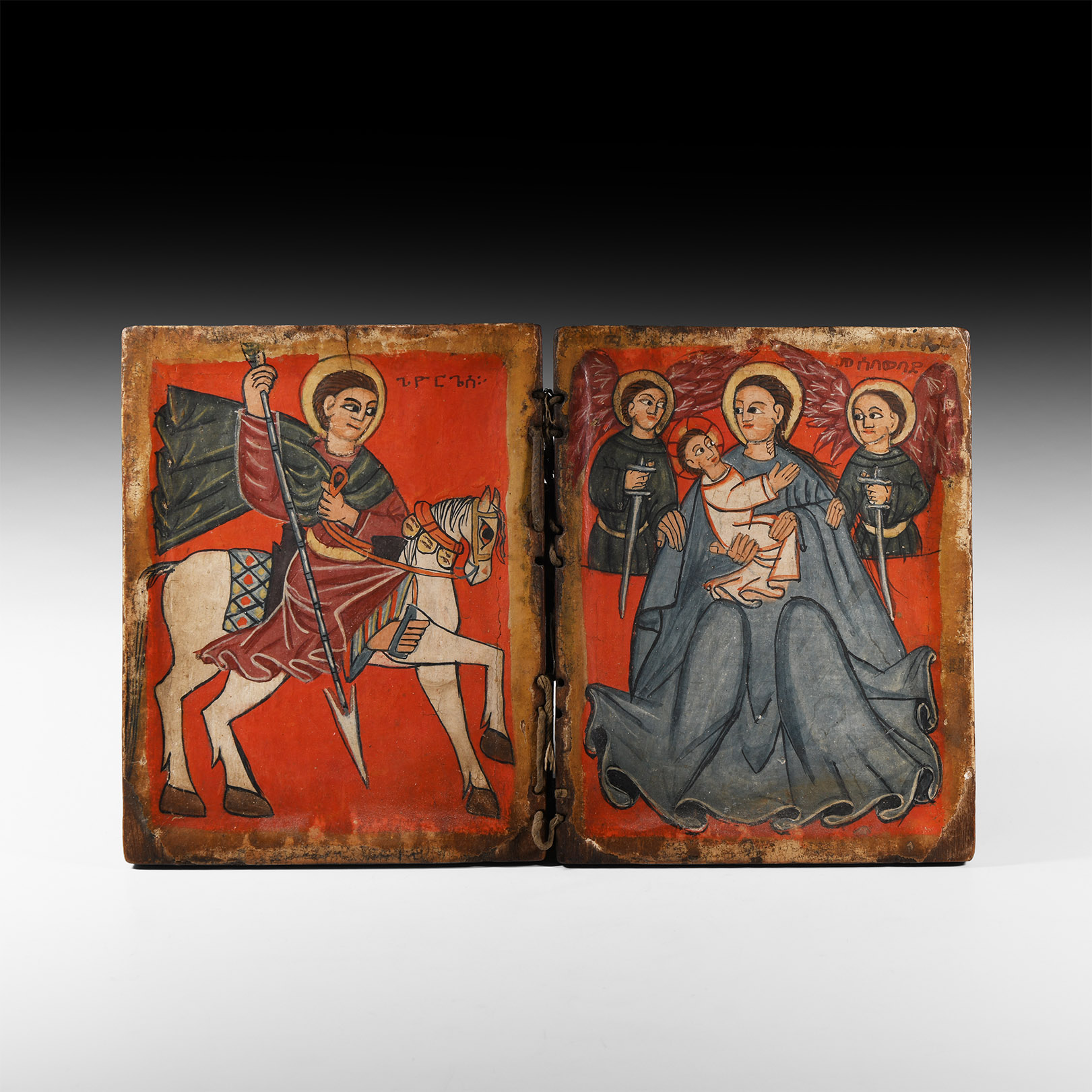
Ethiopian Icon with St George and Virgin
16TH-17TH CENTURY A.D.
7 7/8 x 6 1/8 in. (562 grams, 20 x 15.5 cm).
A portable wooden diptych icon depicting Bet Giyorgis on horseback on the left, dressed in red mauve riding coat, green cloak and carrying a shaft with iron head; on the right the Nativity scene with Virgin and the Child escorted by the angels.
ProvenanceAcquired on the London art market, 2006.
UK private collection.
See Chojnacki, S., Major Themes in Ethiopian Painting, indigenous developments, the influence of foreign models and their adaptation, from the 13th to the 19th century, Wiesbaden, 1983, fig.204, for a similar but more richly decorated icon.
FootnotesThe presence of angels dressed in western garments, the uncovered head of the Virgin and the swords of the angels, could suggest that the diptych is strongly influenced by Italian Renaissance painters. However, the chopping tool used here is particularly Ethiopian, as is the depiction of the Virgin and Child, lacking the care visible in Ethiopian works copied from Italian paintings. Ethiopian paintings influenced by European art can be split into two groups according to Stanislaw Chojnacki: paintings that directly relate to an identified painting, and paintings which borrow themes and details from Western art. In both, however, the Western forms have been simplified to the Ethiopian mode of expression. The horse harness can suggest dating to 16th-17th century A.D.
CONDITIONTimeLine Auctions follows a vetting process to ensure the authenticity and legality of all items, reinforcing our commitment to integrity and responsible trading. Each antiquity, antique, and coin lot undergoes thorough examination by a vetting committee of at least ten external specialists, professional trade association members, scientists, and archaeologists: Our Vetting Process
AUCTIONS:
TimeLine is a leading auction house specialising in antiquities, ancient art, collectables, natural history, coins, medals, and books. Our auctions offer museums, collectors, historians, and enthusiasts the opportunity to acquire unique and historically significant pieces.
-
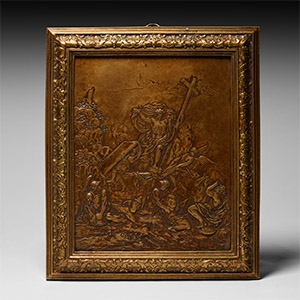
Post Medieval Copper Plaque with Resurrection Scene
18th-19th century A.D.Estimate: £800 - 1,000 (+bp*)
Opening Bid: £400
A bronze repoussé plaque depicting Christ triumphant bearing a cross while Roman soldiers open the sarcophagus; mounted in a bronze frame. 666 grams, 14.5 x 17 cm
English private collection. -
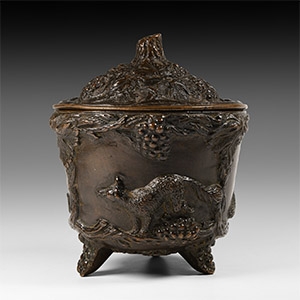
Decorated Bronze Container
Circa 17th-19th century A.D.Estimate: £1,000 - 1,400 (+bp*)
Opening Bid: £500
A bronze trinket-box or container with separate lid; the slightly flared body with three stub feet formed as bunches of grapes, field with frieze divided by twisted branches and leaves into three scenes featuring foxes and a snake; domed lid with with vines, leaves and bunches of grapes, knop handle formed as a twig stump. 1.28 kg, 12.3 cm high
English private collection. -
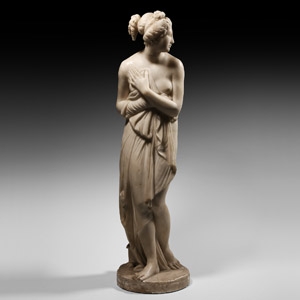
Marble Bathing Venus
Neoclassical, 19th century A.D.Sold for (Inc. bp): £1,235
A marble interpretation of the famous 'Bathing Venus' (Pudica Venus) statue, modelled naturalistically in the round, nude, hair piled behind her head, holding her garment to her breast, standing on a composite discoid base imitating a stone pavement, with a casket at her feet; after Giambologna's Renaissance original; restored. 21.2 kg, 78 cm high
Old repair to neck.
French collection, 1960s-early 2000s. From an important Paris gallery, France.
The original 'Bathing Venus' statue in bronze has been attributed to Giambologna (Giovanni da Bologna) (1529-1608), and was probably created for King Henry IV of France as a diplomatic gift from Ferdinando I de’ Medici, Grand Duke of Tuscany. This is a neoclassical interpretation of that Renaissance statue.
