
Loading, please wait...


LOT 2093
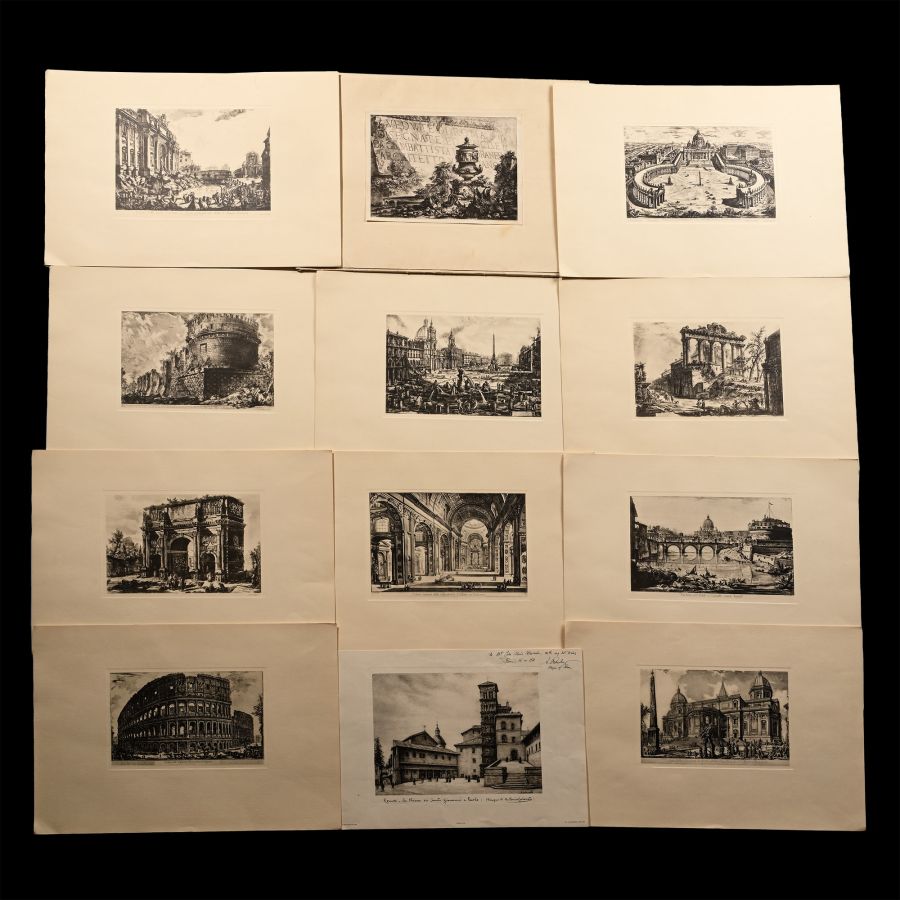
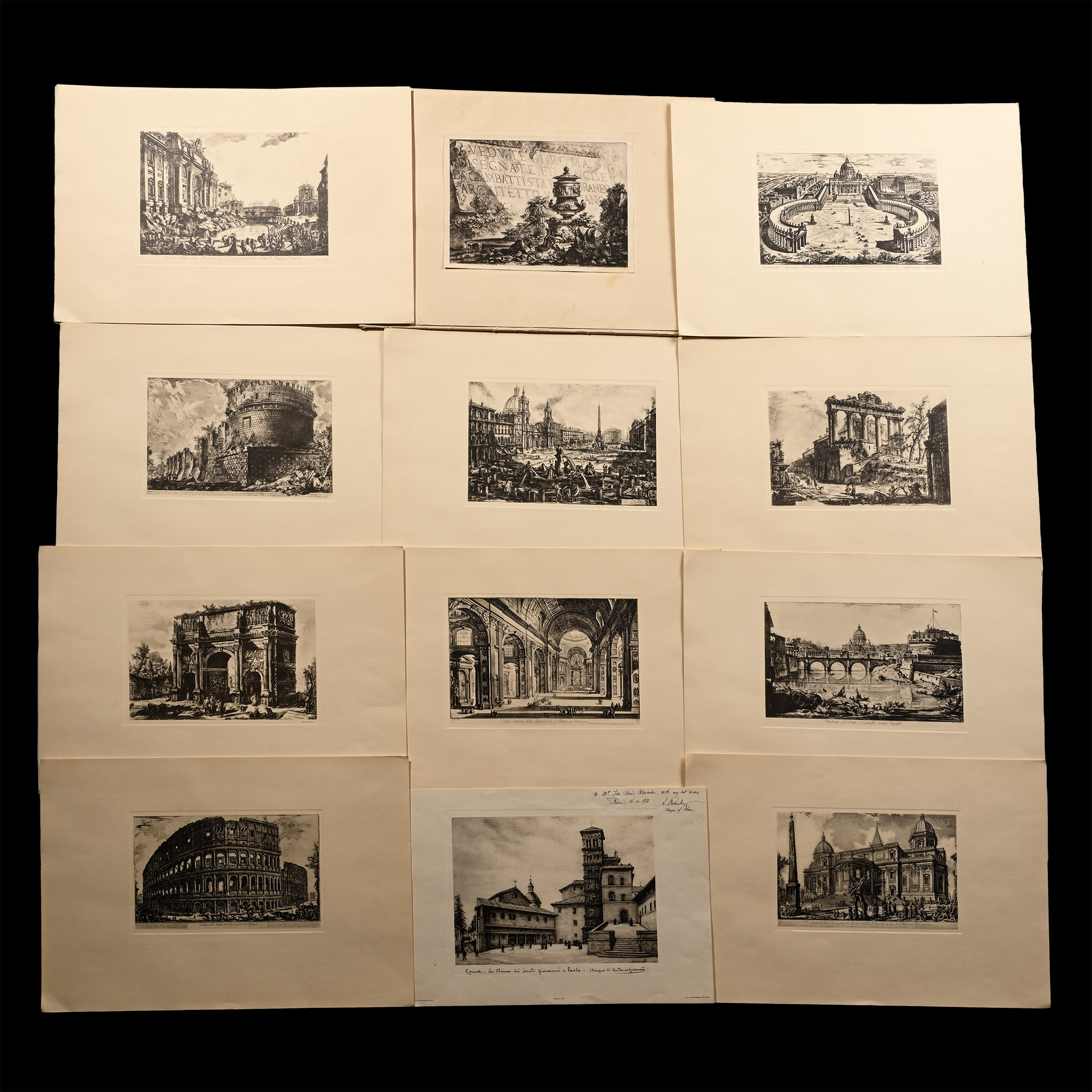
Engravings of Scenes of Rome by Giovanni Piranesi Gifted by the Mayor of Rome in 1952
CIRCA 1950 A.D.
19 1/2 x 13 3/4 in. (710 grams total, 49.5 x 35 cm).
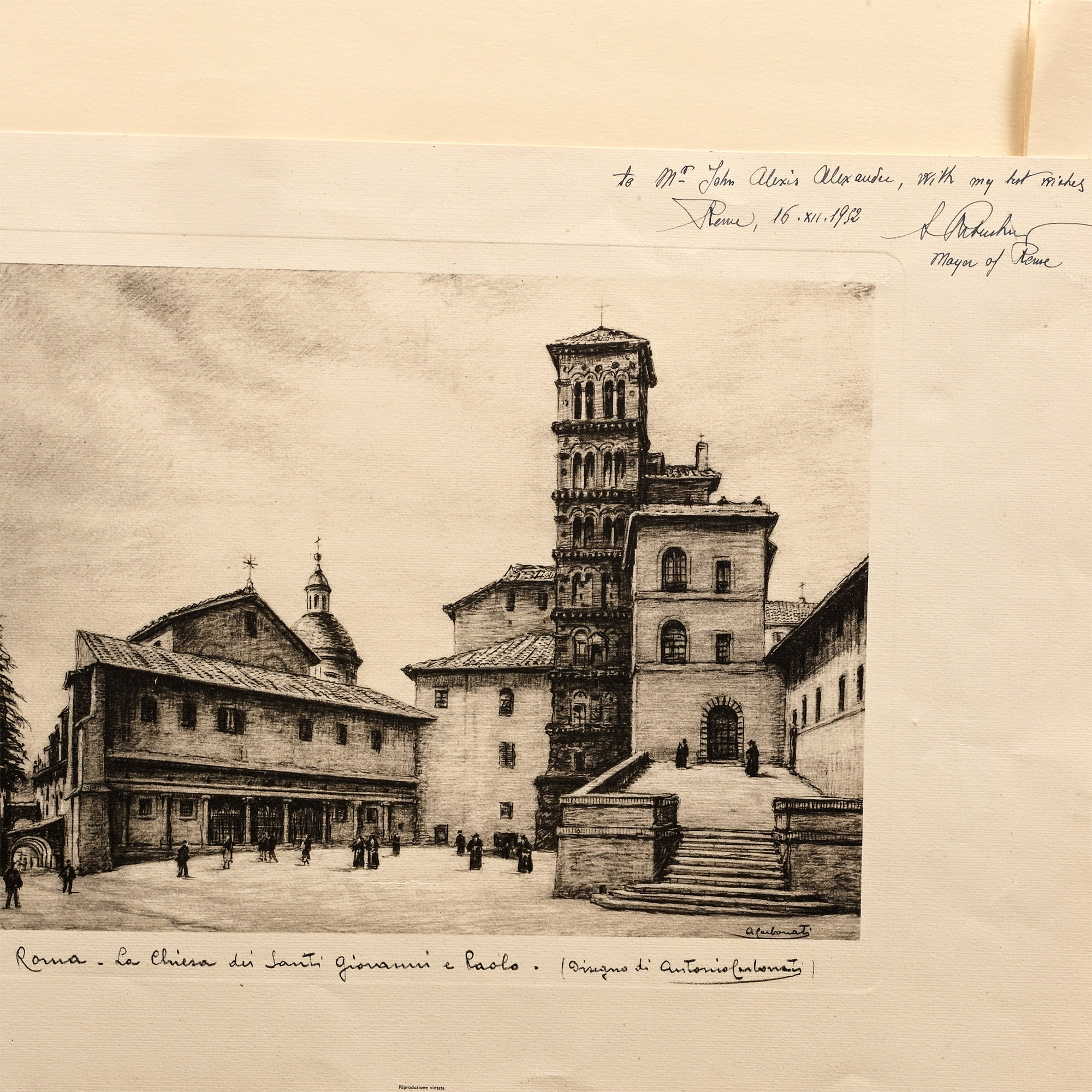
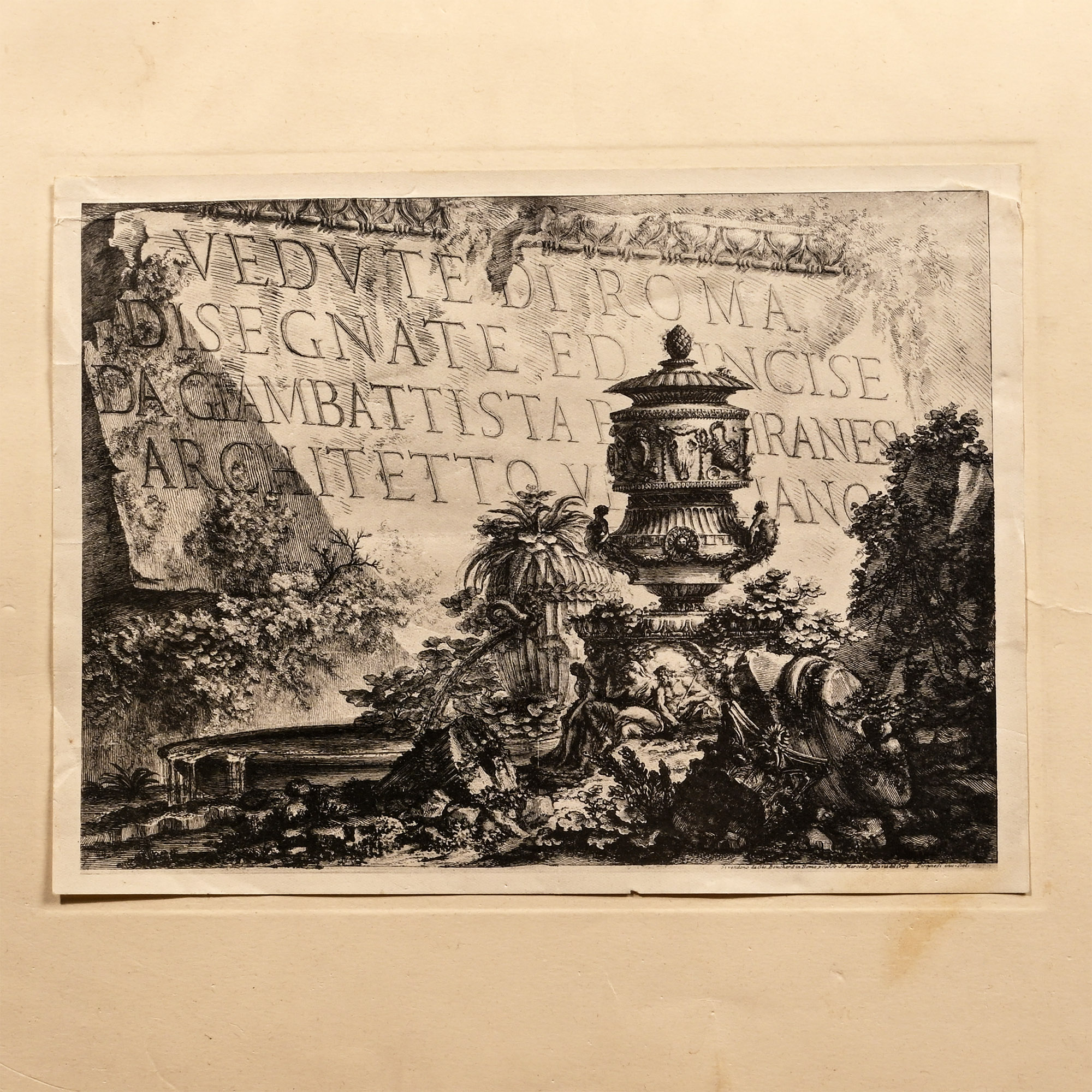
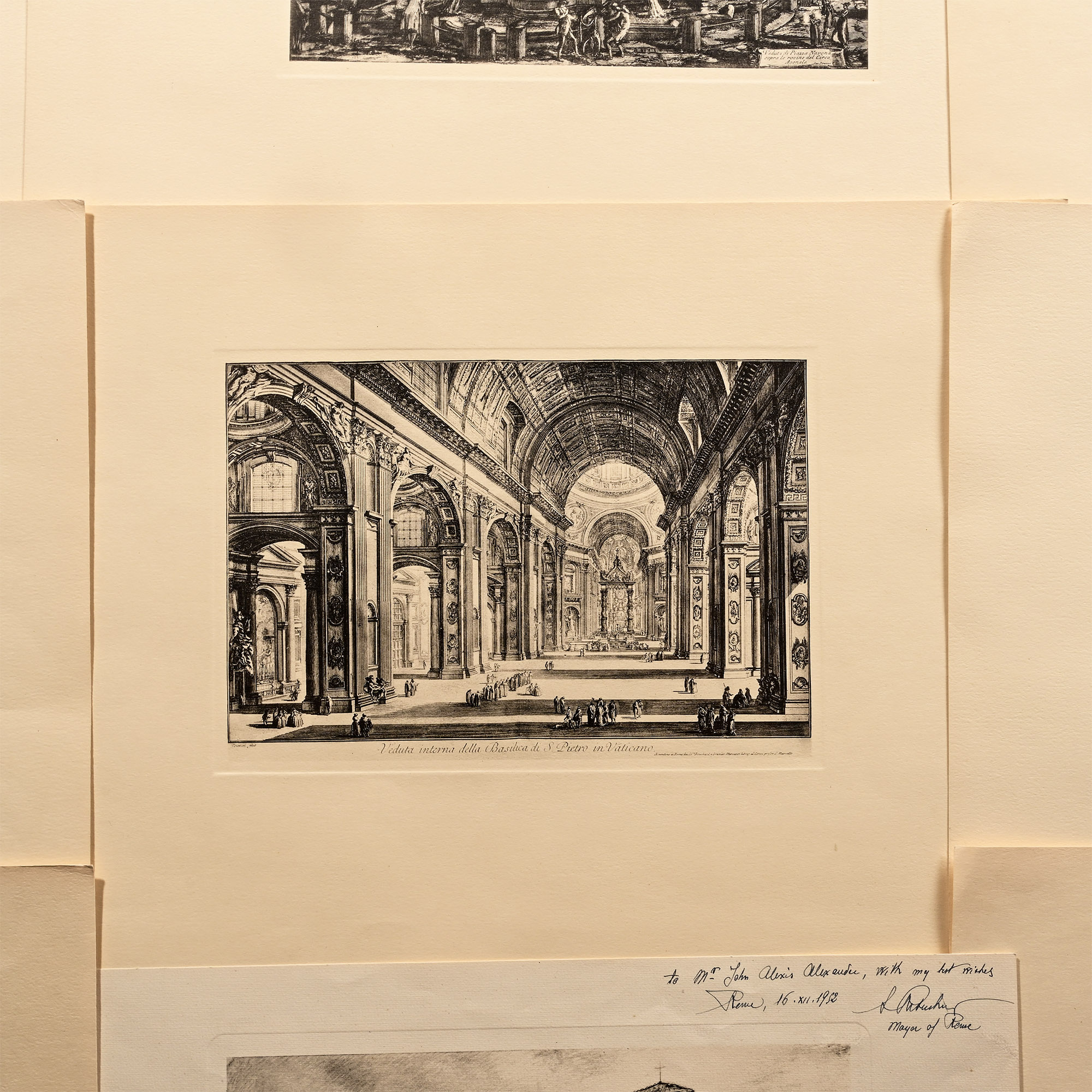
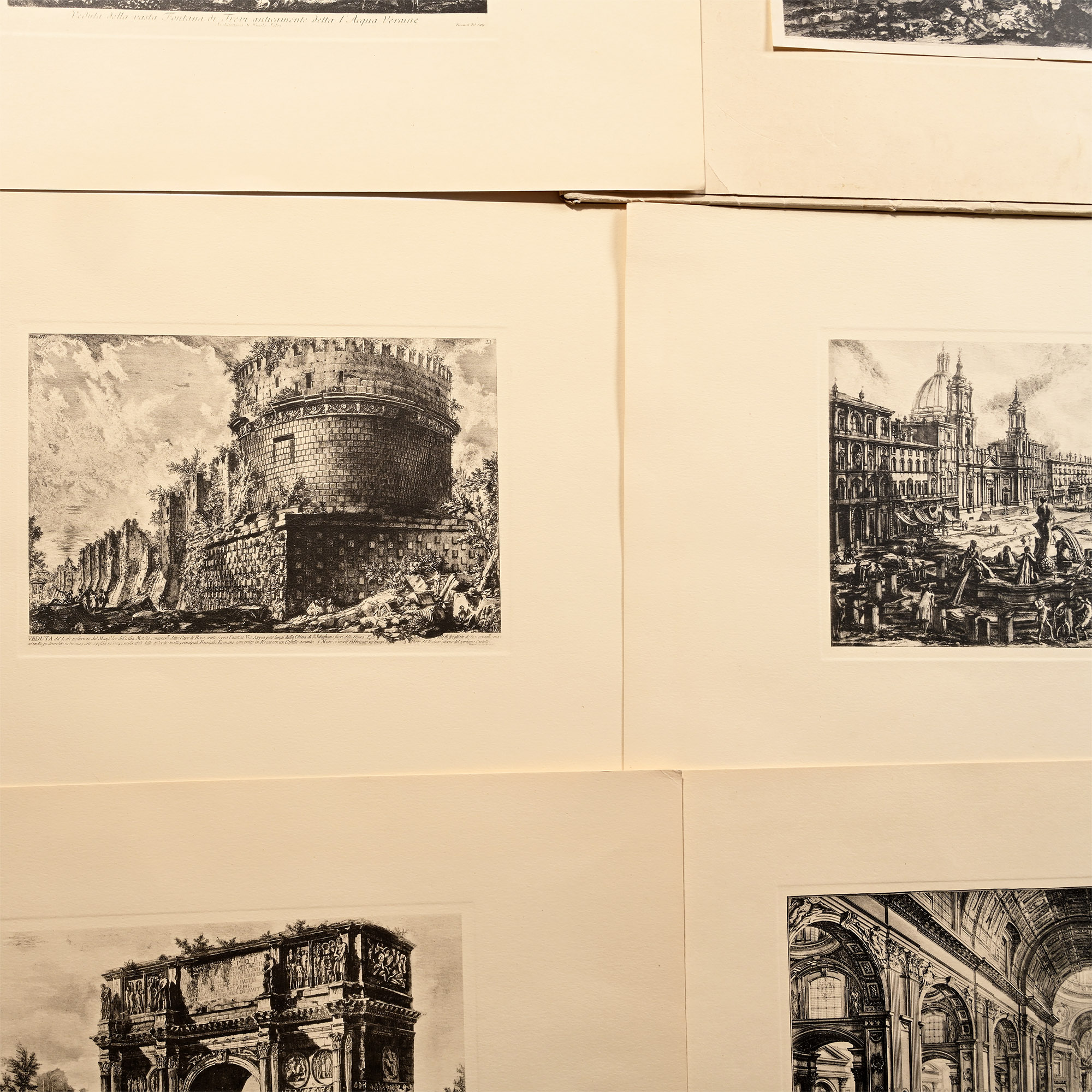
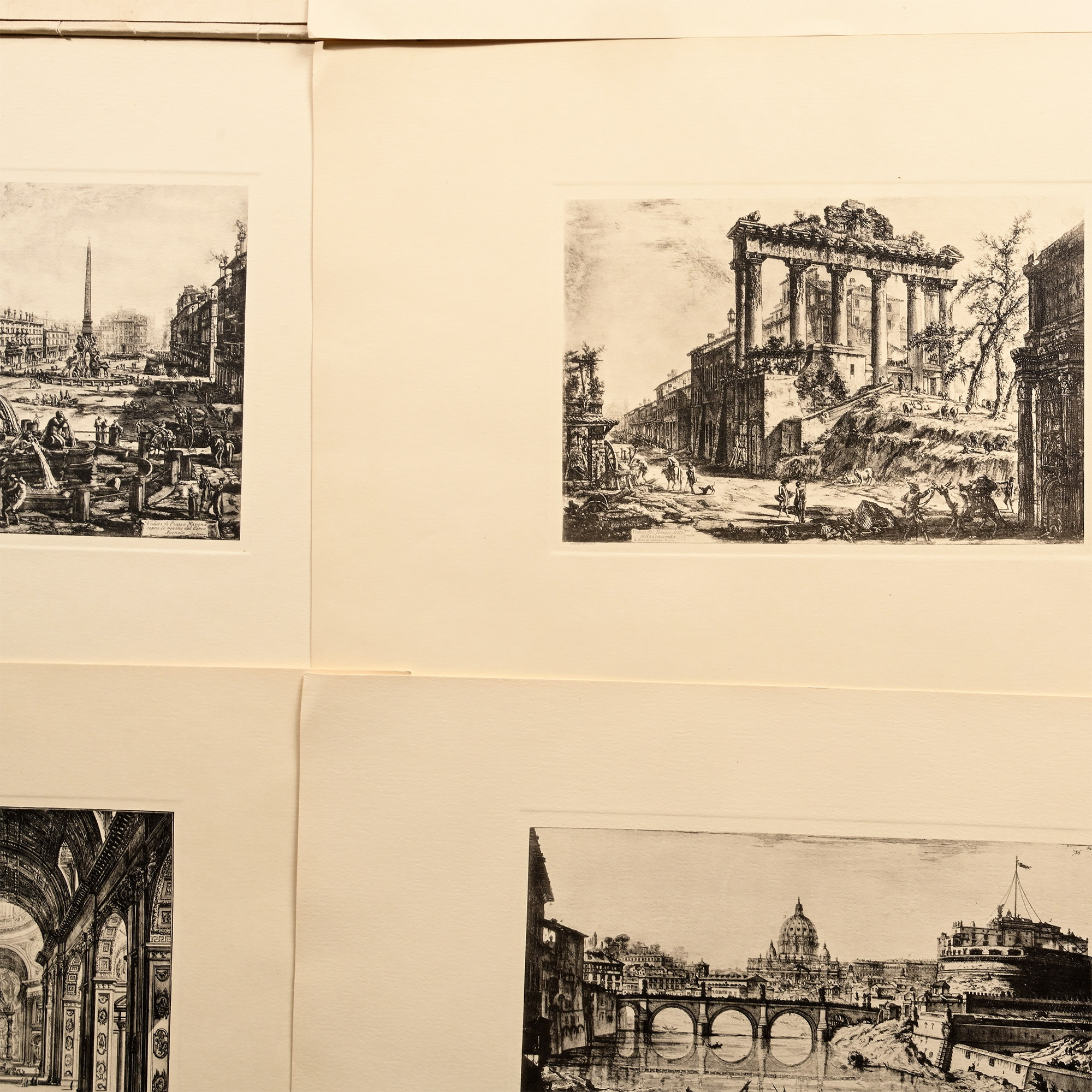
Card slipcase with printed engraving of an urn amid rustic ruins with legend 'Vedute di Roma disegnate ed incise da Giambattista Piranesi Architetto Vi Iano'; card-mounted prints comprising: church tower and square 'Roma La Chiesa di Santi Giovanni e Paolo / Disignato di Antonio Carbonati'and with handwritten dedication above 'To Mr. John Alexis Alexander With my best wishes, Rome 16.xii.1952 S[alvatore] Rebecchini, Mayor of Rome'; Trevi fountain with legend 'Veduta della Fontana di Trevi anticamente detta l'Acqua Veraine'; section of wall and tower with legend 'Veduta del lato posteriore del Mauseleo di Cecilia Metella....'; Colosseum with legend 'Veduta dell' Amfiteatro Flavio detto il Colosseo....'; prospect of the Vatican and foreground with egend 'Veduta dell'insigne Basilica Vaticana coll'ampio Portico e Piazza Adjacente...'; view of the fountain and monument in the Piaza navona with legend 'Veduta di Piazza navonasopre le rovine del Circo Aganate'; ruined temple with legend 'Veduta del Tempio detto della Concordia'; Arch of Constantine with legend 'Veduta dell'Arco di Costantino'; interior of St.Peter's basilca with legend 'Veduta interna della Basilica di S.Petro in Vaticano'; church of Santa maria with legend 'Veduta della Facciata di dietro della Basilica di S. Maria Maggiore'; bridge and castle with legend 'Veduta del Ponte e Castello Sant'Angelo'. [No Reserve]
ProvenanceAcquired on the UK art market.
Property of a Harwich, UK, collector.
TimeLine Auctions follows a vetting process to ensure the authenticity and legality of all items, reinforcing our commitment to integrity and responsible trading. Each antiquity, antique, and coin lot undergoes thorough examination by a vetting committee of at least ten external specialists, professional trade association members, scientists, and archaeologists: Our Vetting Process
AUCTIONS:
TimeLine is a leading auction house specialising in antiquities, ancient art, collectables, natural history, coins, medals, and books. Our auctions offer museums, collectors, historians, and enthusiasts the opportunity to acquire unique and historically significant pieces.
LOT 2093
Engravings of Scenes of Rome by Giovanni Piranesi Gifted by the Mayor of Rome in 1952
Sold for (Inc. bp): £312
-
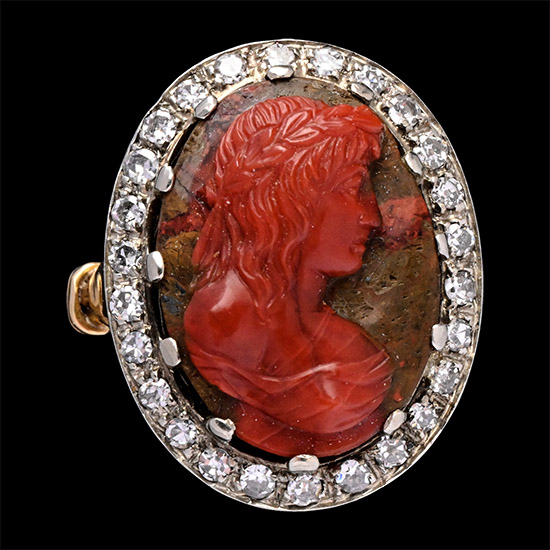
Hardstone Cameo of a Muse in Ring
Italy, 18th century A.D.Sold for (Inc. bp): £2,340
Carved in two-coloured red and brown agate, depicting a classical muse in right-facing profile with flowing hair, and drapery, the laurel wreath identifying her as an embodiment of poetic or artistic inspiration; the cameo set in a 19th-century mount with a border of single-cut diamonds set in platinum, a pierced, open-backed construction and bifurcated shoulders enriched with classical leaf motifs. 6.47 grams, 25.88 mm overall, 16.12 mm internal diameter (approximate size British J 1/2, USA 5, Europe 9.32, Japan 9)
Acquired on the European art market. This lot has been checked against the Interpol Database of stolen works of art and is accompanied by search certificate number no.13327-257906.
The union of an eighteenth-century Italian gem engraving with a later English mount reflects a broader nineteenth-century practice of integrating earlier engraved gems into newly conceived settings. -
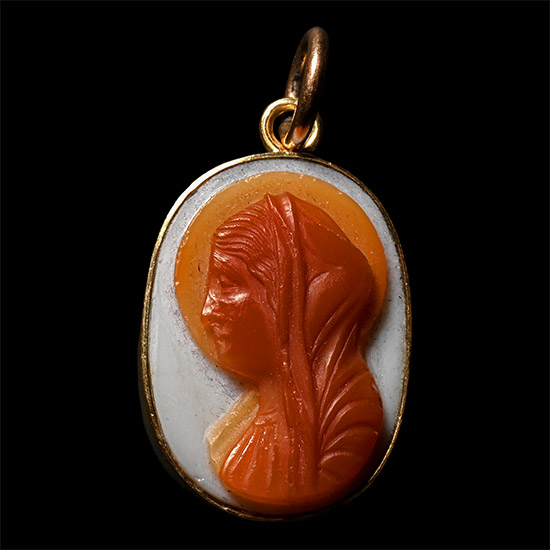
Post Medieval Agate Cameo with Profile Portrait of the Madonna
Italy, 19th century A.D.Estimate: £400 - 600 (+bp*)
Opening Bid: £200
Carved in low relief, nimbate profile bust with palla. 2.77 grams, 34 mm
Private collection, Europe. Acquired on the English art market. -
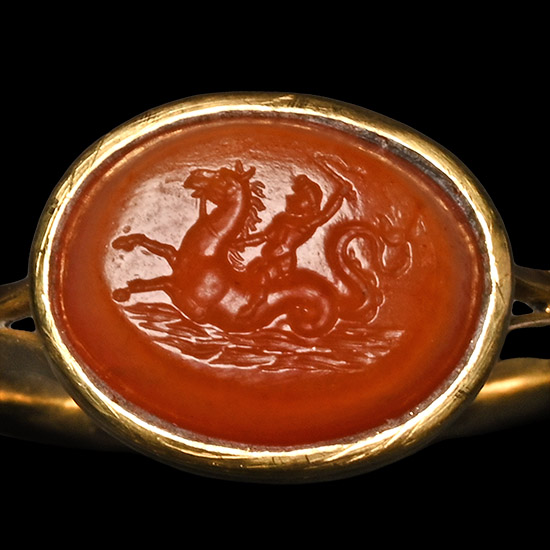
Renaissance Agate Gemstone with Eros Riding a Hippocampus in Gold Ring
16th-17th century A.D.Sold for (Inc. bp): £2,340
Oval banded agate intaglio engraved with Eros riding a hippocampus through the waves and wielding a whip in his hand; set in a later gold ring with openwork shoulders. 4.57 grams, 25.29 mm overall, 17.36 mm internal diameter (approximate size British N 1/2, USA 6 3/4, Europe 14.35, Japan 13)
Acquired on the European art market. This lot has been checked against the Interpol Database of stolen works of art and is accompanied by search certificate number no.13348-257957.
The term hippocampus originates in the Renaissance, from Julius Caesar Arantius. He originated the term from the Greek word for seahorse (hippos [‘horse’] and kampos [‘sea monster’]). Arantius published his description of the hippocampus in 1587, in the first chapter of his work titled De Humano Foetu Liber.
