
Loading, please wait...
LOT 0031
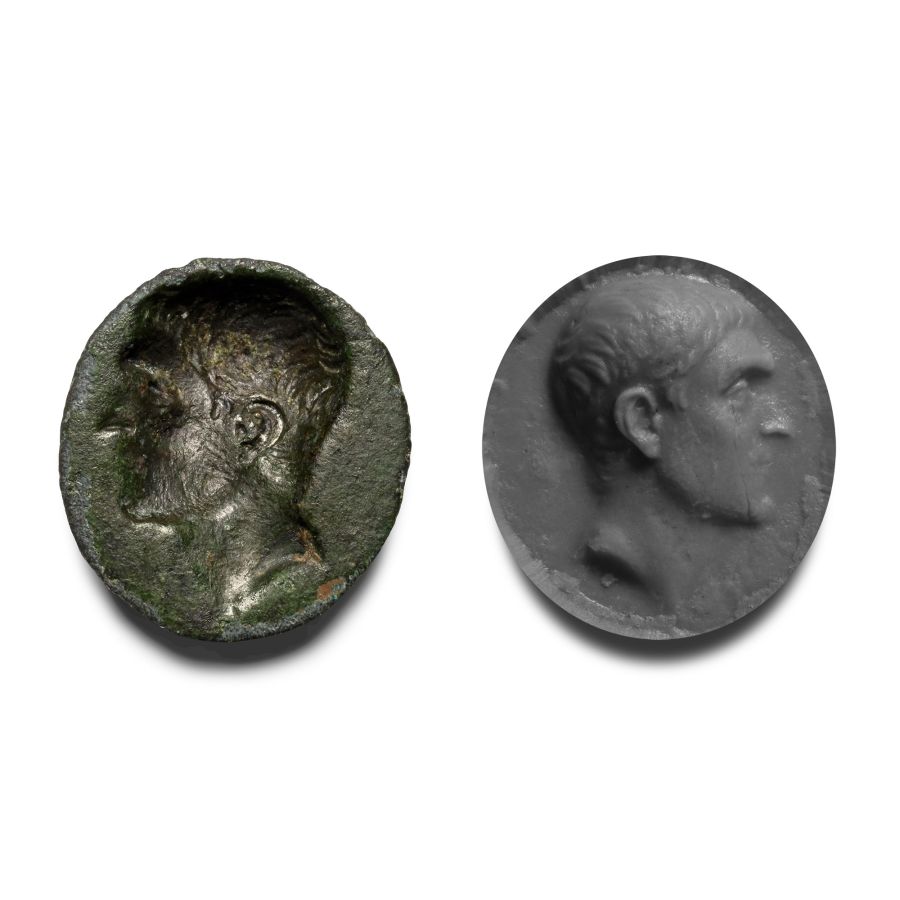
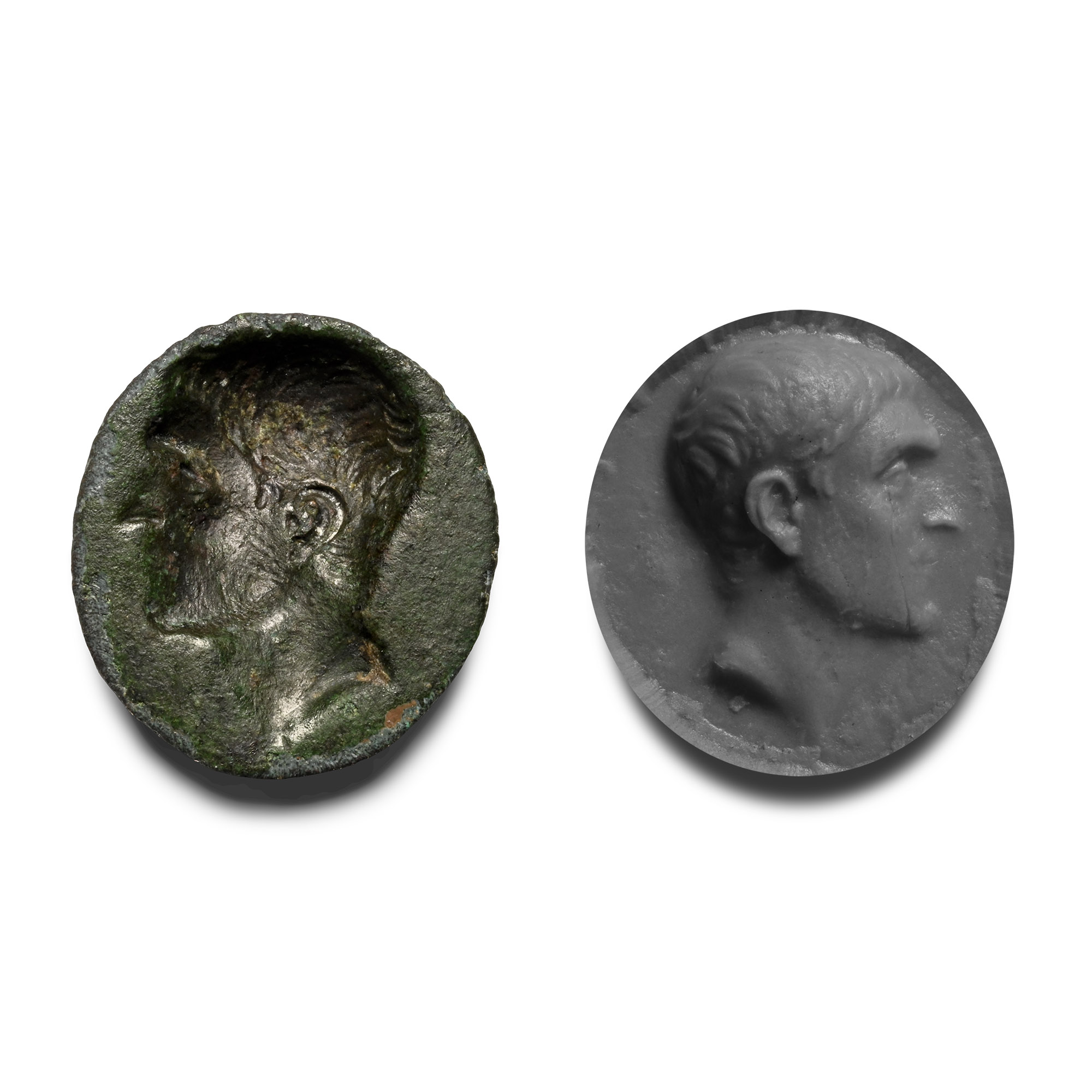
Engraved Bronze Seal of a Republican Period Male Portrait
2ND-1ST CENTURY B.C.
5/8 in. (3.11 grams, 17 mm).
Discoid in plan with a deeply engraved clean-shaven male bust; supplied with a museum-quality impression.
ProvenancePrivate English collection, formed between the late 1970s and early 1990s.
Private collection, London, UK.
TimeLine Auctions follows a vetting process to ensure the authenticity and legality of all items, reinforcing our commitment to integrity and responsible trading. Each antiquity, antique, and coin lot undergoes thorough examination by a vetting committee of at least ten external specialists, professional trade association members, scientists, and archaeologists: Our Vetting Process
AUCTIONS:
TimeLine is a leading auction house specialising in antiquities, ancient art, collectables, natural history, coins, medals, and books. Our auctions offer museums, collectors, historians, and enthusiasts the opportunity to acquire unique and historically significant pieces.
LOT 0031
Engraved Bronze Seal of a Republican Period Male Portrait
Sold for (Inc. bp): £1,235
-
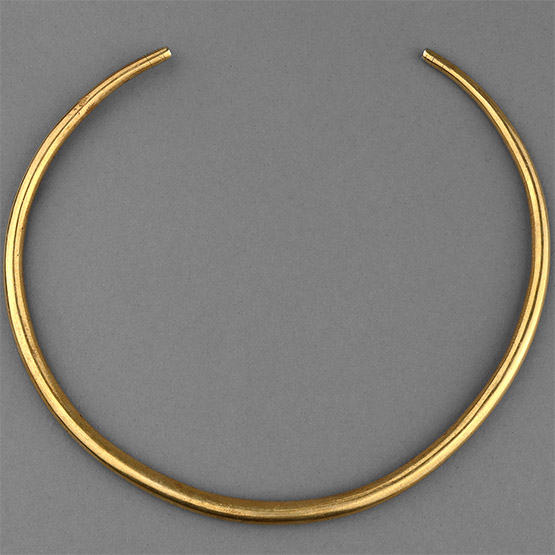
Scythian Electrum Torc
7th-5th century B.C.Sold for (Inc. bp): £14,300
Formed as a simple penannular hoop from a single piece of electrum, tapering towards the terminals. 169 grams, 16.5 cm diameter
Ex Jack Ogden, 1990s. Accompanied by an expertise from Striptwist Ltd, a London-based company run by historical precious metal specialist Dr Jack Ogden, reference number [191101]. This lot has been checked against the Interpol Database of stolen works of art and is accompanied by search certificate number no.13106-248042.
Portable X-ray fluorescence (XRF) analysis confirms the alloy to be electrum, with an average composition of approximately 62% gold, 34% silver, and 3% copper. The purity and metal ratios are consistent with ancient manufacture. The restrained form, lacking figural ornament, is characteristic of early Scythian metalwork and suggests a date prior to the 5th century BC. -
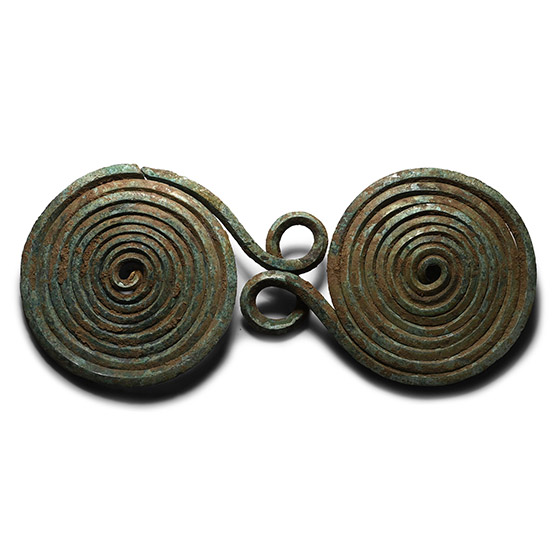
Large Greek Bronze Spiral Fibula
Geometric, 7th-6th century B.C.Estimate: £400 - 600 (‡+bp*)
Opening Bid: £200
Formed from a single square-section filament rolled into two 'spectacle' discs; one of the spirals terminating in a long pin, the other in a hook serving as the catchplate; openwork figure-of-eight at the centre; pin broken, coils separated. 159 grams, 17 cm
Acquired in the mid 1980s-1990s. Private collection, Switzerland, thence by descent. Private collection, since the late 1990s. -
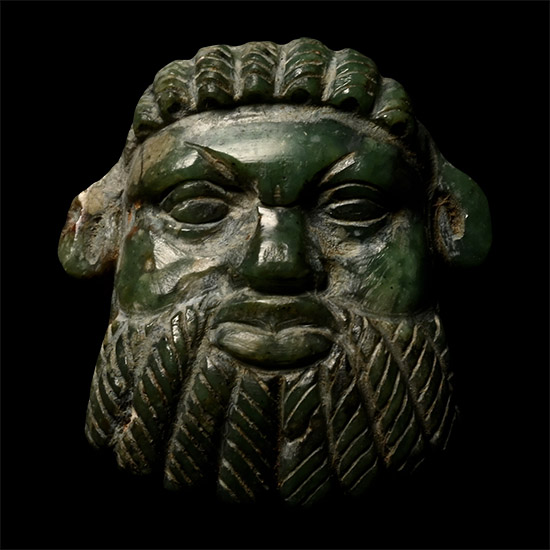
Greek Green Stone Bearded Face Amulet
400-300 B.C.Sold for (Inc. bp): £338
Finely carved head, featuring narrow eyes, a snub nose, full lips, a broad, stranded beard, and tightly curled hair rows; with a suspension loop behind the head. 4.16 grams, 20 mm
Private collection, England.
The facial features closely resemble those of Bes; the absence of Bes's characteristic plumed headdress is also evident in other amulets (Cf. Reisner, G.A., Catalogue général des antiquités égyptiennes du Musée du Caire, Nos.12528-13595, Vol. II, Amulets, Cairo, 1958, p. 16 (CG12649), pl. IV).
