
Loading, please wait...
LOT 0287
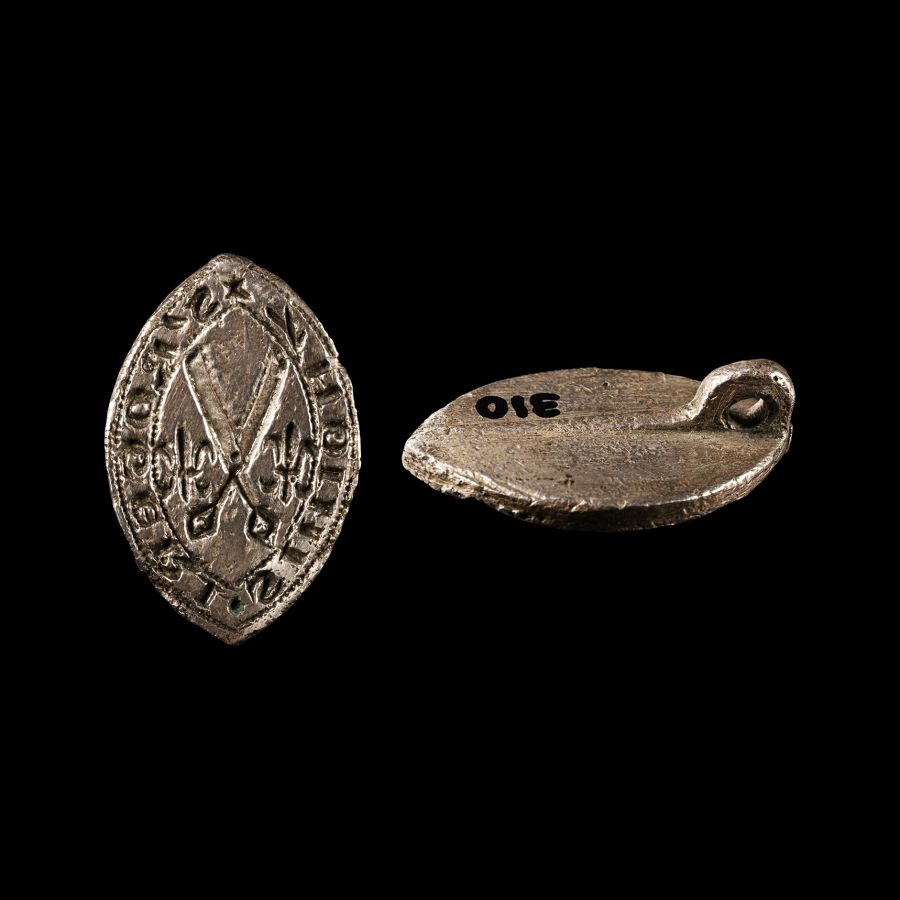
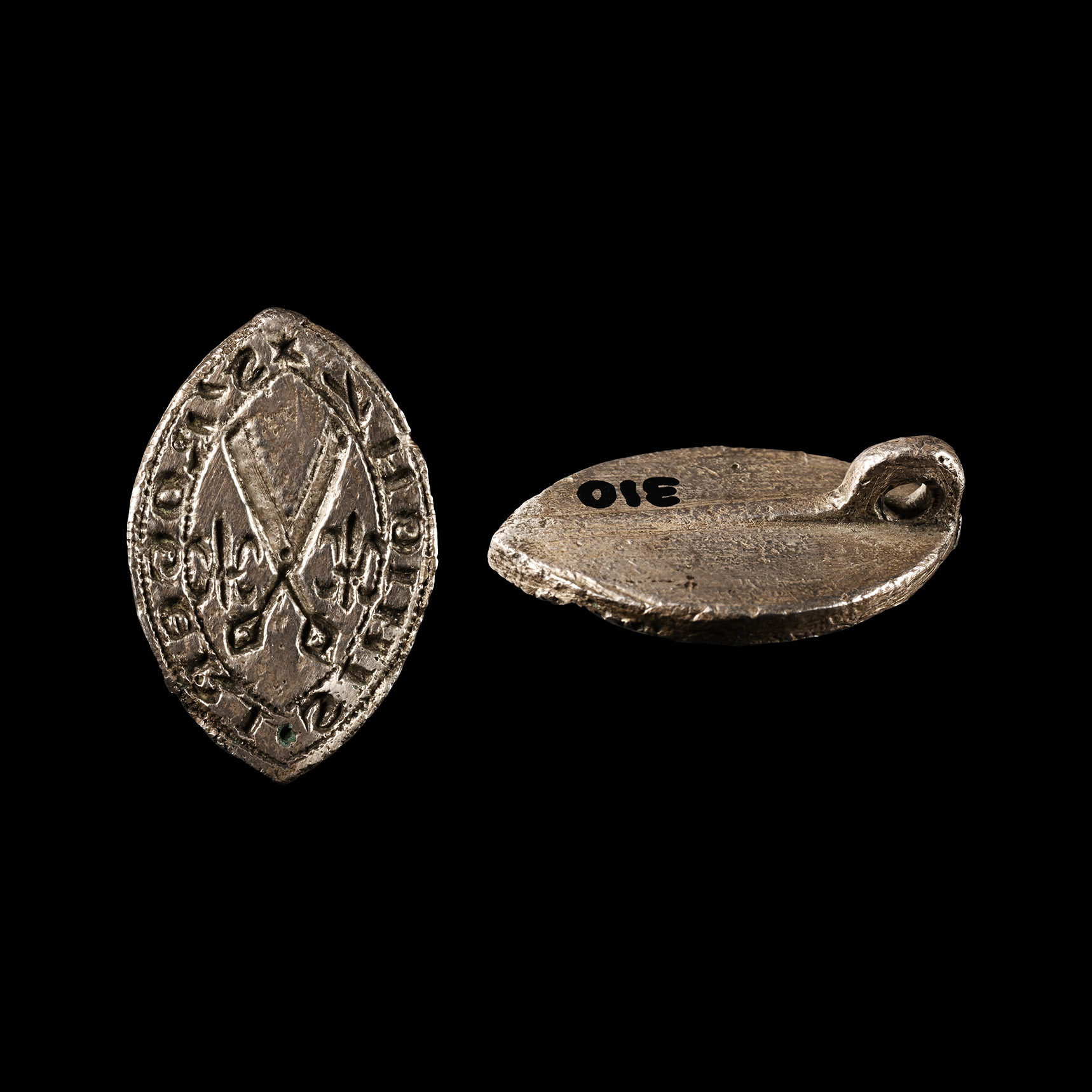
English Medieval Silver Vesica-Shaped Seal Matrix for Tailor Roger Simion
CIRCA 1290-1340 A.D. OR LATER
1 1/4 in. (14.4 grams, 33 mm).
A silver vesica-shaped seal matrix with strap and pierced lug to the reverse; incuse motif of a pair of shears between two small fleurs-de-lys; Lombardic script legend within borders '* S' ROGER · SIMION' (seal of Roger Simion).
ProvenanceThe Matrix Collection, formed by David Morris since the late 1980s.
Matrix Collection catalogue no.0310.
Many of the seals within the collection were published in a book titled 'The Matrix Collection', by David Morris in 2012.
Accompanied by a copy of the illustrated collection notes.
The shears in the design may indicate that Roger was a tailor.
CONDITIONTimeLine Auctions follows a vetting process to ensure the authenticity and legality of all items, reinforcing our commitment to integrity and responsible trading. Each antiquity, antique, and coin lot undergoes thorough examination by a vetting committee of at least ten external specialists, professional trade association members, scientists, and archaeologists: Our Vetting Process
AUCTIONS:
TimeLine is a leading auction house specialising in antiquities, ancient art, collectables, natural history, coins, medals, and books. Our auctions offer museums, collectors, historians, and enthusiasts the opportunity to acquire unique and historically significant pieces.
LOT 0287
English Medieval Silver Vesica-Shaped Seal Matrix for Tailor Roger Simion
Sold for (Inc. bp): £819
-
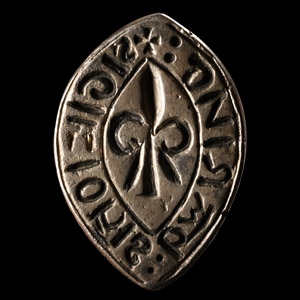
English Medieval Silver Vesica-Shaped Seal Matrix for John Baring
Circa 14th-15th century A.D. or laterSold for (Inc. bp): £520
A silver vesica seal matrix with pierced lug to the reverse; central incuse fleur-de-lys motif; outer band with incuse legend "+ SIGIL IOhIS : bARING:" (seal of John Baring); collector number '109' to reverse. 18.4 grams, 35 mm
The Matrix Collection, formed by David Morris since the late 1980s. Matrix Collection catalogue no.0109. Many of the seals within the collection were published in a book titled 'The Matrix Collection', by David Morris in 2012. Accompanied by a copy of the illustrated collection notes.
The 'A' of Baring is formed with a chevron bar (as is seen on some English coins of the medieval period); the 'N' is retrograde and the 'G' of Lombardic form; a member of the Baring family was Prior of Winchester Abbey (1364-1384 AD) and vesica-shaped matrices are often associated with clerics. -
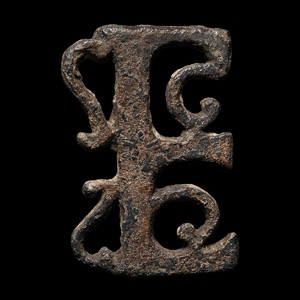
Medieval Mount of Saint Edward the Confessor
Circa 11th-12th century A.D.Sold for (Inc. bp): £130
A mount formed as a capital letter E, representing Saint Edward, embellished with scrolling bars; three mounting lugs to the reverse. 5.6 grams, 29 mm
Acquired in the late 1990s-2000. Property of an East London gentleman. -
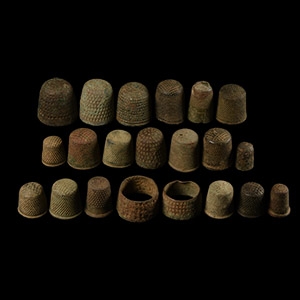
Medieval and later Thimble Group
14th-15th century A.D. and laterSold for (Inc. bp): £91
A mixed group of bronze thimbles including beehive, ring and other types. 95 grams total, 12-22 mm
Found Suffolk.
