Click to Enlarge

Details

LOT 3396

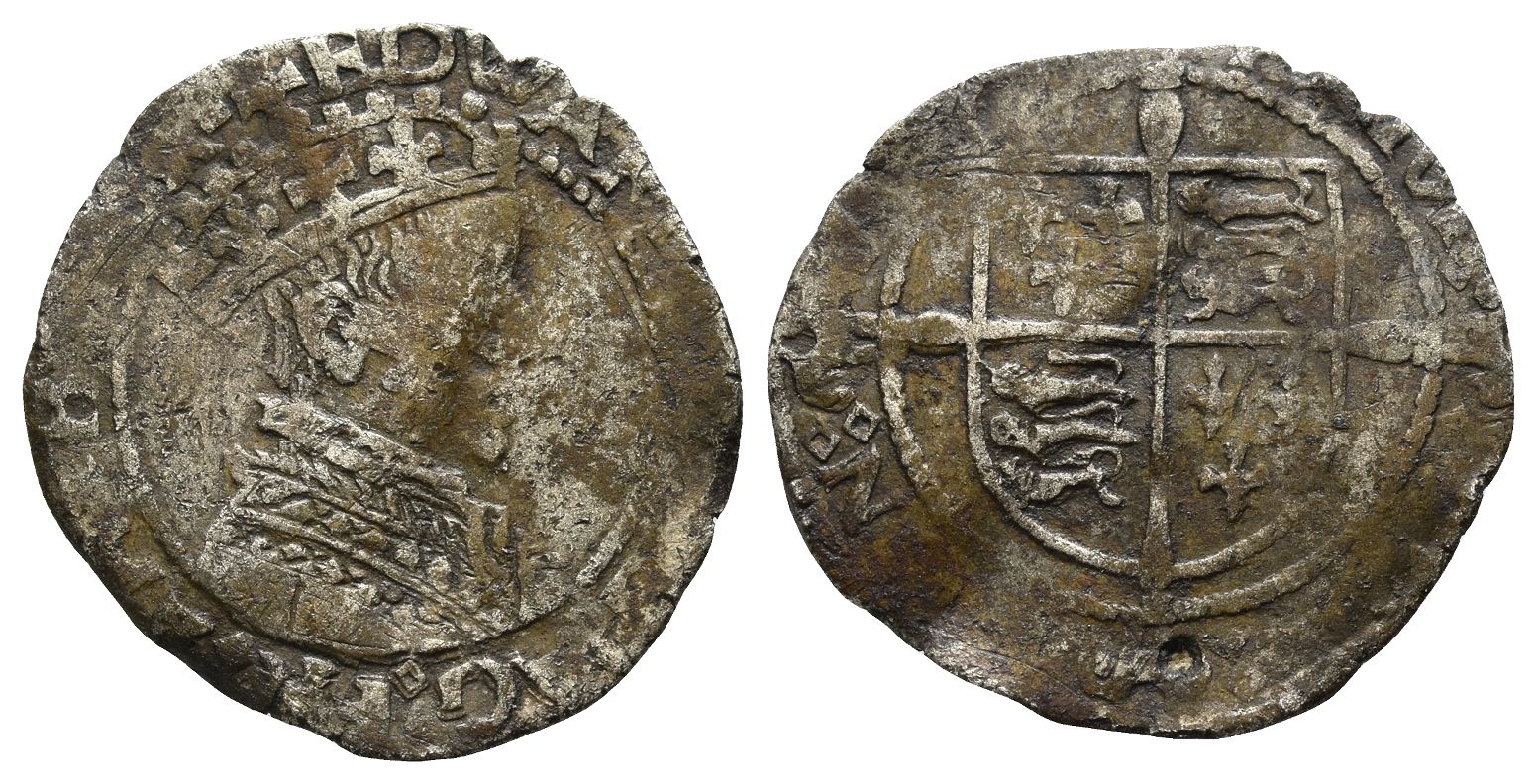
England. Tudor, Edward VI AR Groat. 1547-1553.

Southwark mint; i.m: -. First period, April 1547 - January 1549. EDWAR[D D G] AG' ◊ FR ◊ [Z HI REX, crowned bust to right / [CIVITAS LO]N ◊◊ [DON], quartered shield of arms over long cross fourchée. North 1898; SCBC 2456. About Fine. Very rare.(2.01gr, 24mm, 10h.).

Provenance

Ex Stocker collection, Kent, UK, 1955-early 2000s.

VETTING:

TimeLine Auctions follows a vetting process to ensure the authenticity and legality of all items, reinforcing our commitment to integrity and responsible trading. Each antiquity, antique, and coin lot undergoes thorough examination by a vetting committee of at least ten external specialists, professional trade association members, scientists, and archaeologists: Our Vetting Process


AUCTIONS:

TimeLine is a leading auction house specialising in antiquities, ancient art, collectables, natural history, coins, medals, and books. Our auctions offer museums, collectors, historians, and enthusiasts the opportunity to acquire unique and historically significant pieces.

Very Rare

LOT 3396

England. Tudor, Edward VI AR Groat.

Sold for (Inc. bp): £780

Print page

RELATED LOTS

  • England. Stuart, Charles I AR Halfcrown.
    Excessively Rare Halfcrown of Charles I (The Spink Plate Coin)
    England. Stuart, Charles I AR Halfcrown. 1625-1649.

    Sold for (Inc. bp): £14,300

    'Garter' mint, possibly Hereford; i.m: small lis. Dated 1645. Third horseman. Design possibly by Rude the Coyner. ⚜ CAROLVS • D : G : MAG : BRIT : FRA : ET HI : REX •, King wearing cloak flying from shoulder on horseback to left; holding sword upright with his right hand; grassy ground below / CHRISTO AVSPICE. REGNO, oval shield within Garter inscribed HONI • SOIT • QUI MAL • Y • PENSE, with lion to left and unicorn to right breaking legend; crown above dividing crowned C R, date below. KM 329.5; JGB 1180 (same dies); North 2359 (formerly attributed to Coombe Martin); SCBC 2915 (this coin). 14.86gr, 35mm, 3h.

    Very Fine. Excessively rare. Pleasant pale gilt toning. The Finest Example Known.

    From S. R. Naish, UK, collection. Ex Seaby's Coin & Medal Bulletin, November 1945, no. N207. From H. M. Lingford collection, UK, acquired en bloc by Baldwin, 1951. (The Lingford ticket states that this coin is also from the R D Wills collection, lot 528 etc., but the Wills' piece is a different coin). From Gordon Stanley Hopkins collection. Ex Baldwin's Auctions Ltd, Auction 30, 7 May 2002, lot 272. From Colin Adams collection, UK. Ex Spink, Auction 5033, 1 December 2005, lot 163. Ex Bonhams, New York, 12 December 2012, no.1019 (hammer $40,800.00). Ex Simon Willis Coins, Market Harborough, UK, 2015-2020 (hammer £28,750.00), dealer's ticket included.

    In 1645, Hereford was besieged by a Scottish Covenanter army, allied with the Parliamentarians. The siege lasted a month, but was abandoned by the Covenanters due to the approach of Royalist reinforcements. However, in December of that year, Colonel John Birch led a surprise attack on the city, taking it over for the Parliamentarians. From Spink's note: 'The striking design of this remarkable coin has no parallel in the provincial coinage, indeed the use of lion and unicorn supporters is previously unknown on the English coinage. Lion and dragon supporters are found, but only on some gold sovereigns and half-sovereigns of Henry VIII and Edward VI. It was first noticed in print by Ashmole, in his Institution of the Garter (1672, p.207), and he adds the comment, from contemporary knowledge, that they were 'stamped in the West of England'. Despite the slightly base appearance, these coins were evidently produced by a regular mint and it has been suggested that this may have been Hereford, SCBI 33, p.xlv. On 16 September 1645 the arms of Hereford were augmented and furnished with supporters and the motto Invictae fidelitatis praemium in reference to the heroic siege. Hereford was finally taken by Parliamentary forces on 18 December 1645.' A metal analyzer test indicates a silver fineness of approximately 90%, only marginally less fine than sterling. The coin also contains 1.6% gold which could well be explained by the inclusion of silver-gilt items used in forming flans for coining.

    Lot Details

  • Tudor, Henry VIII AR Halfgroat.
    Tudor, Henry VIII AR Halfgroat. 1509-1547.

    Sold for (Inc. bp): £26

    Canterbury mint; i.m: -. Third coinage, first bust; struck 1544-1547. HENRI '8 D' G' AGL' FR' Z HI' REX, crowned bust facing slightly to right / CIVI-TAS CAN-TOR, coat-of-arms over long cross fourchée. North 1852; SCBC 2378. 1.05gr, 20mm, 6h.

    Fair.

    Ex Stocker collection, Kent, UK, 1955-early 2000s.

    Lot Details

  • England. Tudor, Edward VI AR Penny.
    England. Tudor, Edward VI AR Penny. 1547-1553.

    Sold for (Inc. bp): £293

    York mint; i.m: mullet. Third period; struck 1551. (Mullet) E : D : G : ROSA • SINE • SPINA, rose / CIVI-TAS EBO-RACI, coat-of-arms over long cross fourchée. North 1946; SCBC 2475. 0.52gr, 15mm, 3h.

    Good Very Fine. Extremely rare in good silver for this late base issue.

    Found in Essex, UK.

    Lot Details

Stay up-to-date with the latest from TimeLine Auctions by joining our mailing list