
Loading, please wait...
LOT 1486
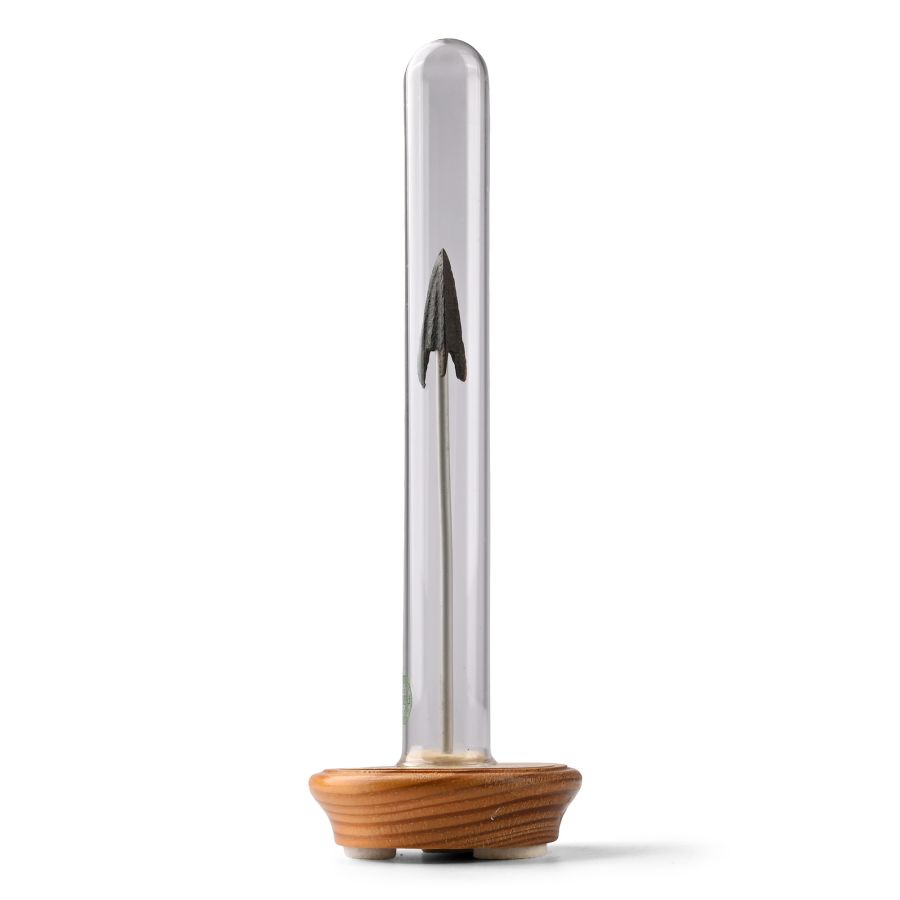
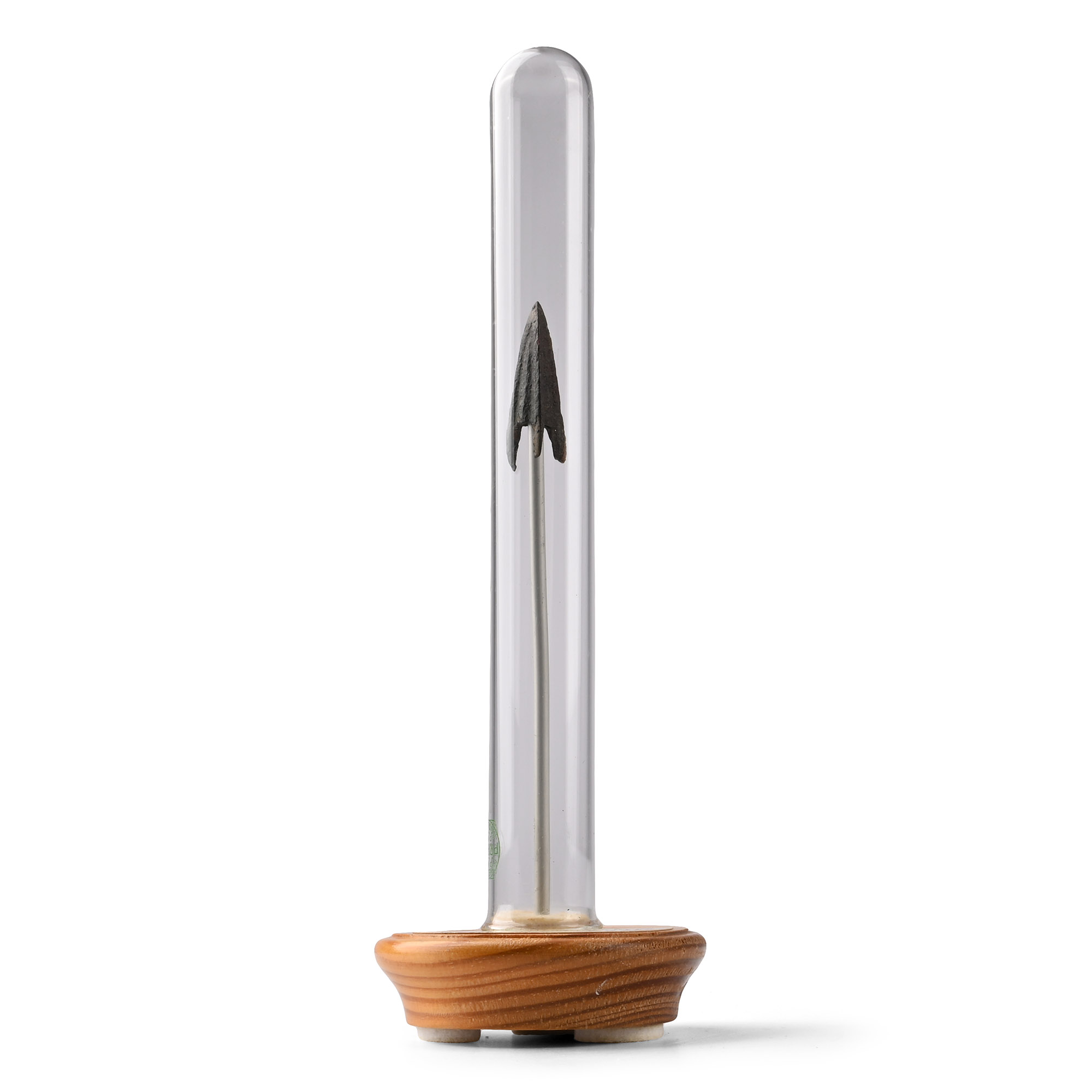
Encased Thracian Bronze Triplebarb Arrowhead
5TH-3RD CENTURY B.C.
1 1/4 in. (28.3 grams, 31 mm).
Triangular in section with prominent flanges extending beyond the mouth of the integral socket; mounted in a glass display on a wooden stand with handwritten legend. [No Reserve]
ProvenanceFrom Asia.
Acquired on the UK art market.
From the private collection of an East Anglian, UK, Specialist Collector.
TimeLine Auctions follows a vetting process to ensure the authenticity and legality of all items, reinforcing our commitment to integrity and responsible trading. Each antiquity, antique, and coin lot undergoes thorough examination by a vetting committee of at least ten external specialists, professional trade association members, scientists, and archaeologists: Our Vetting Process
AUCTIONS:
TimeLine is a leading auction house specialising in antiquities, ancient art, collectables, natural history, coins, medals, and books. Our auctions offer museums, collectors, historians, and enthusiasts the opportunity to acquire unique and historically significant pieces.
-
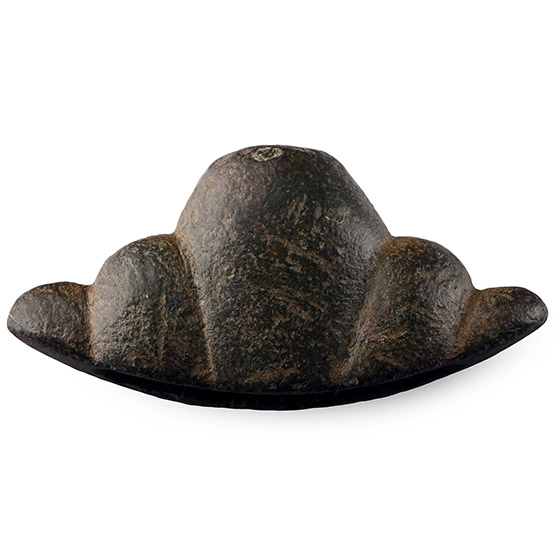
Anglo-Scandinavian Viking Bronze Five-Lobed Sword Pommel
10th-11th century A.D.Sold for (Inc. bp): £390
Of Petersen's Type S (Wheeler Type III) with five graduated lobes; hollow, the lower face a swept arc; pierced through the tallest lobe to accept the tang of the sword's blade. 61 grams, 54 mm
Found UK. From an Colchester, UK, collection. -
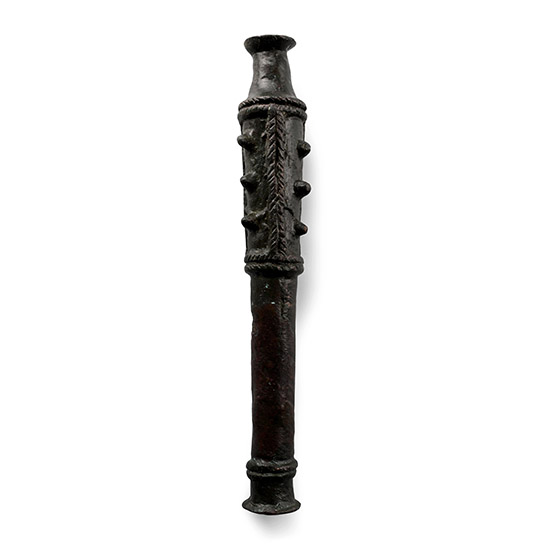
Luristan Bronze Macehead
Late 2nd millennium B.C.Sold for (Inc. bp): £293
Of cylindrical shape, the upper section with alternating rectangular panels framed by pseudo-rope design and vertical rows of three prominent spikes, a short cylindrical shaft edged at top and bottom. 190 grams, 15.6 cm
Ex Abelita family collection, 1980s-2000s.
This weapon has been used in different ways, and it was probably considered the main tool in the Kassite civilisation because of the high number of maces found in this area. Bronze maces in Luristan possibly had wooden handles, although most of them unfortunately, have been eroded and severely deteriorated. According to Khorasani, such maces were realised with the lost-wax process. -
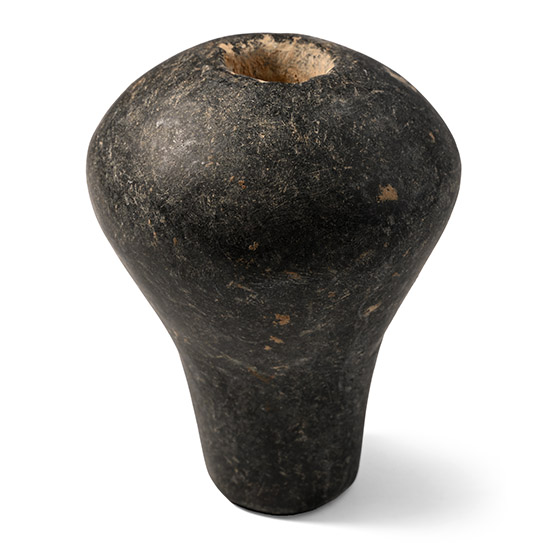
Western Asiatic Polished Stone Macehead
3rd-2nd millennium B.C.Sold for (Inc. bp): £143
With slightly carinated equator to the globular body and tubular shaft. 456 grams, 90 mm
From the collection of North West London, UK, gentleman, early 2000s.
