
Loading, please wait...
LOT 0397
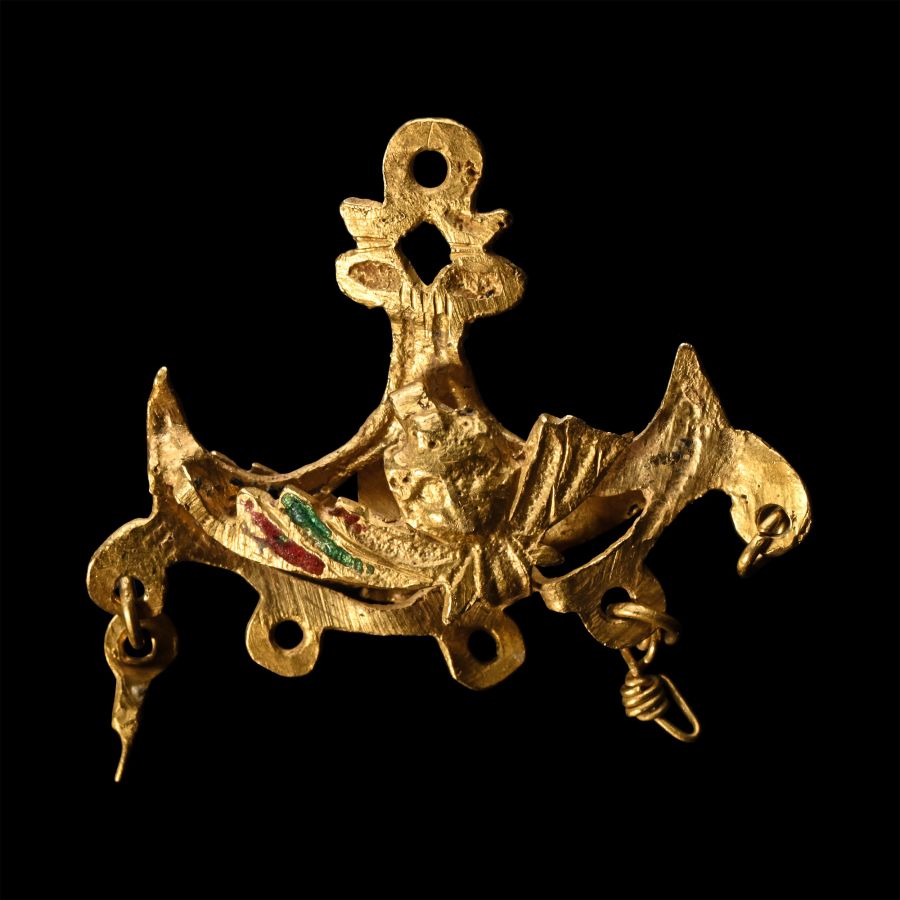
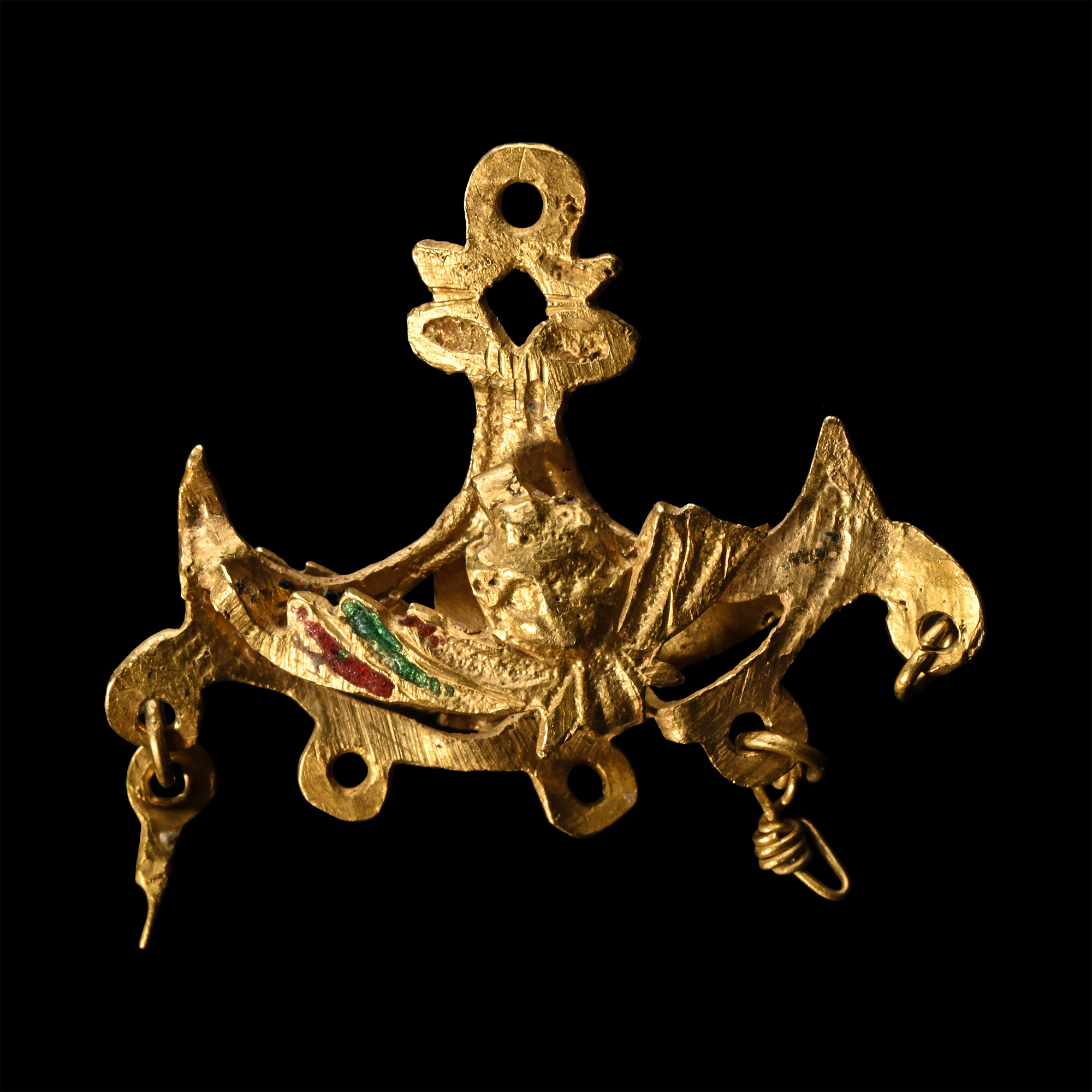
Elizabethan Period Enamelled Gold Ship Pendant
16TH CENTURY A.D.
1 in. (2.78 grams, 27 mm).
Crescentic bifacial pendant with winged putti on each side with traces of original polychrome enamel on the wings, five loops on the underside and a decorated suspension loop above.
ProvenanceFrom a Cambridgeshire, UK, collection, 1990s.
CONDITIONTimeLine Auctions follows a vetting process to ensure the authenticity and legality of all items, reinforcing our commitment to integrity and responsible trading. Each antiquity, antique, and coin lot undergoes thorough examination by a vetting committee of at least ten external specialists, professional trade association members, scientists, and archaeologists: Our Vetting Process
AUCTIONS:
TimeLine is a leading auction house specialising in antiquities, ancient art, collectables, natural history, coins, medals, and books. Our auctions offer museums, collectors, historians, and enthusiasts the opportunity to acquire unique and historically significant pieces.
LOT 0397
Elizabethan Period Enamelled Gold Ship Pendant
Estimate £800 - 1,000€930 - 1,160 (for guidance only)$1,080 - 1,350 (for guidance only)
-
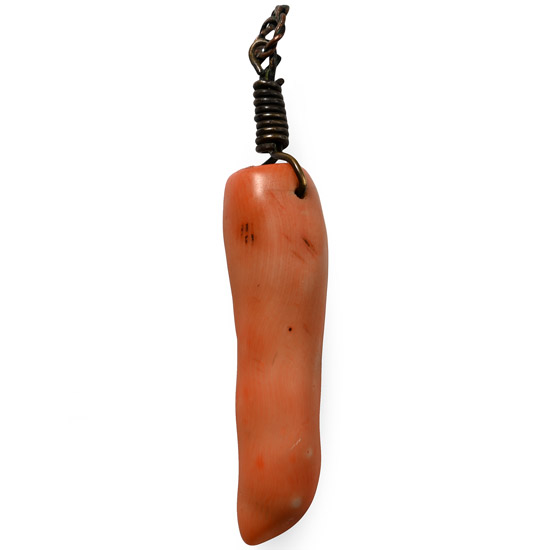
Baroque Style Coral Amulet
17th-18th century A.D.Sold for (Inc. bp): £117
Thick coral branch with natural striations, drilled and set with a silver pendant fitting. 22.23 grams, 85 mm
Acquired on the European art market. -
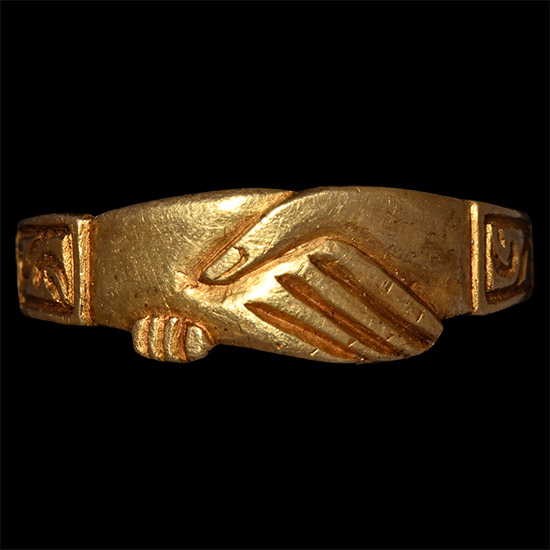
Post Medieval Gold Fede Ring
17th-18th century A.D.Sold for (Inc. bp): £1,170
Comprising a wide hoop, the shoulders with rectangular panels embellished with scrolling motifs framed by delicate wirework borders, the bezel formed as a pair of clasped hands, finely modelled in low relief, symbolising trust, fidelity, and contractual union, the hands articulated with tapering fingers and subtly defined cuffs. 4.08 grams, 21.08 mm overall, 18.89 mm internal diameter (approximate size British R, USA 8 1/2, Europe 18 3/4, Japan 18)
Acquired on the European art market.
The fede motif derives from the medieval formula mani in fede ('hands in trust'), a visual expression of loyalty and binding agreement. Rings of this type circulated widely from the late medieval period onward, gaining particular prominence in the seventeenth and eighteenth centuries as betrothal jewels embodying steadfast commitment. The present example, with its restrained decorative scheme and high gold purity, reflects the enduring appeal of intimate, symbolically charged jewels rooted in long-standing marital and devotional customs. -
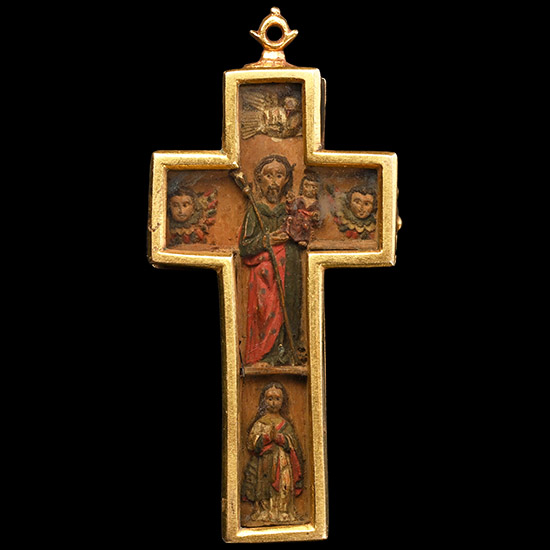
Mexican Gold Mounted Wooden Cross with Saint Joseph
Circa 1600 A.D.Sold for (Inc. bp): £5,720
The wooden cross set behind glass panels set within a large gold mount, the cross carved to one side with Saint Joseph holding the Christ child, beneath the Dove of the Holy Spirit, flanked by angels and above the praying Virgin; the other side with the crucified Christ, flanked on three sides by angels and above a Nun Saint. 50.7 grams, 81 mm
Acquired on the European art market. This lot has been checked against the Interpol Database of stolen works of art and is accompanied by search certificate number no.13345-257977.
The tradition of carving tiny devotional wooden reliefs for pendants began in the 16th century and continued throughout the 17th and 18th centuries in Mexico. The carvings were often sent to Spain, where they were mounted in pendants of silver and gold. Relicarios, The Forgotten Jewels of Latin America, by Martha J. Egan: ‘When ivory became difficult to obtain in Europe during the Middle Ages, following the Ottoman conquest of North Africa, European sculptors of miniature works, notably in the Netherlands and northern Europe, found boxwood to be a serviceable substitute. While only items of limited size can be carved in this hard, fine-grained wood, it can be highly polished, its light color is attractive, its density renders it unlikely to split or chip, and when finished, the carved material can resemble ivory.'
