
Loading, please wait...
LOT 1423
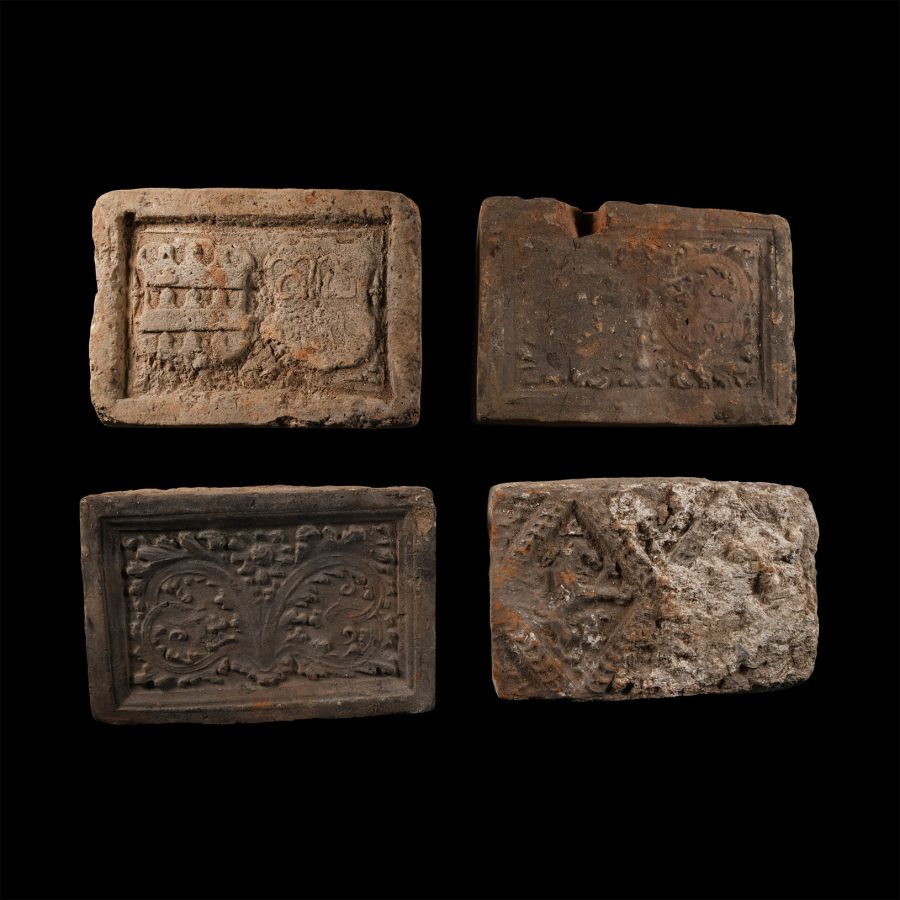
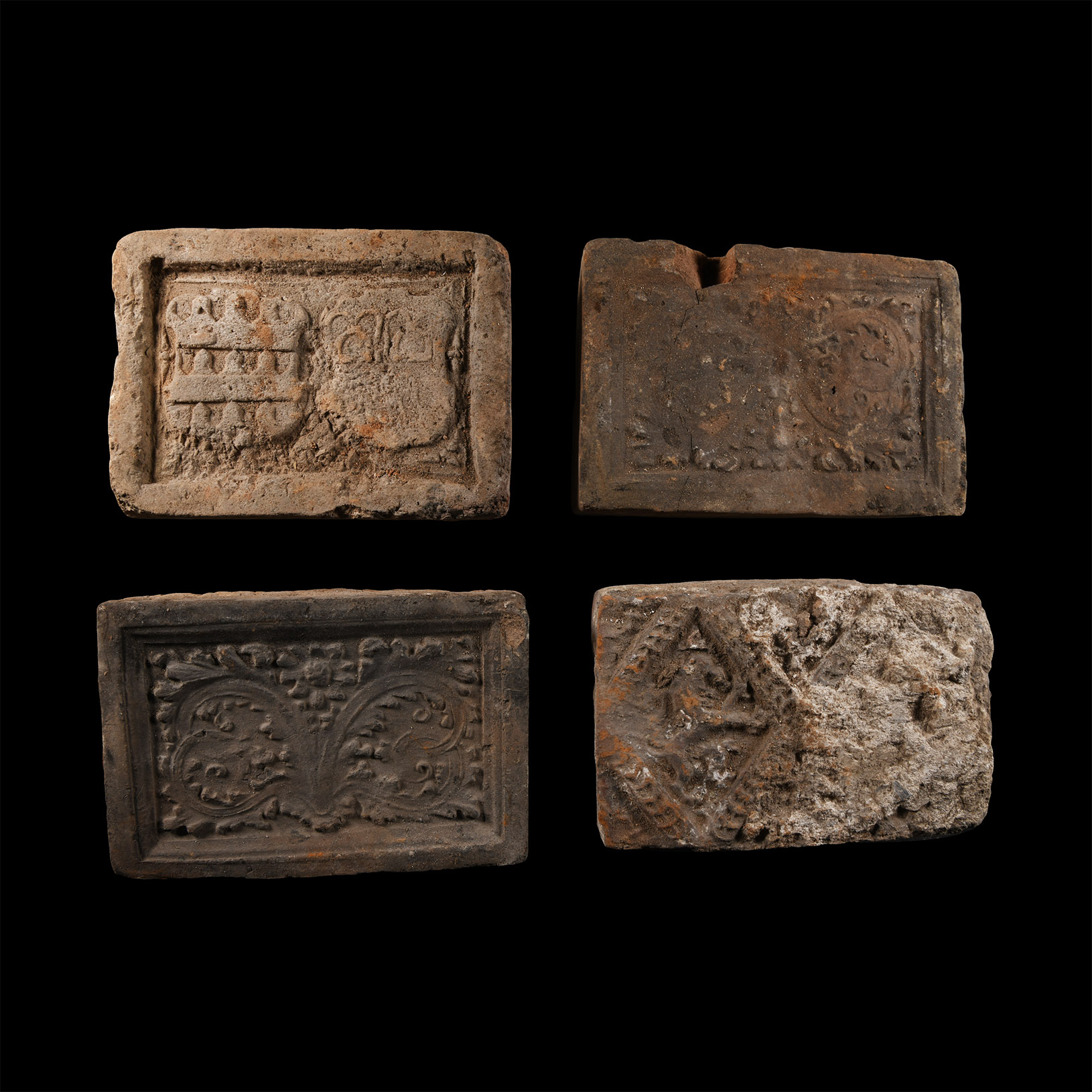
Elizabethan Period Ceramic Fire Brick Group
CIRCA 16TH CENTURY A.D.
5 1/4 - 5 3/4 in. (5.12 kg total, 13.5 - 14.5 cm).
Each differently sized and displaying a design in relief, including elaborate floral motifs, heraldic lion within lozenge and heraldic shields. [4]
ProvenanceAcquired 1990s-early 2000s.
East Anglian private collection.
Cf. similar specimen in the British Museum, inventory no.OA.9377.
FootnotesThese glazed stove or floor tiles are similar to the ones of the great hall and the Tudor kitchens at Hampton Court Palace, made of ceramic, with a glaze to make it hard-wearing and washable. Not just the furnishings, but the palaces themselves were multi-coloured, with brick walls painted red, and exposed timbers in yellow, red, green and white.
CONDITIONTimeLine Auctions follows a vetting process to ensure the authenticity and legality of all items, reinforcing our commitment to integrity and responsible trading. Each antiquity, antique, and coin lot undergoes thorough examination by a vetting committee of at least ten external specialists, professional trade association members, scientists, and archaeologists: Our Vetting Process
AUCTIONS:
TimeLine is a leading auction house specialising in antiquities, ancient art, collectables, natural history, coins, medals, and books. Our auctions offer museums, collectors, historians, and enthusiasts the opportunity to acquire unique and historically significant pieces.
-
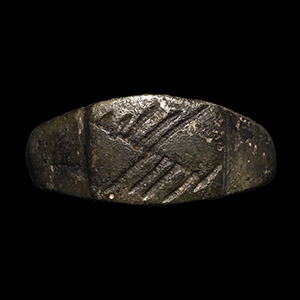
Tudor Period Bronze Fede Ring
16th-17th century A.D.Sold for (Inc. bp): £59
Rectangular boss with offset hatched design imitating the clasped hands of a classic mane in fede ring. 3.02 grams, 21.42 mm overall, 18.39 mm internal diameter (approximate size British P 1/2, USA 7 3/4, Europe 16.86, Japan 16)
Private collection formed since the 1940s. UK art market. Property of an Essex gentleman. -
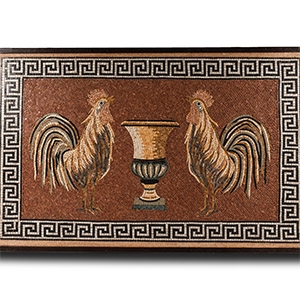
Large Roman Style Mosaic Panel
20th century A.D.Estimate: £1,000 - 1,400 (+bp*)
Opening Bid: £500
Rectangular panel with Greek-key meander border, russet field with two cockerels flanking an urn on a pedestal; embedded in matrix with ferrous frame. 17.6 kg, 108.5 cm wide
Ex Paris collection. French gallery, Paris, 1990-2000s. -
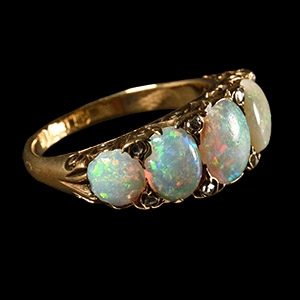
Antique Gold Ring with Australian Opals
London, 1894 A.D.Estimate: £1,000 - 1,400 (+bp*)
Opening Bid: £400
With five graduated white opal cabochons each with shimmering green, blue, yellow and orange coloration believed to be of Australian origin; hallmarked for London, 'T' in shield (1894), 18 carat gold. 5.54 grams, 23.81 mm overall, 17.56 mm internal diameter (approximate size British O, USA 7, Europe 14.98, Japan 14)
Property of an Essex, UK, gentleman.
