
Loading, please wait...
LOT 1951
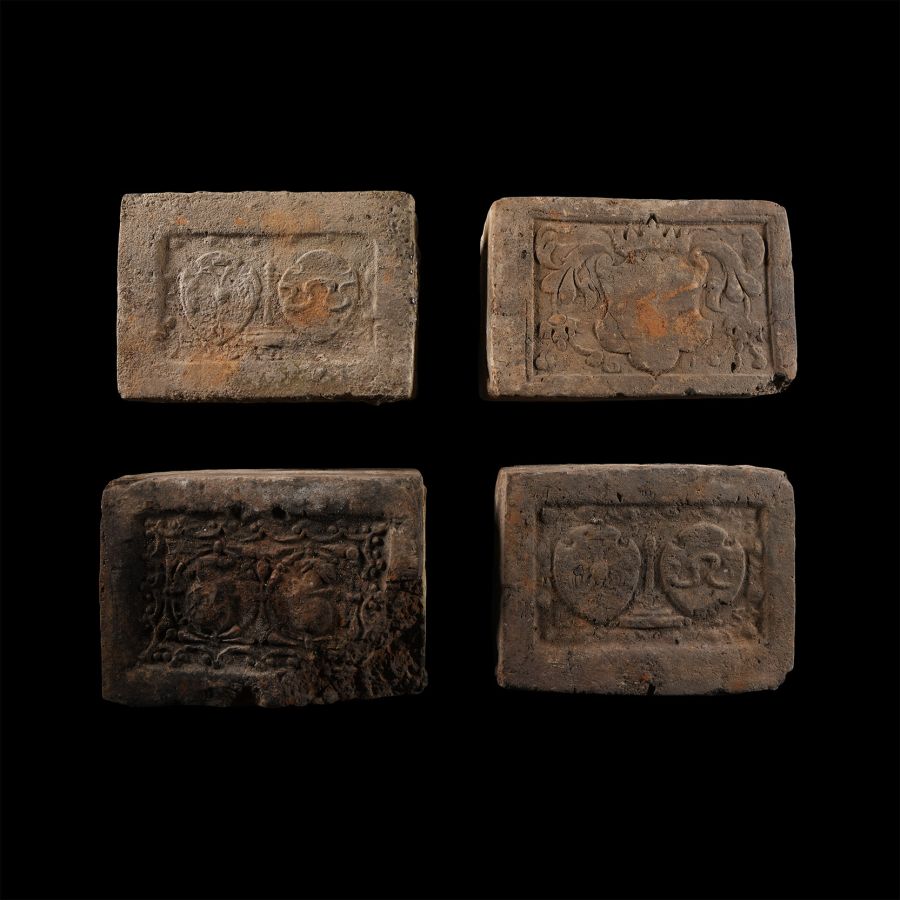
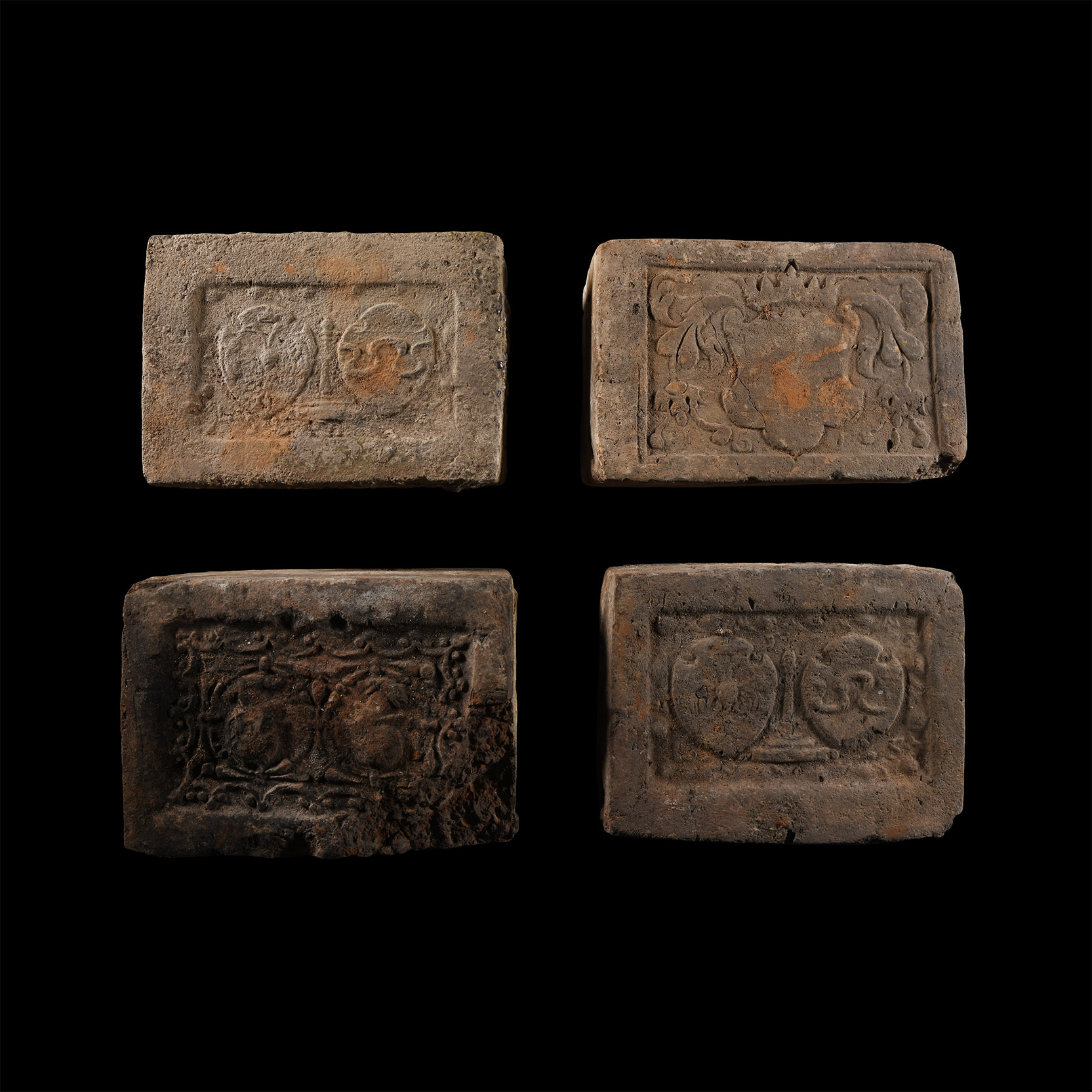
Elizabethan Period Ceramic Fire Brick Group
CIRCA 16TH CENTURY A.D.
5 - 5 1/2 in. (7.7 kg total, 13-14 cm).
Comprising four bricks displaying raised designs: a crowned shield; two displaying armorials flanking an object with tiered base; facing male and female bust within roundels, swags around. [4]
ProvenanceAcquired 1990s-early 2000s.
East Anglian private collection.
Cf. similar specimen in the British Museum, inventory no.OA.9377.
FootnotesThese glazed stove or floor tiles are similar to the ones of the great hall and the Tudor kitchens at Hampton Court Palace, made of ceramic, with a glaze to make it hard-wearing and washable. Not just the furnishings, but the palaces themselves were multi-coloured, with brick walls painted red, and exposed timbers in yellow, red, green and white.
CONDITIONTimeLine Auctions follows a vetting process to ensure the authenticity and legality of all items, reinforcing our commitment to integrity and responsible trading. Each antiquity, antique, and coin lot undergoes thorough examination by a vetting committee of at least ten external specialists, professional trade association members, scientists, and archaeologists: Our Vetting Process
AUCTIONS:
TimeLine is a leading auction house specialising in antiquities, ancient art, collectables, natural history, coins, medals, and books. Our auctions offer museums, collectors, historians, and enthusiasts the opportunity to acquire unique and historically significant pieces.
-
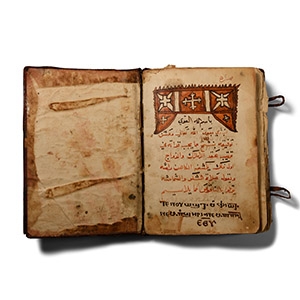
Leather Bound Religious Manuscript Book
18th-19th century A.D.Sold for (Inc. bp): £1,040
Leather-bound book of a religious treatise with Naskh text in red on the first page beneath a banner with cross images and Greek text below; many pages with large Greek letters in black and Naskh script sub-headings in red ink; red Arabic numerals to the corner of some pages; marginal notations and other markings; probably from North Africa. 555 grams. 19 x 14 cm
Acquired 1970s-1996. Property of a North American collector. London collection, 2016. -
.jpg)
Georgian 'Thames' Iron Forks with Bone Handles
Circa 18th century A.D.Sold for (Inc. bp): £46
Two types of two-pronged forks, one with a cylindrical handle carved with a geometric band around the top; one formed with a tapering round-section handle. 59 grams total, 16.3-16.6 cm
Found Billingsgate spoil from the Thames foreshore, London, UK. -
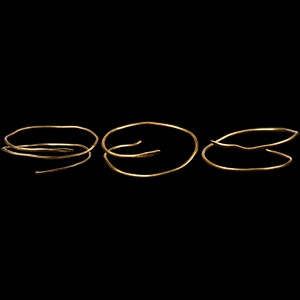
Gold Snake Bracelet Group
20th century A.D. or earlierEstimate: £2,000 - 3,000 (‡+bp*)
Opening Bid: £1,000
Comprising three coiled gold bracelets with stylised snake head detailing. 72 grams total, 69-73 mm
From the collection of a North American gentleman, formed in the 1990s. This lot has been checked against the Interpol Database of stolen works of art and is accompanied by search certificate number no.11888-200712.
