
Loading, please wait...
LOT 0345
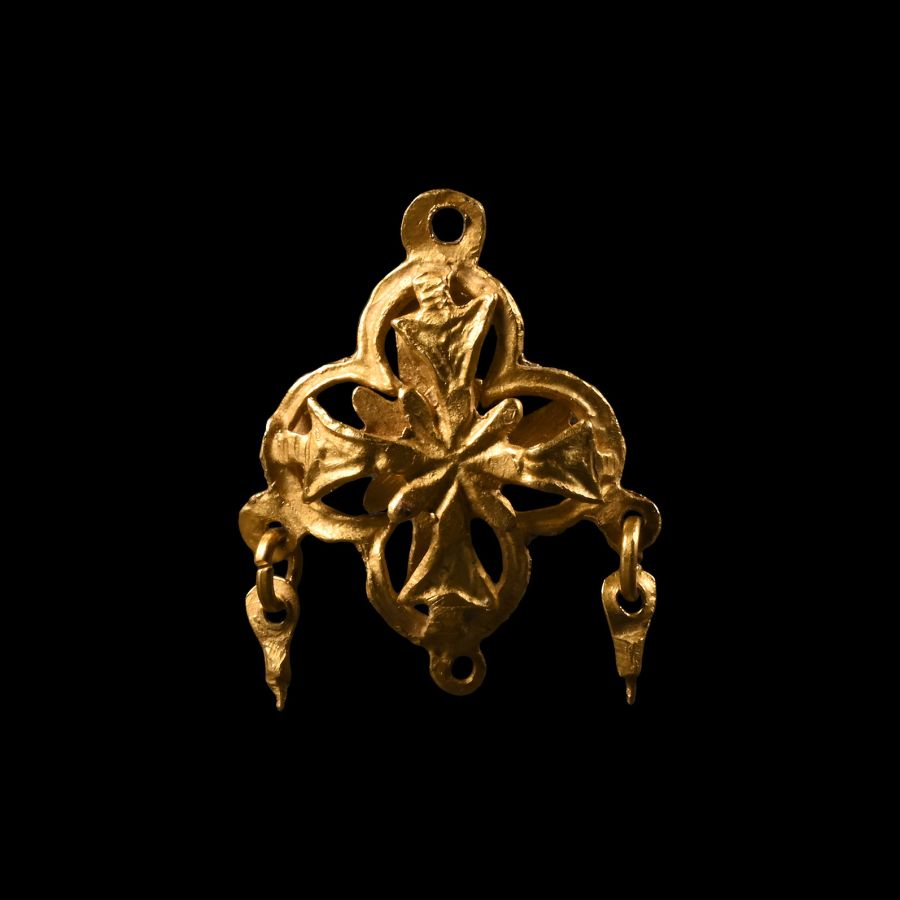
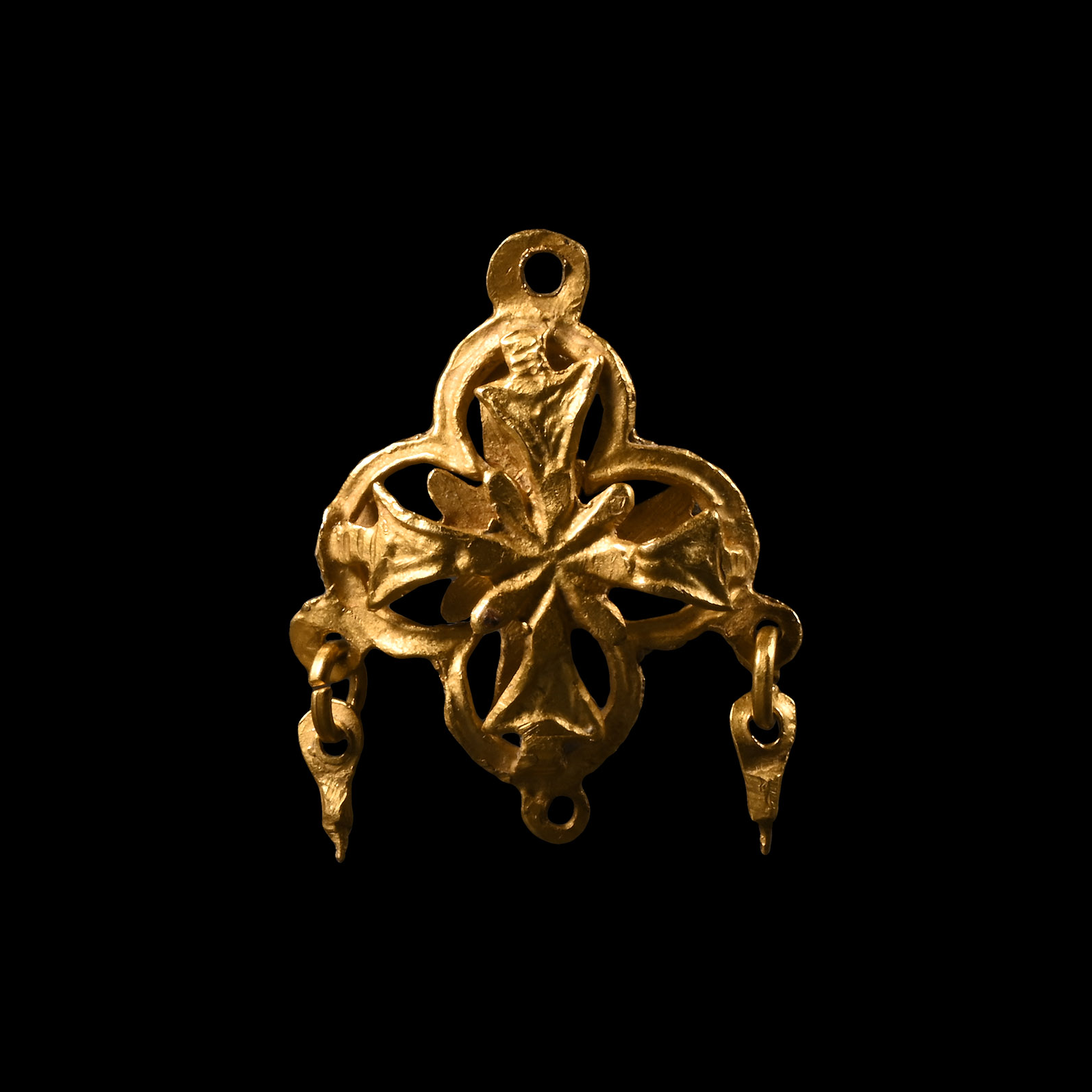
Elizabethan Gold Cross Pendant
16TH-EARLY 17TH CENTURY A.D.
3/4 in. (1.59 grams, 21 mm).
A gold bifacial cruciform pendant comprising: outer frame of four lobes confining a cross moline with saltire to the centre, pierced lug to three arms each with a gold dangle, fourth with larger pierced tab for suspension.
ProvenanceAcquired 1980-2015.
Ex Abelita family collection.
TimeLine Auctions follows a vetting process to ensure the authenticity and legality of all items, reinforcing our commitment to integrity and responsible trading. Each antiquity, antique, and coin lot undergoes thorough examination by a vetting committee of at least ten external specialists, professional trade association members, scientists, and archaeologists: Our Vetting Process
AUCTIONS:
TimeLine is a leading auction house specialising in antiquities, ancient art, collectables, natural history, coins, medals, and books. Our auctions offer museums, collectors, historians, and enthusiasts the opportunity to acquire unique and historically significant pieces.
-
Bronze Statue of the Warrior of Riace
20th century A.D.Estimate: £2,500 - 3,500 (+bp*)
Opening Bid: £1,250
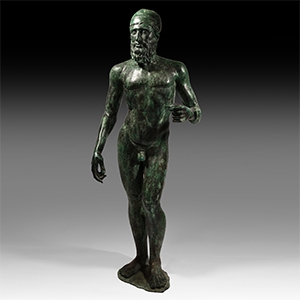
A bronze copy of the 'Warrior of Riace', found in Calabria, Italy, standing nude wearing a cap made from the face of the Nemean lion; bracer to the left forearm for attachment of a shield or lion skin cape. 40 kg, 1.42 m high
French collection, 1960s-early 2000s. From an important Paris gallery, France. This lot has been checked against the Interpol Database of stolen works of art and is accompanied by search certificate number no.11692-199339.
The 'Riace Bronzes' are two full-size Greek bronzes of bearded warriors, dating from about 450 B.C. that were found in the sea near Riace, Calabria, southern Italy in 1972. They are now in the Museo Nazionale della Magna Grecia in the city of Reggio Calabria. -
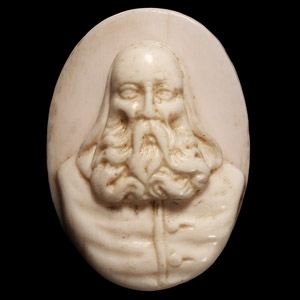
Shell Cameo of a Wealthy Merchant
18th-19th century A.D.Estimate: £120 - 170 (+bp*)
Opening Bid: £60
A carved shell facing bust of a bearded male with long hair, probably a German merchant. 3.04 grams, 23 mm
Acquired from Artermide Aste, auction 39E, lot 426. From the collection of G.M.R.H., London, UK. -
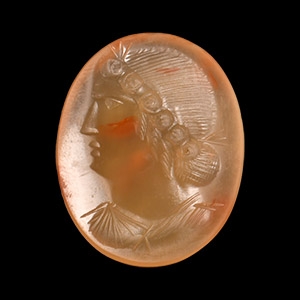
Post Medieval Apollo Gemstone
19th century A.D.Sold for (Inc. bp): £33
A carnelian intaglio bust of Apollo in profile with chlamys to the shoulder, diadem to the brow. 4.54 grams, 26 mm
Acquired in the late 1980s-early 1990s. Important North West London collection.
