
Loading, please wait...
LOT 1129
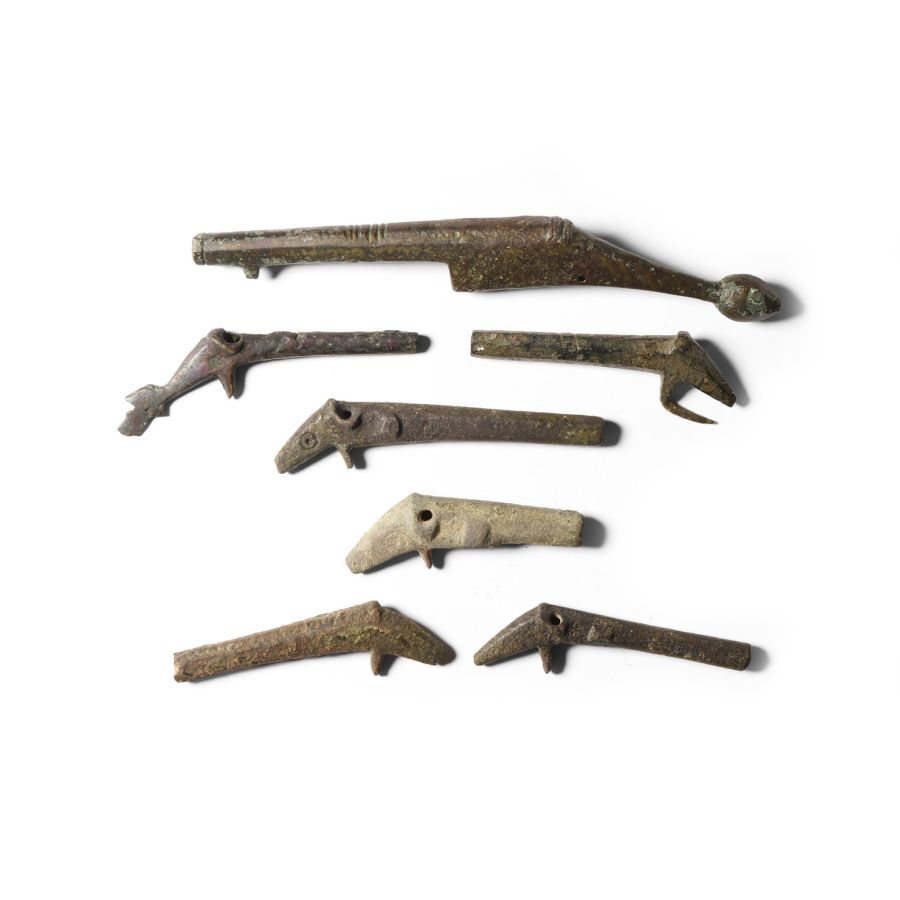
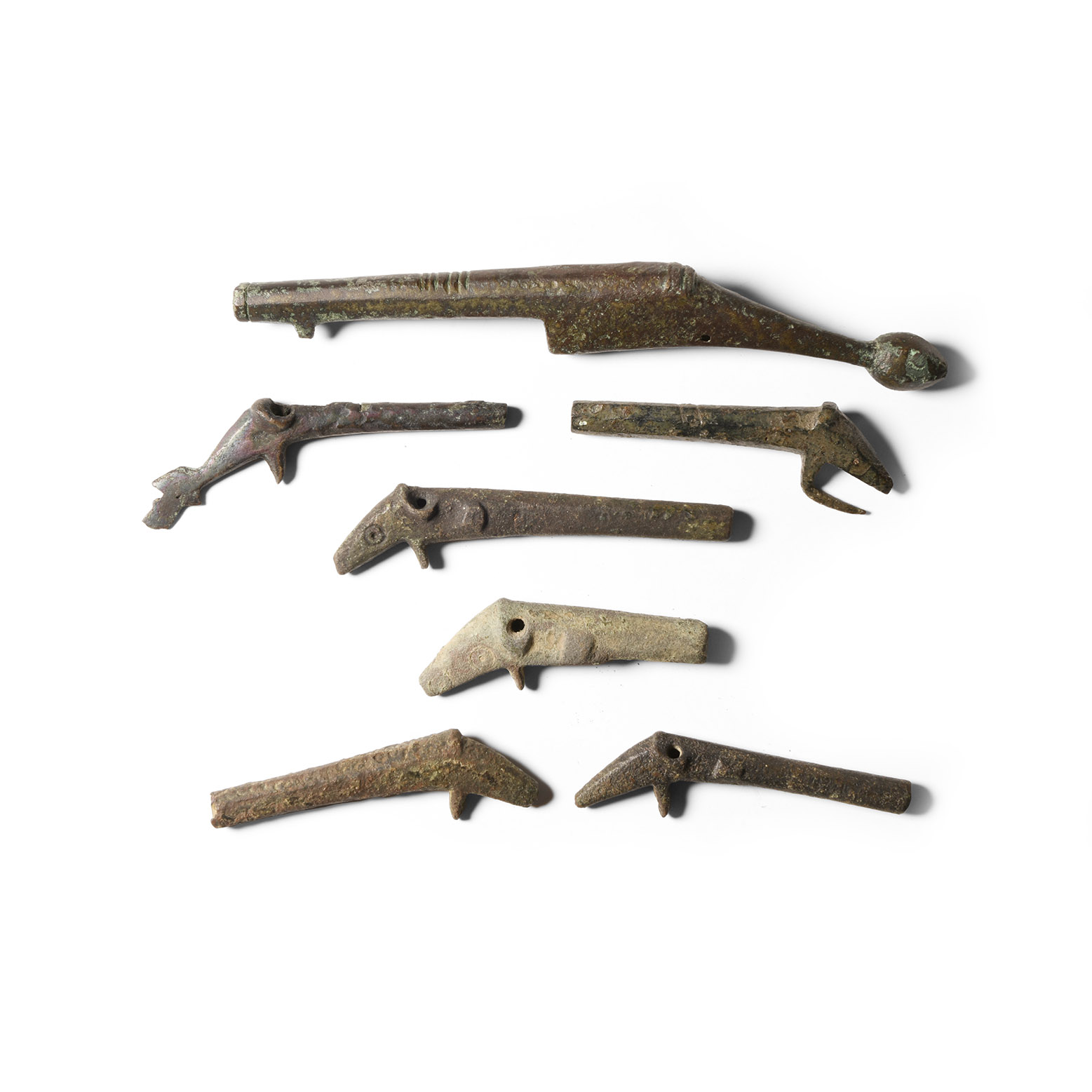
Elizabethan and Later 'Essex' Bronze Petronel Collection
LATE 16TH-EARLY 17TH CENTURY A.D.
1 7/8 - 4 3/4 in. (106 grams total, 4.8-12 cm).
Exhibiting a range of petronel types, including example with ring-and-dot detailing. [7, No Reserve]
ProvenanceFound Essex, UK.
CONDITIONTimeLine Auctions follows a vetting process to ensure the authenticity and legality of all items, reinforcing our commitment to integrity and responsible trading. Each antiquity, antique, and coin lot undergoes thorough examination by a vetting committee of at least ten external specialists, professional trade association members, scientists, and archaeologists: Our Vetting Process
AUCTIONS:
TimeLine is a leading auction house specialising in antiquities, ancient art, collectables, natural history, coins, medals, and books. Our auctions offer museums, collectors, historians, and enthusiasts the opportunity to acquire unique and historically significant pieces.
LOT 1129
Elizabethan and Later 'Essex' Bronze Petronel Collection
Sold for (Inc. bp): £169
-
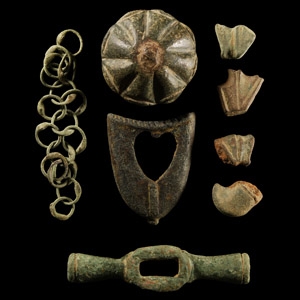
Medieval Bronze Artefact Group
14th-16th century A.D.Sold for (Inc. bp): £52
Comprising: a dagger quillon guard dated 15th-16th century A.D. with X-motifs and accompanied by a Portable Antiquities Scheme record; a partial chape with openwork heart motif; lobed and domed pommel; section of chainmail; four pommels for knives or other utensils, including examples with simple ornamentation. 135 grams total, 12-60 mm
Found Berkshire, UK. Accompanied by a copy of the British Museum's Portable Antiquities Scheme (PAS) report no.BERK-A95853 for the 15th century quillon guard. -
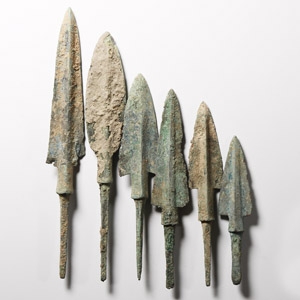
North Western Persian Bronze Arrowhead Group
12th-10th century B.C.Sold for (Inc. bp): £124
Comprising six tanged arrowheads, five with large elongated triangular blades and raised midrib, one with oval shoulders, all with sharp central groove, cylindrical stem with handle for the shaft. 145 grams total, 8-15 cm
Acquired 1980-2015. Ex Abelita family collection.
Some of these arrowheads seems to belong to the type V, subcategory type C, according to the classification of Khorasani and Negahban. In the four categories of triangular bronze arrowheads from Luristan, Marlik and Northern Iran individuated by Negahban, subtypes C and D of type V are larger arrow or javelin heads, C with barbed shoulders and D with round shoulders. -
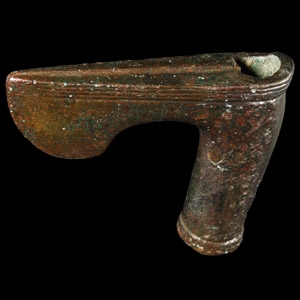
Luristan Bronze Socketted Axe
13th-7th century B.C.Estimate: £180 - 240 (+bp*)
Opening Bid: £90
Composed of a cylindrical socket with channeled lip to upper edge and raised rib to top face, convex cutting edge and raised ridge to butt. 371 grams, 10.2 cm
Acquired 1980-2015. Ex Abelita family collection.
