
Loading, please wait...
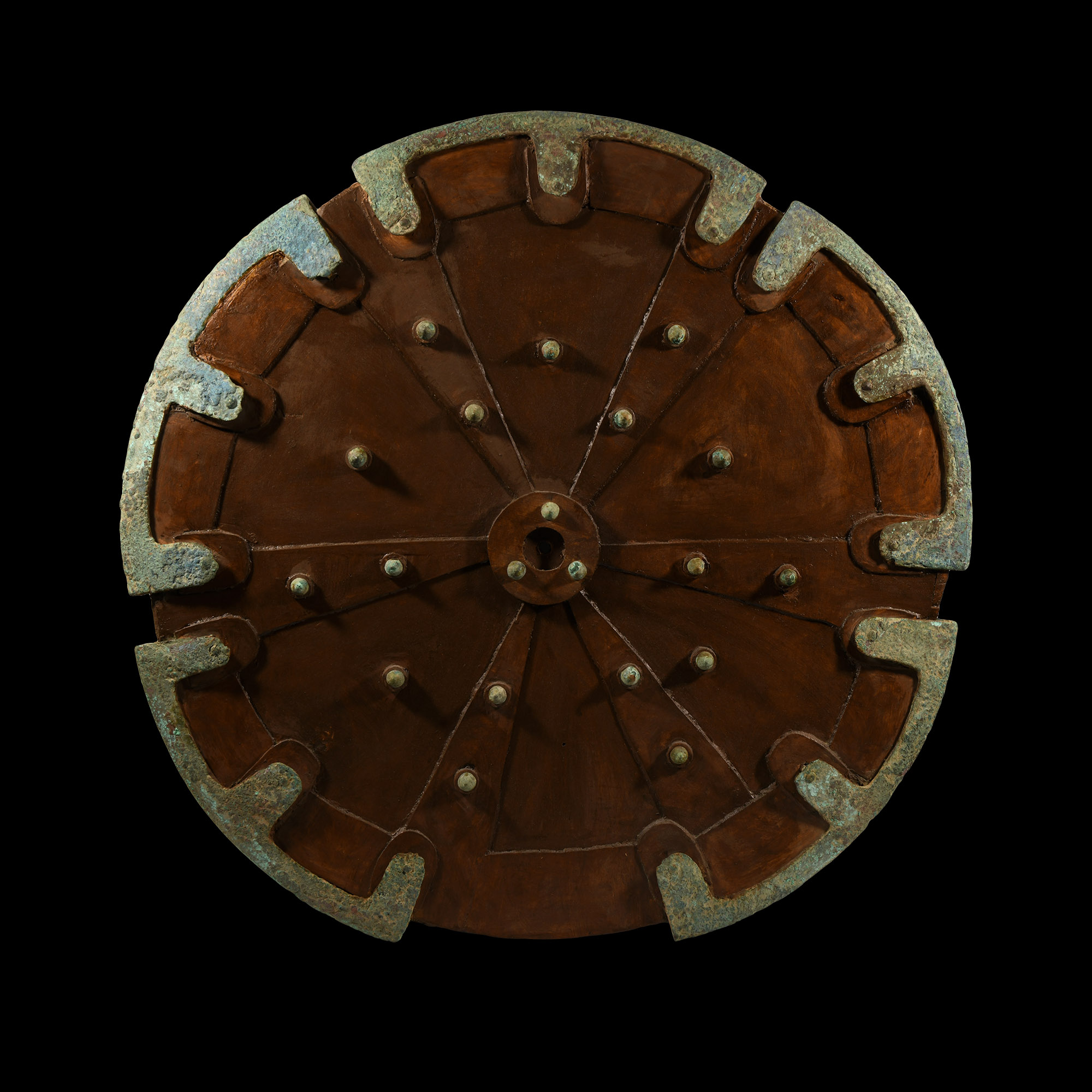
LOT 0262
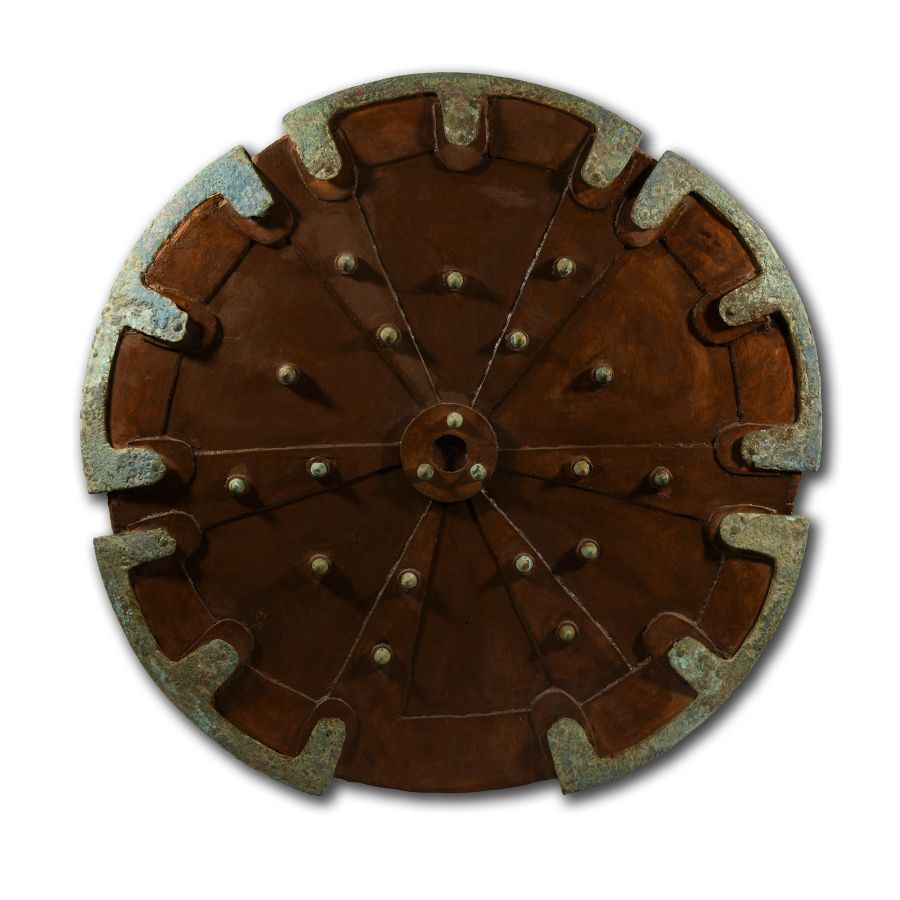
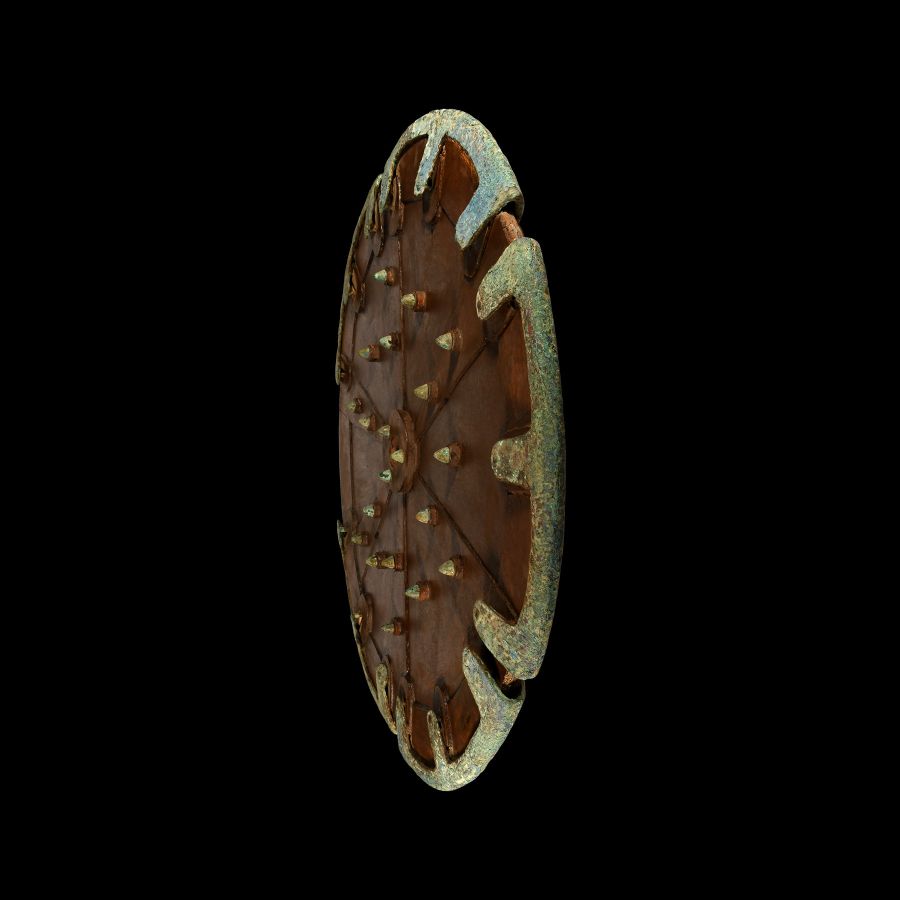
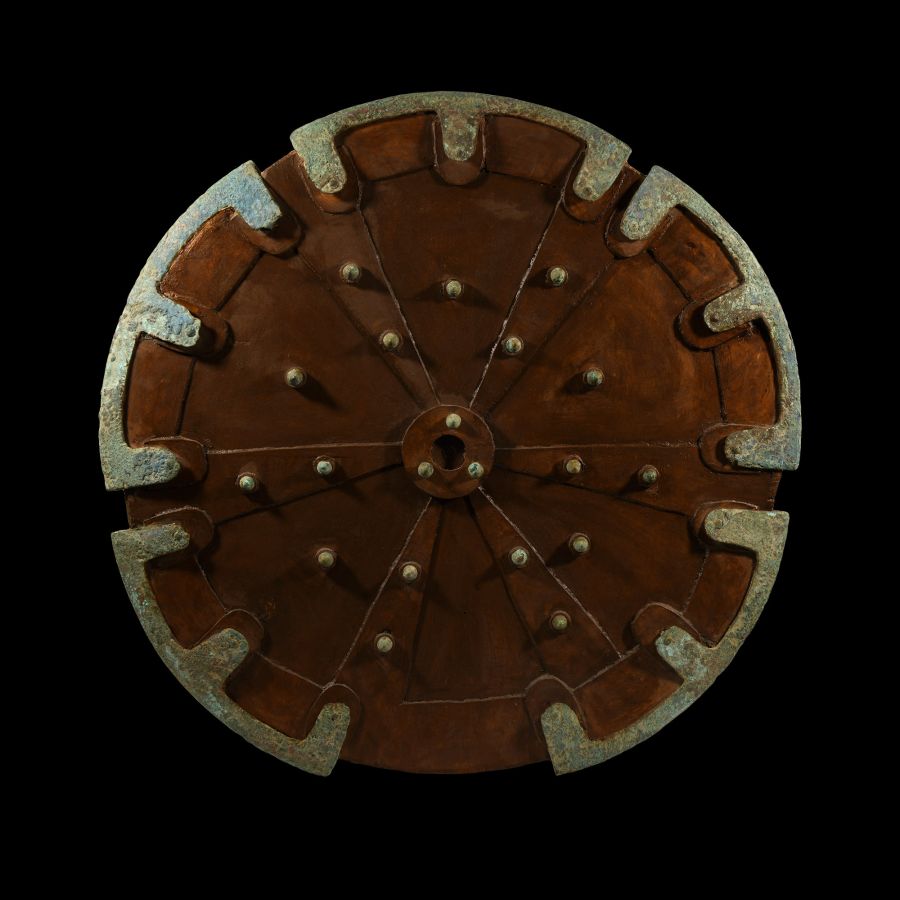
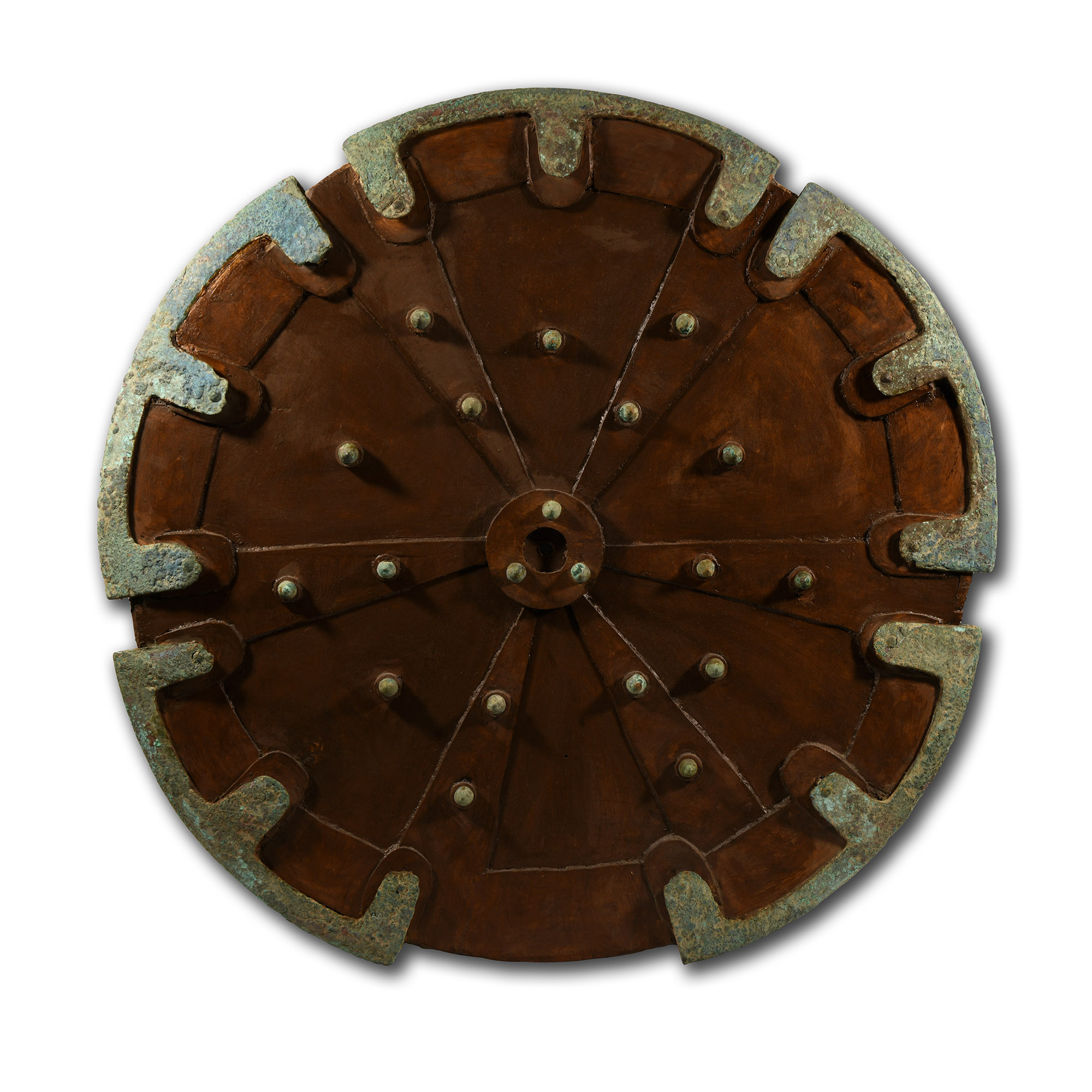
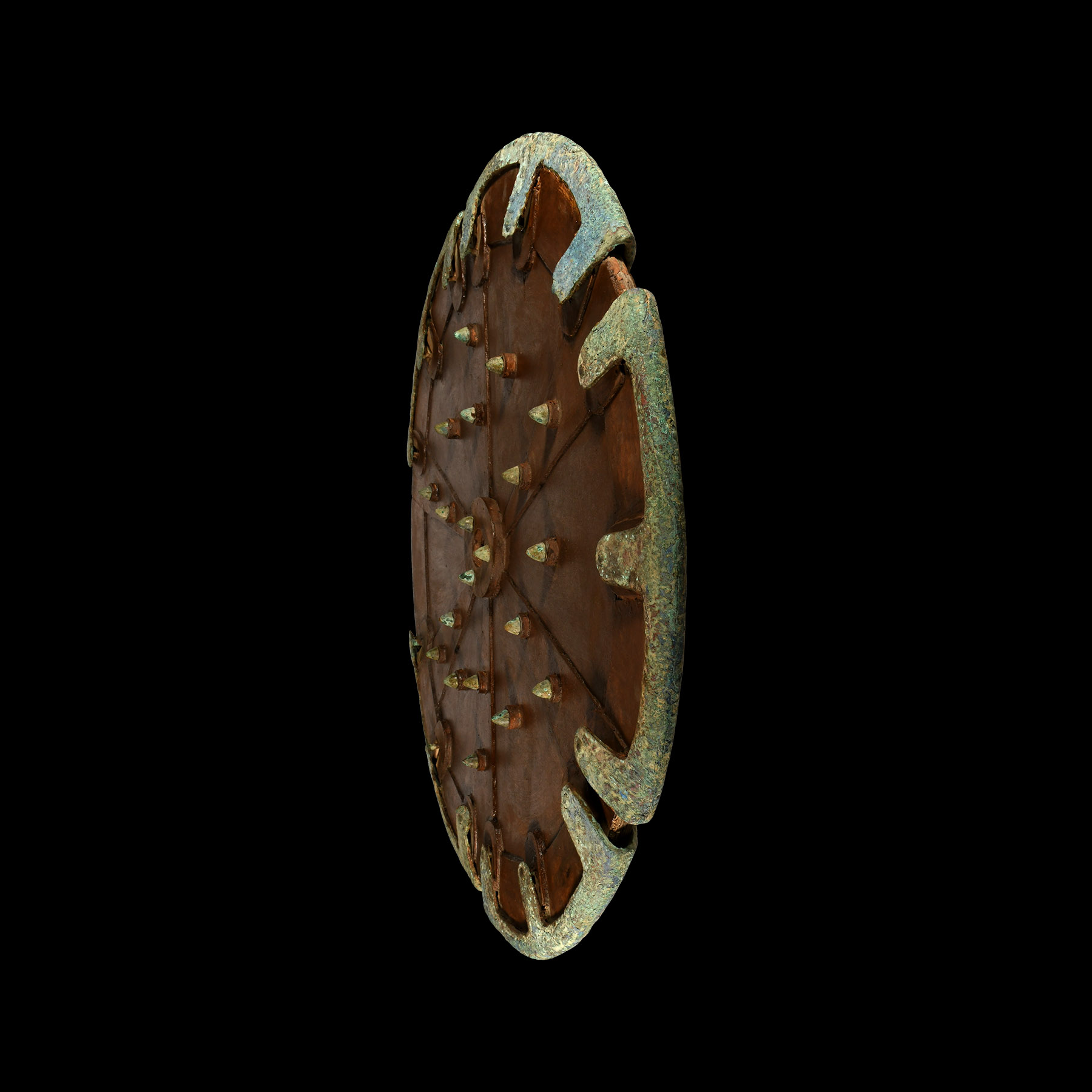
Elamite War Chariot Wheel Fittings
LATE 3RD-EARLY 2ND MILLENNIUM B.C.
38 1/2 in. (19.35 kg, 98 cm diameter).
Comprising five large wheel clamps and twenty conical rivets; each C-section clamp with tongue-shaped later lugs with rivets to both sides; mounted on a custom-made wheel-shaped display mount.
ProvenanceAcquired before 1983.
Ex London gallery, 1990s.
Accompanied by an academic report by Dr Raffaele D’Amato.
This lot has been checked against the Interpol Database of stolen works of art and is accompanied by a search certificate number no.12038-216335.
See Caubet, A. & Yon, M., ‘Pommeaux de chars, du Levant à la Mésopotamie et à l’Élam’ in Études Mésopotamiennes: Recueil de Textes Offert à Jean-Louis Huot, Paris, 2001, pp.69-78; Gökce, B., 'On Urartian Chariots' in Veldmeijer, A.J. & Ikram, S., Chasing Chariot/Proceedings of the First İnternational Chariot Conference (Cairo, 2012), Cairo, 2013, pp.107-122; a similar wheel is on display at the National Museum of Iran in Tehran, and was excavated from Choqa Zanbil, an ancient Elamite site in Khuzestan province; important similar specimens (3) were found in Susa, see Kawami, T.S. ‘That Strange Equid from Susa’ in Crouwel, H.J., ‘Wheeled Vehicles and their Draught Animals in the Ancient Near East—an Update’ in Raulwing, P., Linduff, K.M., Crouwel, J. H., Equids and Wheeled Vehicles in the Ancient World, Essays in Memory of Mary A. Littauer, Oxford, 2019, pp.97-105, figs.5,7,9.
FootnotesThe custom of burying the deceased with chariots and the respective yoked animals has been documented since the 3rd millennium B.C. Bronze wheel clamps similar to these have been found in Elamite and Urartian graves, and are consistent with Assyrian and Elamite models. These clamps have important parallels, including those found from the Susa region which show an affinity with Assyrian iconography.
CONDITIONTimeLine Auctions follows a vetting process to ensure the authenticity and legality of all items, reinforcing our commitment to integrity and responsible trading. Each antiquity, antique, and coin lot undergoes thorough examination by a vetting committee of at least ten external specialists, professional trade association members, scientists, and archaeologists: Our Vetting Process
AUCTIONS:
TimeLine is a leading auction house specialising in antiquities, ancient art, collectables, natural history, coins, medals, and books. Our auctions offer museums, collectors, historians, and enthusiasts the opportunity to acquire unique and historically significant pieces.
-
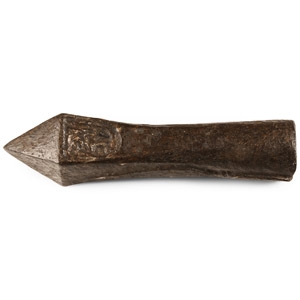
Medieval Socketted Iron Crossbow Bolt Head with Heraldic Shield Maker's Mark
15th-16th century A.D.Sold for (Inc. bp): £286
With pyramidal point, square-section shaft, tubular socket and heater shield displaying a lion passant maker's mark. 46.2 grams, 73 mm
Tucker collection, Buckinghamshire, UK; formed in the 1980s. Property of a Kent lady collector. -
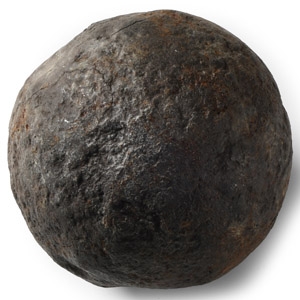
Civil War Iron Cannon Shot
Circa 17th century A.D.Sold for (Inc. bp): £26
Solid-core shot or cannon ball for a small artillery piece. 730 grams, 61 mm
From a collection acquired on the UK art market from various auction houses and collections mostly before 2000. From an important Cambridgeshire estate; thence by descent. -
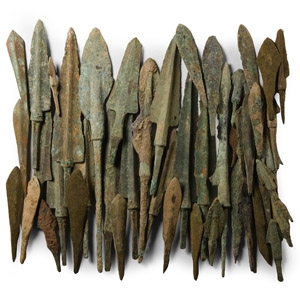
Luristan Arrowhead Collection
13th-7th century B.C.Sold for (Inc. bp): £390
Comprising forty-five arrowheads of various types, including triangular, lanceolate and leaf-shaped; mainly tanged, some barbed. 557 grams total, 3.2-17.1 cm
Acquired 1980-2015. Ex Abelita family collection.
