
Loading, please wait...
LOT 0185
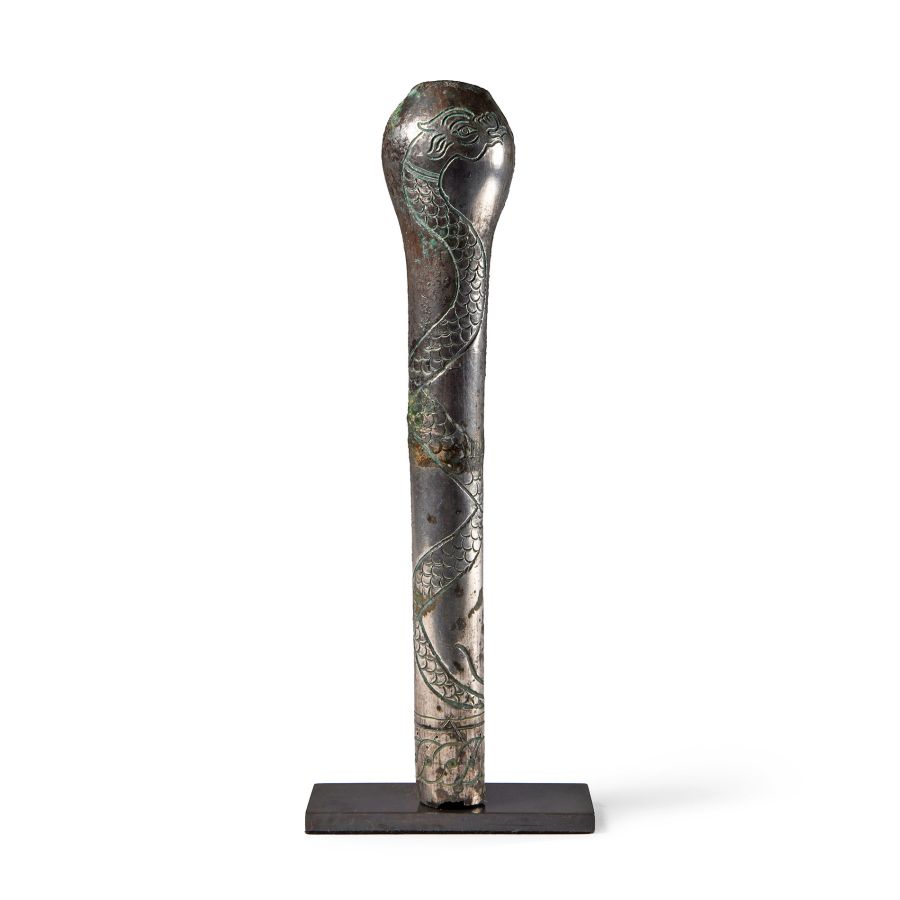
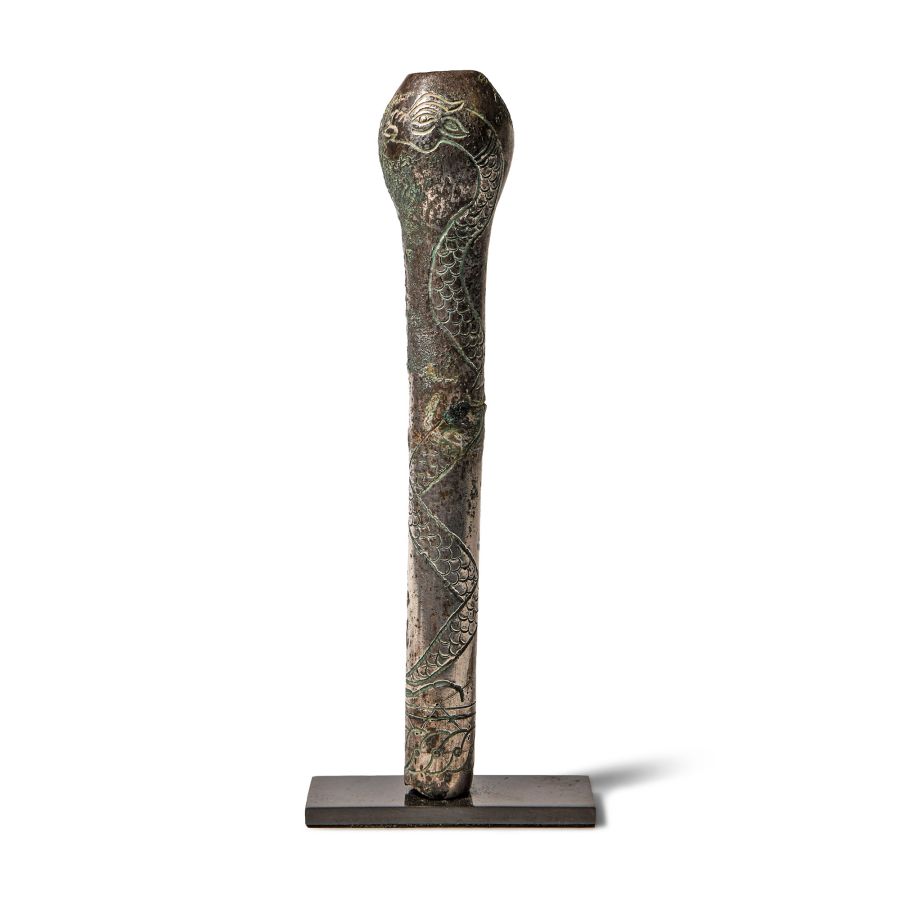
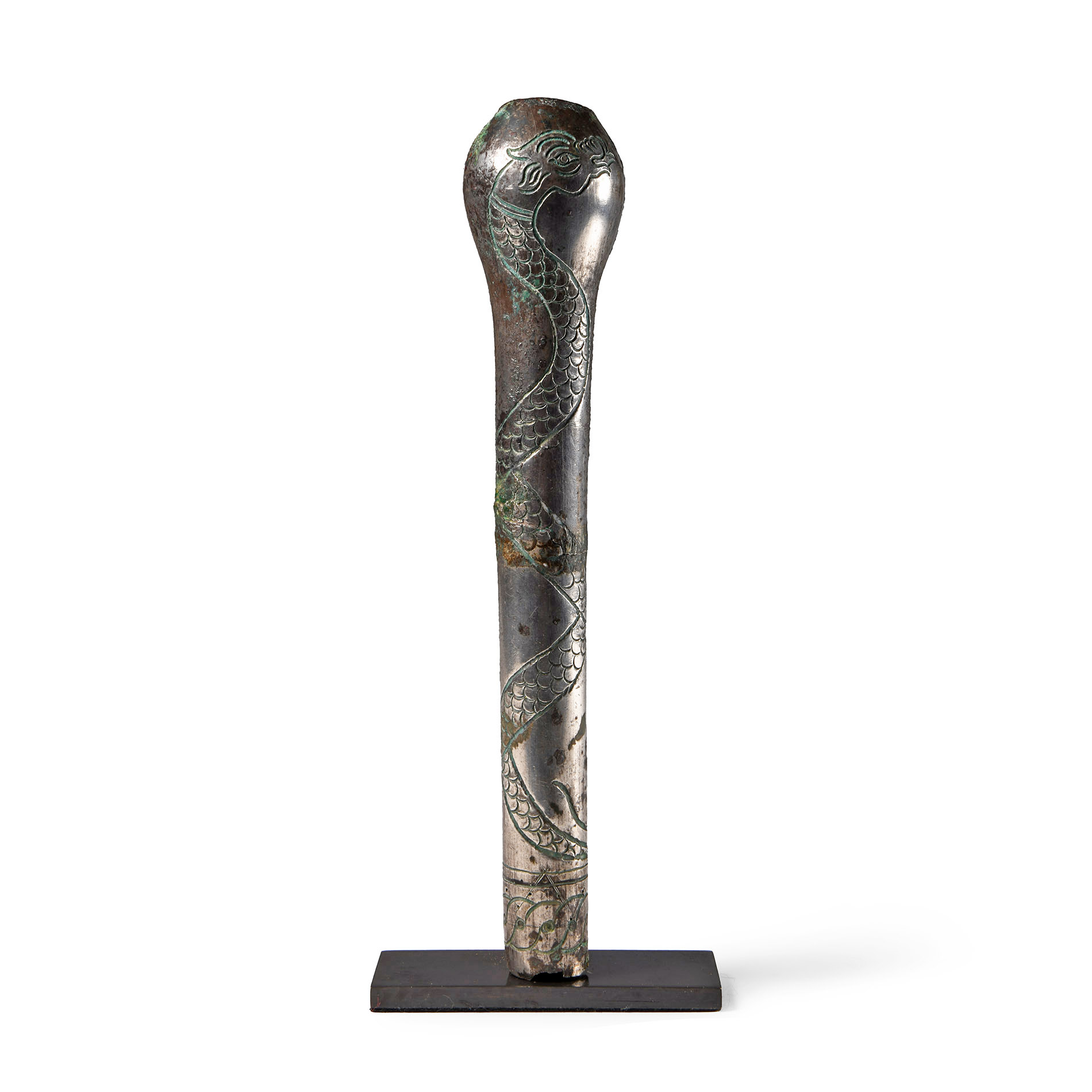
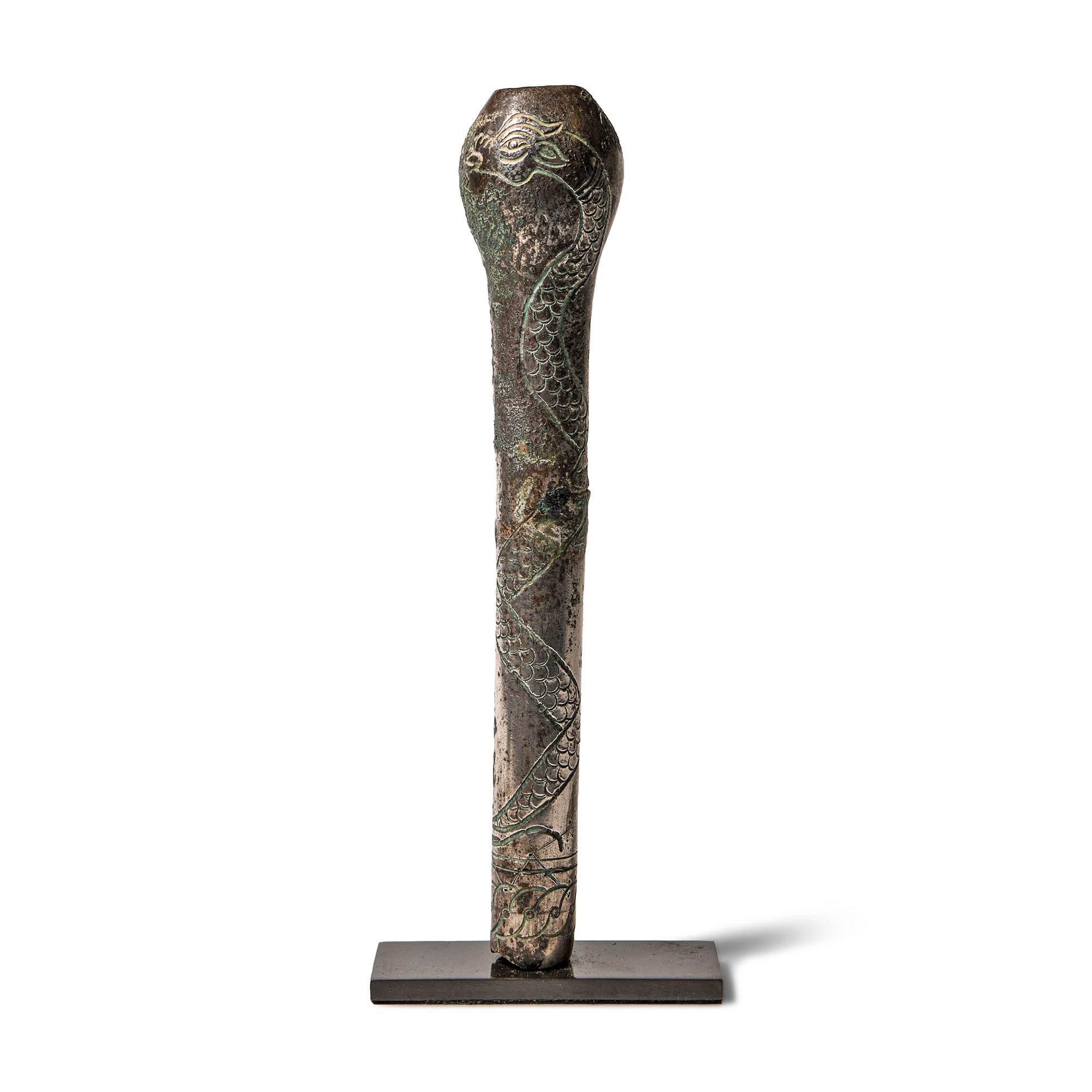
Elamite Silver Staff Terminal with Interlaced Dragons
1ST MILLENNIUM B.C.
7 7/8 in. (45 grams total, 20 cm including stand).
Hollow-formed with bulb finial, low-relief image of opposed dragons with detailed scale texture; circumferential band with incised guilloche below; mounted on a custom-made stand.
ProvenanceLondon, UK gallery, 1971-early 2000s.
This lot has been checked against the Interpol Database of stolen works of art and is accompanied by search certificate no.11966-210624.
This lot has been cleared against the Art Loss Register database, and is accompanied by an illustrated lot declaration signed by the Head of the Antiquities Department, Dr Raffaele D'Amato.
TimeLine Auctions follows a vetting process to ensure the authenticity and legality of all items, reinforcing our commitment to integrity and responsible trading. Each antiquity, antique, and coin lot undergoes thorough examination by a vetting committee of at least ten external specialists, professional trade association members, scientists, and archaeologists: Our Vetting Process
AUCTIONS:
TimeLine is a leading auction house specialising in antiquities, ancient art, collectables, natural history, coins, medals, and books. Our auctions offer museums, collectors, historians, and enthusiasts the opportunity to acquire unique and historically significant pieces.
LOT 0185
Elamite Silver Staff Terminal with Interlaced Dragons
Estimate £1,500 - 2,000€1,740 - 2,320 (for guidance only)$2,030 - 2,700 (for guidance only)
-

Mitanni Hematite Cylinder Seal with Griffin Attacking Quadruped
1500-1200 B.C.Sold for (Inc. bp): £650
With animals and standing figure, restrung pair of red stone beads, old handwritten label '1614'; accompanied by a copy of an old scholarly note, typed and signed by W.G. Lambert, late Professor of Assyriology, University of Birmingham, 1970-1993, which states: 'Cylinder Seal of Hematite, 19.5.x9.5 mm. The design consists of one item occupying the full height of the space, the other items being in effect in two registers. The human figure is full-height, wearing a robe to the ground, holding one hand to the waist, the other up. The lower register consists mainly of two recumbent horned animals, each facing backwards towards a sacred- tree. To the right is a smaller quadruped, to the left a rosette and star. Above a griffin is attacking a quadruped, while behind. The griffin is another quadruped, but horned and recumbent. This seal is Mitanni Elaborate Style, c. 1500-1200 B.C. from Syria or north Mesopotamia. It is cut, as normal for this type of seal, mainly with the cutting wheel and drill, and is a fine example of its kind.'; accompanied by a museum-quality impression. 6.2 grams, 19 mm
UK private collection, acquired 1980-1983. Accompanied by a copy of a scholarly note, typed and signed by Professor Wilfrid George Lambert in 1991. This lot has been cleared against the Art Loss Register database, and is accompanied by an illustrated lot declaration signed by the Head of the Antiquities Department, Dr Raffaele D'Amato. -

Large Western Asiatic Red Terracotta Spouted Jug with Handle
3rd-4th century A.D.Estimate: £400 - 600 (+bp*)
Opening Bid: £200
Biconical body with tall tapering spout, collar to the tapering neck with tear-drop shaped mouth; strap handle surmounted by a ram-head appliqué; a marriage. 1.45 kg, 29.7cm
UK collection, 1990s. Acquired on the UK art market, before 2000. Private collection, Mr M.V., a London-based businessman. This lot has been cleared against the Art Loss Register database, and is accompanied by an illustrated lot declaration signed by the Head of the Antiquities Department, Dr Raffaele D'Amato. -

Mesopotamian Alabaster Animal Amulets
2nd-1st millennium B.C.Sold for (Inc. bp): £169
Each a reclining beast, a lion and ram pierced at the shoulders. 20.6 grams total, 27-32 mm
From the private collection of Mr K.A., acquired in the 1990s-early 2000s. This lot has been cleared against the Art Loss Register database, and is accompanied by an illustrated lot declaration signed by the Head of the Antiquities Department, Dr Raffaele D'Amato.
