
Loading, please wait...
LOT 0931
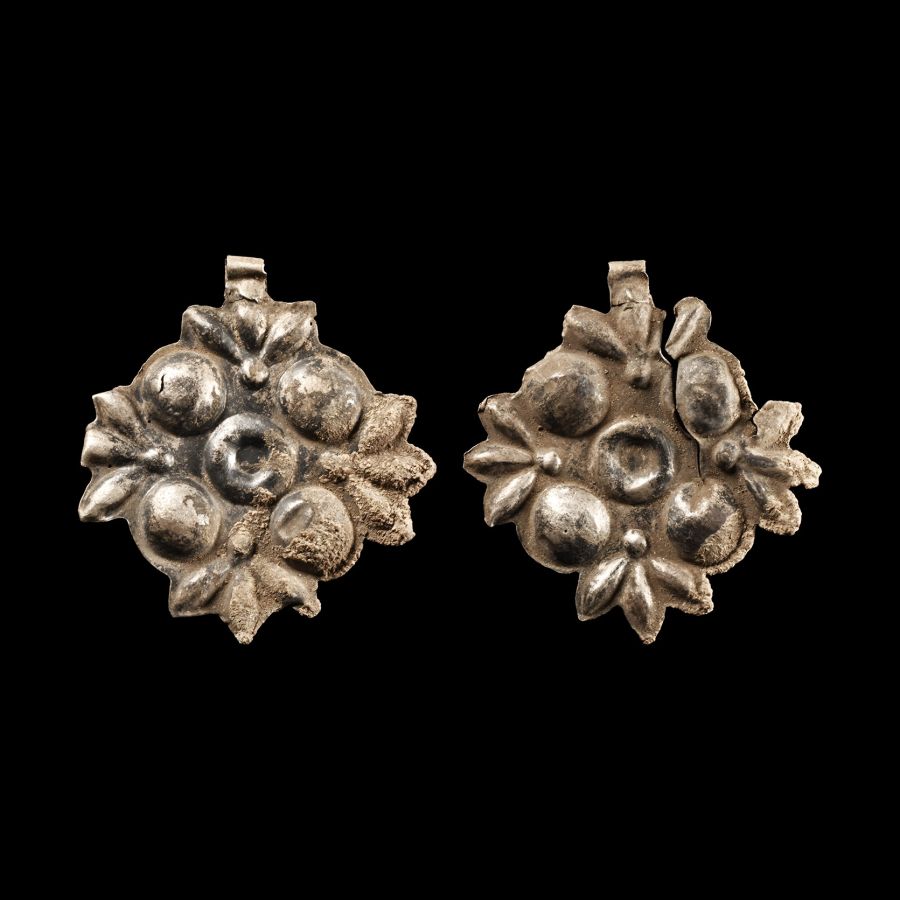
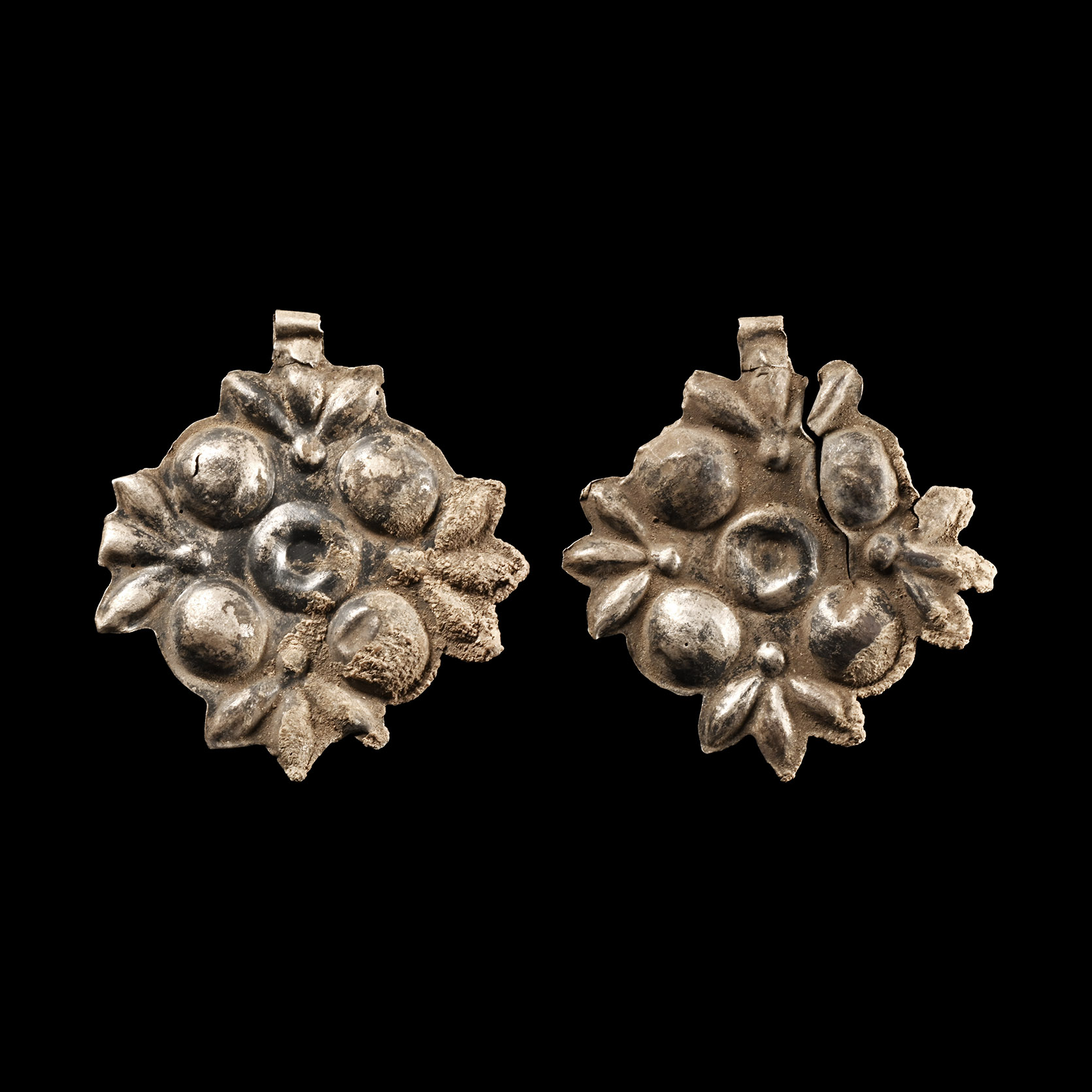
Elamite Silver Pendant Pair
3RD MILLENNIUM B.C.
2 in. (6.82 grams total, 52-53 mm).
Each formed as a stylised flower with a polygonal body and tubular suspension loop, repoussé annulet at centre surrounded by pellets, domed and trefoils. [2]
ProvenanceLondon, UK, gallery; 1971-early 2000s.
CONDITIONTimeLine Auctions follows a vetting process to ensure the authenticity and legality of all items, reinforcing our commitment to integrity and responsible trading. Each antiquity, antique, and coin lot undergoes thorough examination by a vetting committee of at least ten external specialists, professional trade association members, scientists, and archaeologists: Our Vetting Process
AUCTIONS:
TimeLine is a leading auction house specialising in antiquities, ancient art, collectables, natural history, coins, medals, and books. Our auctions offer museums, collectors, historians, and enthusiasts the opportunity to acquire unique and historically significant pieces.
LOT 0931
Elamite Silver Pendant Pair
Estimate £100 - 140€120 - 160 (for guidance only)$140 - 190 (for guidance only)
-
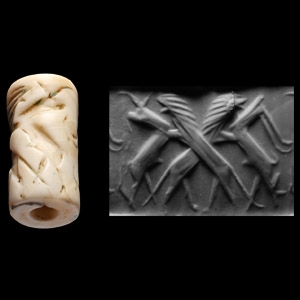
Western Asiatic Shell Cylinder Seal with Attack Scene
Circa 3rd millennium B.C.Sold for (Inc. bp): £520
With incised frieze depicting two leaping lions attacking antelopes. 8.7 grams, 26 mm
Acquired 1970s-1996. Property of a North American collector; collection no.013. London collection, 2016. -
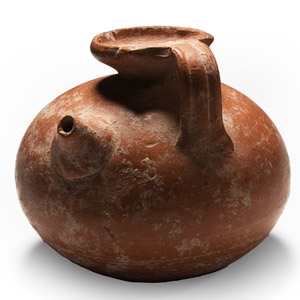
Nabataean Redware Feeder Vessel
1st century B.C.-1st century A.D.Estimate: £250 - 350 (+bp*)
Opening Bid: £130
With bulbous body, narrow neck and broad trumpet-shaped mouth with central filler hole; short conical spout to the shoulder, ribbed strap handle, concentric rings to the lower body and base. 187 grams, 97 mm
From the important family collection of the late M.N., pre-1992. -
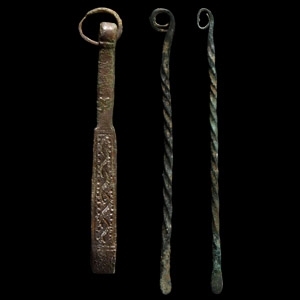
Western Asiatic Bronze Medical Implement Group
1st millennium B.C.Sold for (Inc. bp): £46
Comprising two flat-ended spatulas with twisted shafts and loop finials, and a pair of tweezers with rectangular panel either side decorated with wavy lines flanked by a punched dot border, suspension loop with ring to the apex. 15.4 grams total, 81-82 mm
Ex old English collection. London art market, 1980s.
