
Loading, please wait...
LOT 0893
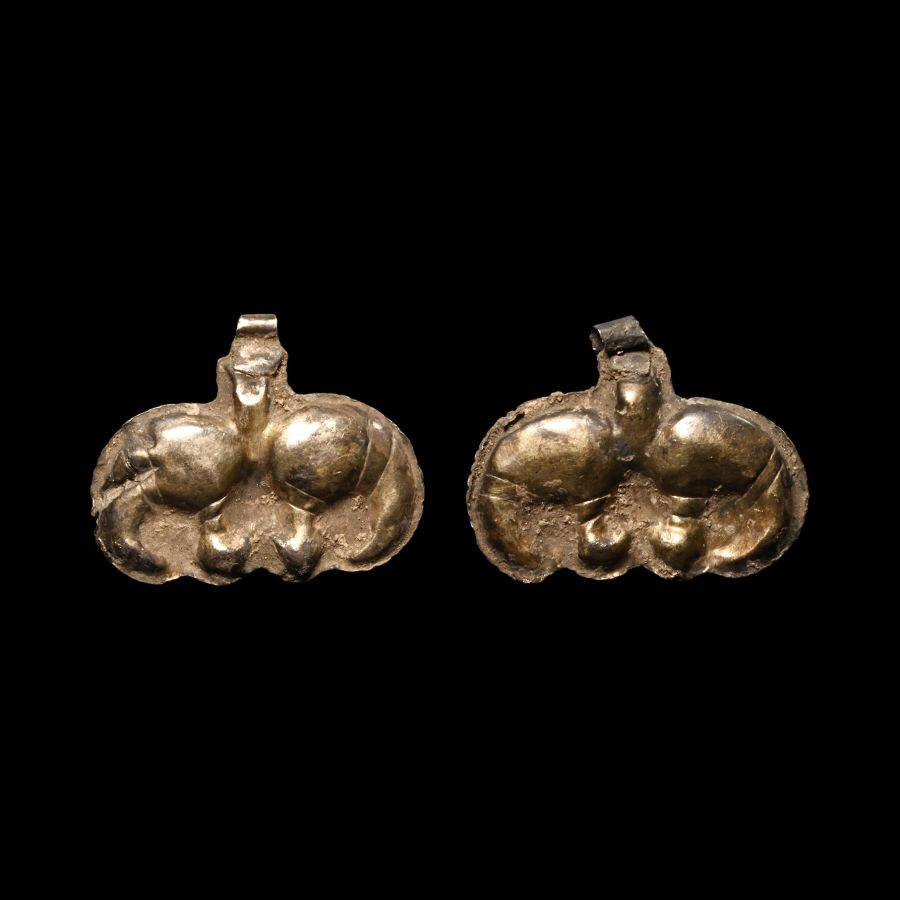
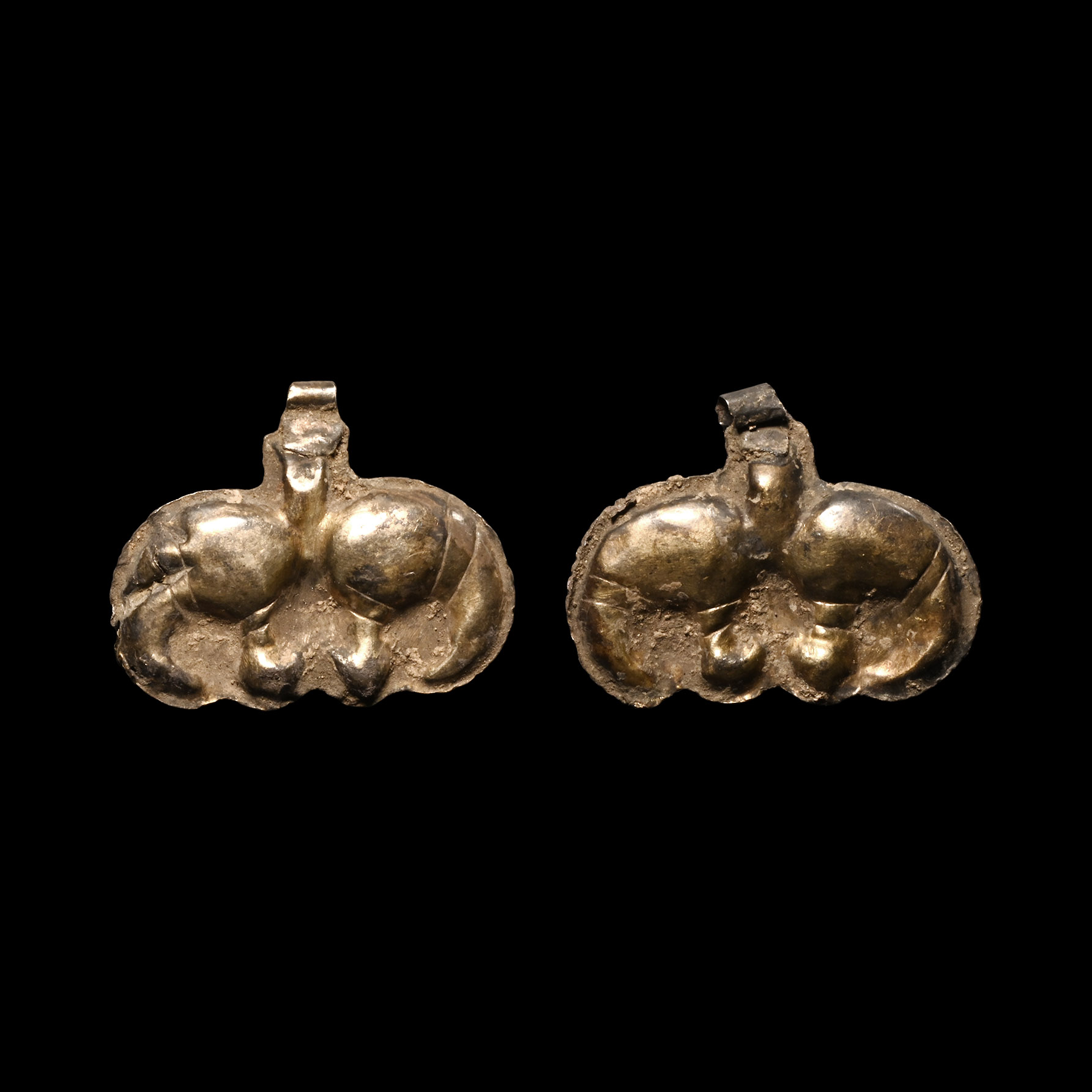
Elamite Silver-Gilt Bird Pendant Pair
3RD MILLENNIUM B.C.
1 1/4 in. (5.79 grams total, 31 mm each).
Each composed of sheet-gold over a bituminous core, displaying two stylised addorsed birds in relief, suspension loops below feet. [2]
ProvenanceLondon, UK, gallery, 1971-early 2000s.
CONDITIONTimeLine Auctions follows a vetting process to ensure the authenticity and legality of all items, reinforcing our commitment to integrity and responsible trading. Each antiquity, antique, and coin lot undergoes thorough examination by a vetting committee of at least ten external specialists, professional trade association members, scientists, and archaeologists: Our Vetting Process
AUCTIONS:
TimeLine is a leading auction house specialising in antiquities, ancient art, collectables, natural history, coins, medals, and books. Our auctions offer museums, collectors, historians, and enthusiasts the opportunity to acquire unique and historically significant pieces.
LOT 0893
Elamite Silver-Gilt Bird Pendant Pair
Estimate £300 - 400€350 - 460 (for guidance only)$410 - 540 (for guidance only)
-
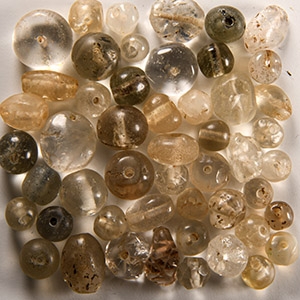
Western Asiatic Rock Crystal and Other Necklace Bead Collection
1st millennium B.C. and laterSold for (Inc. bp): £364
Including facetted, amorphous, spherical, oval and other types; most polished and all drilled for suspension. 54 grams total, 6-14 mm
UK gallery, early 2000s. -
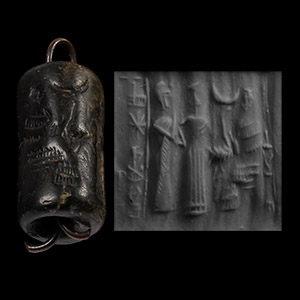
Western Asiatic Haematite Cylinder Seal with Presentation Scene for En-Nanna
2nd-1st millennium B.C.Sold for (Inc. bp): £338
With large central hole, incised frieze of a seated figure receiving an offering from a figure in floor-length pleated garment, second figure behind him in a fringed robe, column of cuneiform text to the rear: En-Nanna, [son of ] ... is your servant. 8.24 grams, 33 mm
Acquired 1970s-1996. Property of a North American collector; collection no.065. London collection, 2016. -
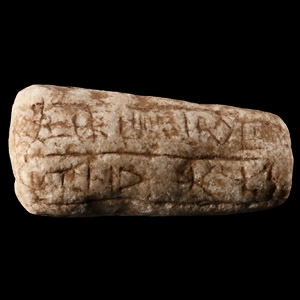
Western Asiatic Stone Cuneiform Tablet
Circa 1700 B.C.Sold for (Inc. bp): £195
Steatite or talc D-section tablet with cuneiform text to the rounded face. 8.18 grams, 37 mm
Acquired 1970s-1996. Property of a North American collector, collection no.084. London collection, 2016.
