
Loading, please wait...
LOT 0208
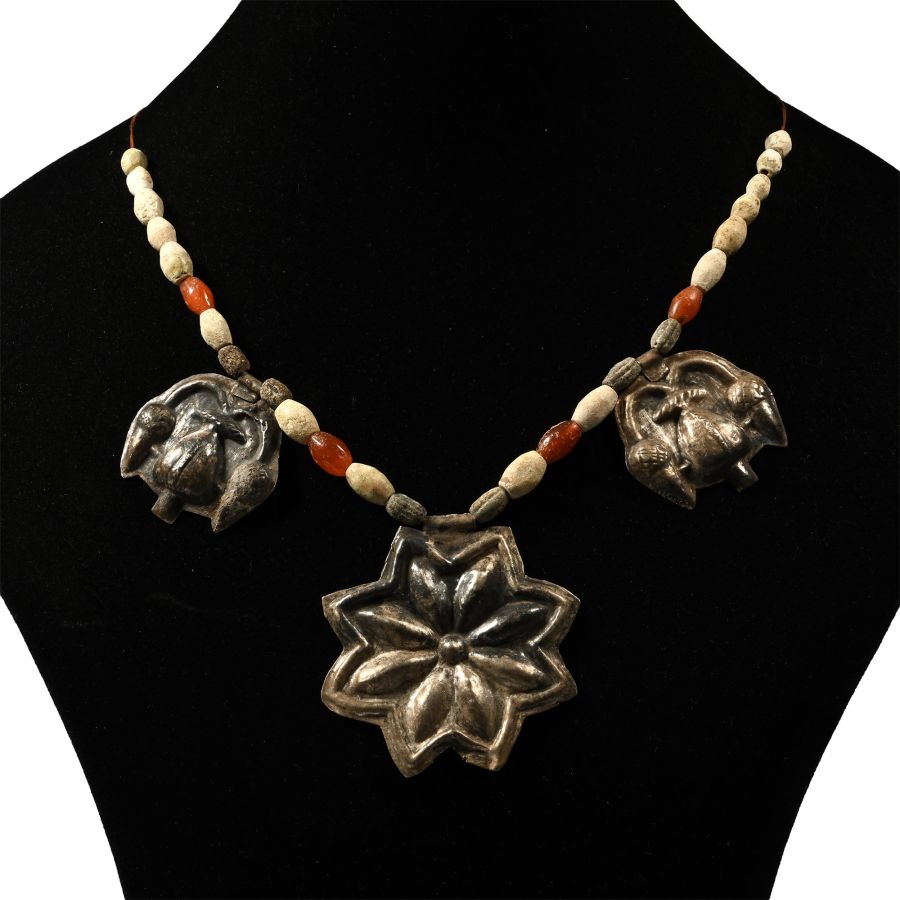
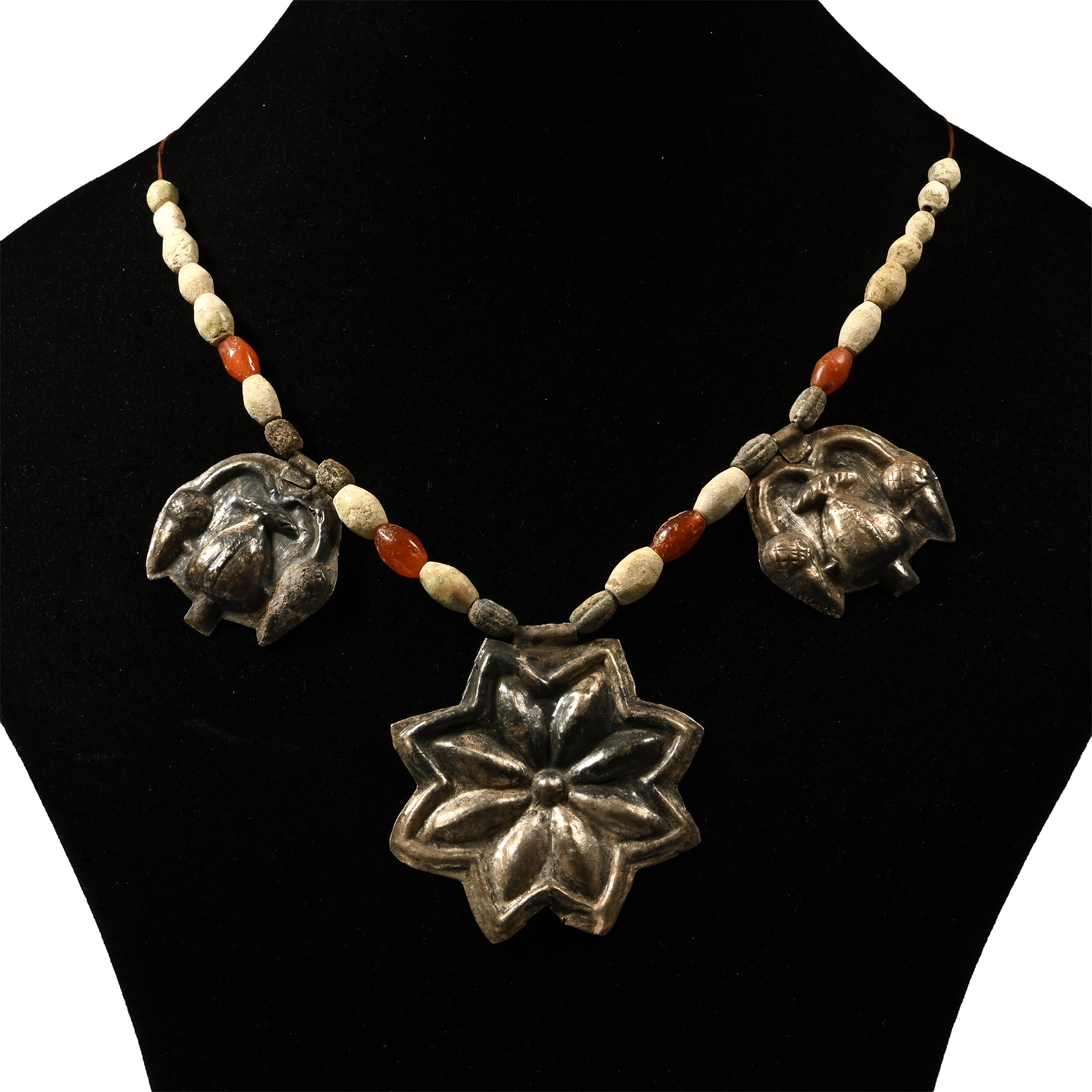
Elamite Carnelian Necklace with Pendants
LATE 2ND-EARLY 1ST MILLENNIUM B.C.
19 1/4 in. (36.3 grams, 49 cm long).
Restrung necklace of biconvex carnelian, limestone and other beads with large sheet-silver repoussé octofoil pendant and two smaller repoussé plaques with vase-and-buds motif.
ProvenanceAcquired before 1983.
Ex London gallery, 1990s.
This lot has been cleared against the Art Loss Register database, and is accompanied by an illustrated lot declaration signed by the Head of the Antiquities Department, Dr Raffaele D'Amato.
TimeLine Auctions follows a vetting process to ensure the authenticity and legality of all items, reinforcing our commitment to integrity and responsible trading. Each antiquity, antique, and coin lot undergoes thorough examination by a vetting committee of at least ten external specialists, professional trade association members, scientists, and archaeologists: Our Vetting Process
AUCTIONS:
TimeLine is a leading auction house specialising in antiquities, ancient art, collectables, natural history, coins, medals, and books. Our auctions offer museums, collectors, historians, and enthusiasts the opportunity to acquire unique and historically significant pieces.
LOT 0208
Elamite Carnelian Necklace with Pendants
Estimate £800 - 1,000€930 - 1,160 (for guidance only)$1,080 - 1,350 (for guidance only)
-
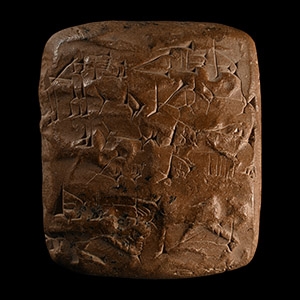
Old Babylonian Terracotta Cuneiform Tablet, Dated to the Seventh Year of King Amar-Suen
21st century B.C.Sold for (Inc. bp): £2,340
Pillow-shaped tablet containing a record of administrative records for arrears owed by Lugal-Ishtaran from the Bala-Offerings, at the end of day 15, it is dated to the year seven of King Amar-Suen, one side with a seal impression showing a man fighting with a rampant lion, possibly depicting Gilgamesh, cuneiform text behind the beast; the other side with cuneiform text overlapped by a seal impression in two registers showing advancing offerants with their arms raised; supplied in an old box with typed collection label to the cover. 40 grams, 45 mm
Found at Jokha, the ruin of the ancient city of Umma in Central Babylonia. Ex Edgar J. Banks (1866-1945). Purchased by Dr John Harvey Kellogg (1852-1943); by family descent to consignor. Edgar Banks was a diplomat and archaeologist upon whom the fictional character of Indiana Jones was based. Dr J.H. Kellogg was the founder of the Battle Creek Sanitarium and inventor of the Corn Flake. This lot has been cleared against the Art Loss Register database, and is accompanied by an illustrated lot declaration signed by the Head of the Antiquities Department, Dr Raffaele D'Amato. -
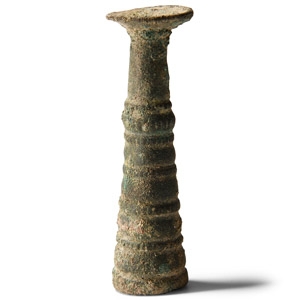
Luristan Bronze Kohl Pot
1st millennium B.C.Estimate: £150 - 200 (‡+bp*)
Opening Bid: £75
Of tapering cylindrical form with everted rim, decoratively notched ribs of alternating breadth to the body. 60 grams, 78 mm
Acquired in Europe before 1993. This lot has been cleared against the Art Loss Register database, and is accompanied by an illustrated lot declaration signed by the Head of the Antiquities Department, Dr Raffaele D'Amato. -
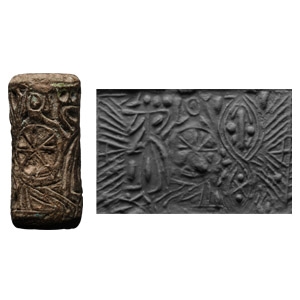
Sumerian Clay Cylinder Seal with Wheel Pattern
3rd millennium B.C.Sold for (Inc. bp): £390
With geometric pattern including a segmented octofoil, two vesica motifs with pellets to the centre and concentric bands outside, lozenge with parallel bands and others. 6.32 grams, 30 mm
From the 'S' collection, acquired 1970-1990s. The collection was seen and studied by W.G.Lambert, late Professor of Assyriology at the University of Birmingham, 1970-1993. This lot has been cleared against the Art Loss Register database, and is accompanied by an illustrated lot declaration signed by the Head of the Antiquities Department, Dr Raffaele D'Amato.
