
Loading, please wait...
LOT 0223
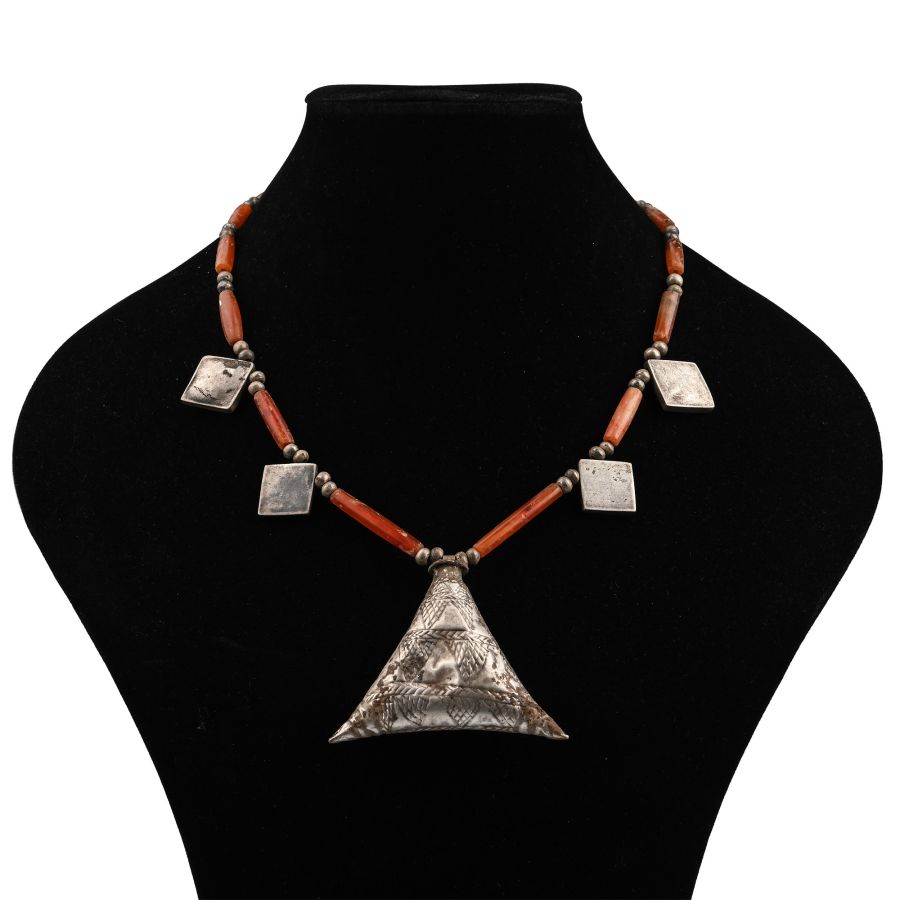
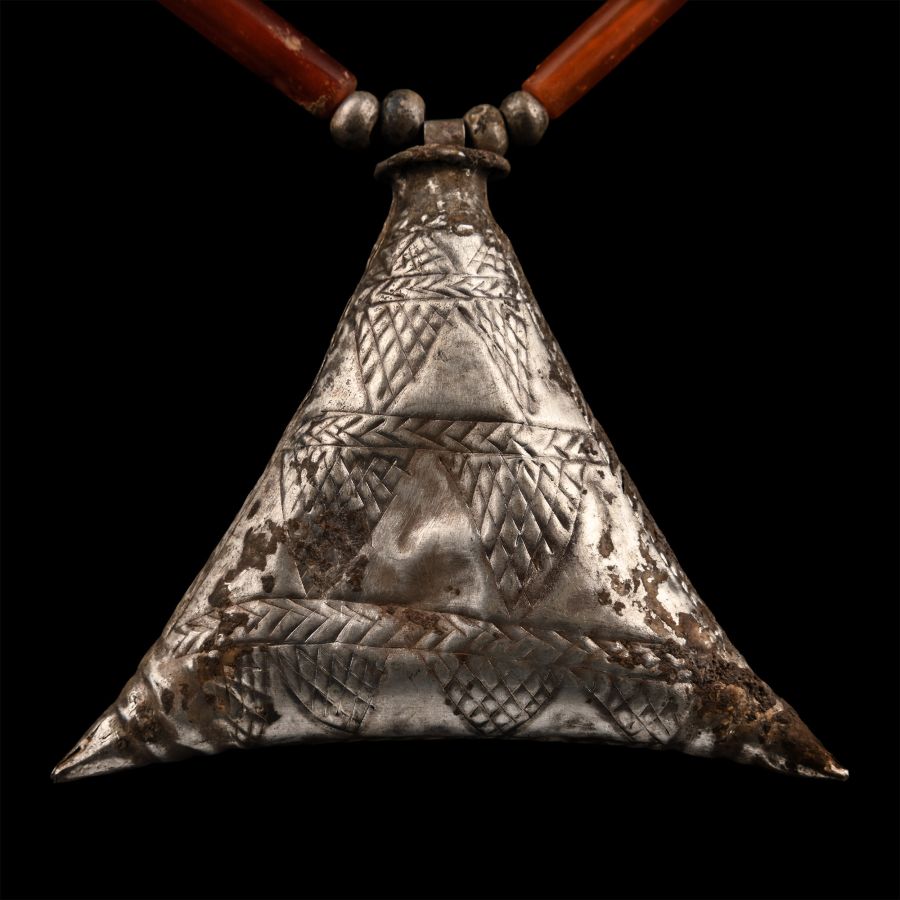
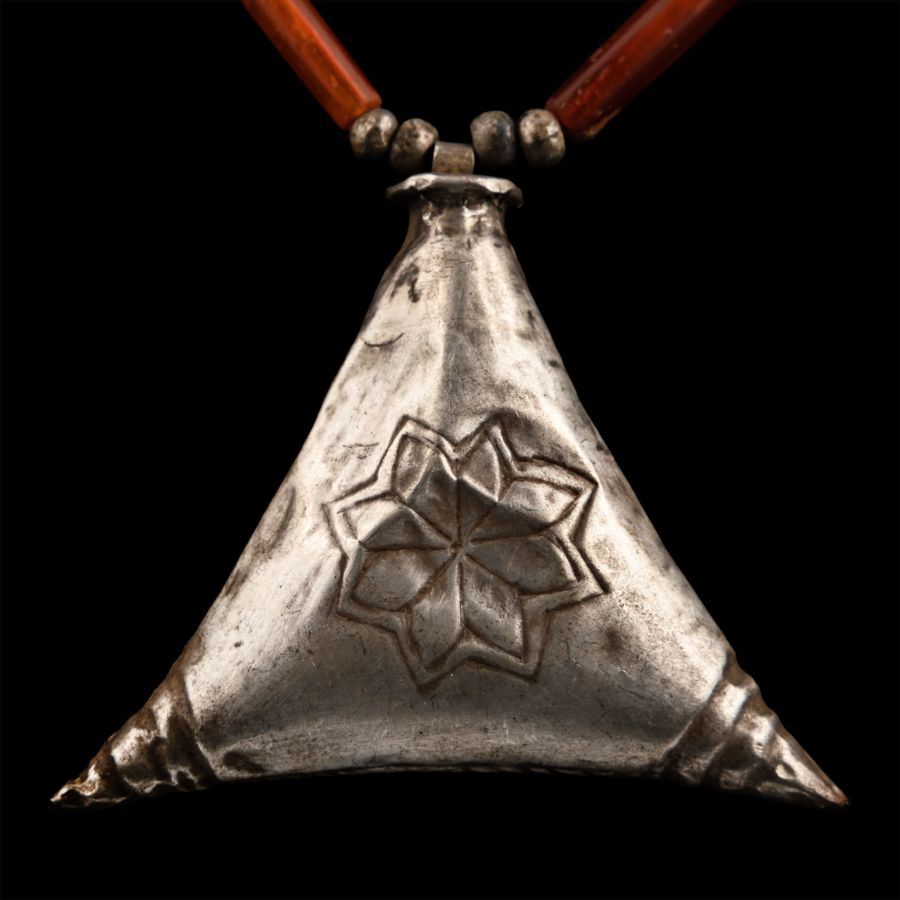
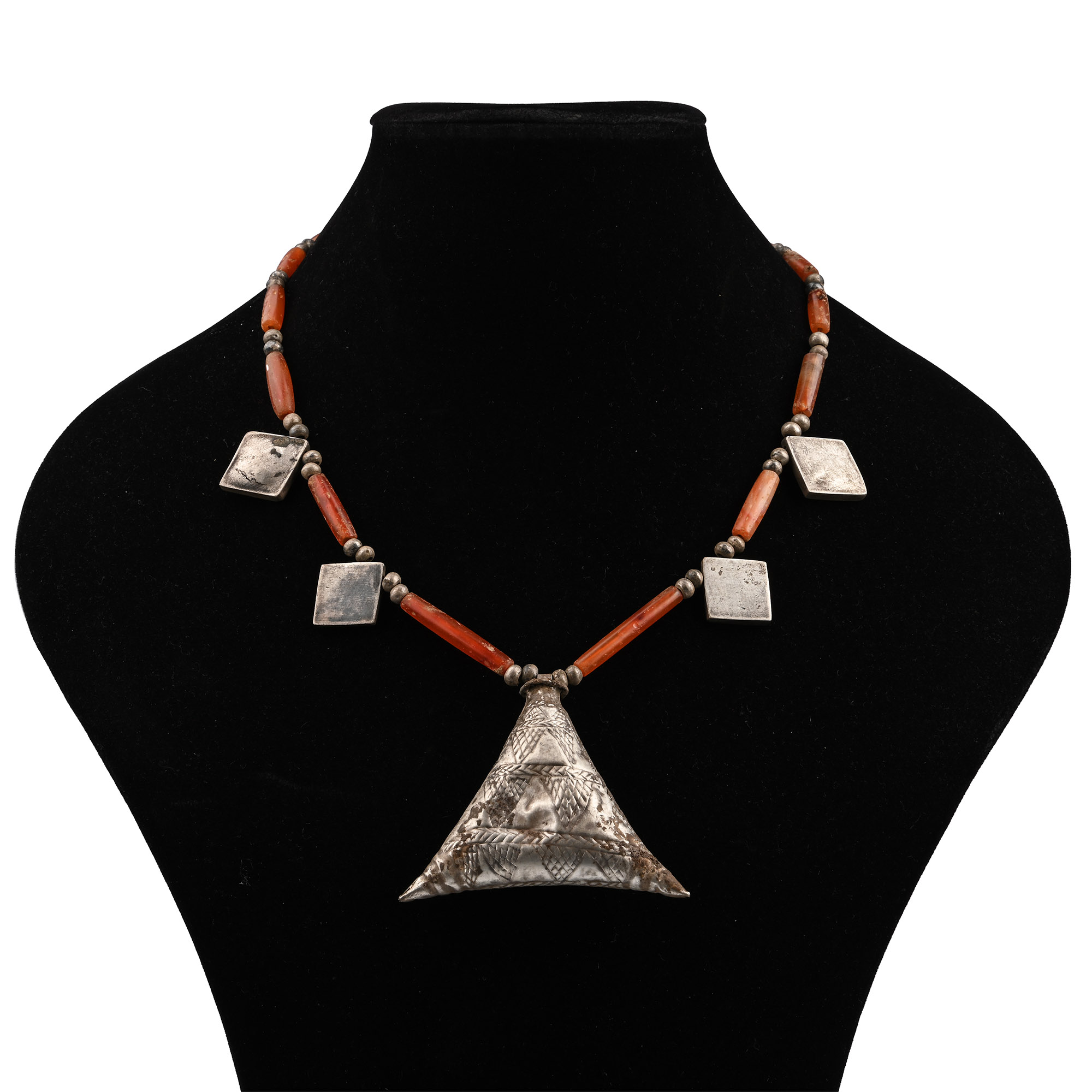
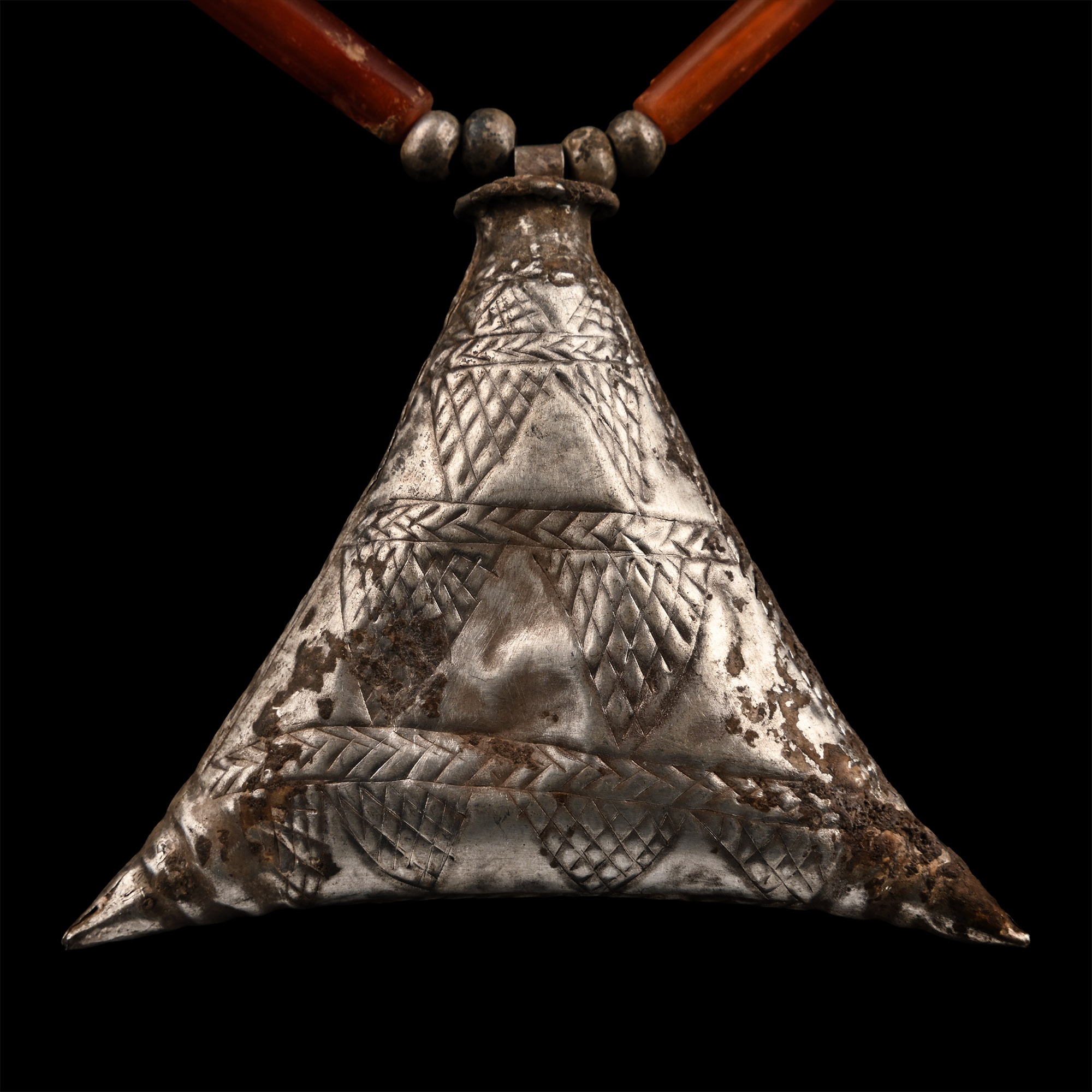
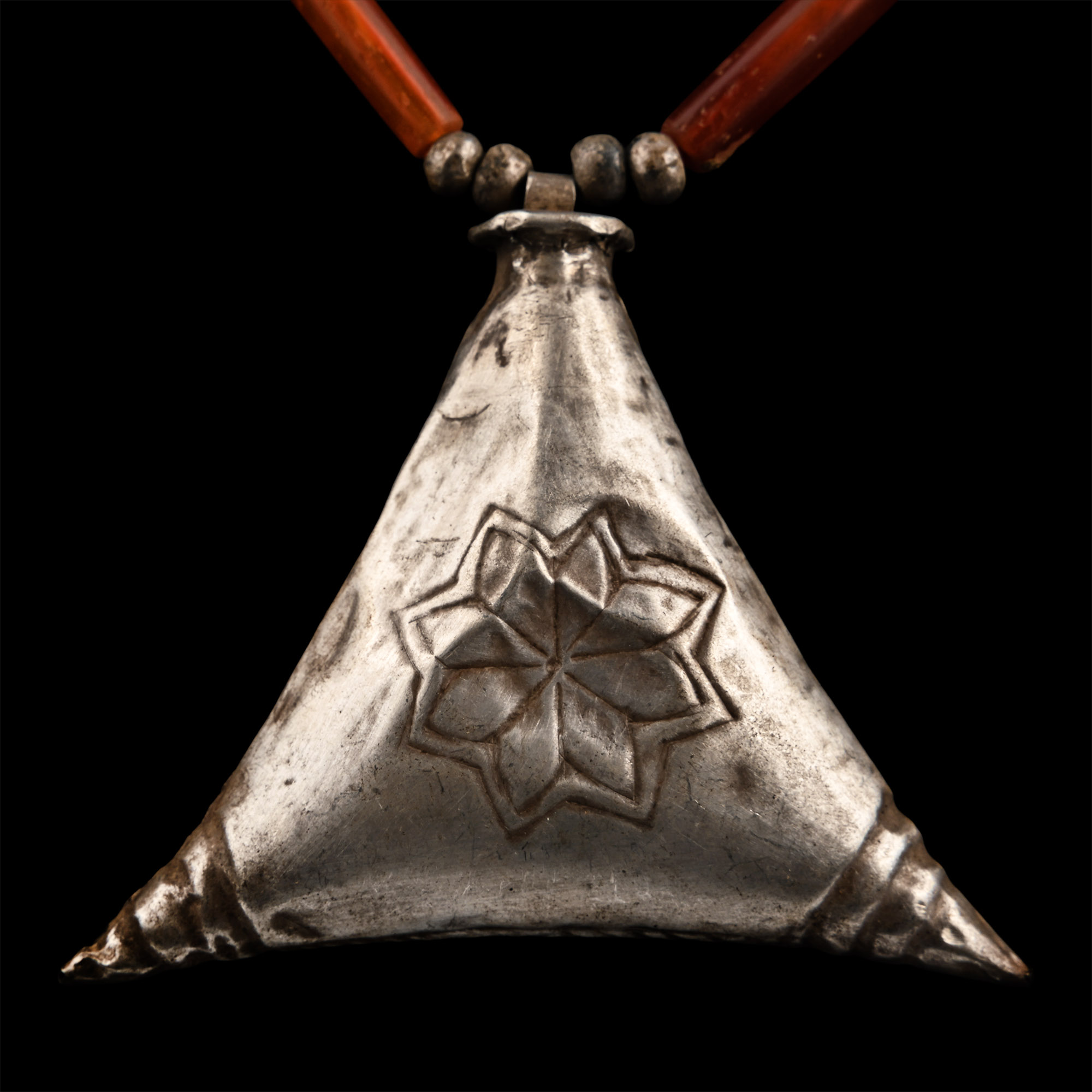
Elamite Carnelian Necklace with Large Silver Triangular Pendant
3RD-2ND MILLENNIUM B.C.
18 1/4 in. (62.2 grams, 46.5 cm).
A restrung necklace composed of carnelian beads and biconvex silver beads, with four lozengiform silver pendants and a hollow-formed bifacial silver triangular pendant, decorated with four rows of interlocking hatched and blank triangles between bands of chevrons on one face, and central floral motif on the other, with a flanged top and suspension loop; with later clasp.
ProvenanceAcquired in the mid-1980s to early 1990s.
Private collection, London, UK.
TimeLine Auctions follows a vetting process to ensure the authenticity and legality of all items, reinforcing our commitment to integrity and responsible trading. Each antiquity, antique, and coin lot undergoes thorough examination by a vetting committee of at least ten external specialists, professional trade association members, scientists, and archaeologists: Our Vetting Process
AUCTIONS:
TimeLine is a leading auction house specialising in antiquities, ancient art, collectables, natural history, coins, medals, and books. Our auctions offer museums, collectors, historians, and enthusiasts the opportunity to acquire unique and historically significant pieces.
LOT 0223
Elamite Carnelian Necklace with Large Silver Triangular Pendant
Estimate £800 - 1,000€930 - 1,160 (for guidance only)$1,080 - 1,350 (for guidance only)
-
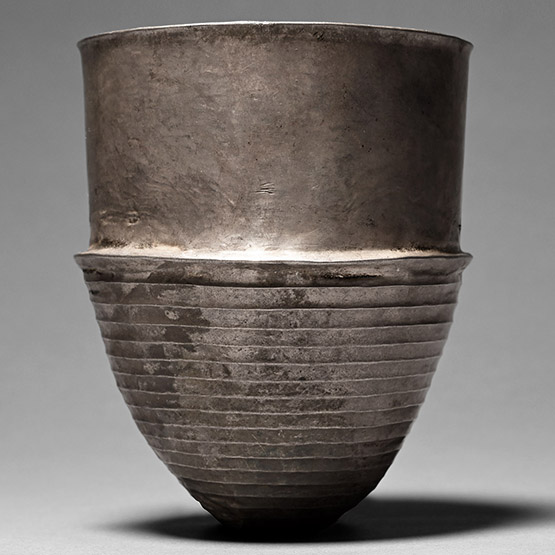
Indo-Parthian Silver Carinated Cup
Circa late 1st century B.C.-early 1st century A.D.Estimate: £2,000 - 3,000 (+bp*)
Opening Bid: £1,111
Formed from a single sheet, the ovoid base carinated with plain upper portion, slightly flared lip to the rim. 95 grams, 10.4 cm
Acquired from a private UK collection prior to 1979. Ex Julian Sherrier collection, a leading figure in Gandharan art. with Christie's, New York, sale 2337, 14th September 2010, no.56A (part). Accompanied by the original Christie's lot ticket. This lot has been checked against the Interpol Database of stolen works of art and is accompanied by search certificate number no.12961-244455.
The taste for beautifully decorated cups and drinking vessels was a hallmark of the later Seleucid Empire and early Arsacid Dynasty. Various beakers and cups were used by the Parthians according to the style of the Hellenized East. -
.jpg)
Mesopotamian Cuneiform Tablet Fragment
2nd millennium B.C.Sold for (Inc. bp): £104
Fragmentary section of a tablet with impressed characters; repaired. 123 grams, 81 mm
Specialised collection of cuneiform texts, the property of a London gentleman and housed in London before 1992. Thence by descent to family members. Examined by Professor Wilfrid George Lambert FBA (1926-2011), historian, archaeologist, and specialist in Assyriology and Near Eastern archaeology, in the late 1980s and early 1990s. This small collection is exceptional for the variety of types, including some very rare and well preserved examples. -
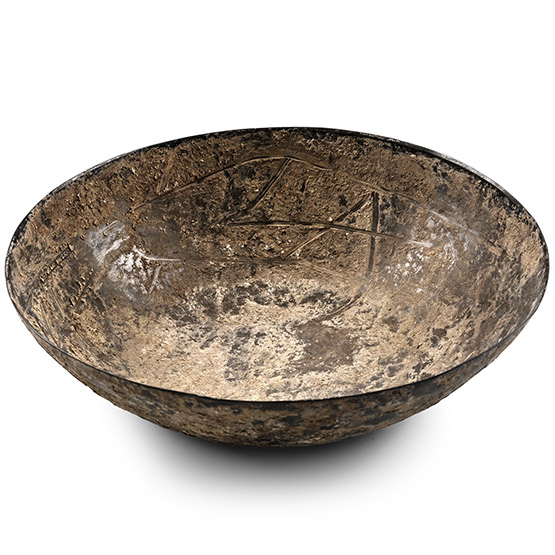
Sasanian Bronze Bowl
3rd-7th century A.D.Sold for (Inc. bp): £59
Broad and convex in profile with flat base. 158 grams, 16.5 cm
From the collection of North West London, UK, gentleman, 1990-2000s.
