
Loading, please wait...
LOT 0210
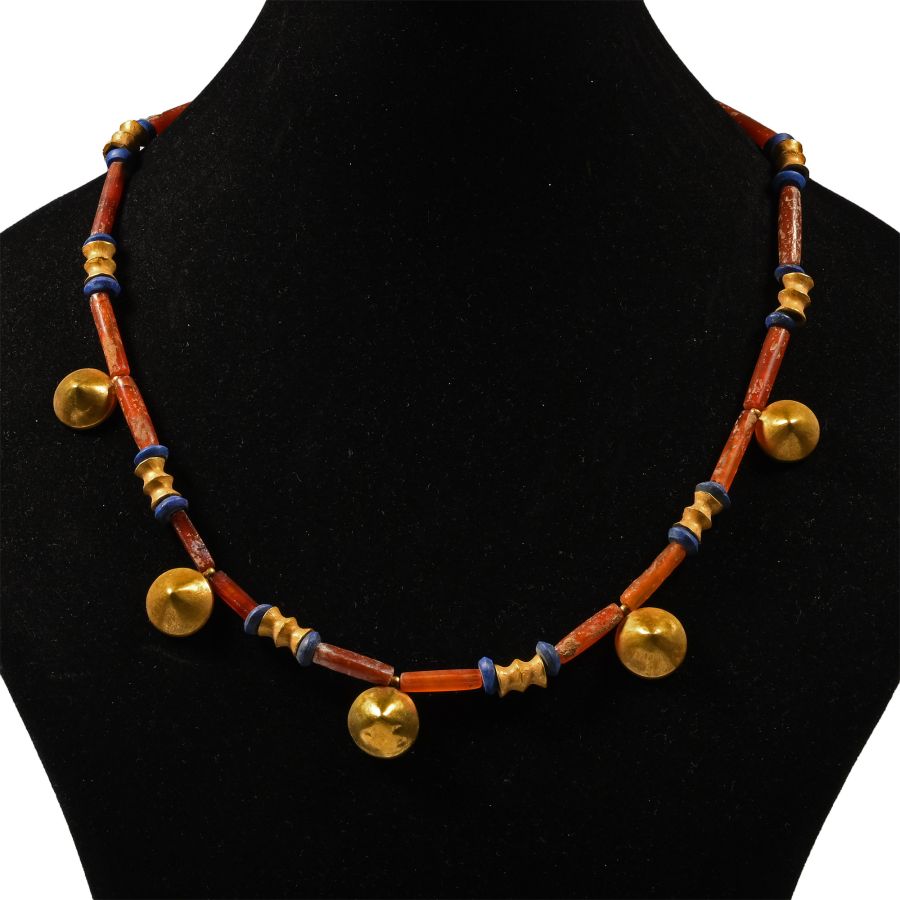
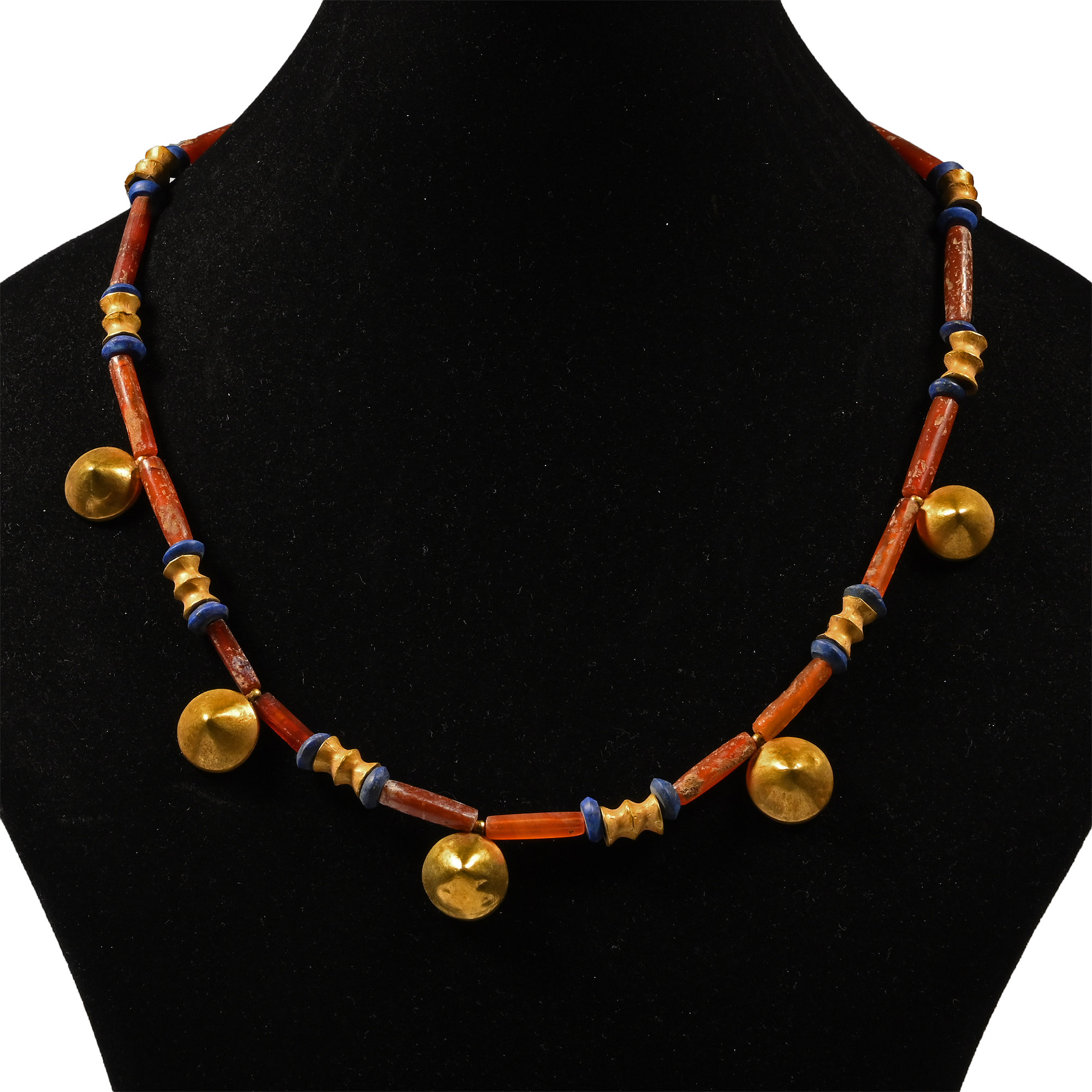
Elamite Carnelian Necklace with Gold Tubular Pendants
LATE 2ND-EARLY 1ST MILLENNIUM B.C.
21 in. (40.93 grams, 53.3 cm long).
Restrung necklace of tubular carnelian beads with interstitial ribbed gold and biconvex blue glass beads, five conical gold pendants each with inset gemstone cloison.
ProvenanceAcquired before 1983.
Ex London gallery, 1990s.
This lot has been checked against the Interpol Database of stolen works of art and is accompanied by a search certificate number no.12536-231962.
This lot has been cleared against the Art Loss Register database, and is accompanied by an illustrated lot declaration signed by the Head of the Antiquities Department, Dr Raffaele D'Amato.
TimeLine Auctions follows a vetting process to ensure the authenticity and legality of all items, reinforcing our commitment to integrity and responsible trading. Each antiquity, antique, and coin lot undergoes thorough examination by a vetting committee of at least ten external specialists, professional trade association members, scientists, and archaeologists: Our Vetting Process
AUCTIONS:
TimeLine is a leading auction house specialising in antiquities, ancient art, collectables, natural history, coins, medals, and books. Our auctions offer museums, collectors, historians, and enthusiasts the opportunity to acquire unique and historically significant pieces.
LOT 0210
Elamite Carnelian Necklace with Gold Tubular Pendants
Sold for (Inc. bp): £3,640
-
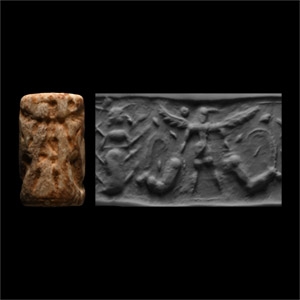
Western Asiatic White Marble Cylinder Seal with Standing Goddess
2900-2500 B.C.Sold for (Inc. bp): £624
Cylinder with cord and bead handles; accompanied by a copy of an old scholarly note, typed and signed by W.G. Lambert, late Professor of Assyriology, University of Birmingham, 1970-1993, which states: 'Cylinder seal of white marble, 32 x 19.5 mm., condition fair. Standing goddess with hand at waist, shoots growing from both sides of her body and her head; standing deity with head and wings of a bird, otherwise a human body, and holding in each hand the tail of a long-horned quadruped. From south-east Iran, c. 2900-2500 B.C. Little is known of the religion of this area, since no written information about it exists.'; accompanied by a museum-quality impression. 21.8 grams total, 8.1-32 mm
UK private collection, acquired 1980-1983. Accompanied by a copy of a scholarly note, typed and signed by Professor Wilfrid George Lambert in September 1990. This lot has been cleared against the Art Loss Register database, and is accompanied by an illustrated lot declaration signed by the Head of the Antiquities Department, Dr Raffaele D'Amato. -
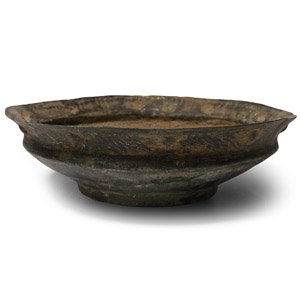
Achaemenid Bronze Dish
6th-4th century B.C.Estimate: £80 - 100 (+bp*)
Opening Bid: £40
Wide with carinated shoulder and everted rim, low foot. 84 grams, 12.4 cm
Acquired 1980-2015. Ex Abelita family collection. This lot has been cleared against the Art Loss Register database, and is accompanied by an illustrated lot declaration signed by the Head of the Antiquities Department, Dr Raffaele D'Amato. -
.jpg)
Mesopotamian Cuneiform Tablet Fragment
Early 2nd millennium B.C.Sold for (Inc. bp): £338
Pillow-shaped fragment with cuneiform text to both broad faces. 35.3 grams, 42 mm
Specialised collection of cuneiform texts, the property of a London gentleman and housed in London before 1992. Thence by descent to family members. Examined by Professor Wilfrid George Lambert FBA (1926-2011), historian, archaeologist, and specialist in Assyriology and Near Eastern archaeology, in the late 1980s and early 1990s. This small collection is exceptional for the variety of types, including some very rare and well preserved examples. This lot has been cleared against the Art Loss Register database, and is accompanied by an illustrated lot declaration signed by the Head of the Antiquities Department, Dr Raffaele D'Amato.
