
Loading, please wait...
LOT 1264
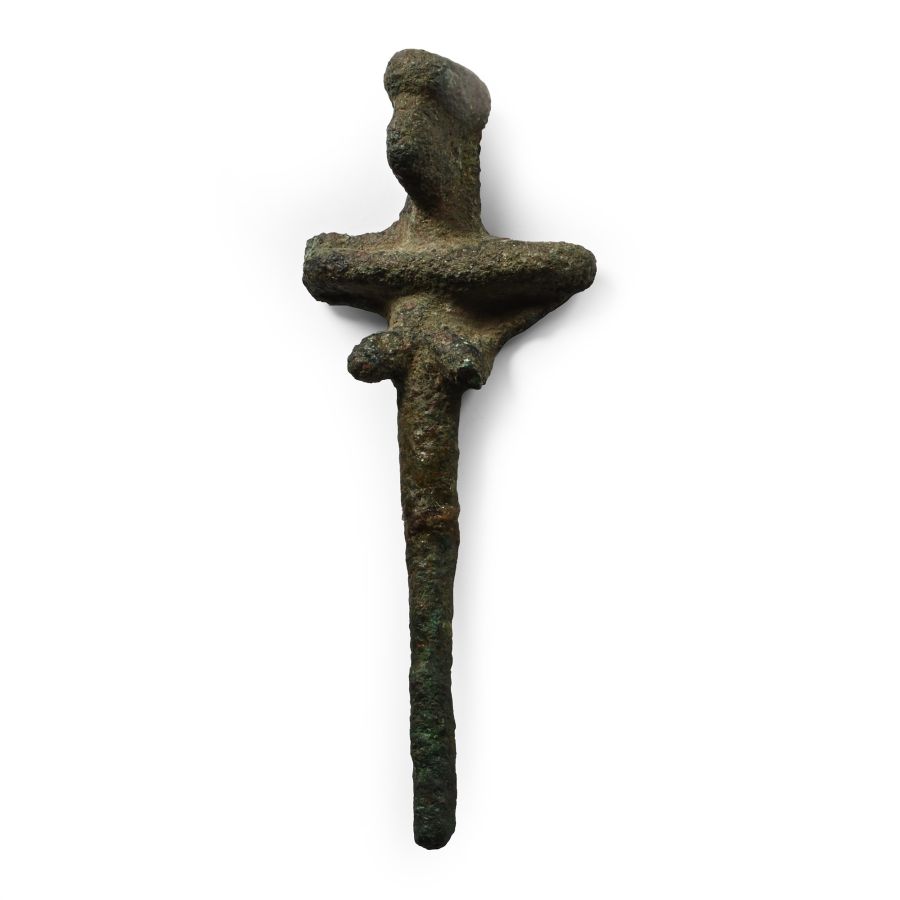
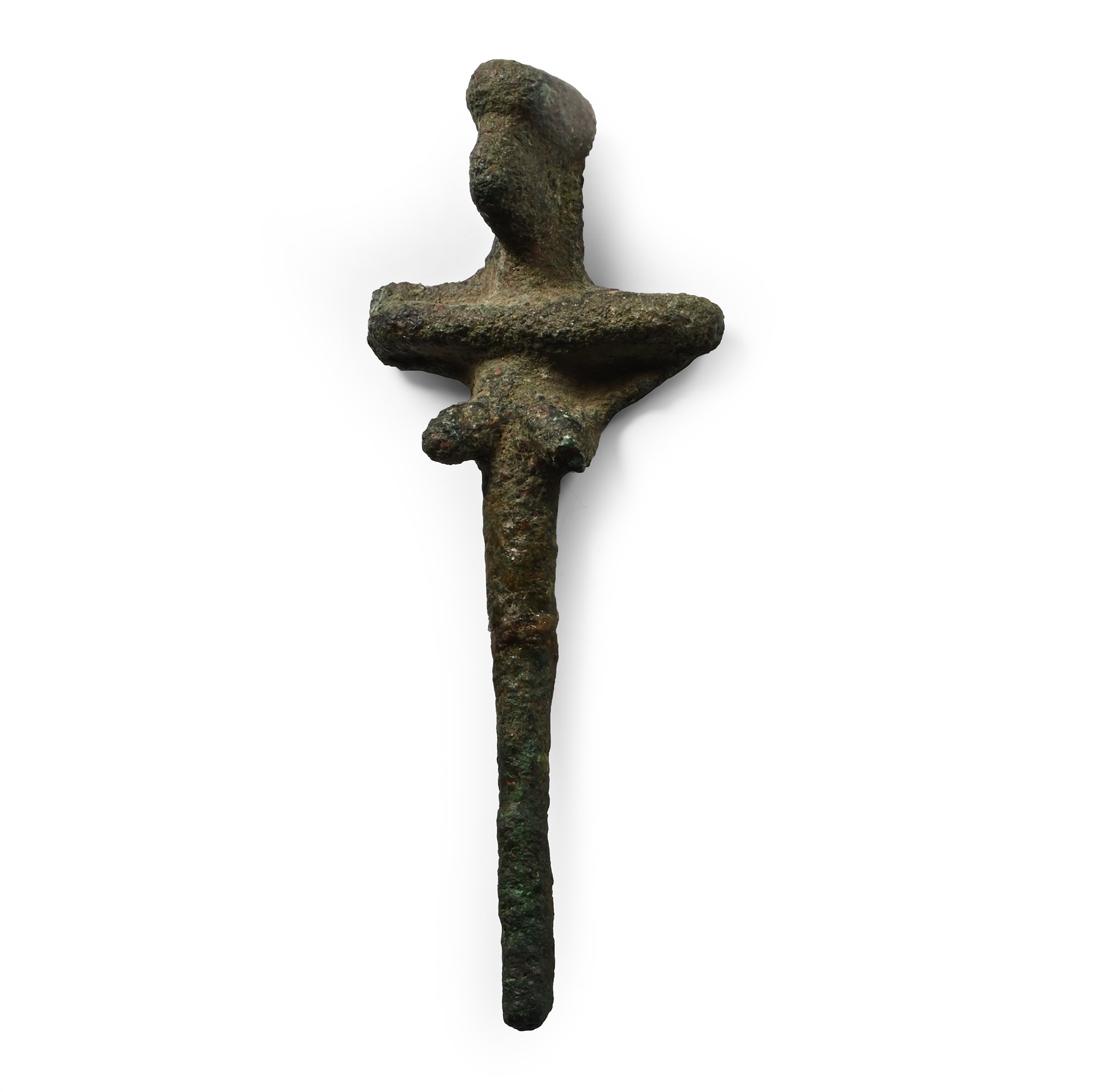
Elamite Bronze Pin with Female Figure
LATE 2ND-EARLY 1ST MILLENNIUM B.C.
3 5/8 in. (34 grams, 93 mm).
Comprising a round-section stem and transverse stub arms, splayed breasts, pinched flange face and D-shaped cap. [No Reserve]
Provenancewith a London, UK gallery 1971-early 2000s.
Private collection, London.
This lot has been cleared against the Art Loss Register database, and is accompanied by an illustrated lot declaration signed by the Head of the Antiquities Department, Dr Raffaele D'Amato.
TimeLine Auctions follows a vetting process to ensure the authenticity and legality of all items, reinforcing our commitment to integrity and responsible trading. Each antiquity, antique, and coin lot undergoes thorough examination by a vetting committee of at least ten external specialists, professional trade association members, scientists, and archaeologists: Our Vetting Process
AUCTIONS:
TimeLine is a leading auction house specialising in antiquities, ancient art, collectables, natural history, coins, medals, and books. Our auctions offer museums, collectors, historians, and enthusiasts the opportunity to acquire unique and historically significant pieces.
-
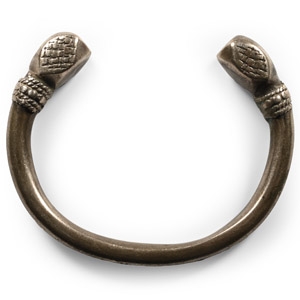
Western Asiatic Silver Bracelet with Polyhedral Terminals
12th-13th century A.D.Sold for (Inc. bp): £195
Penannular round-section shank with granulated collars, polyhedral finials with punched pellet ornament. 124 grams, 87 mm
with a London, UK gallery 1971-early 2000s. Private collection, London. This lot has been cleared against the Art Loss Register database, and is accompanied by an illustrated lot declaration signed by the Head of the Antiquities Department, Dr Raffaele D'Amato. -
.jpg)
Western Asiatic Terracotta Storage Jar with Procession of Ibexes
Circa 1st millennium B.C.Sold for (Inc. bp): £390
Globular with flared rim, horizontal painted bands to the shoulder and equator, wavy line beneath and frieze of ibexes above. 768 grams, 15.7 cm high
From a collection acquired on the UK art market from various auction houses and collections mostly before 2000. From an important Cambridgeshire estate; thence by descent. This lot has been cleared against the Art Loss Register database, and is accompanied by an illustrated lot declaration signed by the Head of the Antiquities Department, Dr Raffaele D'Amato.
The images of the ibex attested as the most ancient figures date back to the discovery of the beakers of Susa ca. 4000 B.C. There are several such beakers in the museums, all coming from the excavations of the prehistoric levels of Susa (later on becoming the Elamite Shushan, modern Shush, Iran). The ibex is portrayed in a non-naturalistic way, with the use of simple shapes, such as triangles. The horns of the goat arch back over itself, forming a circle over its body. The beakers of Susa have the following elements in common: the large ibex image, with exaggerated horns, and figures of wavy lines symbolising water and rain. -
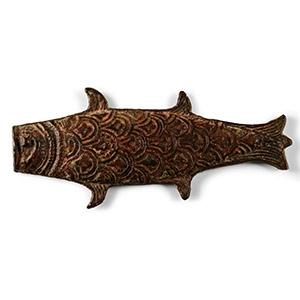
Western Asiatic Bronze Cosmetic Fish Palette
12th century A.D.Estimate: £150 - 200 (+bp*)
Opening Bid: £75
Formed as a shallow fish-shaped dish with scale and gill detailing to the underside; remains of pigment to upper face. 20.7 grams, 86 mm
Ex London, UK, gallery, 1971-early 2000s. London, UK, collection. This lot has been cleared against the Art Loss Register database, and is accompanied by an illustrated lot declaration signed by the Head of the Antiquities Department, Dr Raffaele D'Amato.
