
Loading, please wait...
LOT 0314
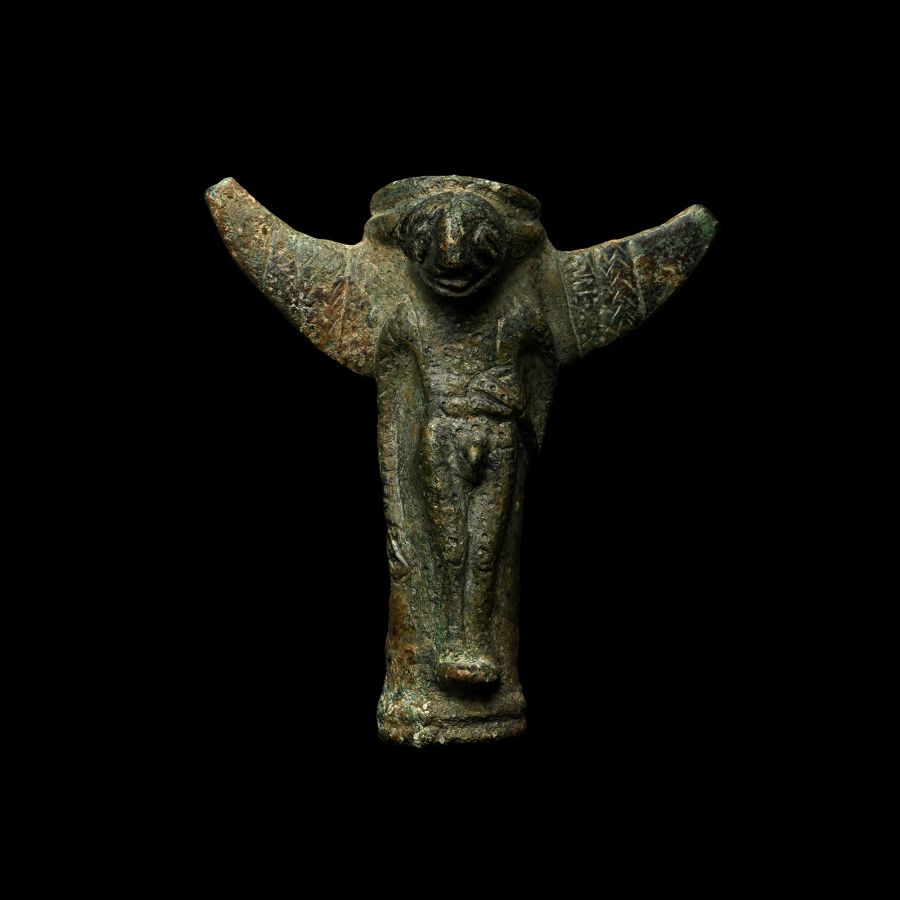
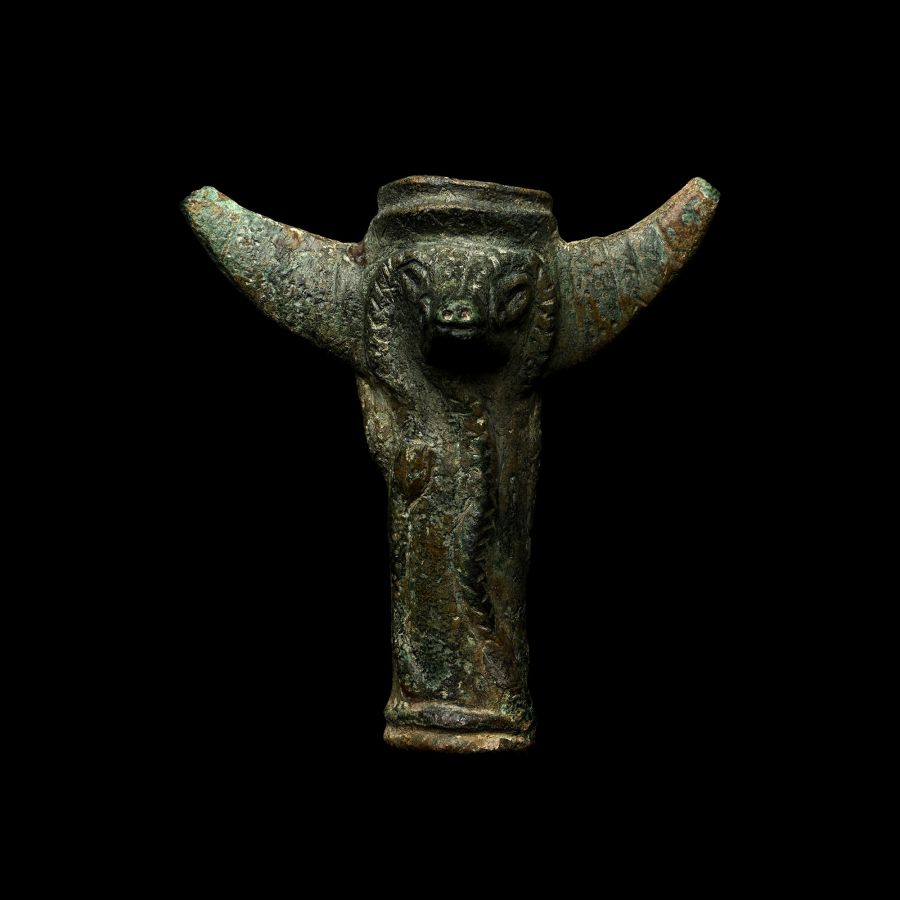
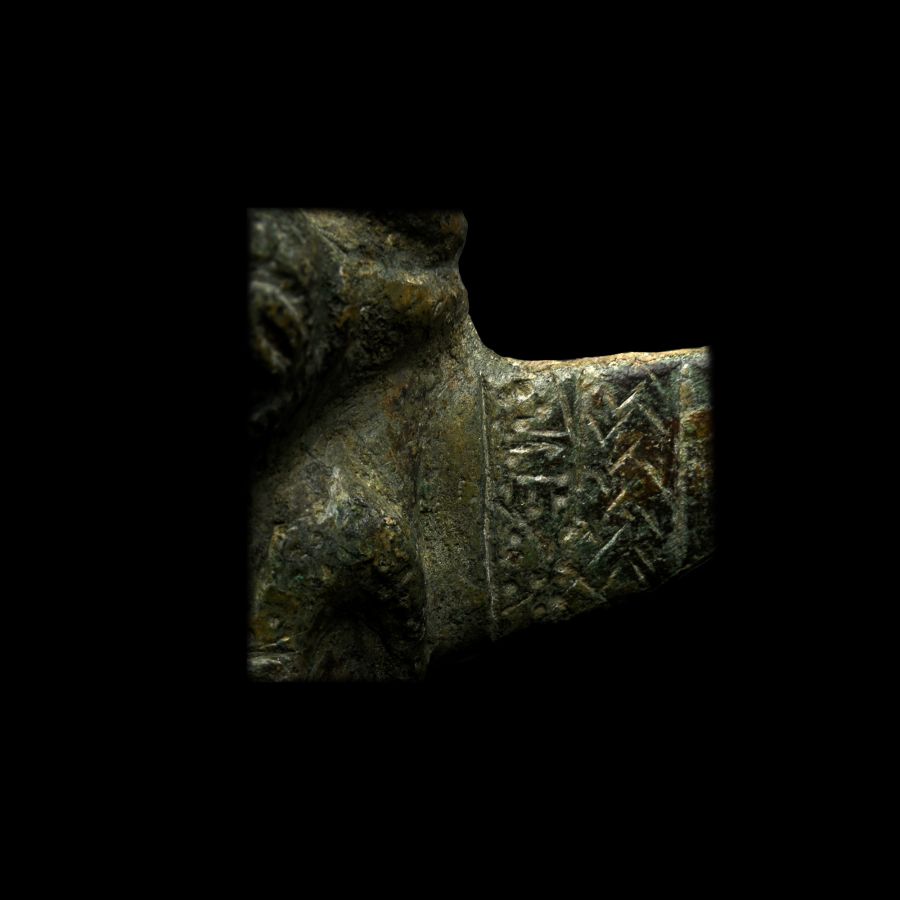
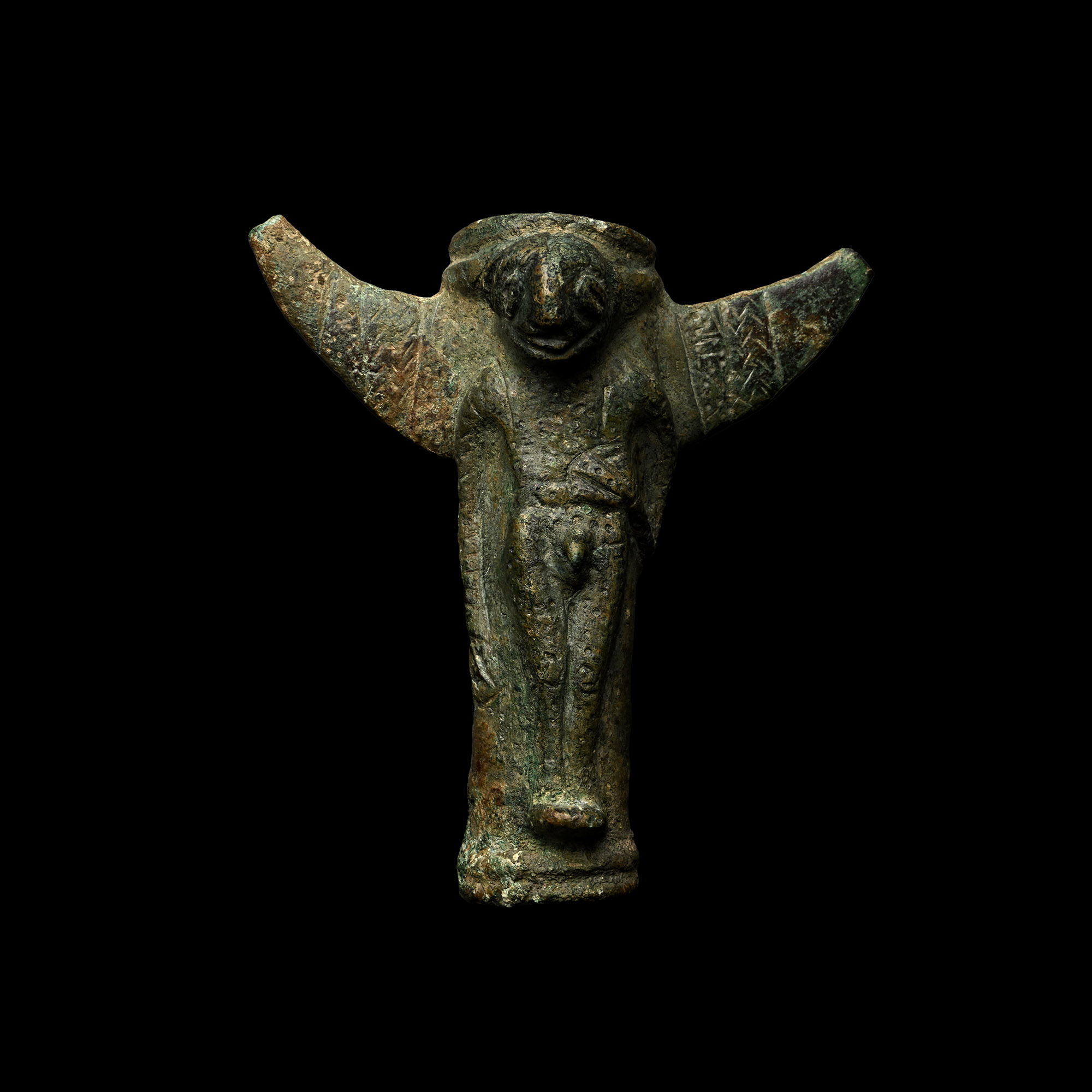
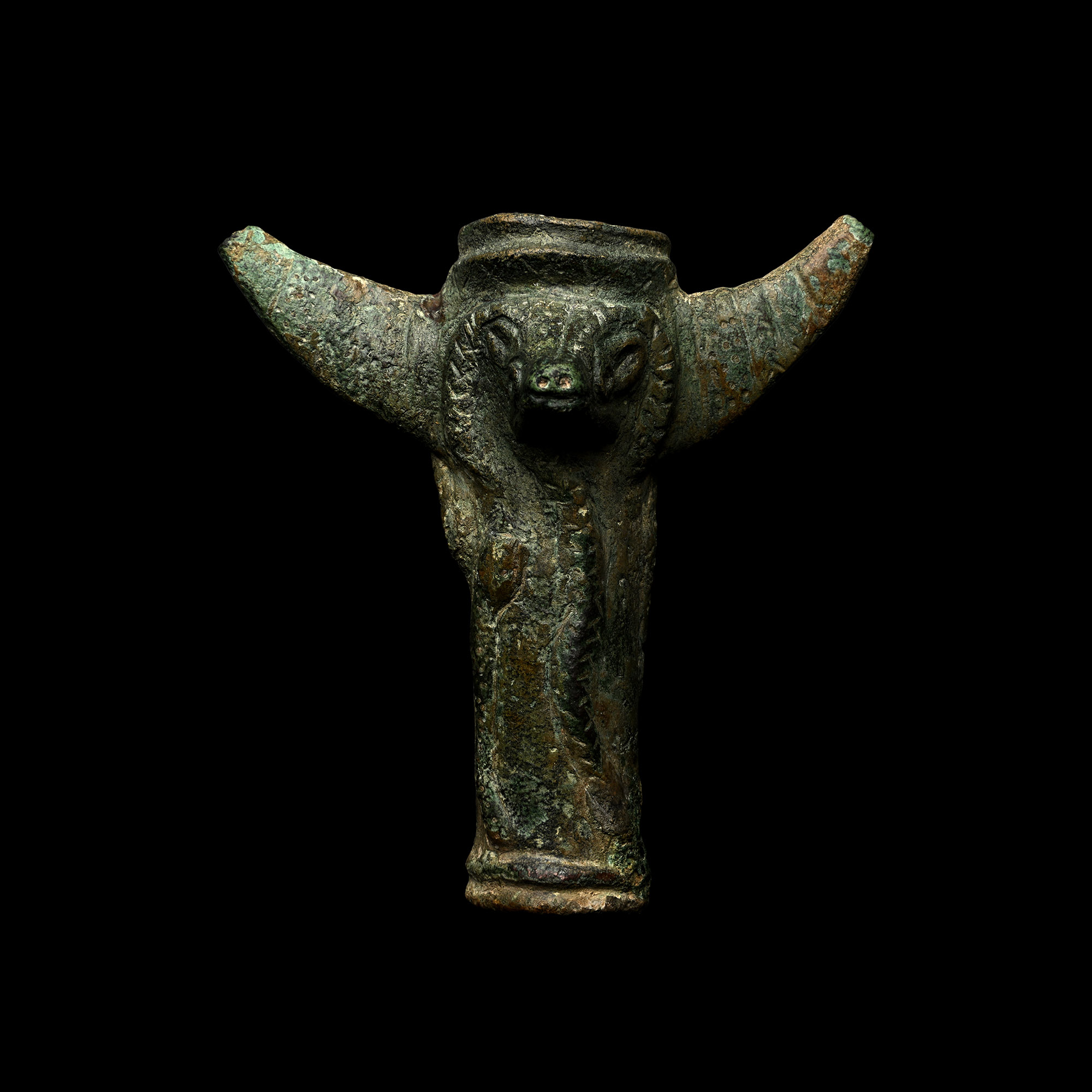
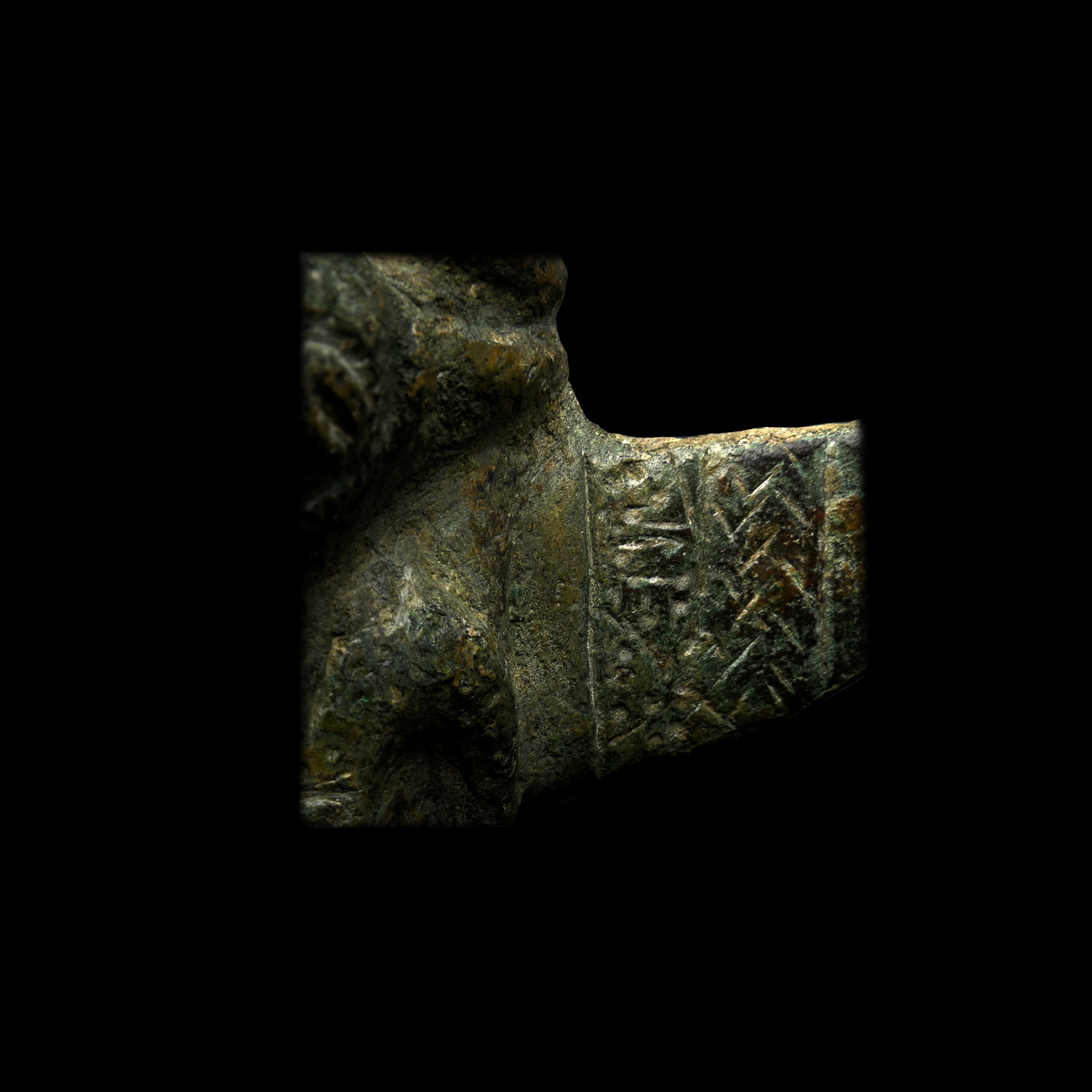
Elamite Bronze Macehead with Winged Human and Animal Figure
2ND MILLENNIUM B.C.
3 7/8 in. (285 grams, 98 mm).
Of cylindrical form with a raised collar at each end, one side depicting a nude male with a projecting grotesque head, the other side with a projecting ram's head with a long, curving serpent below, two crescentic wings projecting from the upper part of the socket.
ProvenanceAcquired before 1983.
Ex London gallery, 1990s.
Private collection, London, UK.
This lot has been checked against the Interpol Database of stolen works of art and is accompanied by search certificate number no.13258-253387.
See similar typologies of mace-heads or sceptres, Muscarella, O.W., Bronze and Iron, ancient Near Eastern Artifacts in the Metropolitan Museum of Art, New York, 1988, nos.294-295, for the type.
FootnotesMaces in the Middle East had always had a double function since the early periods: a) as a weapon and b) as a status symbol or symbol of rank and office. The bull-headed mace, called gorz-e gavsar in Persian, was already in use in the ancient Elam and Luristan, and was also common in religious ceremonies.
CONDITIONTimeLine Auctions follows a vetting process to ensure the authenticity and legality of all items, reinforcing our commitment to integrity and responsible trading. Each antiquity, antique, and coin lot undergoes thorough examination by a vetting committee of at least ten external specialists, professional trade association members, scientists, and archaeologists: Our Vetting Process
AUCTIONS:
TimeLine is a leading auction house specialising in antiquities, ancient art, collectables, natural history, coins, medals, and books. Our auctions offer museums, collectors, historians, and enthusiasts the opportunity to acquire unique and historically significant pieces.
LOT 0314
Elamite Bronze Macehead with Winged Human and Animal Figure
Estimate £1,500 - 2,000€1,740 - 2,320 (for guidance only)$2,030 - 2,700 (for guidance only)
-
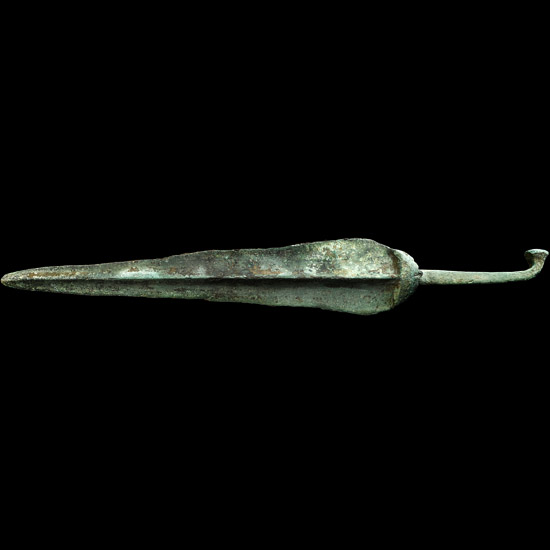
Western Asiatic Bronze Tanged Spearhead
Early 2nd millennium B.C.Sold for (Inc. bp): £182
Slender blade with raised midrib and rectangular-section tang with clubbed finial. 370 grams, 34 cm
Ex Abelita family collection, 1980s-2000s.
A certain number of similar blades, some considered to be spearheads and others to be daggers, all with bent tang, derived from Tepe Hissar Culture III. Some of them, like our specimen, have a button terminal, others have a plain, pointed terminal. The general dating of these specimens is fixed to the early 2nd millennium B.C. -
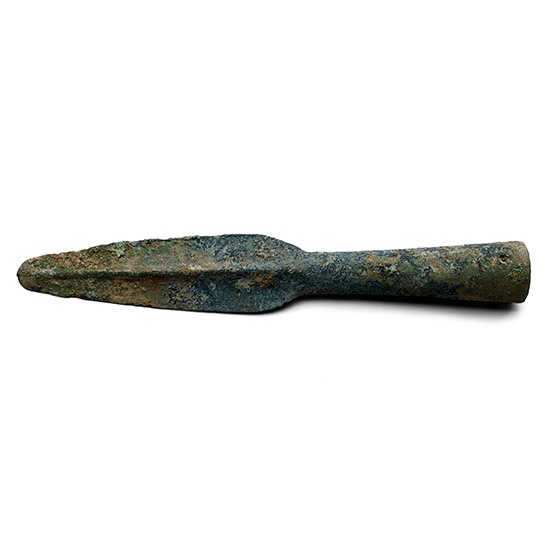
Luristan Bronze Socketted Spearhead
13th-6th century B.C.Sold for (Inc. bp): £117
Comprising a leaf-shaped blade with a raised midrib and a tapering tubular socket. 317 grams, 23.7 cm
Ex Abelita family collection, 1980s-2000s.
The spear belongs to the type VIII classified by Khorasani (spearheads with well-projecting midribs and long folded sockets) and more specifically to subtype C (with leaf-shaped blade and short hollow socket). Usually the willow-leaf blade has an almost straight shoulder base and a wide, flat midrib tapering towards the point. -
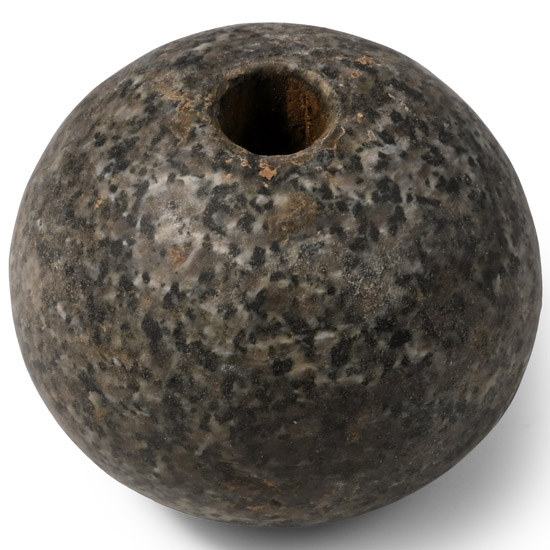
Western Asiatic Stone Macehead
3rd-2nd millennium B.C.Sold for (Inc. bp): £46
Doughnut-shaped body and a round socket. 211 grams, 55 mm
From a London, UK, collection, 2000s. Property of an Essex, UK, gentleman.
