
Loading, please wait...
LOT 0315
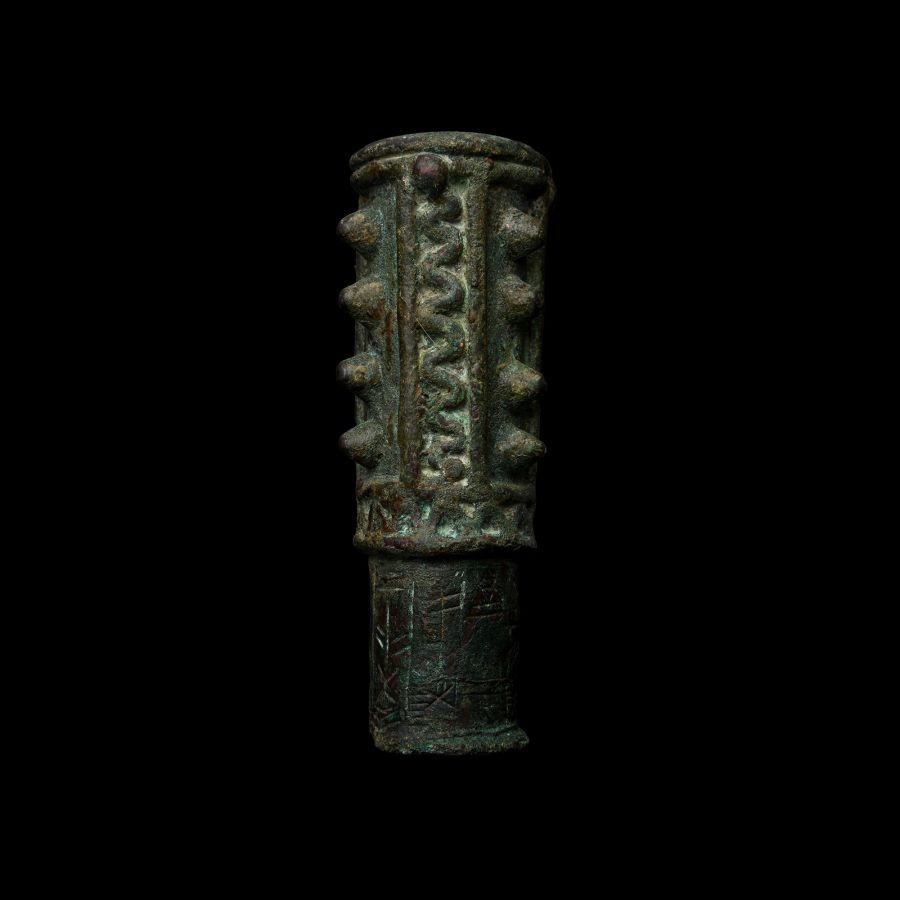
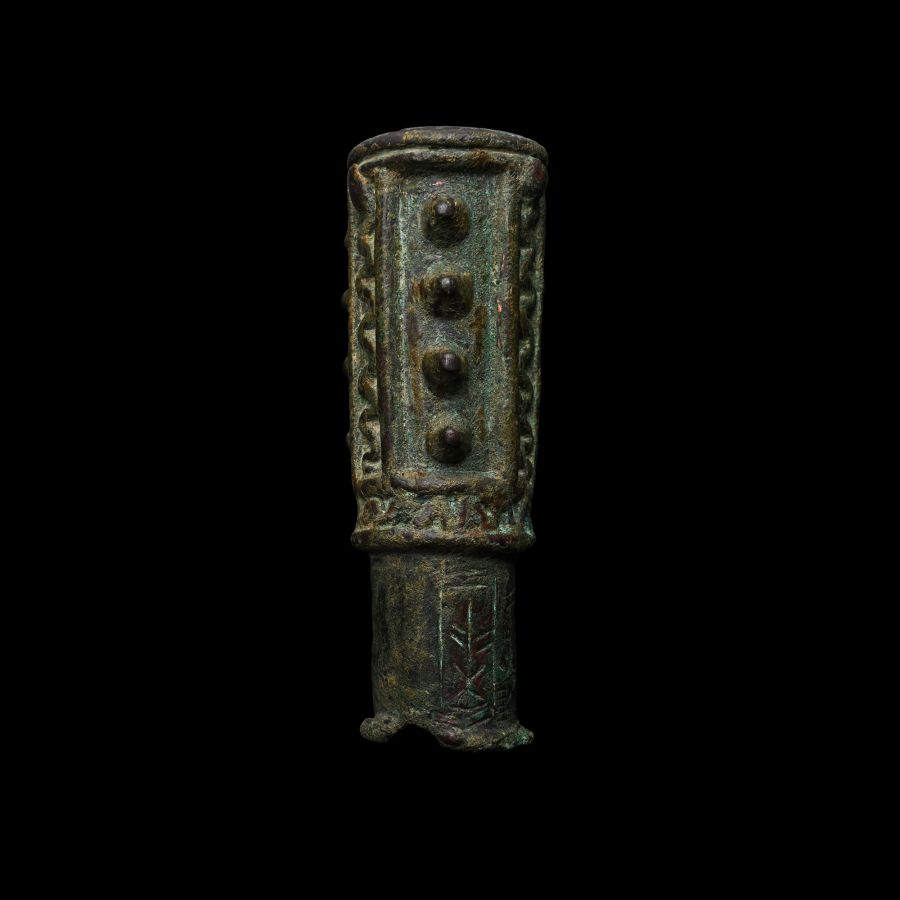
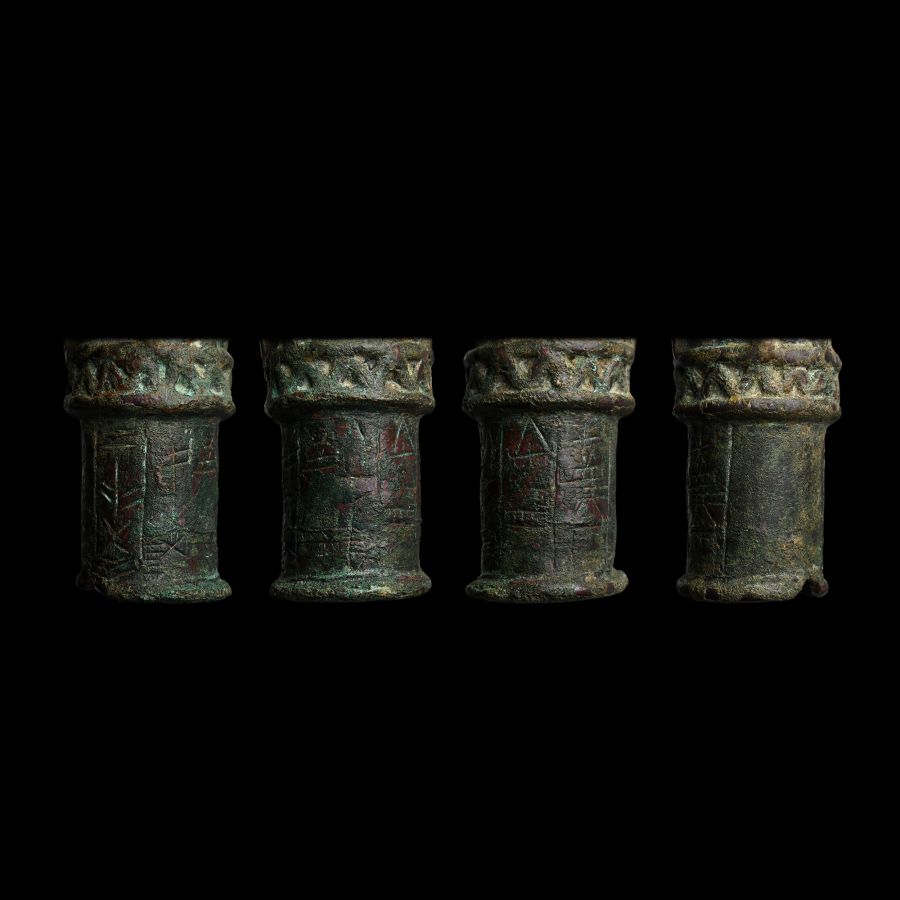
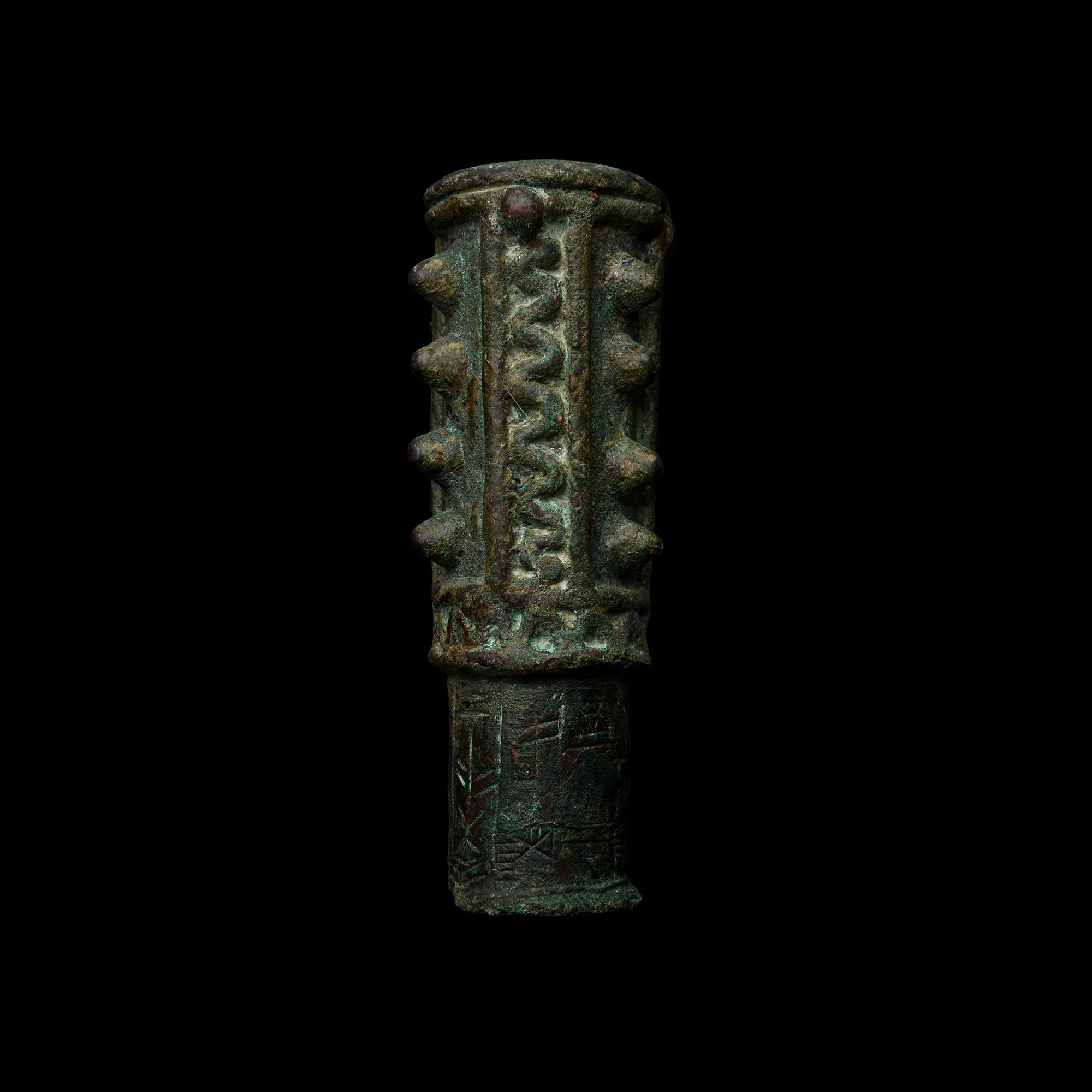
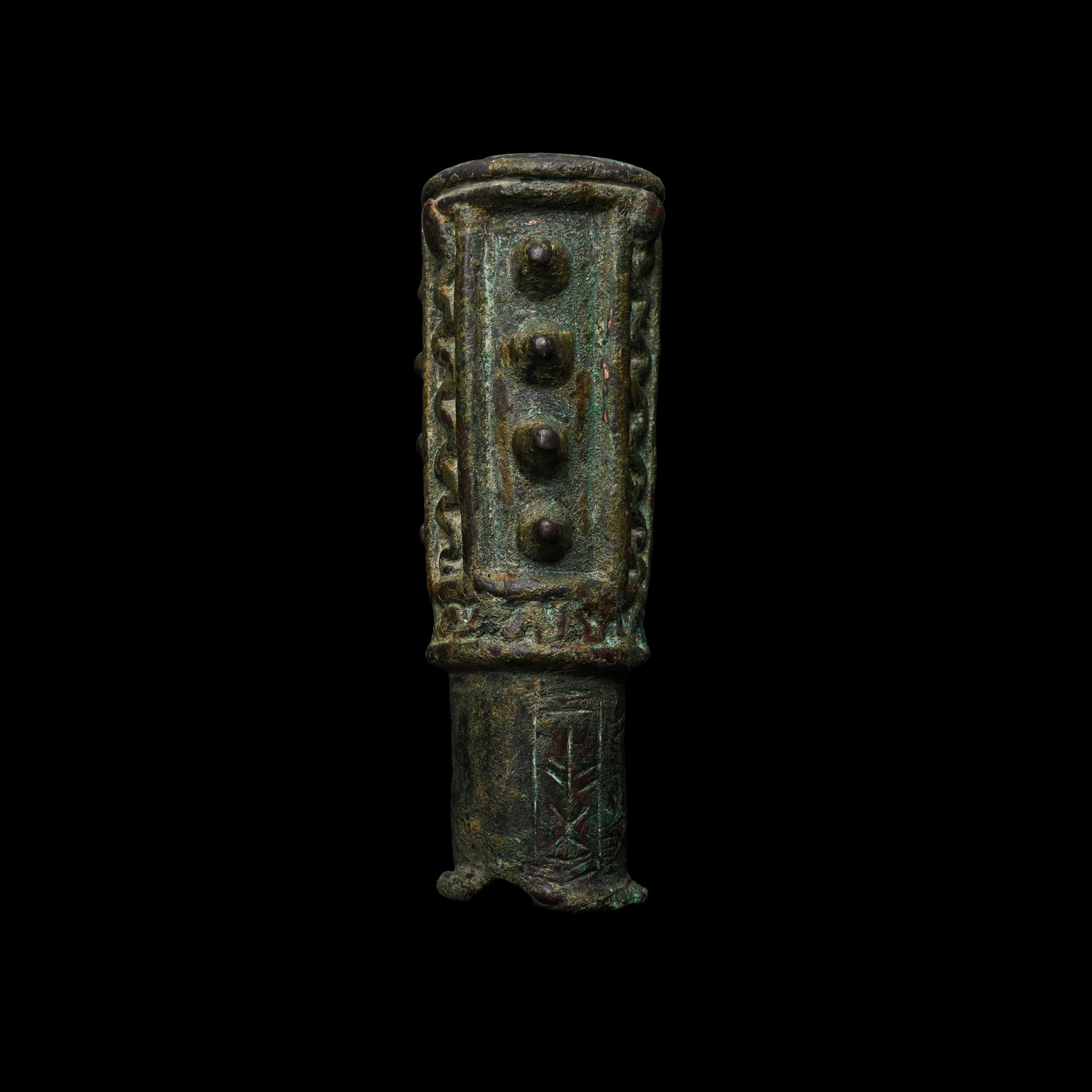
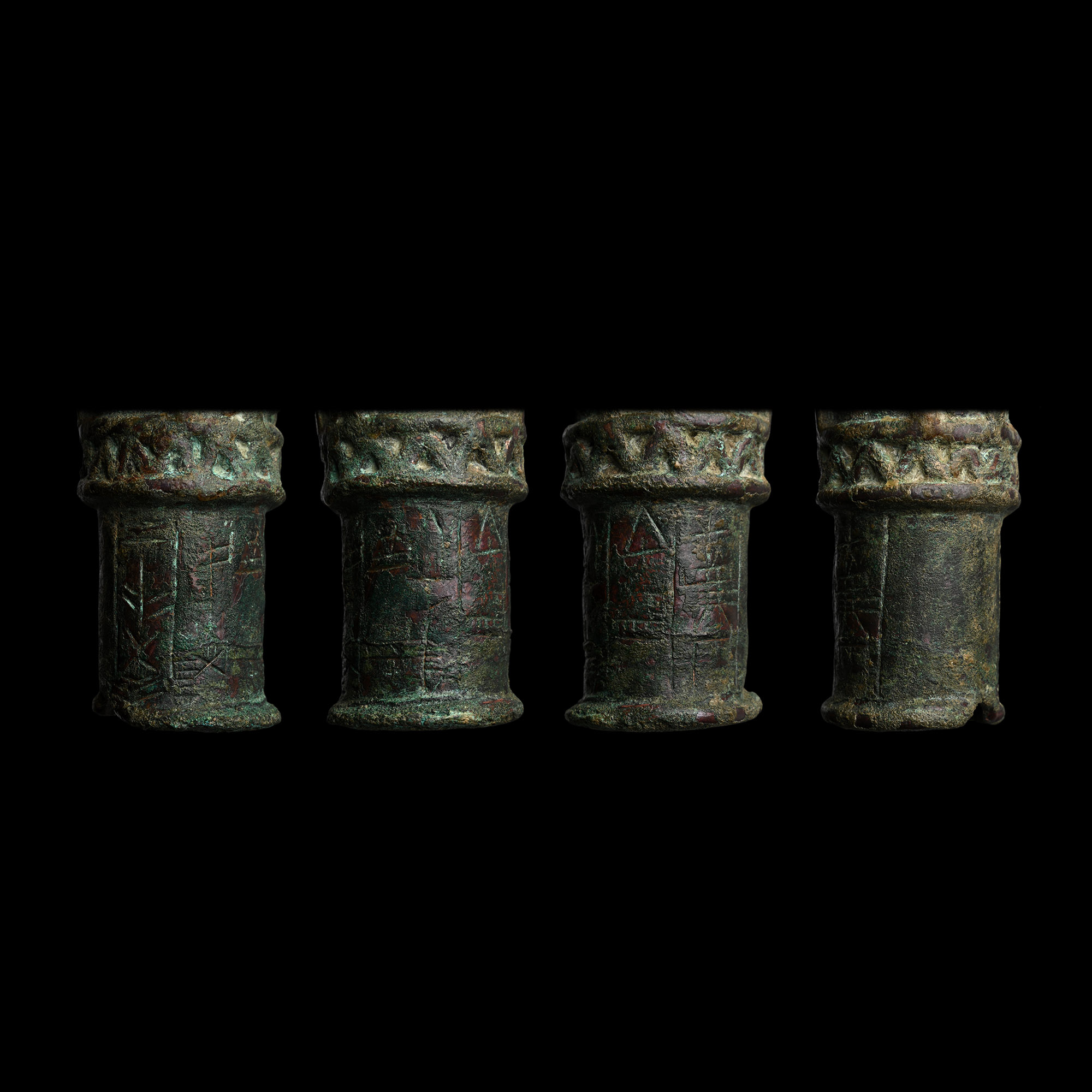
Elamite Bronze Macehead Inscribed 'To Nin’azu, Bala, son of Lugal-kare-si'
EARLY DYNASTIC IIIB PERIOD, CIRCA 2500-2340 B.C.
4 1/2 in. (350 grams, 11.6 cm).
Comprising a cylindrical shaft with a narrow flanged base, the upper section with three vertical relief panels decorated by round spikes alternated with a wavy pattern, divided and bordered by parallel ridges, engraved with five lines of Sumerian cuneiform text around the socket, a votive inscription translating to: 'To Nin’azu, Bala, son of Lugal-kare-si, the merchant, has presented (it)'.
ProvenanceAcquired before 1983.
Ex London gallery, 1990s.
Private collection, London, UK.
This lot has been checked against the Interpol Database of stolen works of art and is accompanied by search certificate number no.13257-253385.
Cf. for similar items Gorelik, M., Weapons of Ancient East, IV millennium BC-IV century BC, Saint Petersburg, 2003, pl.XXX, no.82, from Mesopotamia; Christie's, The Axel Guttmann Collection of Ancient Arms and Armour, part 1, London, 2002, item 18, p.24.
FootnotesThis gorz mace head belongs to the category of truncheon-shaped mace heads, a type developed on the Iranian plateau during the Bronze Age, used by Elamite and Luristan warriors since the 3rd millennium B.C. This category of objects was also interpreted as a part of a shaft or cudgel, but most scholars agree on the interpretation of use as a mace.
CONDITIONTimeLine Auctions follows a vetting process to ensure the authenticity and legality of all items, reinforcing our commitment to integrity and responsible trading. Each antiquity, antique, and coin lot undergoes thorough examination by a vetting committee of at least ten external specialists, professional trade association members, scientists, and archaeologists: Our Vetting Process
AUCTIONS:
TimeLine is a leading auction house specialising in antiquities, ancient art, collectables, natural history, coins, medals, and books. Our auctions offer museums, collectors, historians, and enthusiasts the opportunity to acquire unique and historically significant pieces.
LOT 0315
Elamite Bronze Macehead Inscribed 'To Nin’azu, Bala, son of Lugal-kare-si'
Sold for (Inc. bp): £2,340
-
.jpg)
Viking Iron Sword Pommel and Lower Guard
10th-11th century A.D.Sold for (Inc. bp): £702
Comprising: lower guard, lentoid in plan with recessed underside, slot to accept the tang; pommel with integral upper guard, Petersen's Type X with semicircular profile and raised upper section, slot for tang in the underside. 480 grams total, 77-92 mm
London, UK, collection, formed in the late 1990s. -
.jpg)
Urartian Bronze Helmet with Embossed Decoration
9th-7th century B.C.Sold for (Inc. bp): £6,500
A Caucasian or Urartian helmet of domed profile, hammered from a single sheet of metal; radiating rows of small repoussé bosses with interstitial rows connecting larger examples; shallow recess at the forward edge; old accession label to inner face 'AG334'; later pseudo-inscription; some restoration. 1.5 kg total, 41 cm including stand
Ex Axel Guttmann Collection of Ancient Arms and Armour, Germany [1944-2001], AG 334, 1990. with Hermann Historica, Munich, Germany, 2008. Private collection, New York, USA. Accompanied by an academic report by Dr Raffaele D’Amato. This lot has been checked against the Interpol Database of stolen works of art and is accompanied by search certificate number no.13262-254403.
The Urartian craftsmen were especially famous for their metalworking skills. However, the shape of this helmet differs considerably from the usual pointed Urartian examples, and shows a strong influence from the Scythian and Moeotic military headgear, which is not surprising if we consider that Urartu had been at war with the Scythian tribes of Caucasus since the 7th century B.C. The remainder of the helmet is its bowl, embossed and decorated, and an unusual recess on the front part. The helmet was used with a padded cap, which probably formed an integral part of the same headgear. -
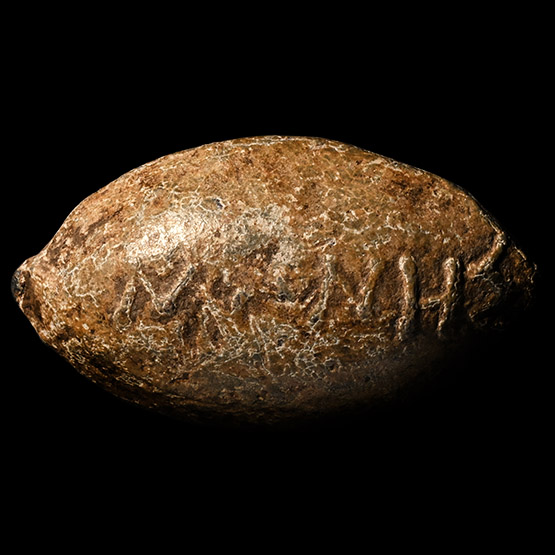
Greek Lead Slingshot with Inscriptions
4th-3rd century B.C.Sold for (Inc. bp): £156
Lenticular type with casting seam to the rim, raised 'Μ...ΝΗΣ' legend. 25.5 grams, 28 mm
Ex German art market, 2000s. Acquired from an EU collector living in London. From the collection of a Surrey, UK, gentleman.
The leaden bullets, which were thrown from slings, were called in Greek Molivdainai (μολύβδαιναι), and in Latin glandes; the former indicating the material ‘lead’, the latter the shape ‘acorns’. These bullets were cast in a mould and bore letters or devices, or both, on two sides or on only one. In form, they were more like an almond than an acorn, but many are pointed at both ends; in size, they are generally about one and a half inches in maximum length, and under one inch in maximum width.
