
Loading, please wait...
LOT 0250
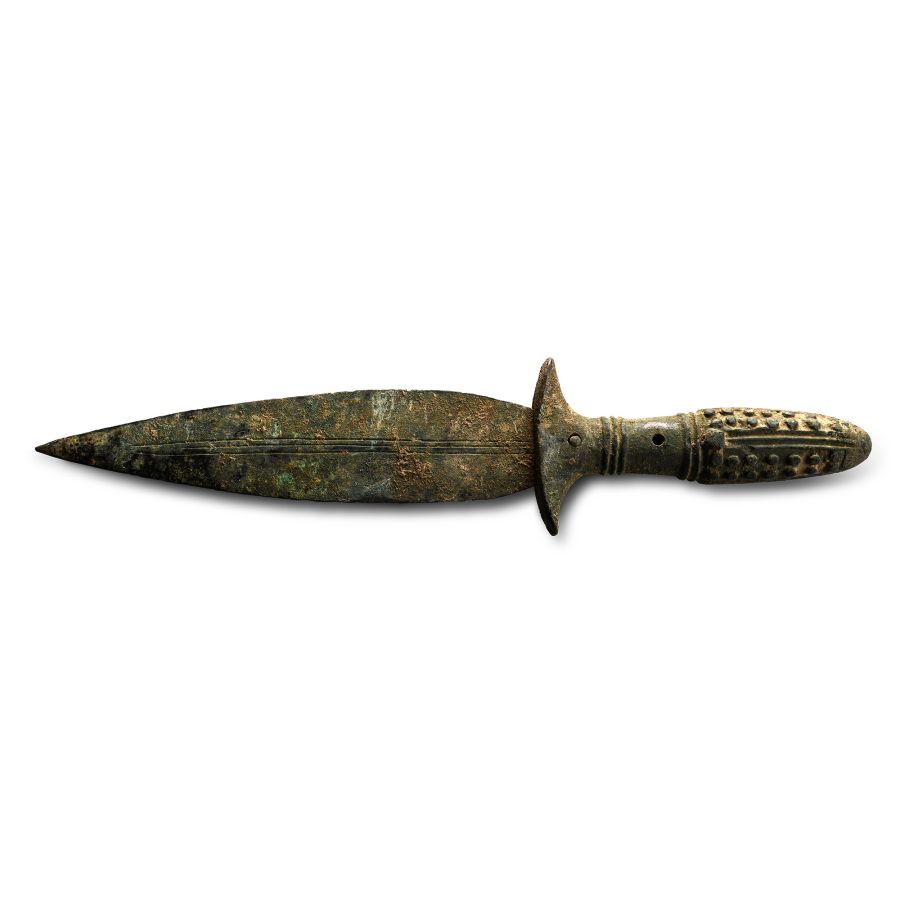
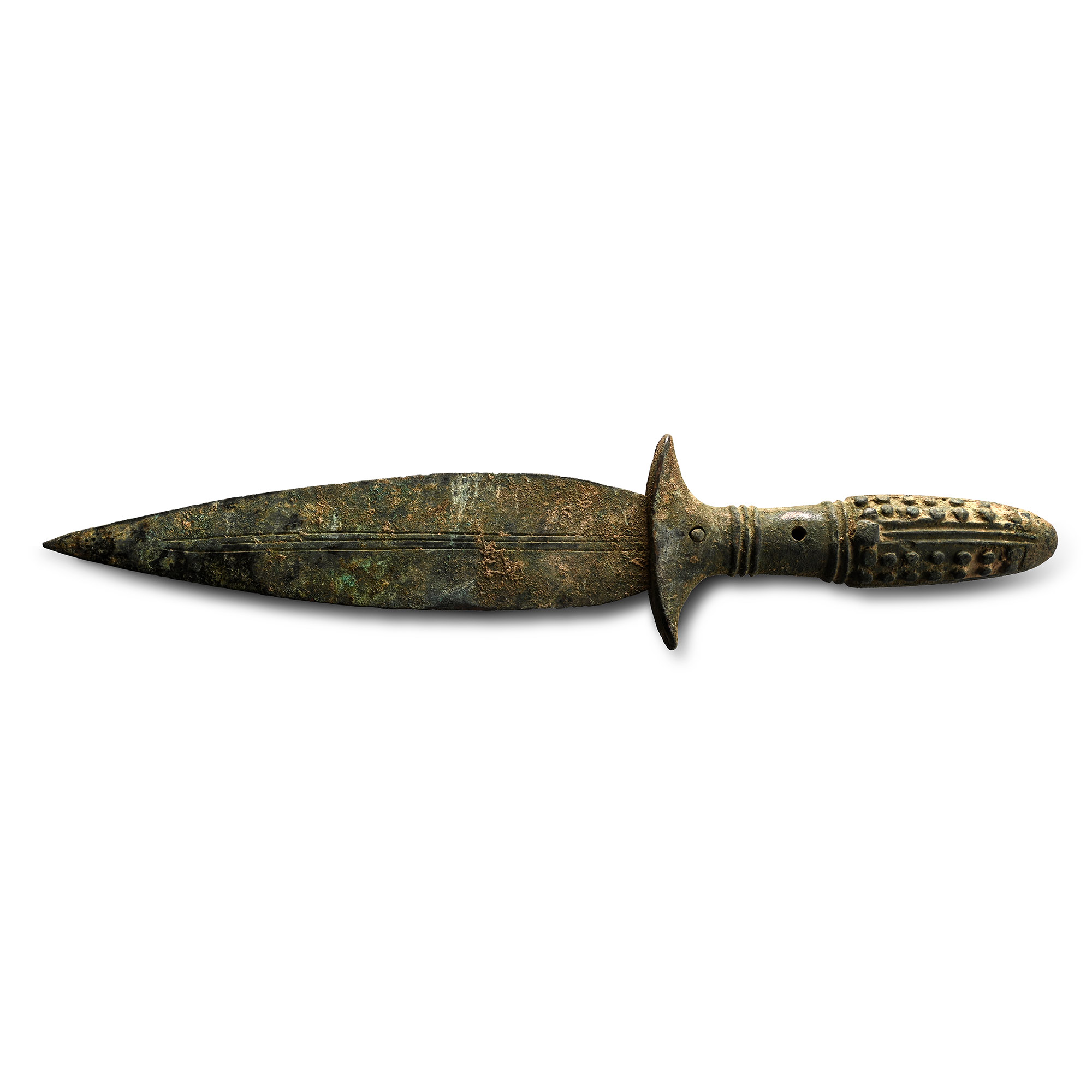
Elamite Bronze Dagger with Decorated Hilt
2ND MILLENNIUM B.C.
9 5/8 in. (165 grams, 24.5 cm).
Leaf-shaped blade with a separately cast hilt; blade tapering to a point, incised with three lines of incised linear decoration; hilt with flared guard, pierced with a pin and with a raised geometric pattern.
ProvenanceAcquired on the UK art market, 1990s.
Private collection, New York, USA.
Cf. Khorasani, M.M., Arms and Armour from Iran - The Bronze Age to the End of the Qajar Period, Tübingen, 2006, p.375, Cat.2, inventory no.668, for type.
CONDITIONTimeLine Auctions follows a vetting process to ensure the authenticity and legality of all items, reinforcing our commitment to integrity and responsible trading. Each antiquity, antique, and coin lot undergoes thorough examination by a vetting committee of at least ten external specialists, professional trade association members, scientists, and archaeologists: Our Vetting Process
AUCTIONS:
TimeLine is a leading auction house specialising in antiquities, ancient art, collectables, natural history, coins, medals, and books. Our auctions offer museums, collectors, historians, and enthusiasts the opportunity to acquire unique and historically significant pieces.
-
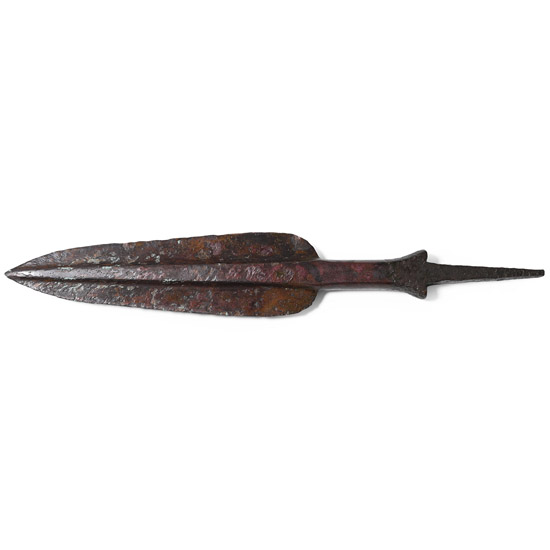
Western Asiatic Bronze Spear Blade
2nd-1st millennium B.C.Estimate: £180 - 240 (+bp*)
Current Winning Bid: £100
With an ovate blade, prominent central rib and rounded shoulders, square-section shaft with flared lateral spurs forming a collar, rectangular tang with narrow tip. 347 grams, 29.6 cm
Ex Abelita family collection, 1980s-2000s. -
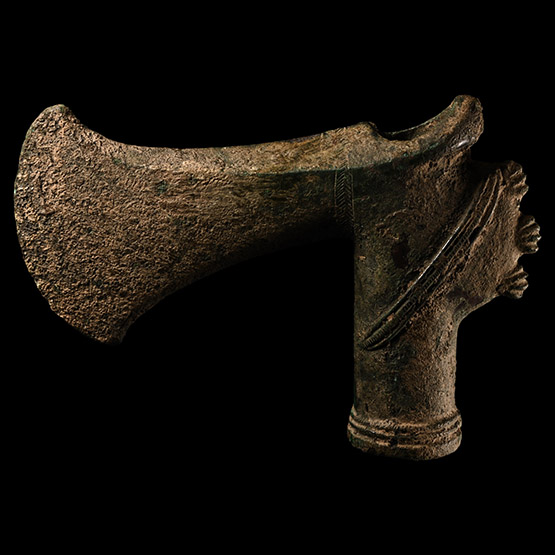
Luristan Socketted Bronze Axe Head Sar-e Tabar
Circa 2200-1600 B.C.Estimate: £500 - 700 (‡+bp*)
Opening Bid: £250
Comprising a wide curving blade and long neck with a band of herringbone decoration at the base, tubular neck with claw-like extension to the rear and a decorative diagonal band to both sides. 308 grams, 10.6 cm
Acquired on the Swiss art market, 1997. Private collection, Europe.
Similar examples of axeheads were produced in Luristan, and early parallels date back to 2200 B.C. They have moulding bands at the base, and the shaft is often crosshatched, showing different lozenge-shaped figures. -
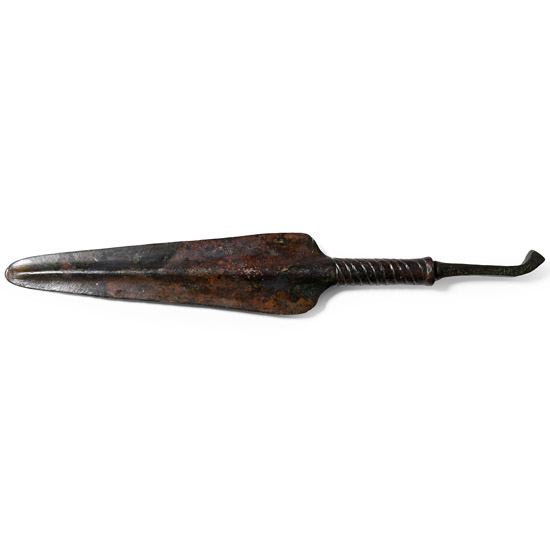
Western Asiatic Bronze Spear Blade
2nd-1st millennium B.C.Estimate: £180 - 240 (+bp*)
Current Winning Bid: £90
Comprising a triangular blade with a rounded tip, a flaring neck with incised barleytwist detailing, and a square-section tang with bent tip. 355 grams, 32.2 cm
Ex Abelita family collection, 1980s-2000s.
