
LOT 3461
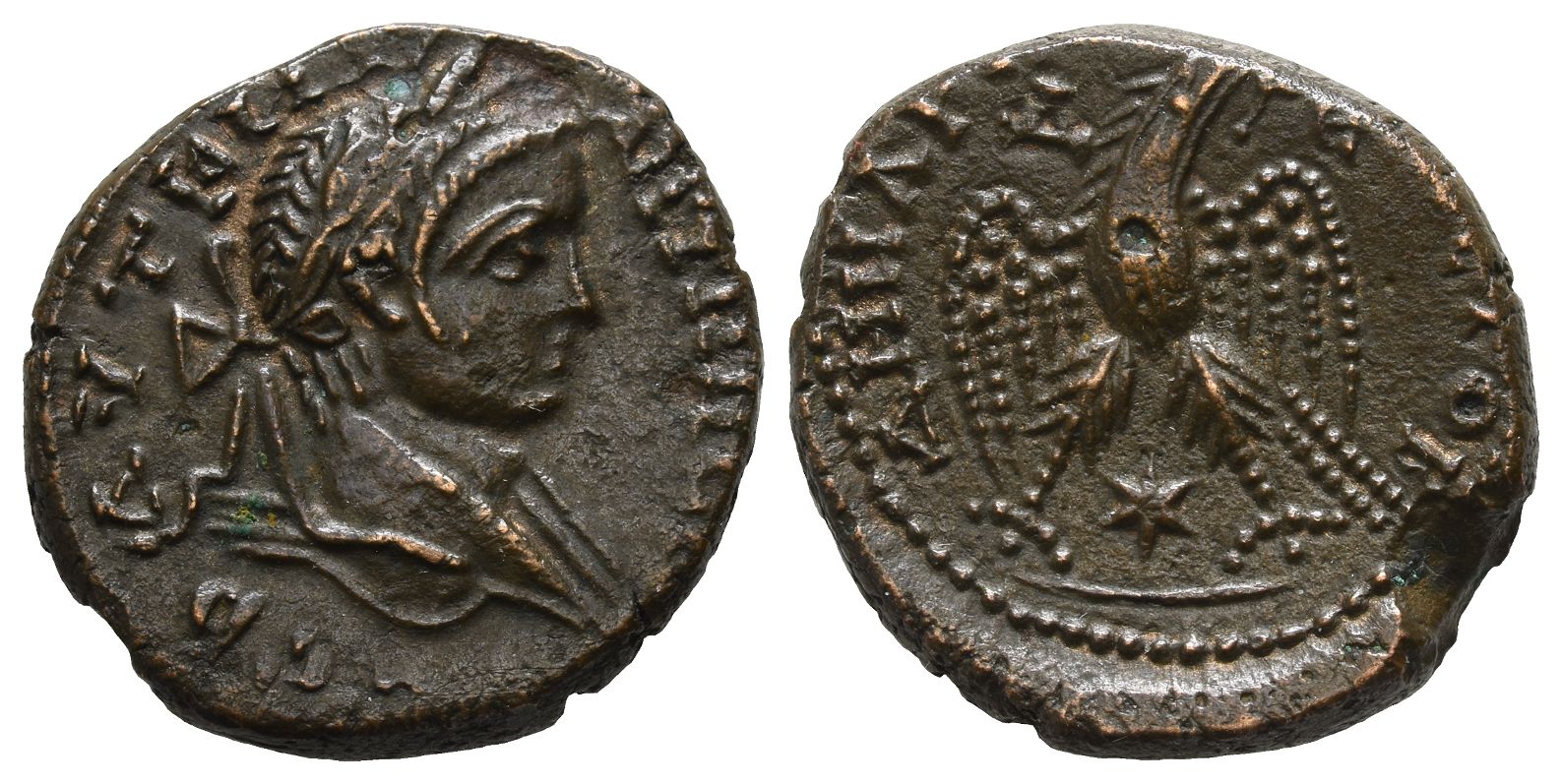
Elagabalus AE Tetradrachm of Antioch, Seleucis and Pieria. Struck possibly AD 219.
AYT K M ANTΩNЄINOC CЄB, laureate head to right, slight drapery on left shoulder / ΔHMAP[X ЄΞ YΠA] TO B, eagle with spread wings, head and tail to right, standing facing and holding wreath in beak; Δ Є across upper fields; between legs, star. Cf. Prieur 266. Good Very Fine.(10.87gr, 25mm, 12h.).
ProvenanceAcquired in the mid 1980s-1990s.
Private collection, Switzerland, thence by descent.
Private collection, since the late 1990s.
TimeLine Auctions follows a vetting process to ensure the authenticity and legality of all items, reinforcing our commitment to integrity and responsible trading. Each antiquity, antique, and coin lot undergoes thorough examination by a vetting committee of at least ten external specialists, professional trade association members, scientists, and archaeologists: Our Vetting Process
AUCTIONS:
TimeLine is a leading auction house specialising in antiquities, ancient art, collectables, natural history, coins, medals, and books. Our auctions offer museums, collectors, historians, and enthusiasts the opportunity to acquire unique and historically significant pieces.
LOT 3461
Elagabalus AE Tetradrachm of Antioch, Seleucis and Pieria.
Sold for (Inc. bp): £33
-
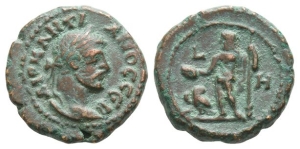
Diocletian BI Tetradrachm of Alexandria, Egypt. Dated RY 8 (AD 291/2).
Sold for (Inc. bp): £20
ΔIOKΛHTIANOC CЄB, laureate head to right / Zeus standing to left, holding patera and sceptre; to left, eagle standing to left, head to right; L H (date) across fields. RPC X Online Unassigned ID 76093; Dattari (Savio) 5777; Emmett 4087.8. 6.63gr, 20mm,12h.
Very Fine. Olive green patina with brown highlights.
From the collection of a gentleman, acquired on the London art market in the 1990s. -
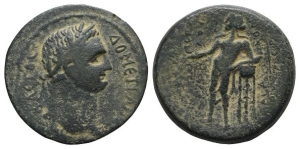
Domitian AE 25mm of Mopsus, Cilicia. Dated CY 161(?) (AD 93/4).
Sold for (Inc. bp): £39
ΔOMЄTIA[NOC CЄ]BACTOC, laureate head to right / Apollo standing facing, head to left, holding branch and leaning on tripod / [MOΨЄATΩN THC IЄPAC KAI ACYΛOY] to left, KAI A[YTO]NOM[OY] to right, [AΞP] date to outer right. RPC II 1741; SNG Levante 1326. 11.42gr, 25mm, 1h.
Good Fine.
Export permit approved by the Israel Antiquities Authority. Ex Roma Numismatics Ltd, E-Sale 71, 28 May 2020, lot 713. Property of a London antiquarian. -
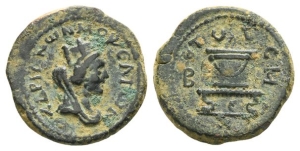
Cilicia, Mopsouestia-Mopsus AE 19mm. Dated CY 262 (AD 194/5). Time of Septimius Severus. Pseudo-autonomous issue.
Sold for (Inc. bp): £52
ΑΔΡΙΑΝധΝ ΜΟΨΕΑΤധΝ, turreted, veiled and draped bust of Tyche to right / ЄTOVC B-Ξ-C (date), altar on stand. RPC IV.3 25422.1 (temporary) = SNG Levante 1342. 5.48gr, 19mm, 6h.
Good Very Fine. Exceedingly rare. Best known specimen with clear date.
Acquired on the European coin market. Property of a Kent, UK, gentleman.
