
Loading, please wait...
LOT 0007
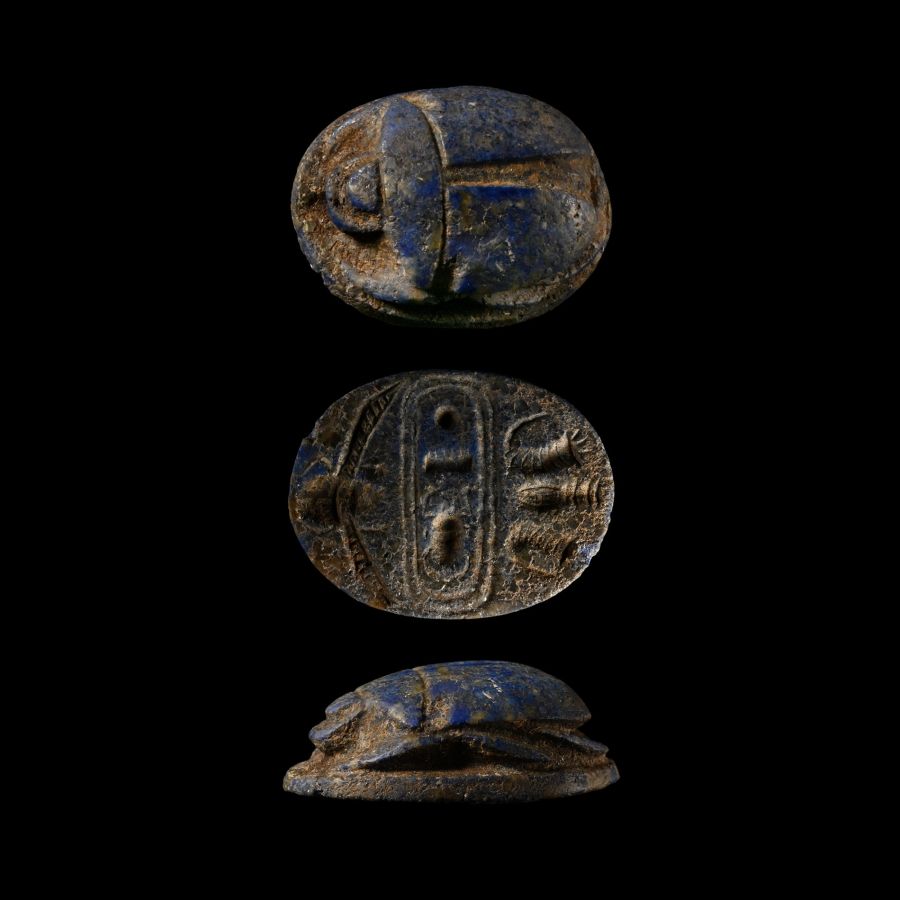
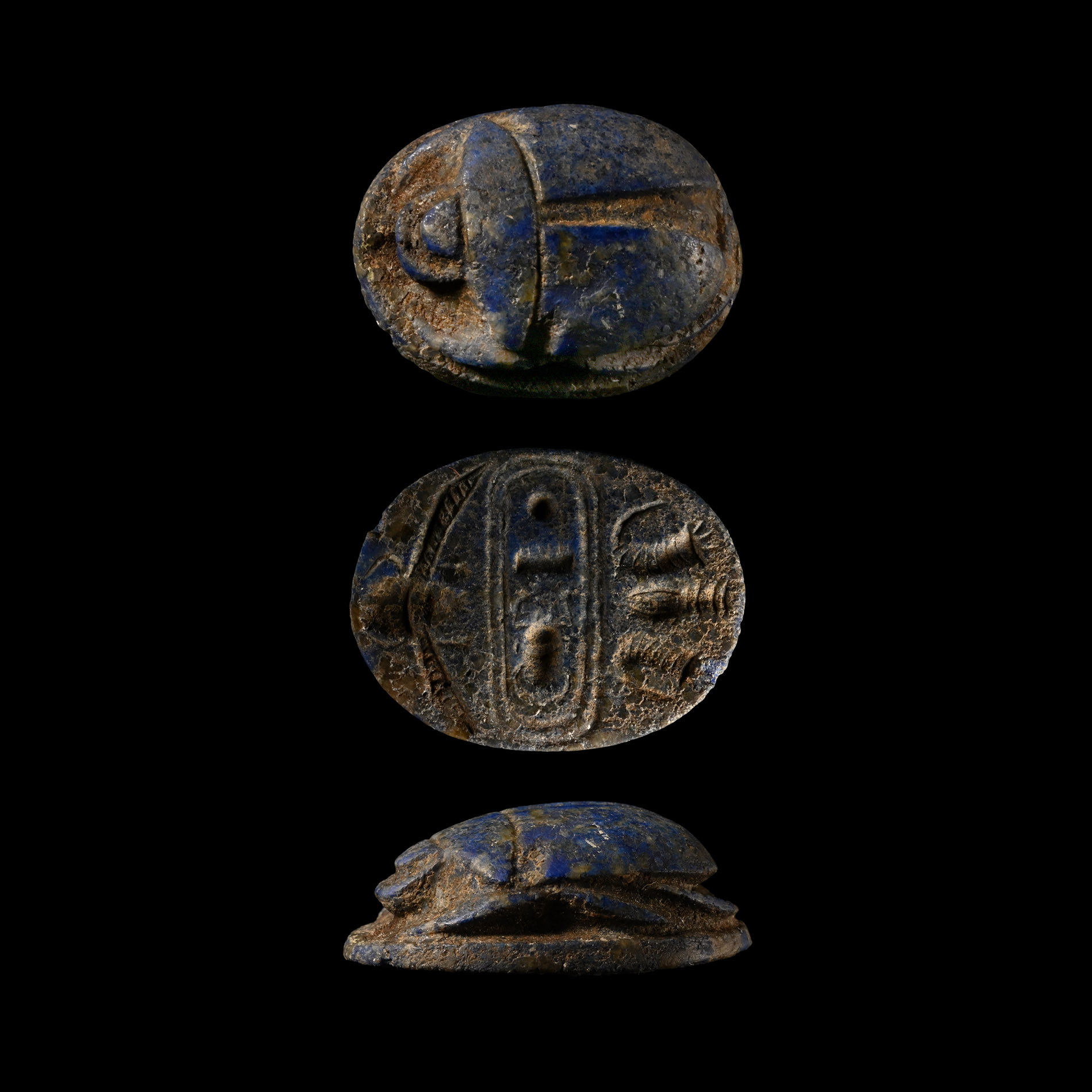
Egypto-Phoenician Lapis Lazuli Scarab with Cartouche for Thutmose III
LATE 1ST MILLENNIUM B.C.
1 in. (7.4 grams, 25 mm).
With carapace detailing to obverse, plaque with intaglio cartouche for the throne name of Thutmose III men-kheper-Re, winged scarab at one end and a central floral motif flanked by cornucopia at the other end.
ProvenancePrivate collection of Mr S.A., Switzerland, 1990s, thence by descent.
This lot has been checked against the Interpol Database of stolen works of art and is accompanied by search certificate no.12127-211877.
This lot has been cleared against the Art Loss Register database, and is accompanied by an illustrated lot declaration signed by the Head of the Antiquities Department, Dr Raffaele D’Amato.
Cf. Petrie, W.M.F., Scarabs and Cylinders with Names, London, 1917, pl. XXVIII no. 75, for a Thutmose III cartouche scarab of similar design.
CONDITIONTimeLine Auctions follows a vetting process to ensure the authenticity and legality of all items, reinforcing our commitment to integrity and responsible trading. Each antiquity, antique, and coin lot undergoes thorough examination by a vetting committee of at least ten external specialists, professional trade association members, scientists, and archaeologists: Our Vetting Process
AUCTIONS:
TimeLine is a leading auction house specialising in antiquities, ancient art, collectables, natural history, coins, medals, and books. Our auctions offer museums, collectors, historians, and enthusiasts the opportunity to acquire unique and historically significant pieces.
LOT 0007
Egypto-Phoenician Lapis Lazuli Scarab with Cartouche for Thutmose III
Estimate £2,500 - 3,500€2,900 - 4,060 (for guidance only)$3,380 - 4,730 (for guidance only)
-
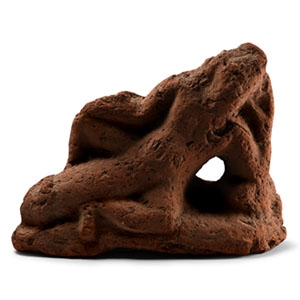
Egyptian Ithyphallic Terracotta Reclining Figure
Ptolemaic Period, 3rd century B.C.Sold for (Inc. bp): £46
Probably depicting young Harpocrates, holding his weight on his left arm, enormous phallus resting between his spread legs, shaved head and side-lock braid. 319 grams, 13 cm vwide
The Erotica Collection Christian von Faber-Castell, Küsnacgt ZH, Switzerland, since the late 1970s. This lot is accompanied by an illustrated lot declaration signed by the Head of the Antiquities Department, Dr Raffaele D’Amato.
A few early Hellenistic terracotta figures show the ithyphallic youth Harpocrates reclining on his phallus, usually depicted (when preserved) with a bald or shaved head and side-lock, sometimes in Macedonian dress. Some in this form have hermaphrodite-like features, although this may be little more than just the representation of a plump baby. Christian von Faber-Castell (born 1950) is a renowned German entrepreneur and art collector, best known as a member of the prominent Faber-Castell family, famed for their iconic writing instruments. A passionate advocate for art and culture, Christian von Faber-Castell curated an extensive and diverse private collection of erotica, spanning centuries and cultures. His collection reflects a deep appreciation for the interplay of beauty, sensuality, and artistic expression, bringing together rare and unique works that explore themes of intimacy and human connection. Pieces from this collection have been featured in notable exhibitions and are celebrated for their artistic and historical significance. This offering represents a rare opportunity to acquire works from one of the most fascinating and eclectic private collections of its kind. -
.jpg)
Egyptian Gold Uraeus Amulet
Late New Kingdom, 1279-1070 B.C.Estimate: £250 - 350 (+bp*)
Opening Bid: £125
Depicting a rearing cobra sporting a sun disc with its coiled body below resting on the hieroglyphic neb sign. 0.38 grams, 11 mm
From an early 20th century French collection. This lot is accompanied by an illustrated lot declaration signed by the Head of the Antiquities Department, Dr Raffaele D’Amato. -
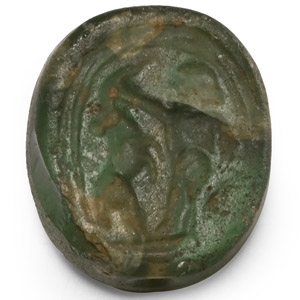
Egypto-Phoenician Glass Scaraboid with Beast-Tamer
800-600 B.C.Estimate: £100 - 140 (+bp*)
Opening Bid: £50
Ellipsoid in plan with transverse piercing, impressed intaglio scene of 'beast-tamer' motif (human figure in profile with one arm extended towards a rampant ibex); aqua glass; repaired. 4.28 grams, 19 mm
From the collection of Mr S.M., London, UK, formed from 1979-1999. This lot is accompanied by an illustrated lot declaration signed by the Head of the Antiquities Department, Dr Raffaele D’Amato.
