
Loading, please wait...

LOT 0509
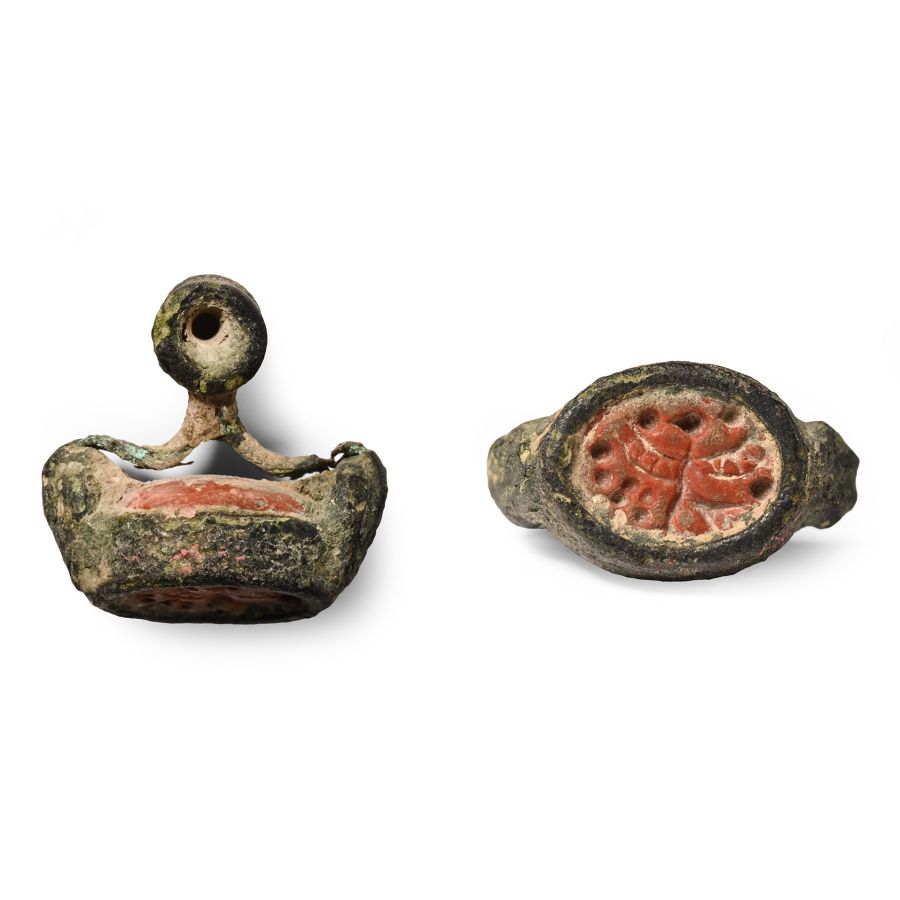
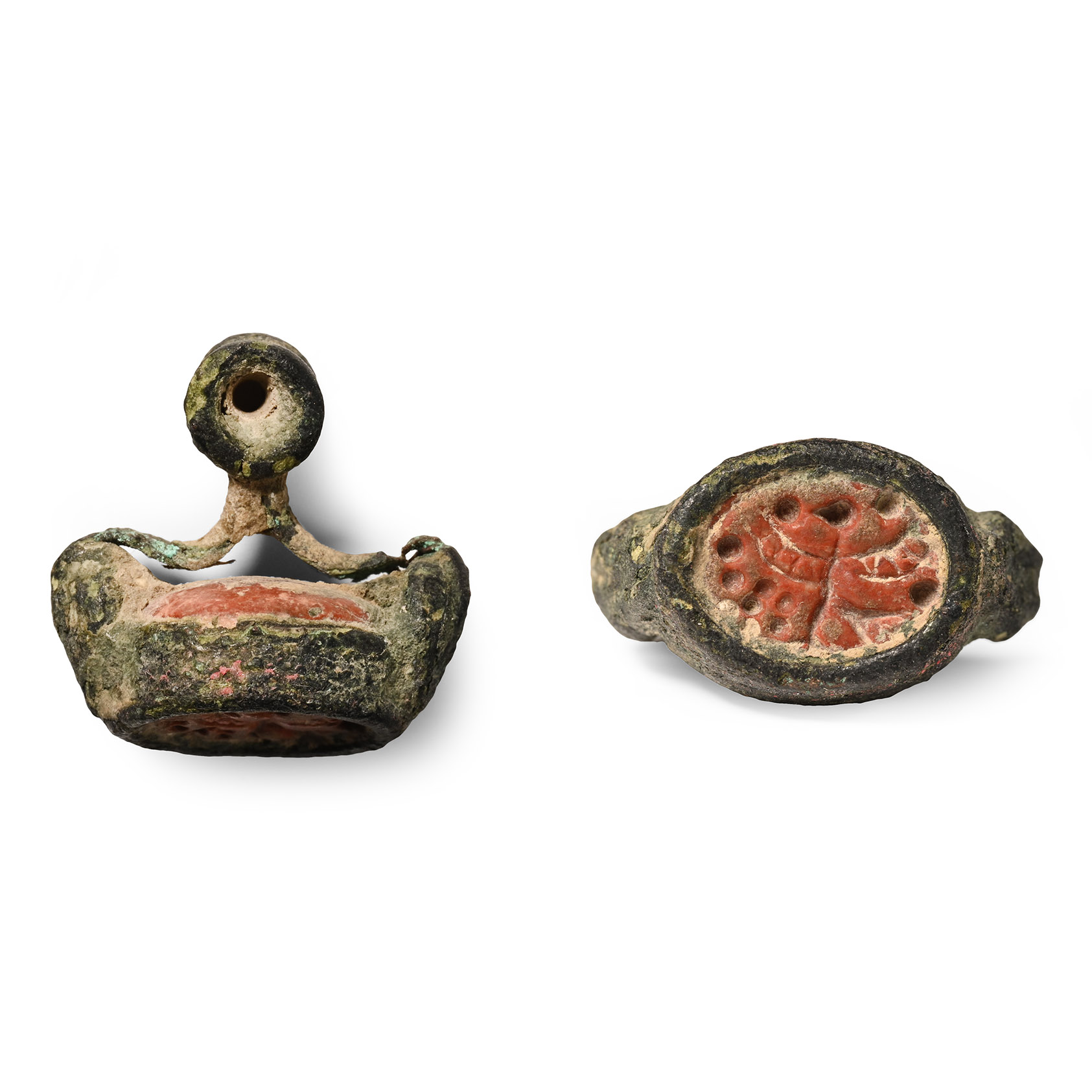
Egypto-Phoenician Hardstone Scaraboid Set in Bronze Pendant
LATE 1ST MILLENNIUM B.C.
3/4 in. (3.84 grams, 18 mm).
Comprising a carnelian scaraboid with a stylised bird with open wings to the underside, pellets to the field; set in an openwork bronze pendant frame with tubular loop.
ProvenanceFrom an early 20th century Home Counties, UK, collection.
CONDITIONTimeLine Auctions follows a vetting process to ensure the authenticity and legality of all items, reinforcing our commitment to integrity and responsible trading. Each antiquity, antique, and coin lot undergoes thorough examination by a vetting committee of at least ten external specialists, professional trade association members, scientists, and archaeologists: Our Vetting Process
AUCTIONS:
TimeLine is a leading auction house specialising in antiquities, ancient art, collectables, natural history, coins, medals, and books. Our auctions offer museums, collectors, historians, and enthusiasts the opportunity to acquire unique and historically significant pieces.
LOT 0509
Egypto-Phoenician Hardstone Scaraboid Set in Bronze Pendant
Estimate £200 - 300€230 - 350 (for guidance only)$270 - 410 (for guidance only)
-
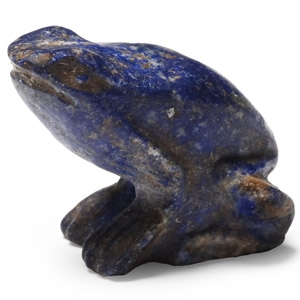
Egyptian Lapis Lazuli Frog Amulet
Late Period, 664-332 B.C.Sold for (Inc. bp): £260
Naturalistically rendered figure of a seated frog with longitudinal suspension hole through feet. 2.6 grams, 19 mm
From the collection of a gentleman, acquired on the London art market in the 1990s. -
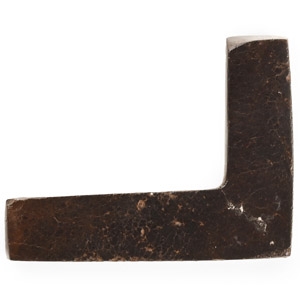
Egyptian Hardstone Architectural Amulet
Late Period, 664-332 B.C.Estimate: £200 - 300 (+bp*)
Opening Bid: £100
Carved haematite representation of a carpenter's or stonemason's set-square. 3.15 grams, 24 mm
with Hotel des Ventes, Drouot, Paris, France. From the collection of Mr H. Naudy, Paris, France. Acquired at between 2004-2010. Property of a French collector.
Amulets of the L-shaped carpenter's or stonemason's set-square, usually depicted as two rectangular strips of unequal lengths meeting at a right angle, were most frequently made of dark hard stones such as haematite, as this example. Set-square amulets were believed to bestow eternal moral uprightness upon their possessor. -
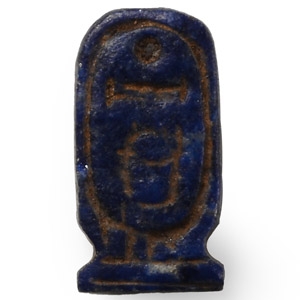
Egyptian Lapis Lazuli Amulet with Cartouche
New Kingdom, 1539-1075 B.C.Sold for (Inc. bp): £143
Rectangular in section with longitudinal piercing, hieroglyphic text. 1.38 grams, 16 mm
Acquired on the UK art market before 2000. Property of an Essex, UK, gentleman.
