
Loading, please wait...
LOT 0606
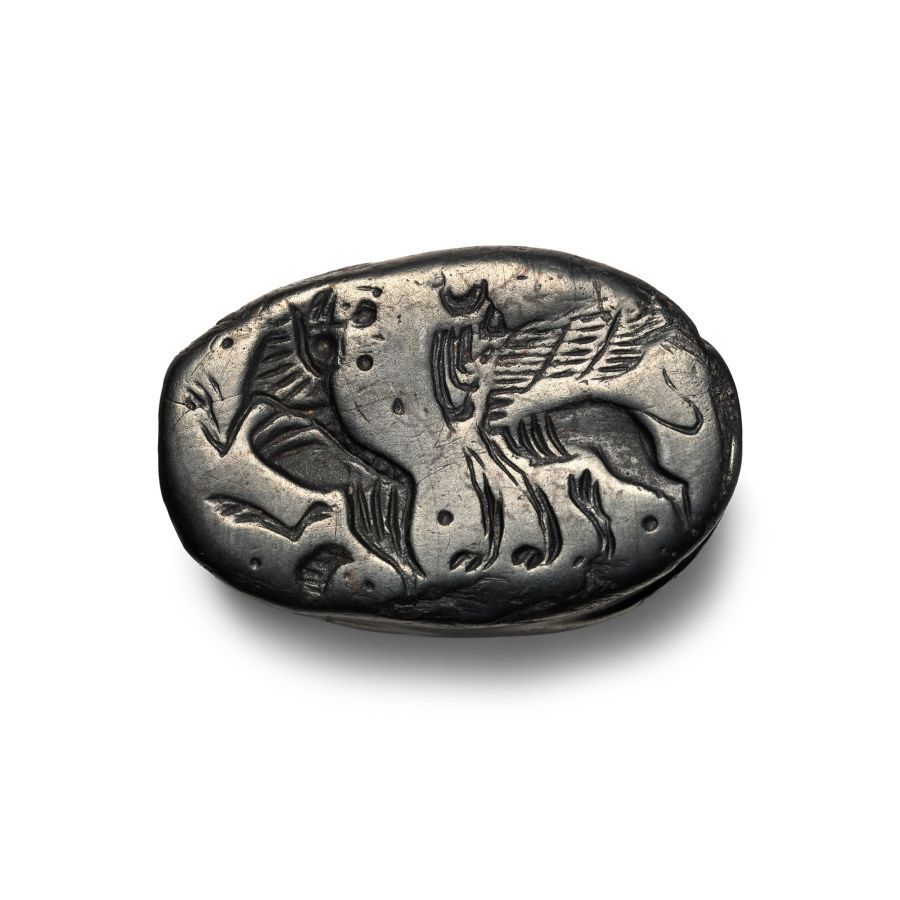
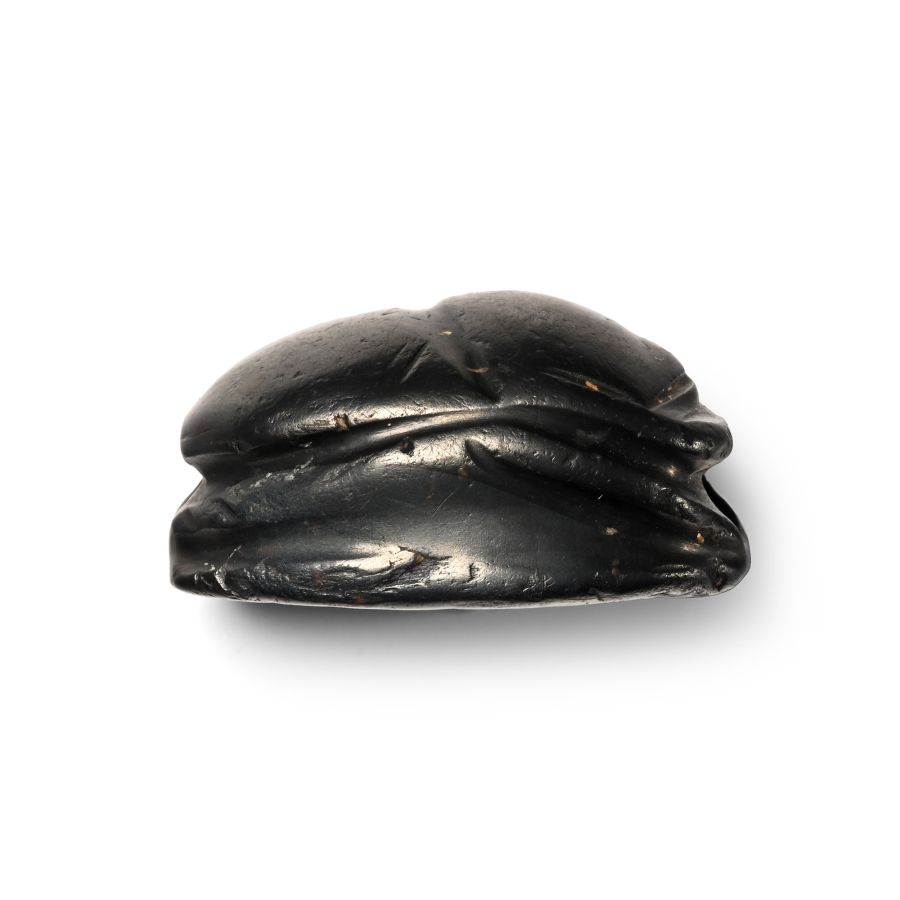
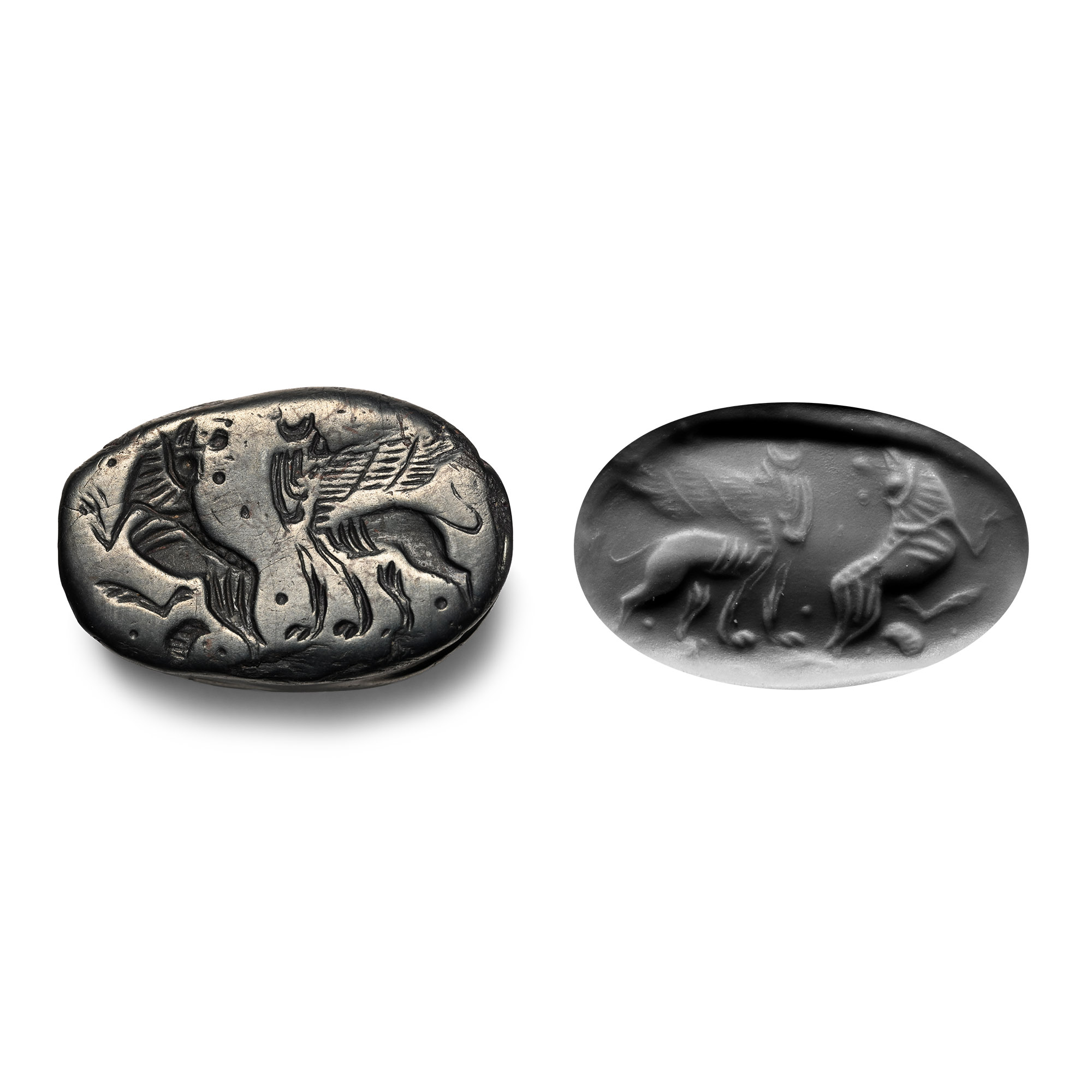
Egypto-Phoenician Haematite Scaraboid Seal
CIRCA 5TH CENTURY B.C.
7/8 in. (8.35 grams, 21 mm).
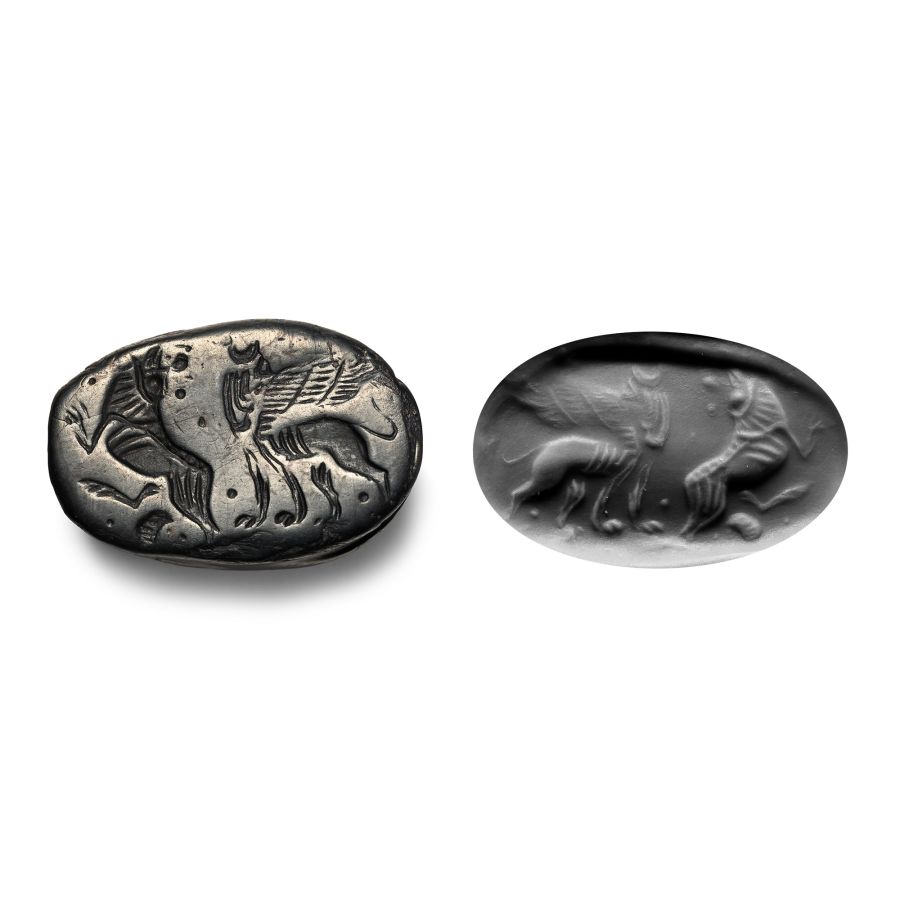
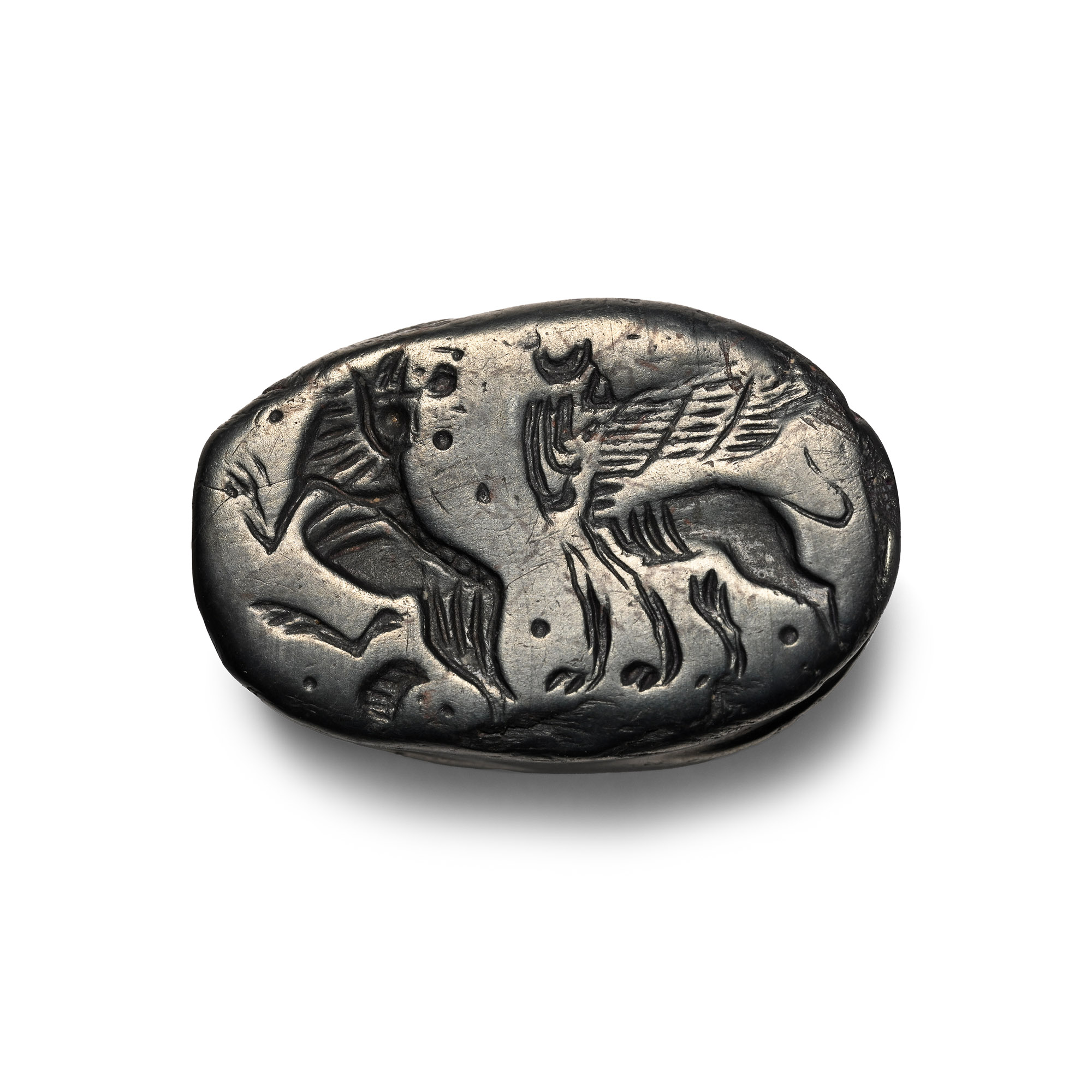
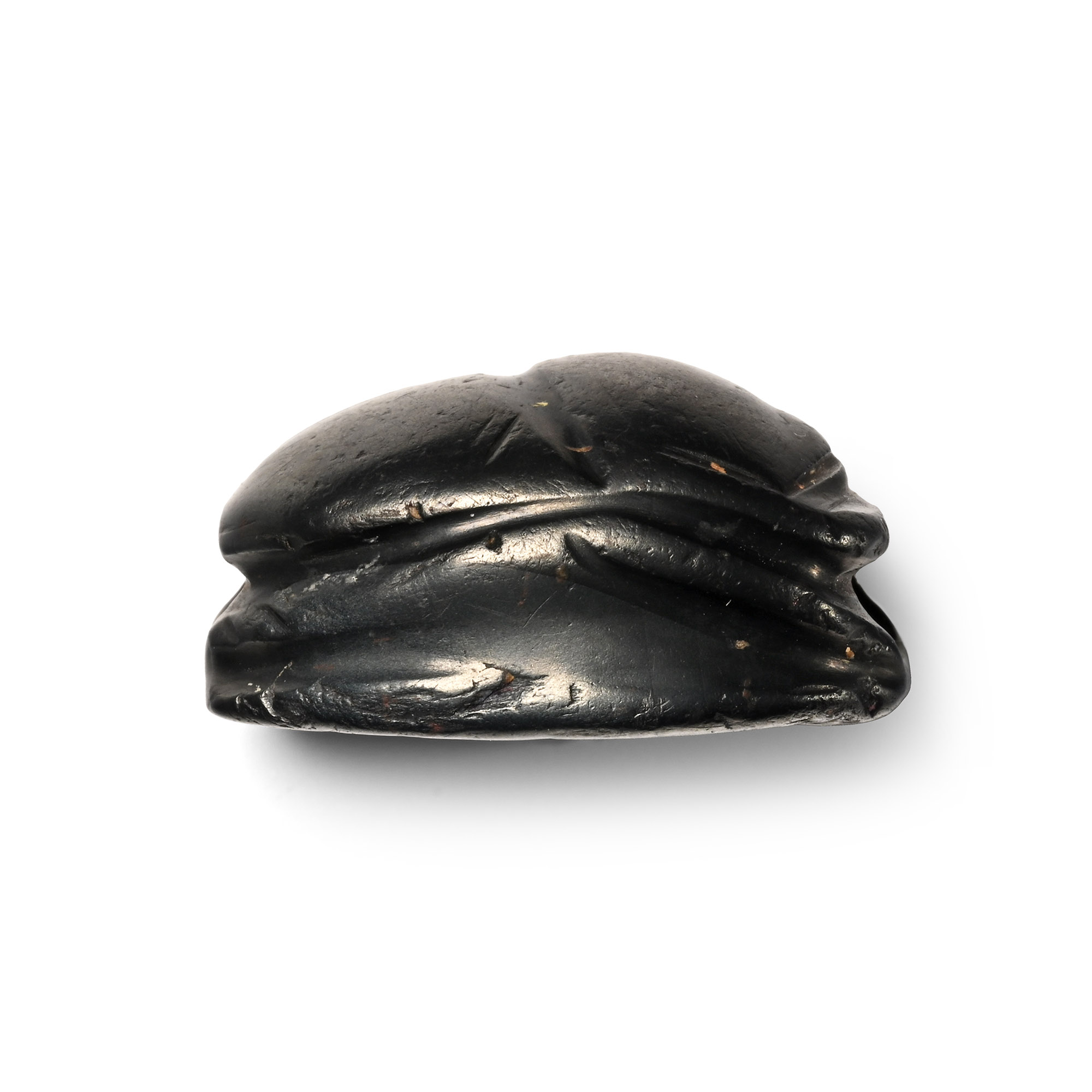
The upper side is modelled as a scarab with a stylised head, prothorax, elytra, and legs; the underside bearing a rampant lion and a statant winged gryphon.
ProvenanceAcquired in the mid 1980s-1990s.
Private collection, Switzerland, thence by descent.
Private collection, since the late 1990s.
Accompanied by a copy of an Art Loss Register certificate, no.3095.WW.
This lot has been checked against the Interpol Database of stolen works of art and is accompanied by a search certificate no.12715-234628.
TimeLine Auctions follows a vetting process to ensure the authenticity and legality of all items, reinforcing our commitment to integrity and responsible trading. Each antiquity, antique, and coin lot undergoes thorough examination by a vetting committee of at least ten external specialists, professional trade association members, scientists, and archaeologists: Our Vetting Process
AUCTIONS:
TimeLine is a leading auction house specialising in antiquities, ancient art, collectables, natural history, coins, medals, and books. Our auctions offer museums, collectors, historians, and enthusiasts the opportunity to acquire unique and historically significant pieces.
LOT 0606
Egypto-Phoenician Haematite Scaraboid Seal
Estimate £1,800 - 2,400€2,090 - 2,780 (for guidance only)$2,430 - 3,240 (for guidance only)
Opening Bid
£950 (EUR 1,102; USD 1,283) ‡+BP*
-
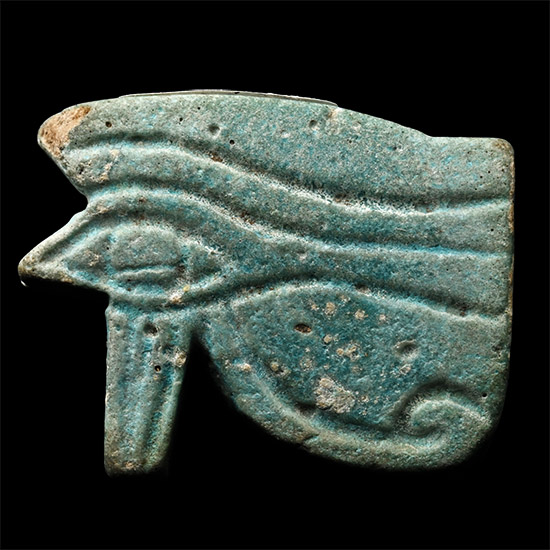
Egyptian Blue Glazed Faience Wedjat Eye Amulet
Late Period, 664-332 B.C.Estimate: £180 - 240 (‡+bp*)
Opening Bid: £90
A double-sided wedjat-eye amulet depicting a human eye shape paired with an eyebrow and specific falcon markings: a tear-like drop extending down from the front of the lower lid and a stylised spiral curl trailing from the base; longitudinally pierced for suspension. 9.8 grams, 36 mm
Ex Carl Leonhard Burckhardt-Reinhard (1902-1965), formed since 1922, Egypt. Inherited by his son Christopher Burckhardt in 1966, Switzerland. Since then in the possession of his wife, Switzerland.
The wedjat represents the left eye of Horus that was healed by Thoth. It symbolises the moon, while the right eye of the falcon-headed sky god symbolises the sun. Amulets in the shape of the wedjat were said to have magical powers and the ability to protect and heal. -
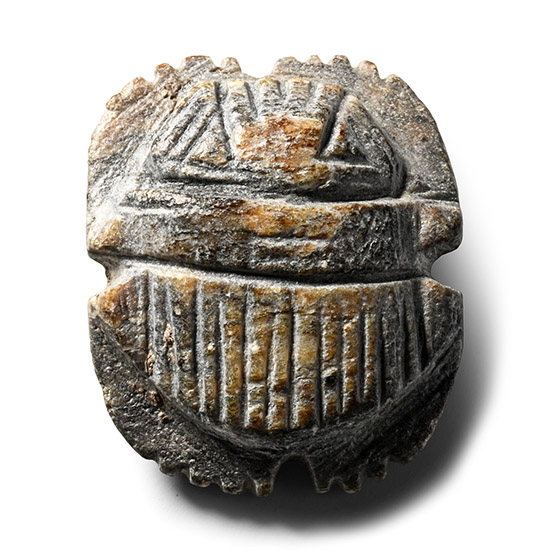
Egyptian Stone Scarab
Late Period, 664-332 B.C.Estimate: £120 - 170 (+bp*)
Opening Bid: £5
With incised anatomical detailing on the body, the underside ground smooth, with a faint trace of an original horizontal suspension hole. 3.28 grams, 20 mm
London, UK, art market, 1980s. Private collection, London, UK. -
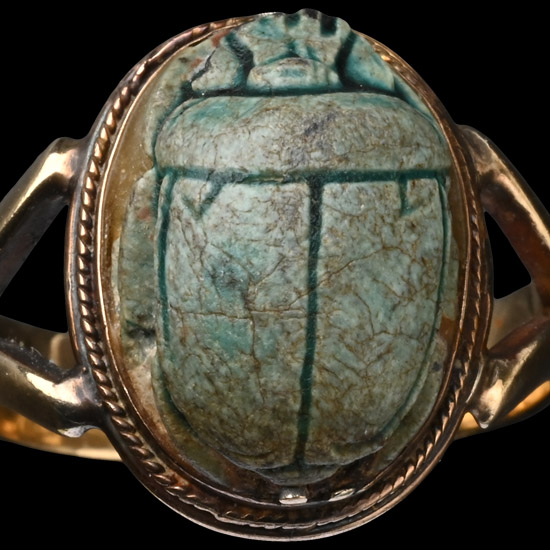
Egyptian Glazed Faience Scarab in Victorian Gold Ring
New Kingdom, circa 13th–11th century B.C. and laterEstimate: £300 - 400 (+bp*)
Opening Bid: £150
The scarab modelled with a stylised head, delineated pronotum and wing cases, a longitudinal division and angular markings at the shoulders, the underside with the seated figure of a pharaoh or god, facing a vertical cartouche bearing the throne name of Thutmose III, Men-kheper-re; set in a Victorian gold mount with an open-backed oval setting, with a fine beaded or twisted-wire border and pierced, divided shoulders. 5.69 grams, 26.90 mm overall, 18.79 x 18.00 mm internal diameter (approximate size British R, USA 8 1/2, Europe 18 3/4, Japan 18)
Acquired on the European art market. UK, private collection.
