
Loading, please wait...

LOT 0453
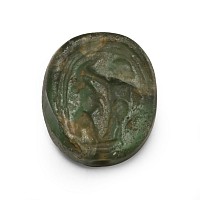
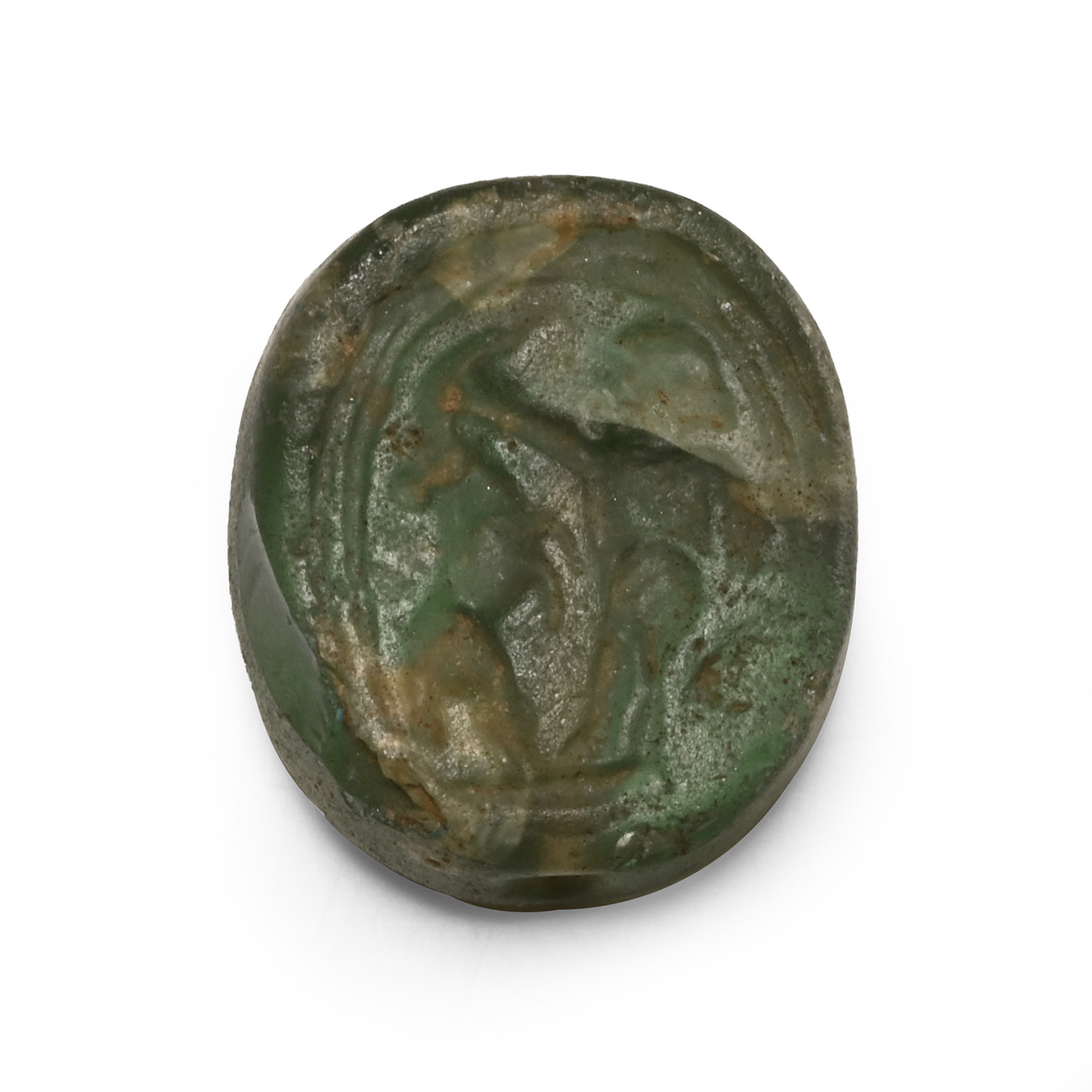
Egypto-Phoenician Glass Scaraboid with Beast-Tamer
800-600 B.C.
3/4 in. (4.28 grams, 19 mm).
Ellipsoid in plan with transverse piercing, impressed intaglio scene of 'beast-tamer' motif (human figure in profile with one arm extended towards a rampant ibex); aqua glass; repaired.
ProvenanceFrom the collection of Mr S.M., London, UK, formed from 1979-1999.
CONDITIONTimeLine Auctions follows a vetting process to ensure the authenticity and legality of all items, reinforcing our commitment to integrity and responsible trading. Each antiquity, antique, and coin lot undergoes thorough examination by a vetting committee of at least ten external specialists, professional trade association members, scientists, and archaeologists: Our Vetting Process
AUCTIONS:
TimeLine is a leading auction house specialising in antiquities, ancient art, collectables, natural history, coins, medals, and books. Our auctions offer museums, collectors, historians, and enthusiasts the opportunity to acquire unique and historically significant pieces.
LOT 0453
Egypto-Phoenician Glass Scaraboid with Beast-Tamer
Estimate £100 - 140€120 - 160 (for guidance only)$140 - 190 (for guidance only)
-
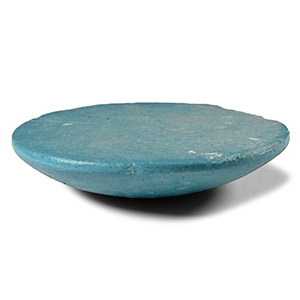
Egyptian Blue Faience Funerary Dish for Modelled Food
Middle Kingdom, 12th Dynasty, 1991–1802 B.C.Sold for (Inc. bp): £1,170
Shaped as a shallow circular dish. 252 grams, 11.1 cm
Acquired on the German art market, 1989-1995. with The Museum Gallery, 19 Bury Place, London, WC1, UK, 1998-2003. Property of a London based academic, 2003-present.
Faience food and dish simulacra replaced the wooden food preparation models of the earlier Middle Kingdom. -
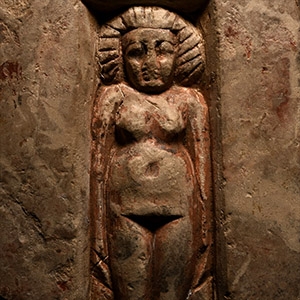
Egyptian Female Fertility Figurine Plaque
Late Period-Ptolemaic Period, 664-31 B.C.Estimate: £1,000 - 1,400 (+bp*)
Opening Bid: £556
Carved rectangular plaque with central recess, carved image of a nude female modelled in the half-round with a deeply striated bag wig, arms by her side; traces of red and black pigment on the body; mounted on a custom-made stand. 502 grams total, 17.1 cm including stand
From a central London collection, formed 1980-2000. From the private collection of Mr David Barker, London, UK; thence by descent.
The rectangular limestone plaque almost certainly represents a shrine. Such plaques first appeared in Lower Egypt and became widespread in the Late Period and Ptolemaic era. They may have developed from earlier female figurines depicted on beds and are usually associated with the female goddesses Isis and Hathor, both powerful protectors of women and childbirth and associated with fertility. -
.jpg)
Egyptian Steatite Scarab with Bes
Late Period, 664-332 B.C.Estimate: £150 - 200 (+bp*)
Opening Bid: £75
Plano-convex in section with detailed obverse, the underside with the figure of Bes flanked by adoring baboons and sun discs. 10.7 grams, 31 mm
Ex London, UK collection, 1990s.
Bes became one of ancient Egypt's most popular apotropaic deities from the New Kingdom onwards. Despite his somewhat fearful appearance, Bes was the patron and protector of pregnant women and children and believed to protect the wearer from snakes. The depiction of baboons flanking Bes with their arms raised before the sun disk was a common feature on temple wall reliefs. In ancient Egyptian religious literature, baboons heralded the dawn and, thus, the rebirth of the sun.
