
Loading, please wait...
LOT 0456
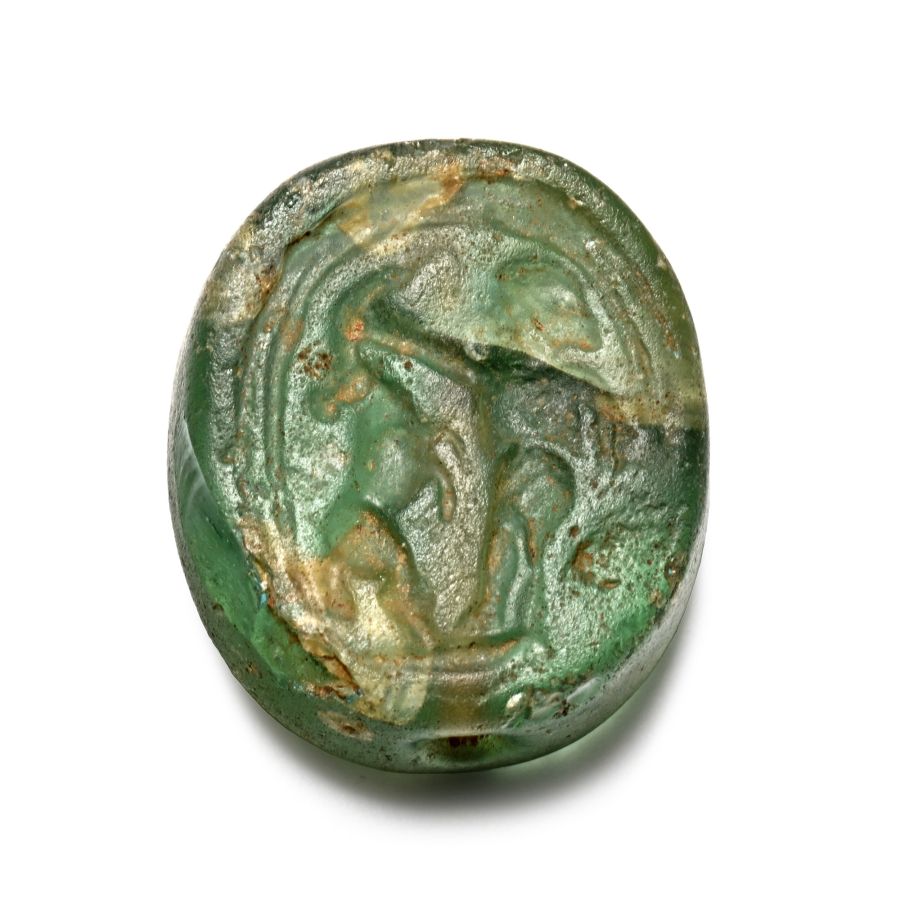
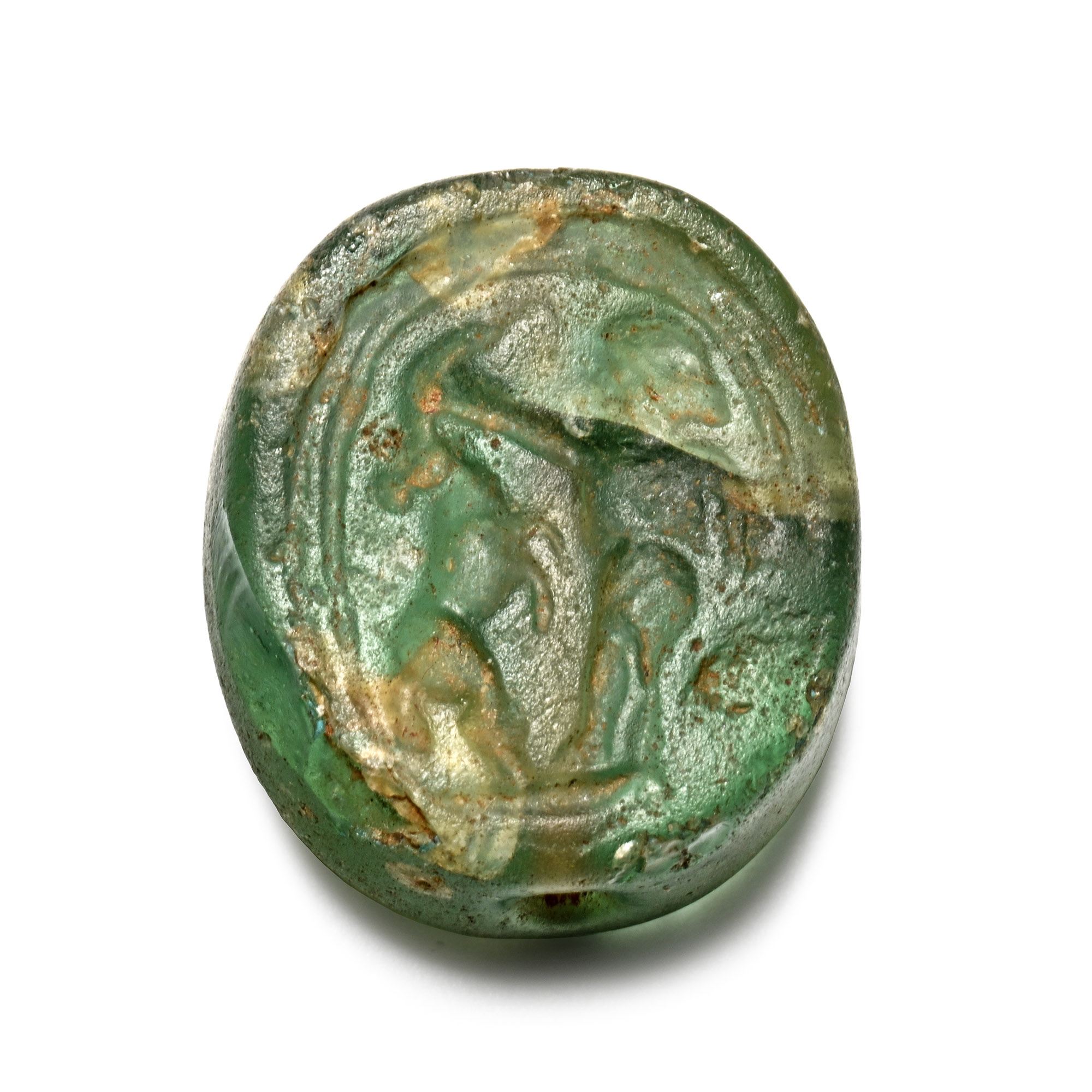
Egypto-Phoenician Glass Scarab Seal with Beast-Tamer Scene
CIRCA 800-600 B.C.
3/4 in. (4.28 grams, 19 mm).
Ellipsoid in plan with transverse piercing, impressed intaglio scene of 'beast-tamer' motif (human figure in profile with one arm extended towards a rampant ibex); aqua glass; repaired.
ProvenanceEx the private collection of the late Mr S.M., London, UK, formed from 1979-1999.
CONDITIONTimeLine Auctions follows a vetting process to ensure the authenticity and legality of all items, reinforcing our commitment to integrity and responsible trading. Each antiquity, antique, and coin lot undergoes thorough examination by a vetting committee of at least ten external specialists, professional trade association members, scientists, and archaeologists: Our Vetting Process
AUCTIONS:
TimeLine is a leading auction house specialising in antiquities, ancient art, collectables, natural history, coins, medals, and books. Our auctions offer museums, collectors, historians, and enthusiasts the opportunity to acquire unique and historically significant pieces.
LOT 0456
Egypto-Phoenician Glass Scarab Seal with Beast-Tamer Scene
Sold for (Inc. bp): £156
-
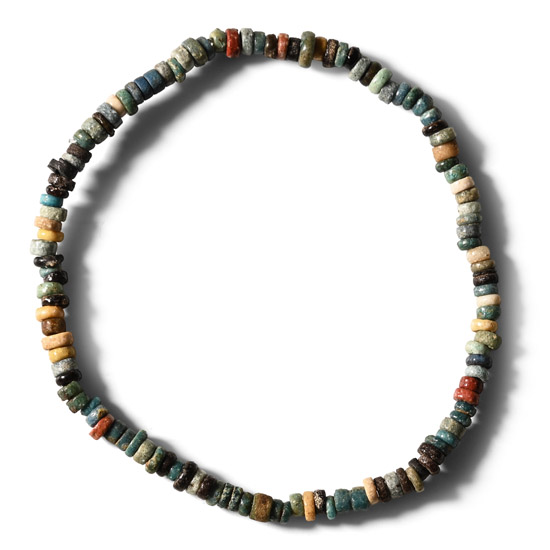
Egyptian Faience Mummy Bead Bracelet
Late Period, 664-332 B.C.Sold for (Inc. bp): £182
Composed of blue, cream, black, green and red annular beads, restrung with an elasticated string. 2.23 grams, 18 cm
Ex Ancient Art Shop, Windsor, UK, 1990s. Ex private collection. -
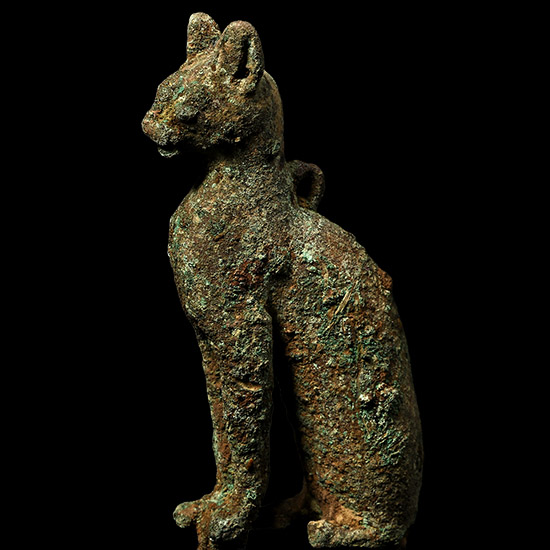
Egyptian Bronze Seated Cat Statuette
Late Period, 664-332 B.C.Sold for (Inc. bp): £1,040
Bastet in squatting pose, ears pricked and alert with her tail wrapped close to right side of her body, two short lugs beneath for attachment to a separate base, and a suspension loop behind the shoulders. 74 grams, 87 mm
Acquired on the UK art market, 1990s. Private collection, New York, USA. -
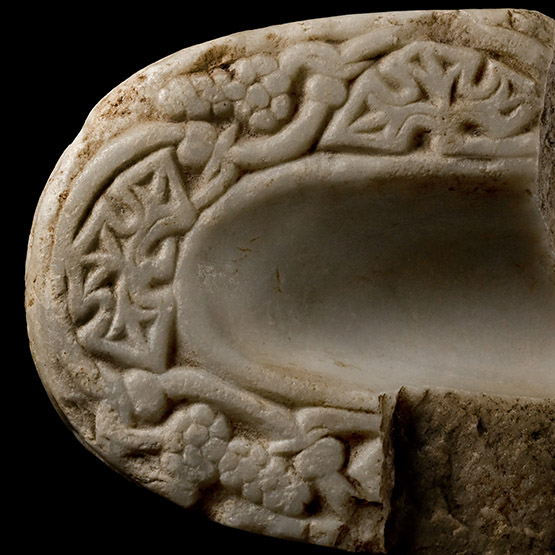
Coptic Marble Liturgical Vessel Fragment with Inscription
6th century A.D.Sold for (Inc. bp): £1,053
Tongue-shaped with low rounded pad on the underside, raised edge with low-relief decoration of grape vines and leaves, the edge with pairs of opposing doves eating grapes; dedicatory Demotic inscription on the underside. 87 grams, 55 mm
Acquired in the mid 1980s-1990s. Private collection, Switzerland, thence by descent. Private collection, since the late 1990s. Accompanied by an academic report by Dr Raffaele D'Amato. This lot has been checked against the Interpol Database of stolen works of art and is accompanied by a search certificate number no.12575-232108.
These vessels were used as liturgical objects for church offerings or ritual, and were extensively employed from late antiquity in ecclesiastical contexts.
