
Loading, please wait...



LOT 2059
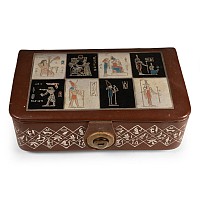
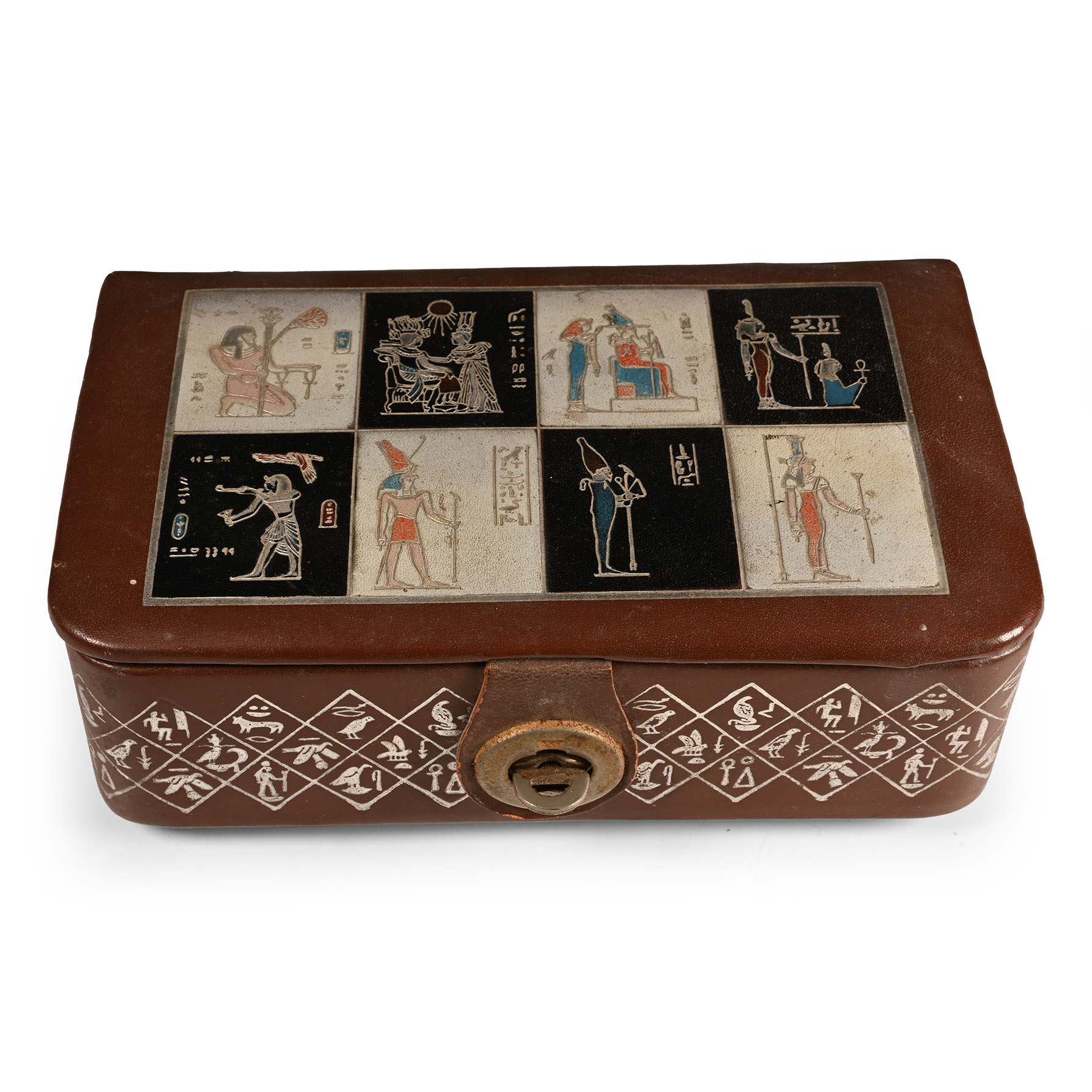
'Egyptianised' Musical Jewellery Box
20TH CENTURY A.D.
6 7/8 x 4 3/8 x 2 3/8 in. (645 grams, 17.6 x 11 x 6 cm).
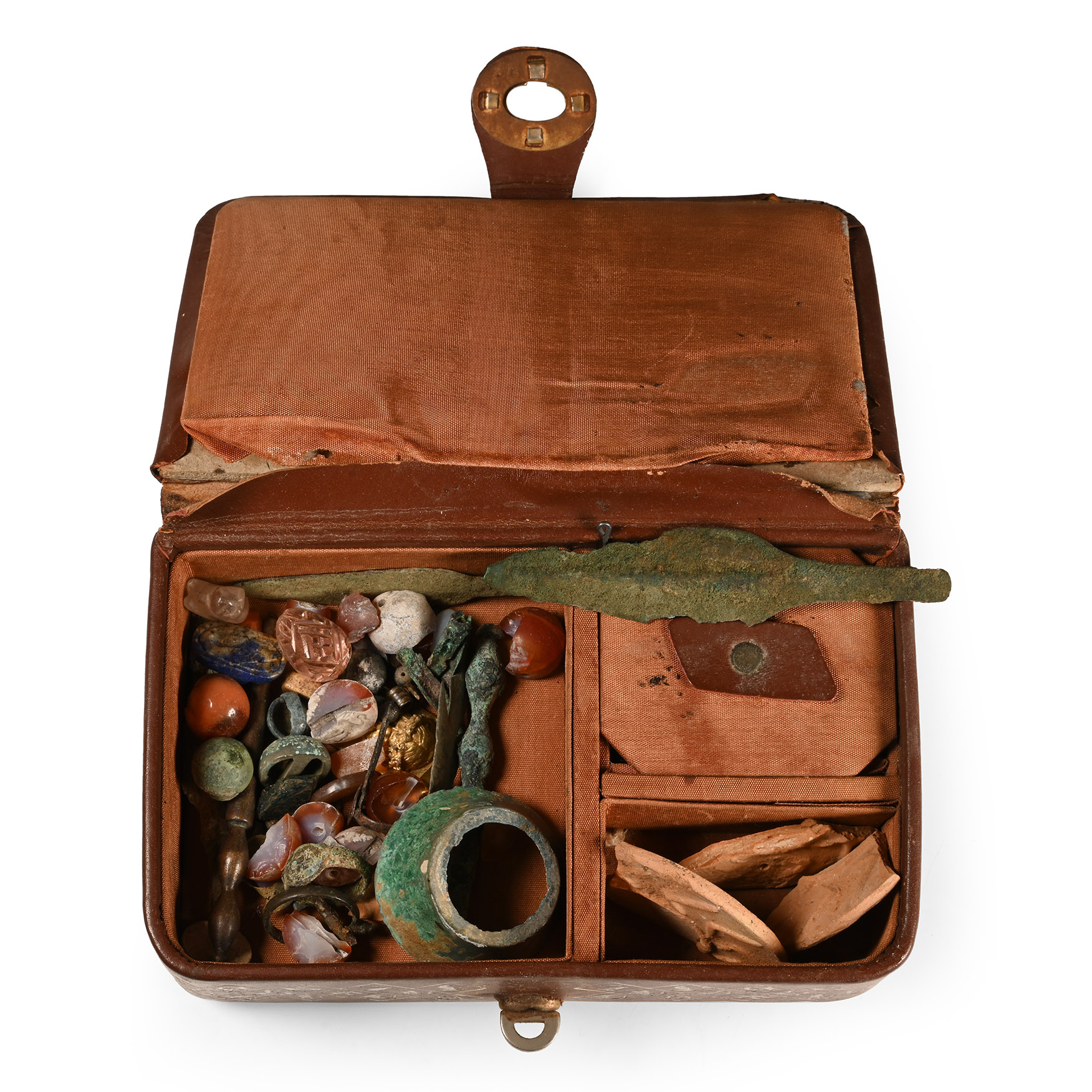
Wooden rectangular box with applied detailing of hieroglyphs and other symbols, polychrome panels with images of gods; segmented inner compartment with musical-box mechanism containing a mixed group of ceramic, faience, bronze and other items; complete, inner lid torn. [No Reserve]
ProvenanceProperty of a North London, UK, gentleman.
CONDITIONTimeLine Auctions follows a vetting process to ensure the authenticity and legality of all items, reinforcing our commitment to integrity and responsible trading. Each antiquity, antique, and coin lot undergoes thorough examination by a vetting committee of at least ten external specialists, professional trade association members, scientists, and archaeologists: Our Vetting Process
AUCTIONS:
TimeLine is a leading auction house specialising in antiquities, ancient art, collectables, natural history, coins, medals, and books. Our auctions offer museums, collectors, historians, and enthusiasts the opportunity to acquire unique and historically significant pieces.
-
.jpg)
'Nuestra Senora de la Luz' Shipwreck Fork and Spoon Set
Sunk 1752 A.D.Sold for (Inc. bp): £169
Comprising a four-pronged table fork and a spoon with ovoid bowl. 71 grams total, 16.5-17 cm
Salvaged by Ruben Collado Amatriain in 1992. Accompanied by original signed declarations in both English and Spanish from Ms Mariana Faine Collado, daughter of Mr Ruben Collado Amatriain. -
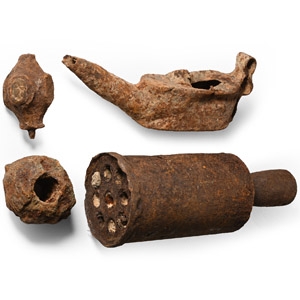
Mixed Iron Artefact Group
15th-20th century A.D.Sold for (Inc. bp): £65
Including a small bulbous macehead, a hollow-formed lamp with spout and loop handle, and other items. 3.63 kg total, 5.8-19.1 cm
From a collection acquired on the UK art market from various auction houses and collections mostly before 2000. From an important Cambridgeshire estate; thence by descent. -
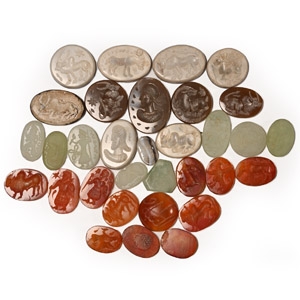
Near Eastern Style Stone Gemstone Collection
20th century A.D.Sold for (Inc. bp): £117
Mainly ellipsoid in plan, many with intaglio animal motifs, profile busts and others; after the antique. 64 grams total, 13-25 mm
From a central London ADA dealership, 1980-1990.
