
Loading, please wait...
LOT 0448
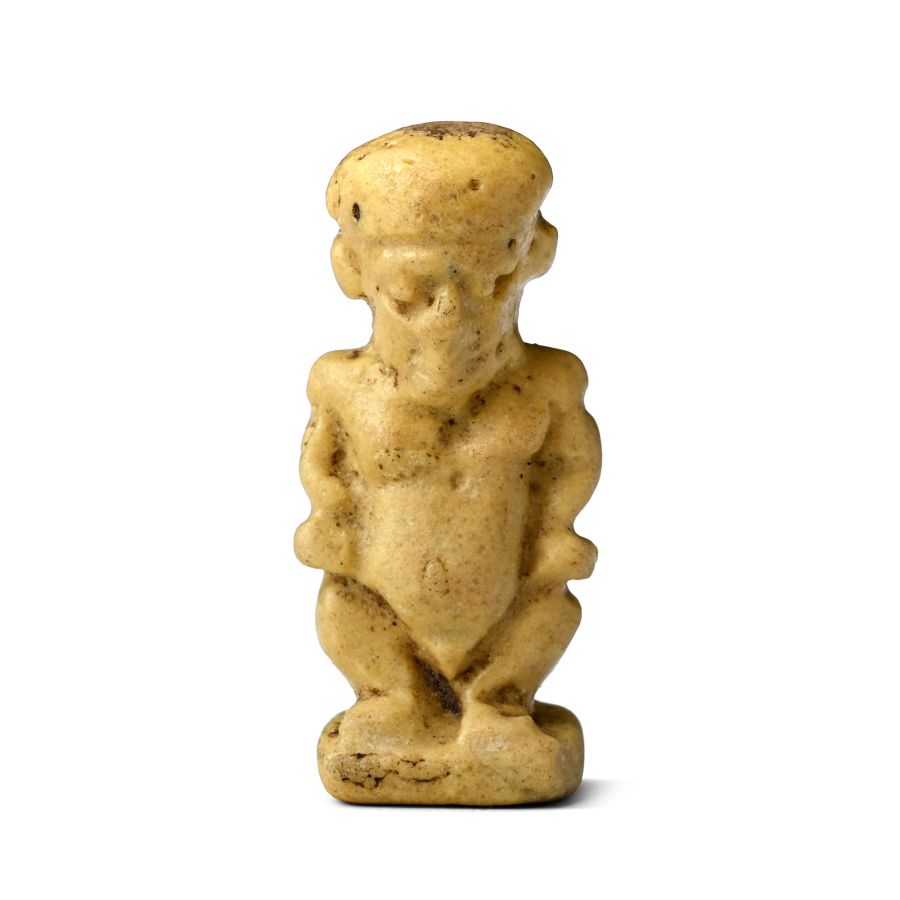
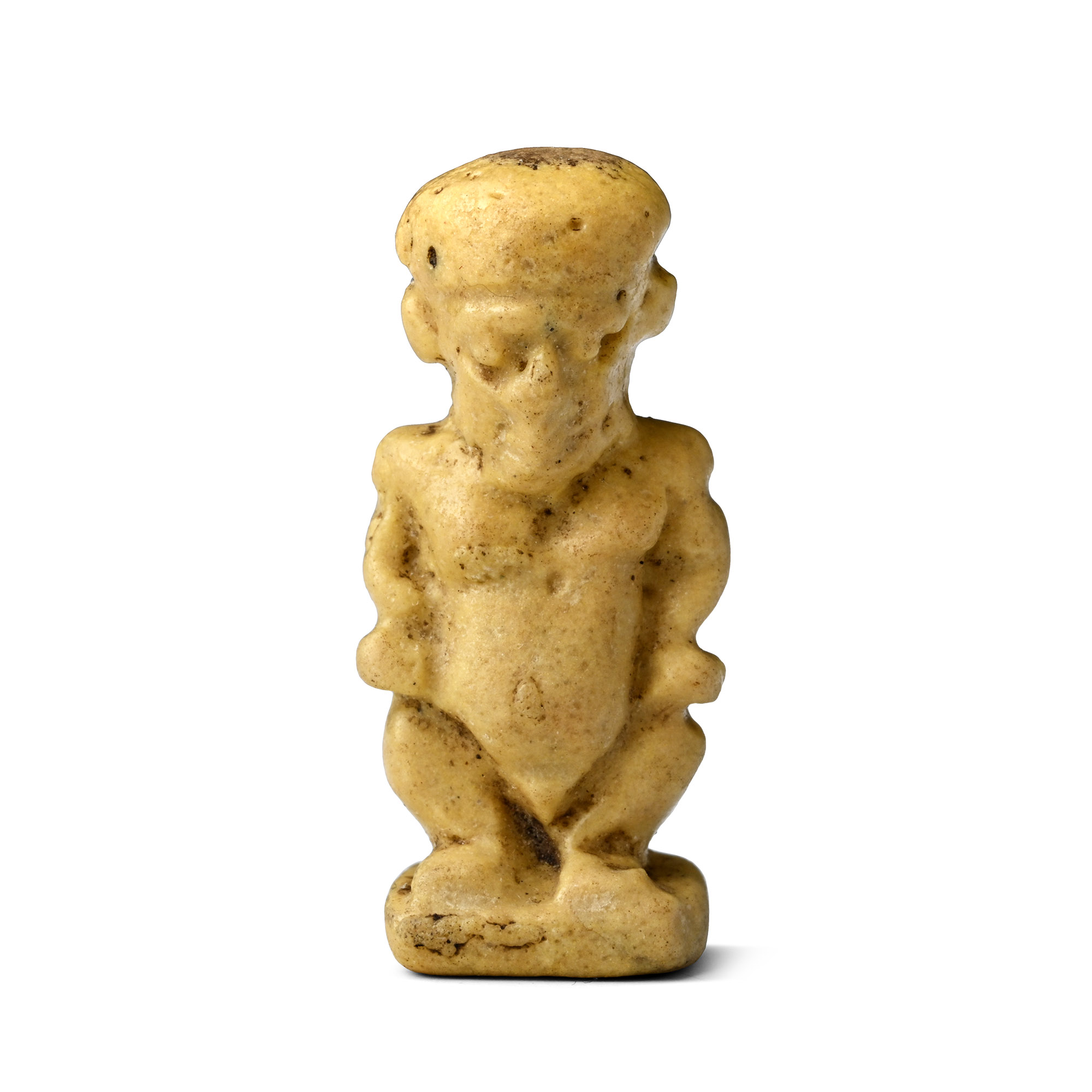
Egyptian Yellow Faience Pataikos Amulet
LATE PERIOD, 664-332 B.C.
1 1/4 in. (4.87 grams, 32 mm).
Depicted nude and standing on a rectangular base, with a large head, and short arms resting above his bendy legs.
ProvenanceFrom an early 20th century UK collection.
Accompanied by a previously illustrated catalogue card with provenance.
Cf. Petrie, W.M.F., Amulets. Illustrated by the Egyptian Collection in University College, London, 1914, pl. XXXI l, for similar.
FootnotesHerodotus mentions Pataikos as a dwarf-like depiction of Ptah, although the ancient Egyptian name of the god remains unclear. These small amulets symbolise Ptah’s immense magical power, which helps to protect the wearer from dangerous creatures such as snakes and crocodiles. The role of the deity in the funerary sphere is explained in Spell 164 of the Book of the Dead, where Pataikos is invoked to safeguard the deceased’s heart against attacks by enemies and against the decay of the body.
CONDITIONTimeLine Auctions follows a vetting process to ensure the authenticity and legality of all items, reinforcing our commitment to integrity and responsible trading. Each antiquity, antique, and coin lot undergoes thorough examination by a vetting committee of at least ten external specialists, professional trade association members, scientists, and archaeologists: Our Vetting Process
AUCTIONS:
TimeLine is a leading auction house specialising in antiquities, ancient art, collectables, natural history, coins, medals, and books. Our auctions offer museums, collectors, historians, and enthusiasts the opportunity to acquire unique and historically significant pieces.
-
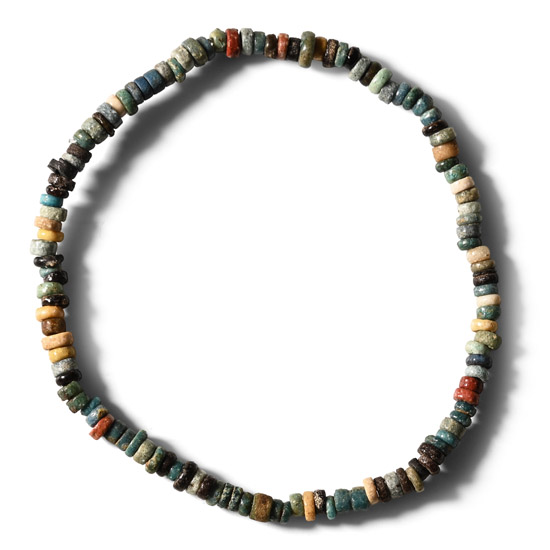
Egyptian Faience Mummy Bead Bracelet
Late Period, 664-332 B.C.Sold for (Inc. bp): £182
Composed of blue, cream, black, green and red annular beads, restrung with an elasticated string. 2.23 grams, 18 cm
Ex Ancient Art Shop, Windsor, UK, 1990s. Ex private collection. -
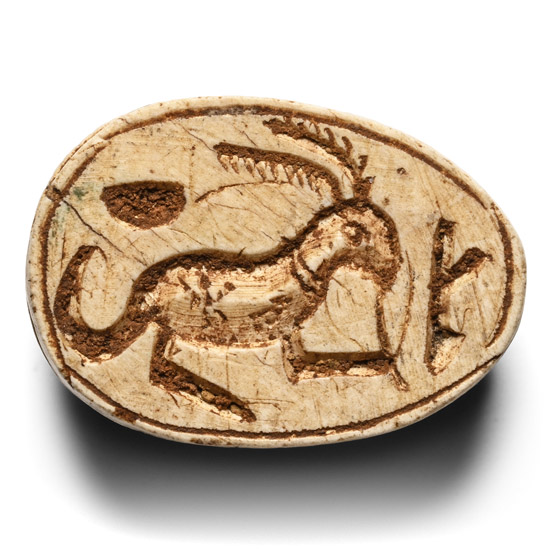
Egyptian Steatite Scarab with Hare
Late Period-Ptolemaic Period, 664-30 B.C.Sold for (Inc. bp): £182
Anatomical detailing on the carapace and pierced longitudinally; underside with a reclining hare and two hieroglyphs. 3.07 grams, 19 mm
From the private collection of a European gentleman (1942-2024), formed since the 1970s.
The Egyptian hare, Cape Hare, was associated with the goddess Wenut, whose name means the 'swift one'. -
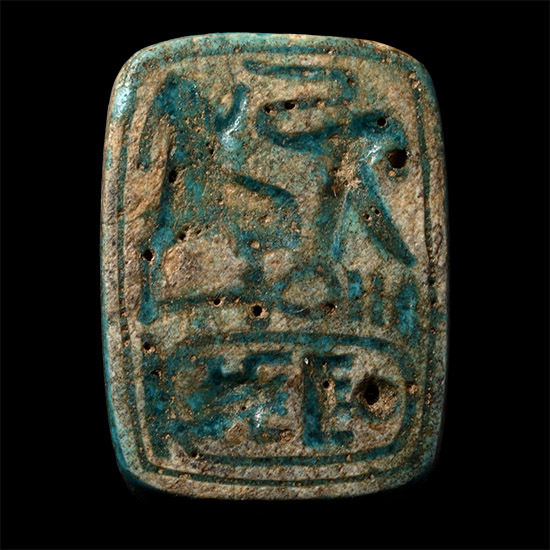
Egyptian Bifacial Steatite Amuletic Plaque with Cartouches for Tuthmoses III
New Kingdom, circa 1479-1425 B.C.Sold for (Inc. bp): £169
Amuletic bead, bifacial with designs: Side A - cartouche for Tuthmoses III with ankh, lion couchant, crown and other motifs; Side B - cartouche as on Side A with perching birds above and below. 2.93 grams, 18 mm
Ex John Cummings Ltd., Lincolnshire, UK. From the private collection of a Canadian gentleman living in Essex, UK, formed since the 1920s-circa 1990. Property of an Essex lady until the late 1990s; thence by descent. From the private collection of an Essex gentleman since the late 1990s. Accompanied by an old information card.
