
Loading, please wait...
LOT 0026
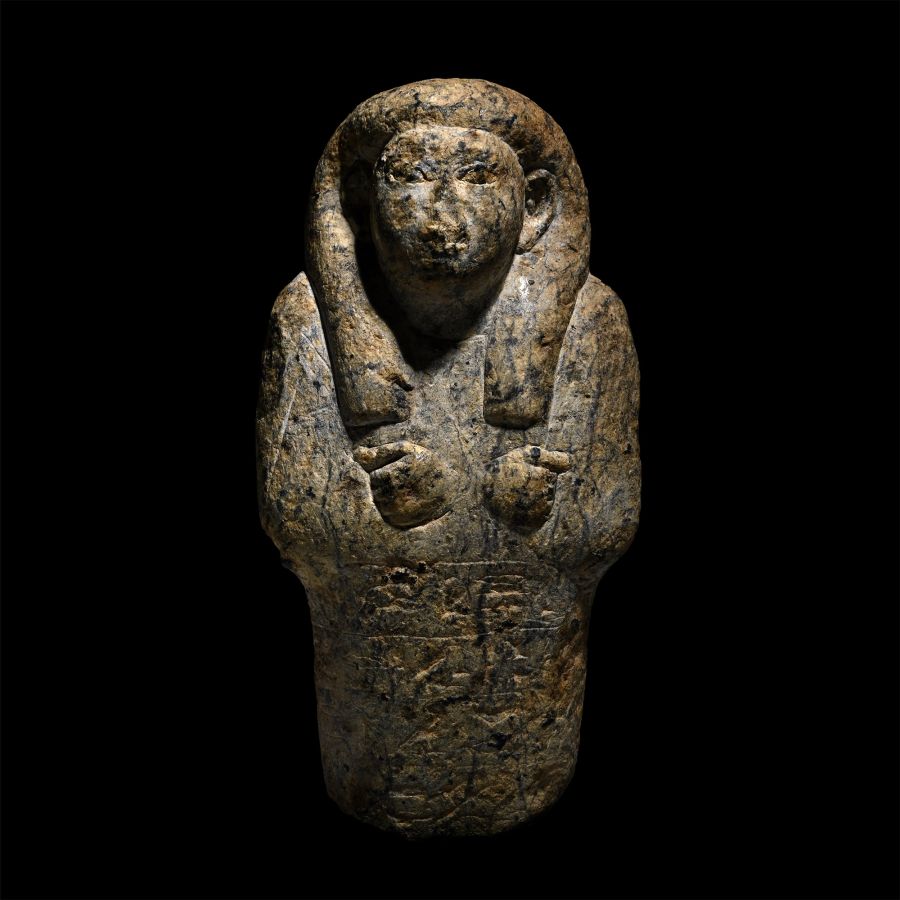
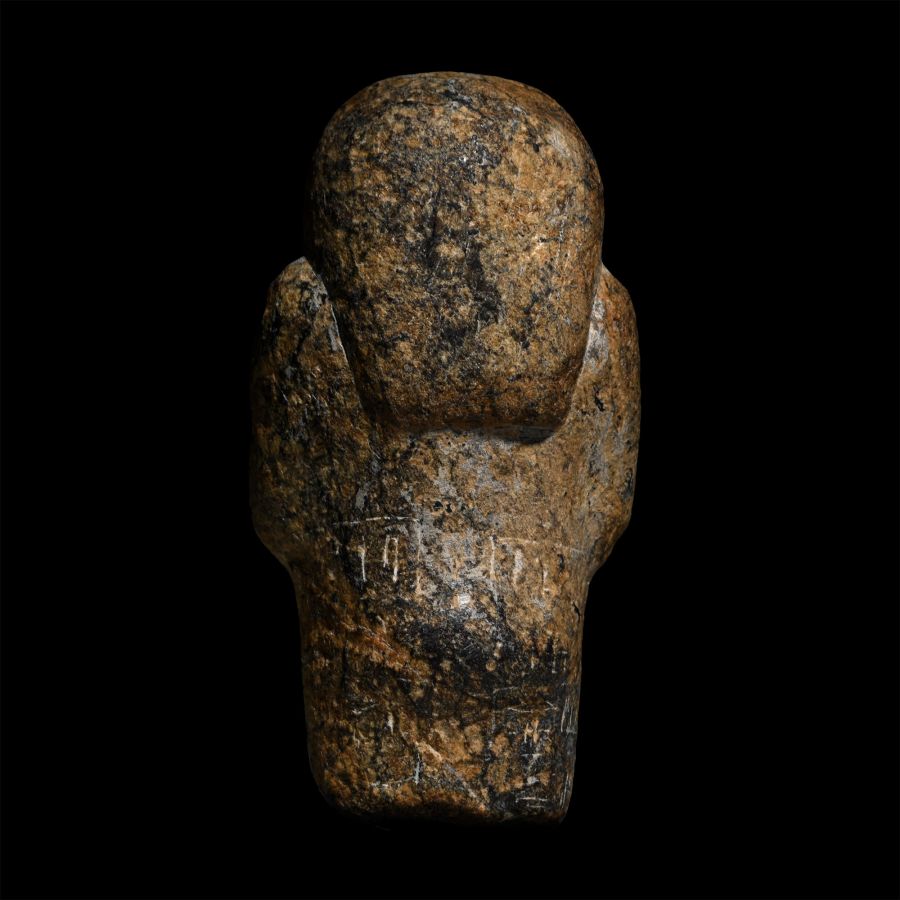
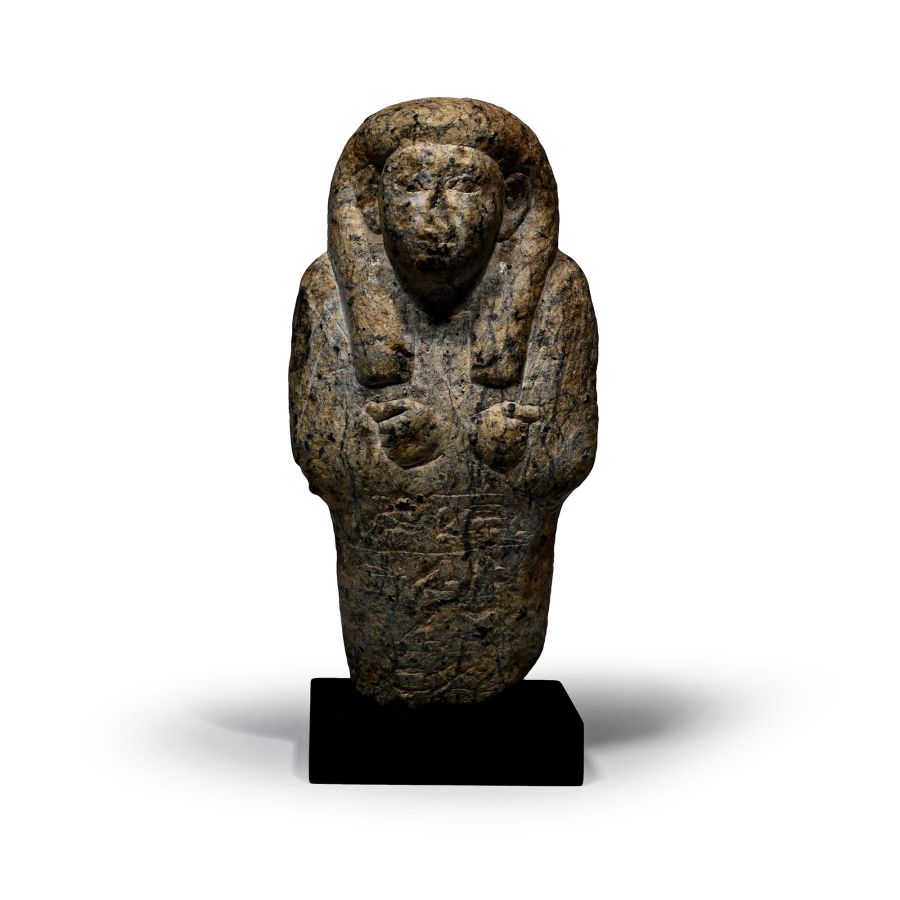
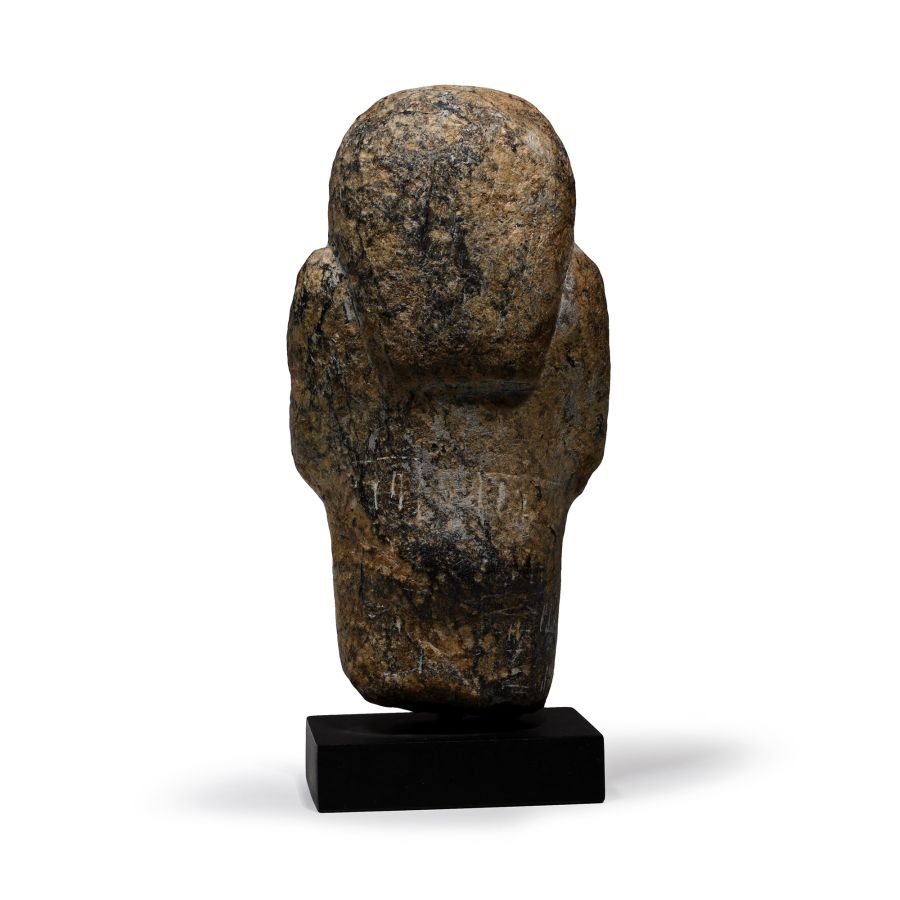
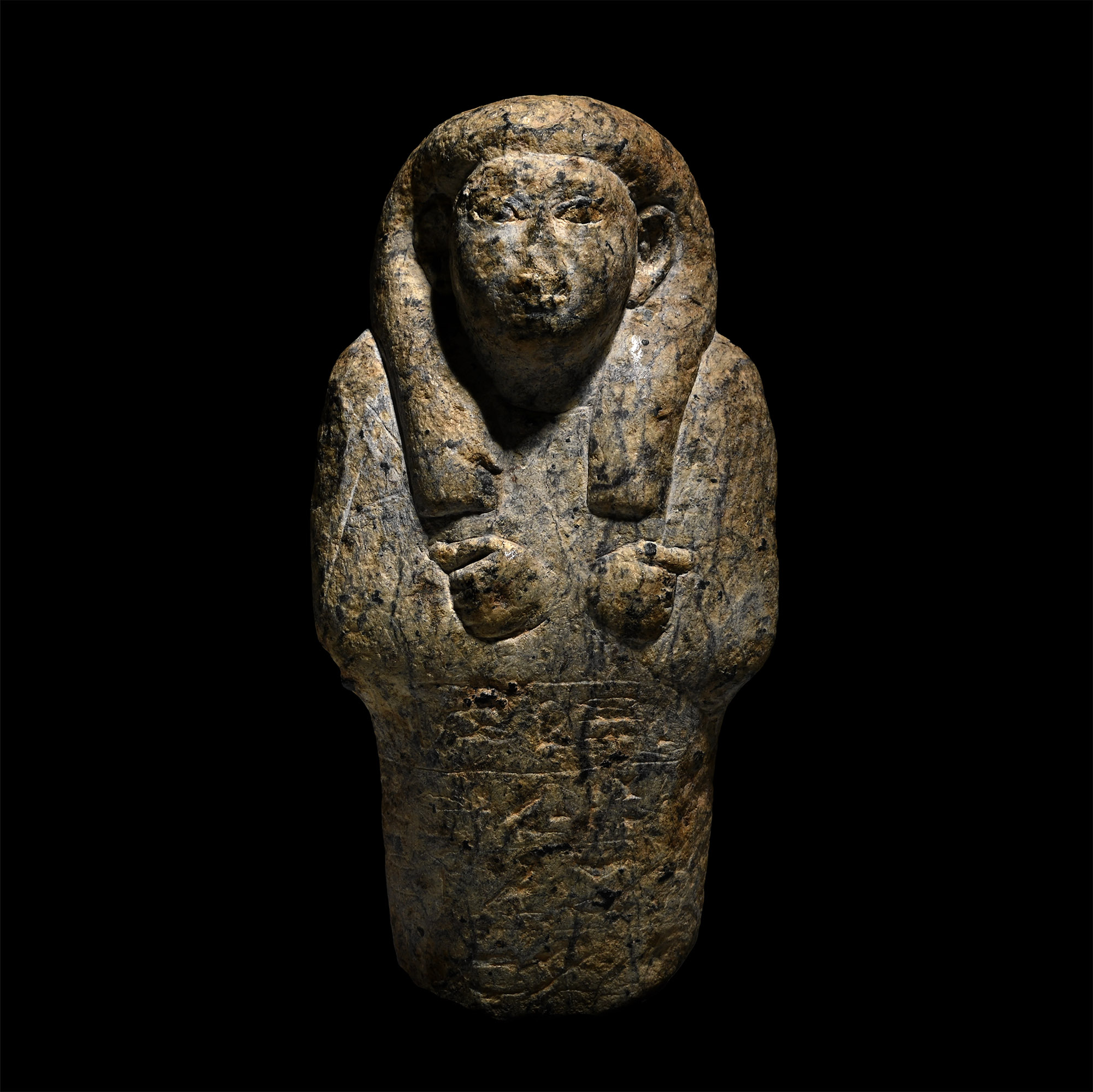
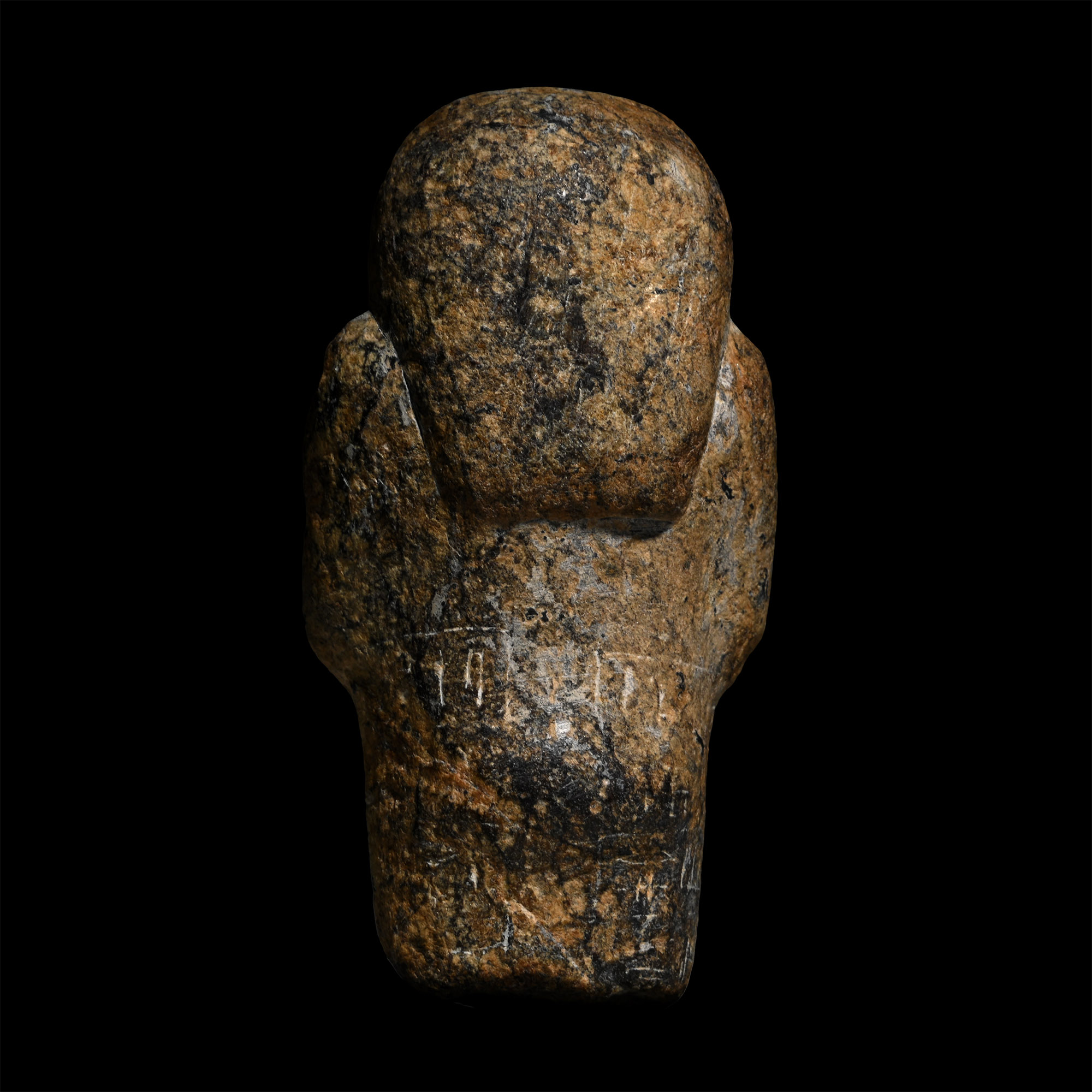
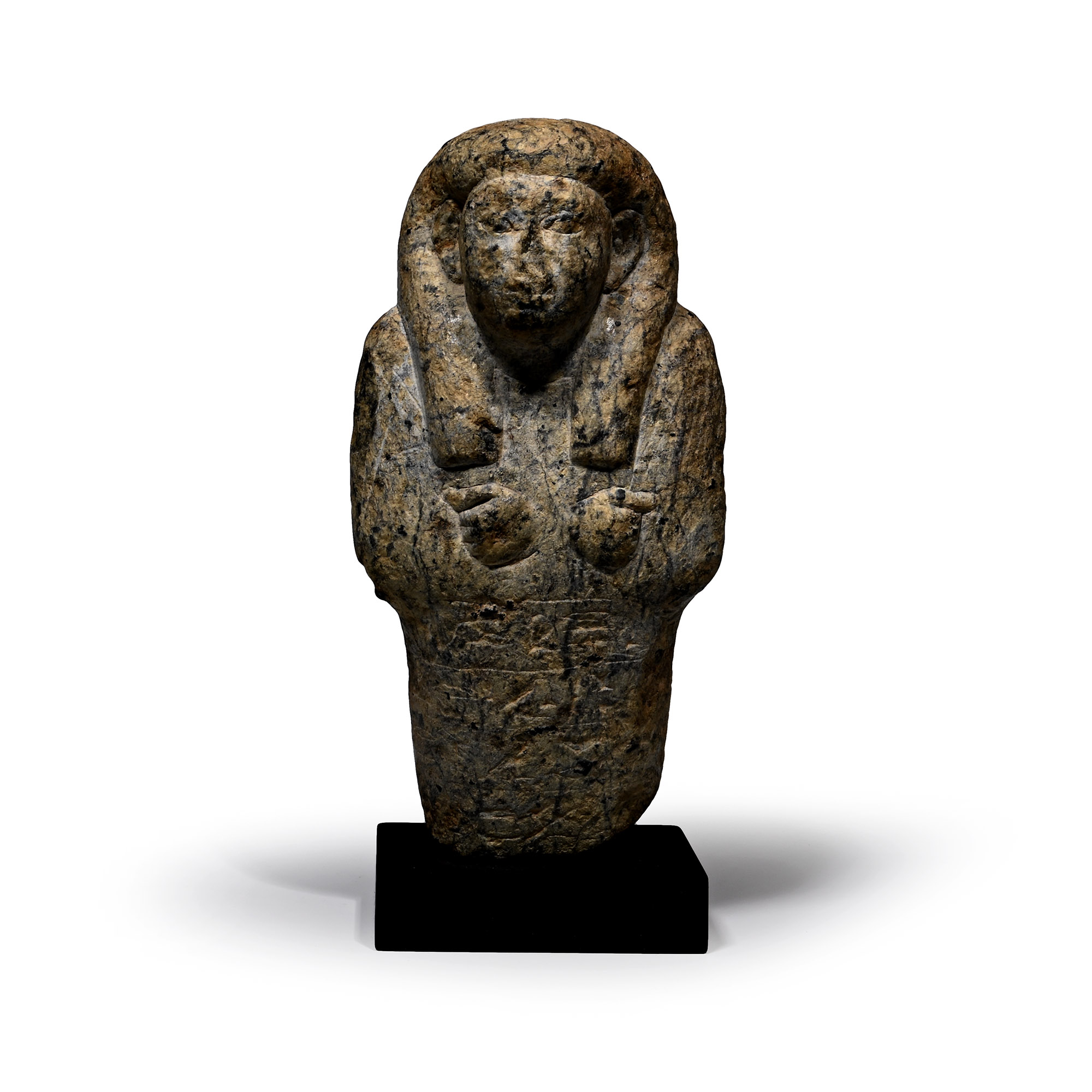
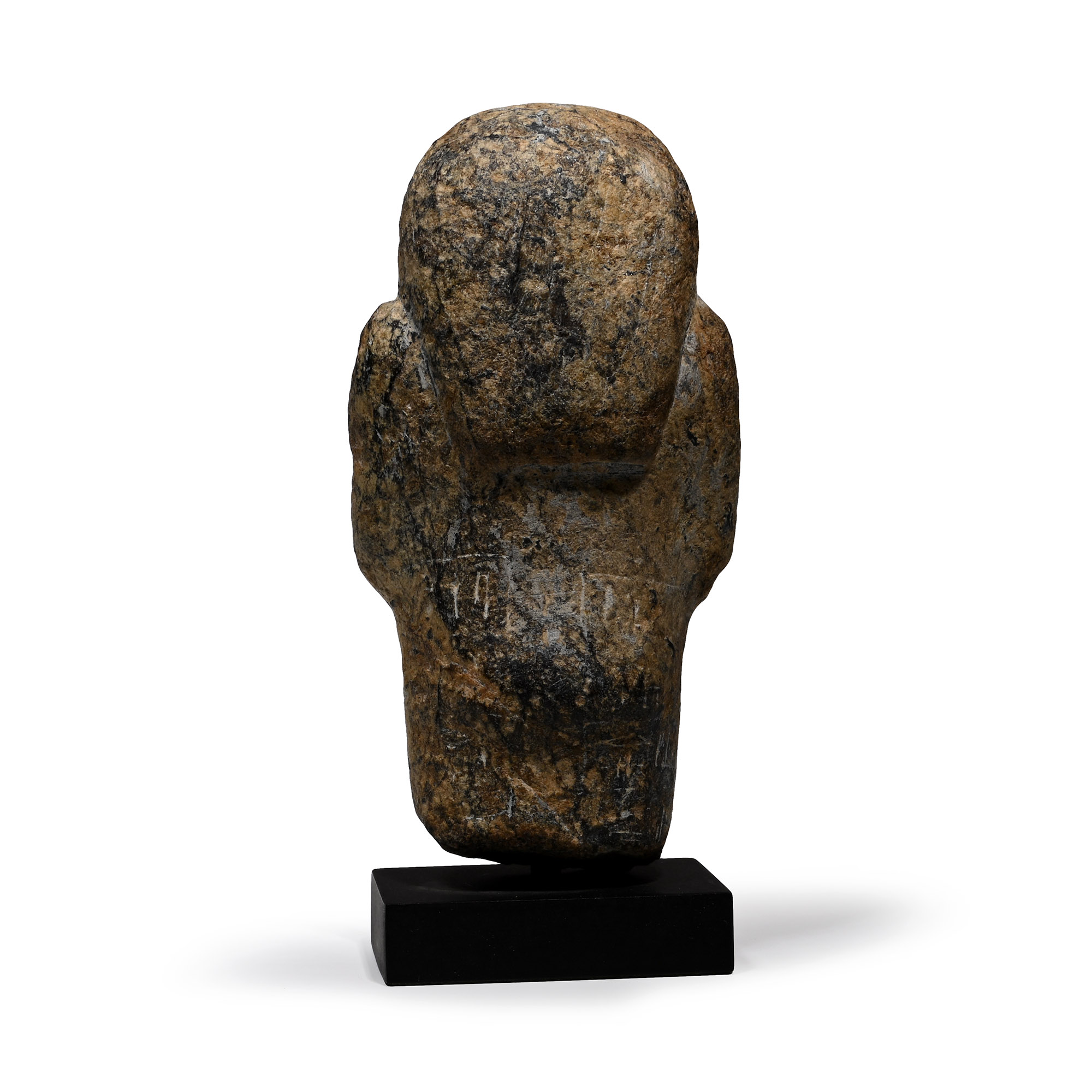
Egyptian Yellow and Black Serpentine Hieroglyphic Shabti
25TH-26TH DYNASTY, CIRCA 650-525 B.C.
5 1/4 in. (455 grams total, 13.3 cm including stand).
Fragment of a mummiform shabti wearing a heavy tripartite wig, with crossed hands on the chest holding faintly incised agricultural implements; four lightly incised horizontal lines of hieroglyphic text on the lower body; mounted on a custom-made stand. [No Reserve]
ProvenanceFrom the private collection of Peter Clayton, FCILIP, Dip, Arch, FSA, FRNS, Hemel Hempstead, Hertfordshire, UK; formed since the late 1950s.
FootnotesHardstone shabtis appear in the burials of certain high officials in the late 25th and early 26th Dynasties, after which faience became the predominant material for all shabti statuettes.
CONDITIONTimeLine Auctions follows a vetting process to ensure the authenticity and legality of all items, reinforcing our commitment to integrity and responsible trading. Each antiquity, antique, and coin lot undergoes thorough examination by a vetting committee of at least ten external specialists, professional trade association members, scientists, and archaeologists: Our Vetting Process
AUCTIONS:
TimeLine is a leading auction house specialising in antiquities, ancient art, collectables, natural history, coins, medals, and books. Our auctions offer museums, collectors, historians, and enthusiasts the opportunity to acquire unique and historically significant pieces.
LOT 0026
Egyptian Yellow and Black Serpentine Hieroglyphic Shabti
Estimate £1,500 - 2,000€1,740 - 2,320 (for guidance only)$2,030 - 2,700 (for guidance only)
-
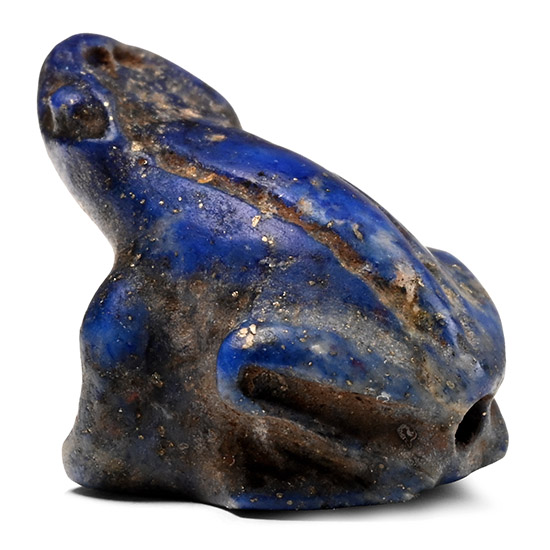
Egyptian Lapis Lazuli Frog Amulet
Late Period, 664-332 B.C.Estimate: £200 - 300 (+bp*)
Opening Bid: £60
Carved in the round in a crouched pose, with hind legs folded behind the body, pierced through the stomach for suspension. 1.02 grams, 14 mm
From a mid 20th century collection.
Frog amulets in ancient Egypt symbolised fertility, rebirth, and renewal. Associated with the goddess Heqet, linked to childbirth and life-giving forces, they were especially popular for fertility and protection during pregnancy and labour. Their association with the annual Nile flood, which brought new life to the land, further emphasised their symbolism of revival and abundance. -

Egypto-Phoenician Period Haematite Scarab with Winged Figure
700-500 B.C.Estimate: £500 - 700 (‡+bp*)
Opening Bid: £250
Schematic scarab body with a scene on the underside of an advancing winged figure. 6.52 grams, 17 mm
Acquired in the mid 1980s-1990s. Private collection, Switzerland, thence by descent. Private collection, since the late 1990s. -
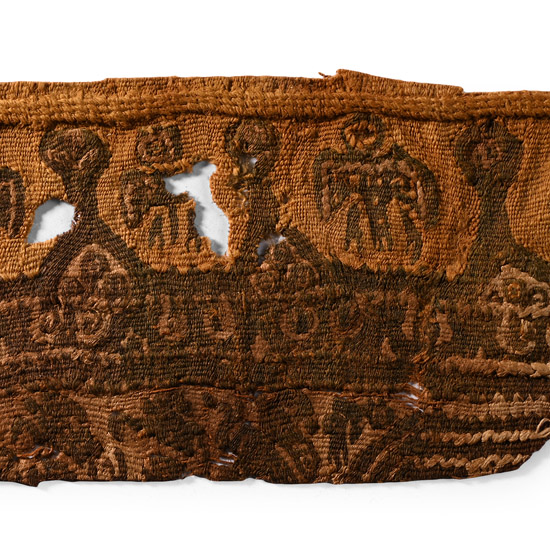
Egyptian Coptic Tunic Textile Fragment of a Segmentum with Eagles and Other Birds
Circa 7th century A.D.Estimate: £50 - 70 (+bp*)
Opening Bid: £5
Fragment of a large segmentum in linen and wool, embroidered with rows of eagles and other birds, the borders with geometric decorations. 8 grams, 19 cm
Acquired 1970s-1996. Property of a North American collector. London collection, 2016.
The segment is realised in the tapestry technique. They were part of the decoration of a tunic, and the presence of the Imperial eagle, not a common pattern, could refer to a military tunic.
