
Loading, please wait...
LOT 0006
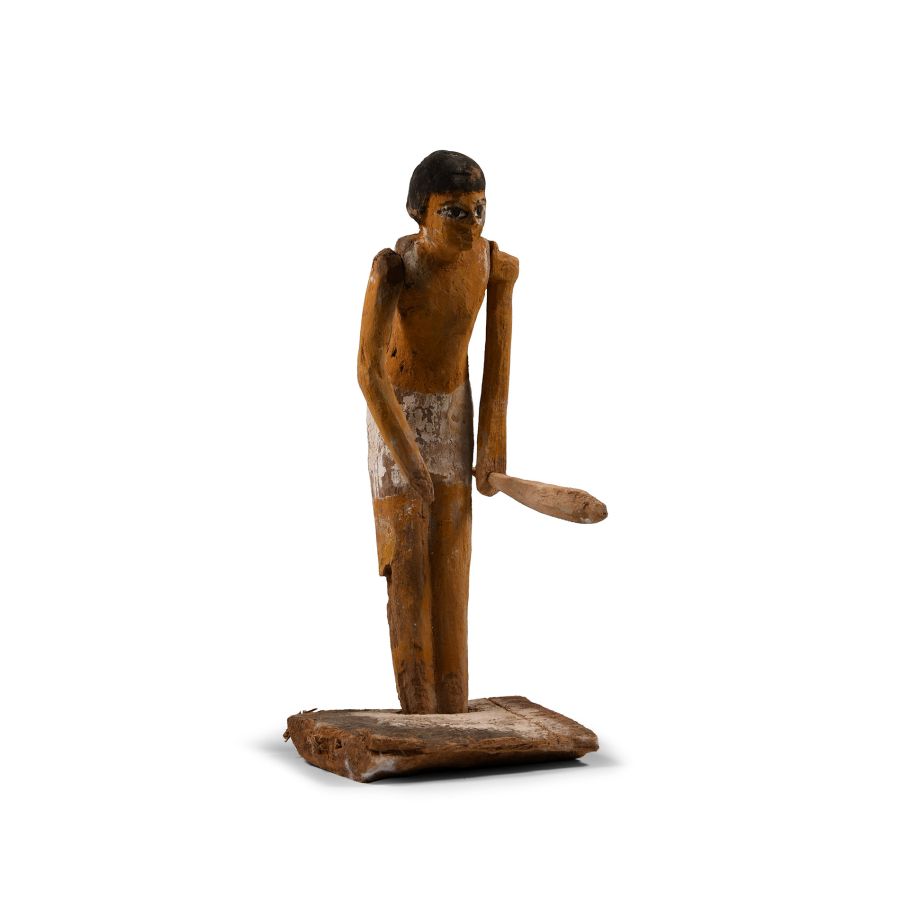
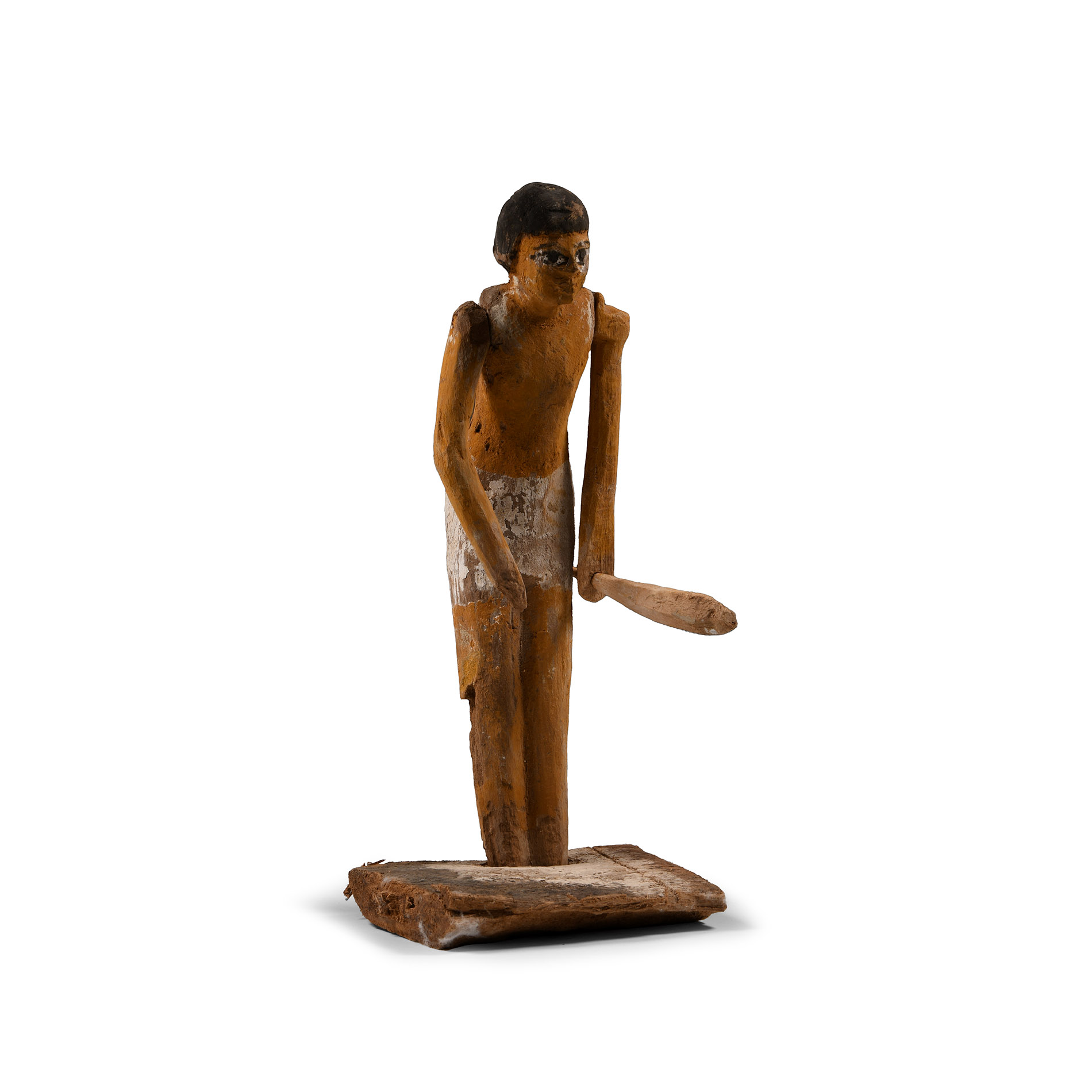
Egyptian Wooden Tomb Servant
MIDDLE KINGDOM, LATE 11TH-EARLY 12TH DYNASTY, 2010-1961 B.C.
9 in. (140 grams, 23 cm high).
Carved in the round with separate articulated arms, painted facial details and wearing a short linen kilt; slightly bent posture, feet pegged to a rectangular base; wooden implement for beating flax in the left hand.
ProvenanceFrom an early 20th century collection.
Ex UK collection.
Ex Ancient Art, London N14, UK.
Private collection of Mr T.H., Norfolk, UK.
Accompanied by a previous dealer's certificate of authenticity.
See Taylor, J.H., Death and the Afterlife in Ancient Egypt, London, 2001, for discussion of the tomb figurines.
CONDITIONTimeLine Auctions follows a vetting process to ensure the authenticity and legality of all items, reinforcing our commitment to integrity and responsible trading. Each antiquity, antique, and coin lot undergoes thorough examination by a vetting committee of at least ten external specialists, professional trade association members, scientists, and archaeologists: Our Vetting Process
AUCTIONS:
TimeLine is a leading auction house specialising in antiquities, ancient art, collectables, natural history, coins, medals, and books. Our auctions offer museums, collectors, historians, and enthusiasts the opportunity to acquire unique and historically significant pieces.
-
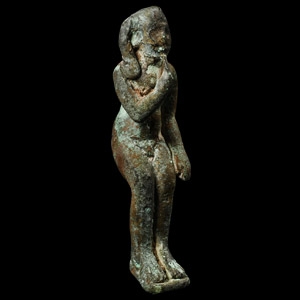
Egyptian Bronze Seated Harpocrates Figure
Late Period, 664-332 B.C.Sold for (Inc. bp): £182
With feet resting on a rectangular base, forefinger on the lips, prominent sidelock of youth. 30.7 grams, 68 mm
Ex Brigantia, York, UK, item no.12040. Private collection of Mr T.H., Norfolk, UK. Accompanied by a previous dealer's certificate of authenticity.
Harpocrates is the Greek rendering of the Egyptian Hor-pa-khered, which translates as 'Horus the Child'. This refers to Horus as the divine infant of Isis and Osiris. Wearing the amulet of Harpocrates could provide the wearer with the same protection that Isis gave to her beloved son. -
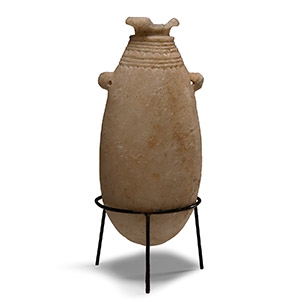
Egyptian Decorated Alabaster Alabastron
Circa 500 B.C.Sold for (Inc. bp): £390
Lentoid in section with pierced lateral lugs at the shoulder, circumferential banding at the neck with dentilled detailing; supplied with a custom-made stand. 281 grams total, 15 cm high including stand
Private collection, Germany, 1990s-2000s. -
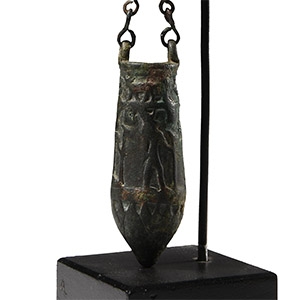
Egyptian Bronze Situla with Chain
Late Period, 664-332 B.C.Sold for (Inc. bp): £624
With loops to the rim and short chains hanging from a hook finial; upper register with solar barque; the body with figure of priapic god Amun-Min and offerant before an offering table; lotus-flower motif to the base; mounted on a custom-made stand. 129 grams total, 24.5 cm high including stand
Ex S.M. collection, Israel. Ex Ancient Art, London N14, UK. Private collection of Mr T.H., Norfolk, UK. Accompanied by a previous dealer's certificate of authenticity.
