
Loading, please wait...
LOT 0526
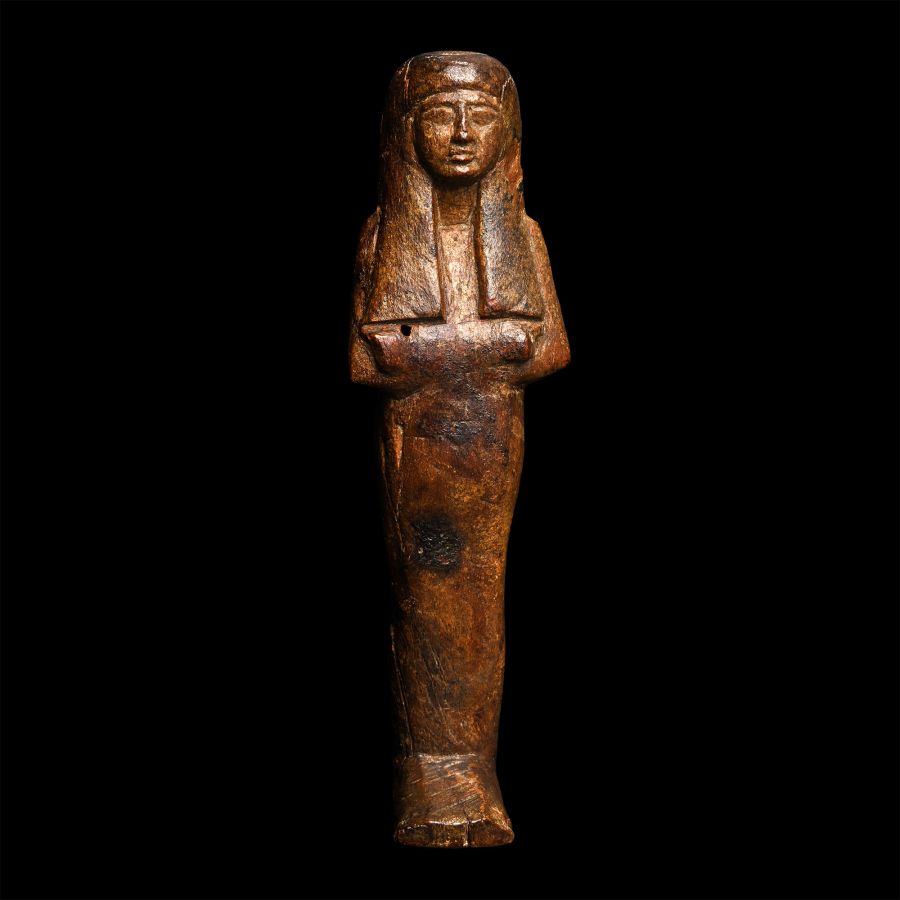
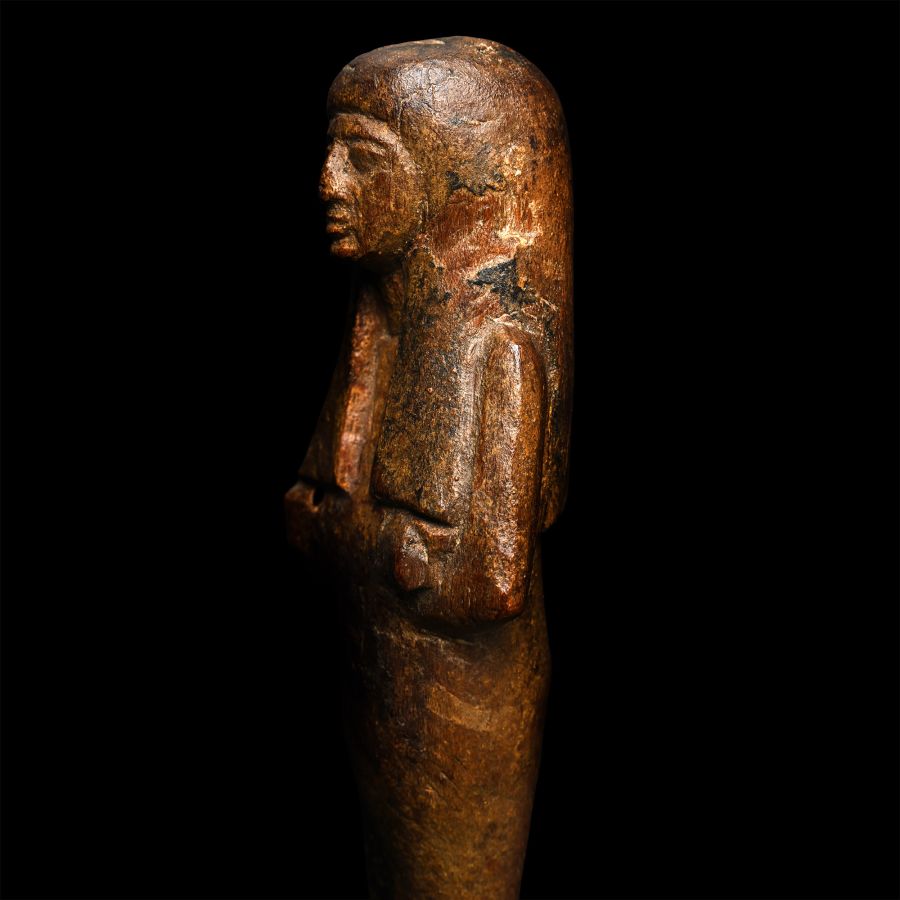
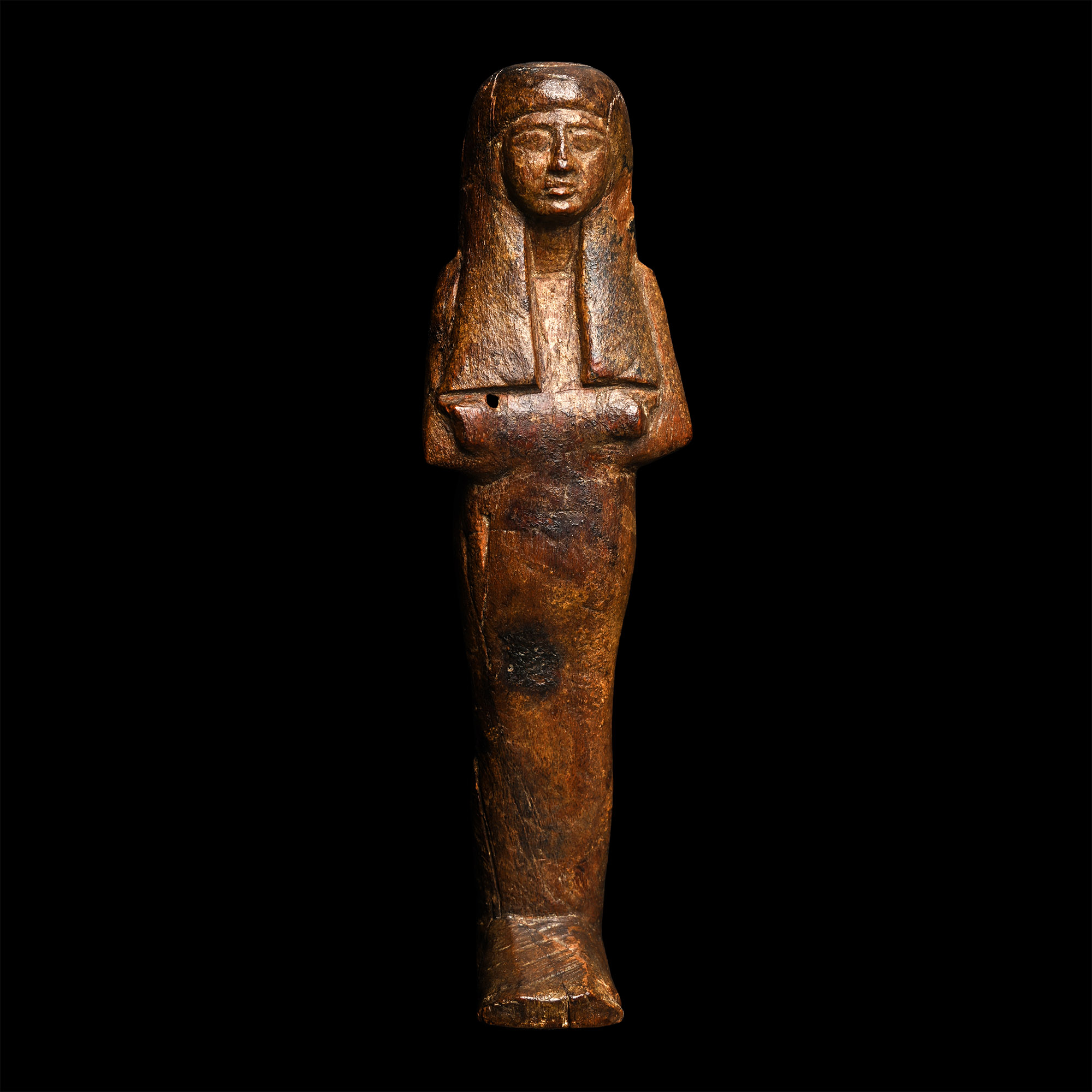
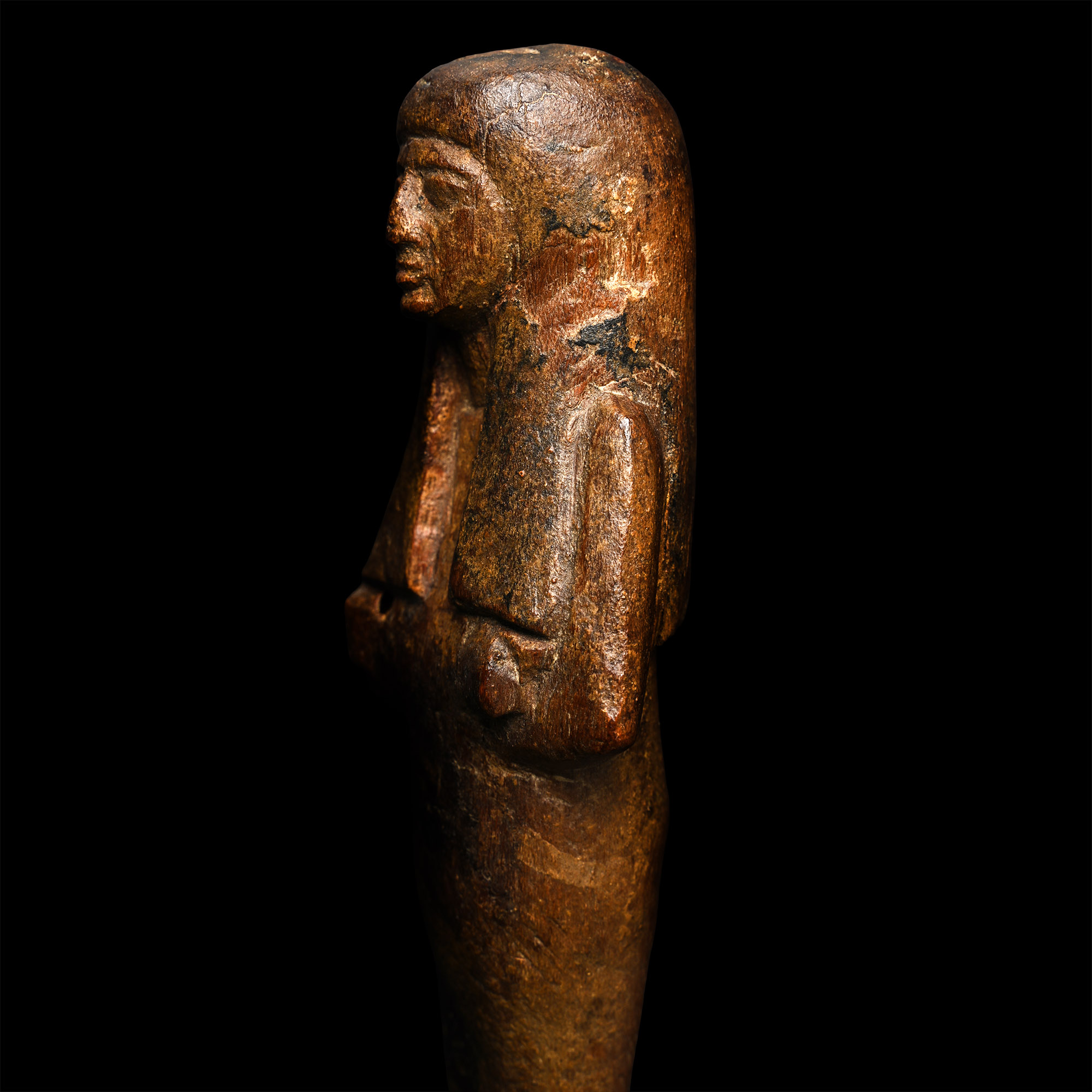
Egyptian Wooden Shabti
NEW KINGDOM, 19TH DYNASTY, CIRCA 1292-1185 B.C.
8 1/2 in. (140 grams, 21.5 cm).
Carved in the round in a typical mummiform shape with hands crossed on the chest, wearing a tripartite wig with long, splayed lappets; collector's number to base 'E.803'.
ProvenanceEx R. Liechti (1934-2010) collection, Geneva, Switzerland.
This lot has been checked against the Interpol Database of stolen works of art and is accompanied by a search certificate no.13228-249321.
Cf. Schlögl, H., and Brodbeck, A., Ägyptische Totenfiguren aus öffentlichen und privaten sammlungen der Schweiz, Göttingen, 1990, p. 116, no. 53, for a similar example.
FootnotesA shabti (or ushabti) is a small funerary figurine from ancient Egyptian tombs, dating from around 2000 BCE to 30 BCE. Its main purpose was to assist the deceased in the afterlife by performing tasks like farming. Shabtis were often inscribed with a magical formula from the Book of the Dead to ensure they would come to life when needed.
CONDITIONTimeLine Auctions follows a vetting process to ensure the authenticity and legality of all items, reinforcing our commitment to integrity and responsible trading. Each antiquity, antique, and coin lot undergoes thorough examination by a vetting committee of at least ten external specialists, professional trade association members, scientists, and archaeologists: Our Vetting Process
AUCTIONS:
TimeLine is a leading auction house specialising in antiquities, ancient art, collectables, natural history, coins, medals, and books. Our auctions offer museums, collectors, historians, and enthusiasts the opportunity to acquire unique and historically significant pieces.
LOT 0526
Egyptian Wooden Shabti
Estimate £5,000 - 7,000€5,800 - 8,120 (for guidance only)$6,750 - 9,450 (for guidance only)
Opening Bid
£2,500 (EUR 2,900; USD 3,375) ‡+BP*
-
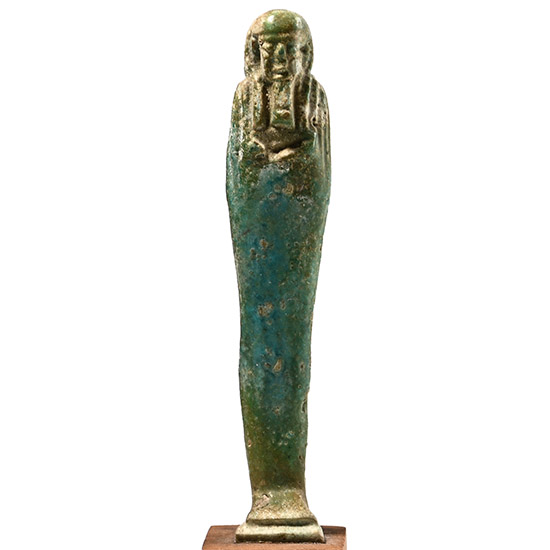
Egyptian Blue Glazed Shabti
30th Dynasty-Ptolemaic Period, 380-30 B.C.Estimate: £80 - 100 (+bp*)
Bids: 2 | Current Bid: £15
Slender mummiform type standing on an integral plinth, wearing a lappet wig with crossed arms holding agricultural tools; plain, broad dorsal pillar; with an old collector's note: 'Ancient Egyptian Exceedingly fine statuette in beautiful blue glaze B.C. 700 A very choice & desirable specimen from Lord Grenfell's collection. Excavated at Thebes'; mounted on a custom-made stand with label on the underside: 'Egyptian B.C. 700 Lord Grenfell's Collection. Excavated at Thebes'. 28 grams, 10.8 cm (38 grams total, 12.6 cm high including stand)
Excavated Thebes, Egypt. Ex Lord Grenfell's (1896-1926) collection, UK. From the estate of a deceased Sussex private collector since the early 20th century. -
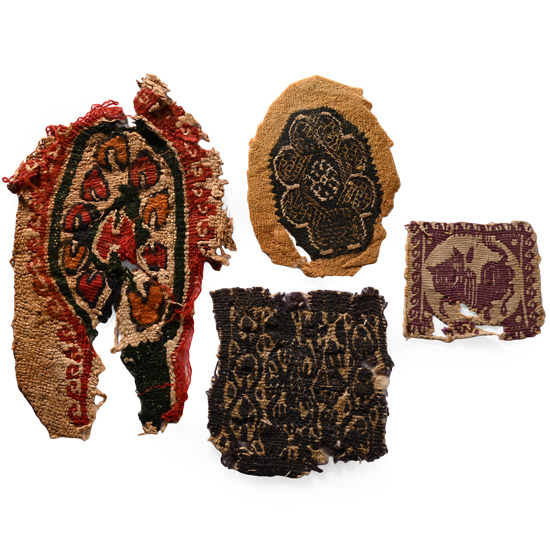
Egyptian Coptic Tunic Textile Fragments of Orbiculi, Tablia and Segmenta with Vegetation, Animals and Geometric Ornament
Circa 6th-7th century A.D.Estimate: £80 - 100 (+bp*)
Bids: 1 | Current Bid: £5
Comprising a tablion in purple and blue wool over white linen, with floral ornaments featuring ivy leaves; another smaller tablion in purple wool over white linen, the borders meander decorated, featuring a bull inside a medallion; an orbiculus with lozenge decoration, featuring a vegetal ornament inscribed in a polilobated flower; and a very large foliate ornament in red, green, yellow, orange and red wool on white linen, with vegetal decoration, the borders meander decorated, tapestry work (S-twist). 10.56 grams total, 5.8-15.5 cm
Acquired 1970s-1996. Property of a North American collector. London collection, 2016.
The fragments are decorative parts of tunics. These are fabrics of great decorative finesse, with some elements displaying an unusual and extremely well-preserved colour palette. -
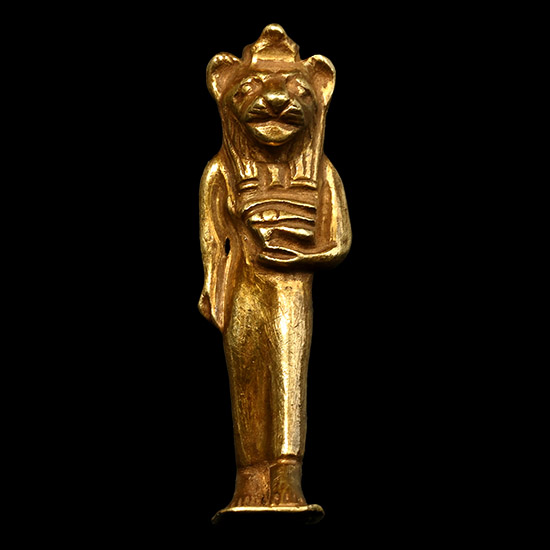
Egyptian Gold Sekhmet Statuette
Late Period-Ptolemaic Period, circa 664-30 B.C.Estimate: £5,000 - 7,000 (+bp*)
Opening Bid: £2,500
Figure of the lioness-headed goddess standing on a rectangular plinth, wearing a striated lappet wig with uraeus and an ankle-length, tight-fitting dress, her right arm extended down her side and her left hand holding a wedjat-eye symbol against her chest; a suspension loop behind her head. 5.31 grams, 28 mm
From the collection of a UK gentleman, London, UK, by descent from his family collection 1970s. This lot has been checked against the Interpol Database of stolen works of art and is accompanied by search certificate no.13544-263324.
The wedjat-eye and lioness are potent, often intertwined symbols in ancient Egyptian mythology. The wedjat, representing Horus’s healed eye, signifies protection and healing, while the lioness—linked to the goddesses Sekhmet and Wadjet—embodies power and fierce defence as the “Eye of Ra”. Together, in amulets and in Egyptian art, they convey healing, protection, and strength.
