
Loading, please wait...
LOT 0002
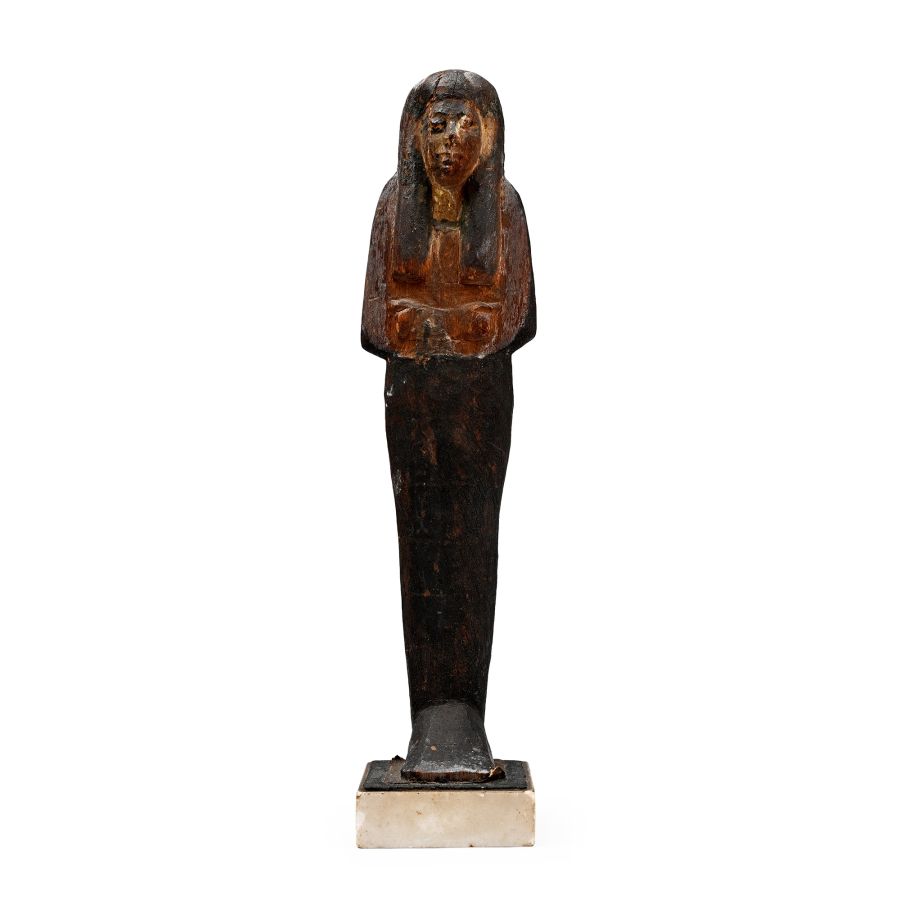
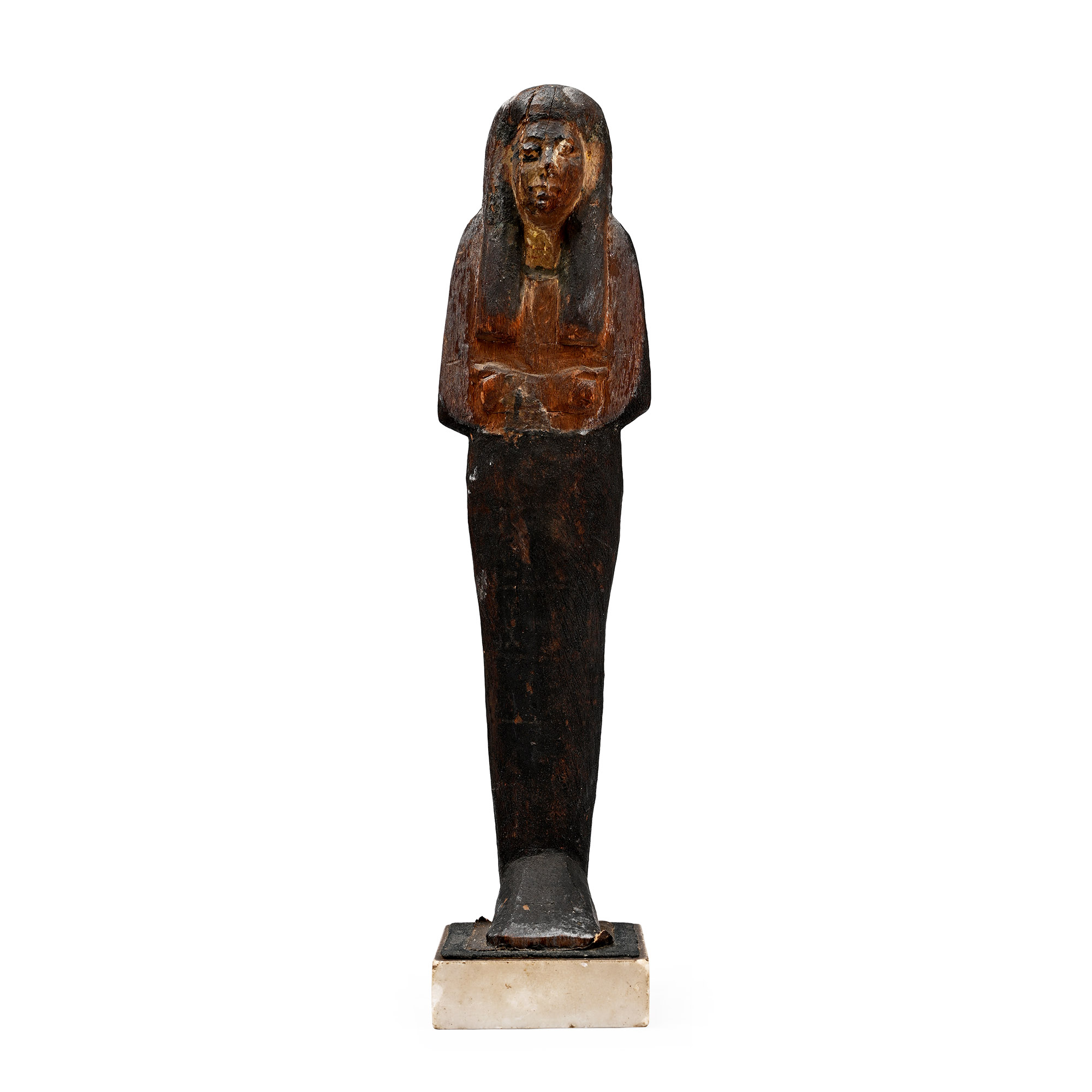
Egyptian Wooden Shabti
NEW KINGDOM, 19TH DYNASTY, 1293-1185 B.C.
10 5/8 in. (332 grams, 26.9 cm).
Carved in the round with detailed tripartite wig, hands crossed at the chest; some painted and gilded(?) plaster surface; mounted on a later base.
ProvenanceFrom the collection of Mrs Kilvert, who fled from France to England during the French Revolution.
Received by gift to the Hodge family from Mrs Kilvert at Bath in 1864-1865; thence by descent to the grandchildren of Mr John Hodge, a private London tutor.
From the collection of a New Zealand family; thence by descent.
This lot has been checked against the Interpol Database of stolen works of art and is accompanied by a search certificate number no.12846-239090.
This lot has been cleared against the Art Loss Register database, and is accompanied by an illustrated lot declaration signed by the Head of the Antiquities Department, Dr Raffaele D'Amato.
Cf. Janes, G., The Shabti Collections 5: A Selection from the Manchester Museum, Lymm, 2012, p.64, for a shabti with a similar decorative arrangement.
FootnotesA shabti, also known as ushabti or shawabti, is a small funerary figurine found in ancient Egyptian tombs, dating from around 2000 BCE to 30 BCE. Its main purpose was to serve as a servant for the deceased in the afterlife, carrying out manual tasks such as farming or irrigation. Shabtis were often inscribed with a magical formula from the Book of the Dead to ensure they would animate when summoned. The distinctive, lighter-coloured, and previously part-gilded upper body decoration, contrasting with the black used for the rest of the figure, may symbolise the moment of rebirth, when the face of the deceased was bathed in the sun's rays.
CONDITIONTimeLine Auctions follows a vetting process to ensure the authenticity and legality of all items, reinforcing our commitment to integrity and responsible trading. Each antiquity, antique, and coin lot undergoes thorough examination by a vetting committee of at least ten external specialists, professional trade association members, scientists, and archaeologists: Our Vetting Process
AUCTIONS:
TimeLine is a leading auction house specialising in antiquities, ancient art, collectables, natural history, coins, medals, and books. Our auctions offer museums, collectors, historians, and enthusiasts the opportunity to acquire unique and historically significant pieces.
-
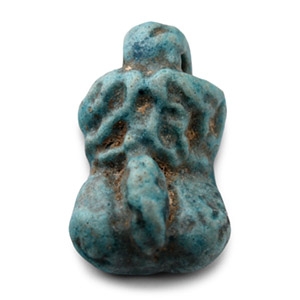
Egyptian Faience Phallic Amulet
Ptolemaic-Roman Period, 323 B.C.-323 A.D.Sold for (Inc. bp): £46
Pendant plaque of male genitals with loop above. 1.08 grams, 17 mm
From an early 20th century collection. This lot is accompanied by an illustrated lot declaration signed by the Head of the Antiquities Department, Dr Raffaele D'Amato. -
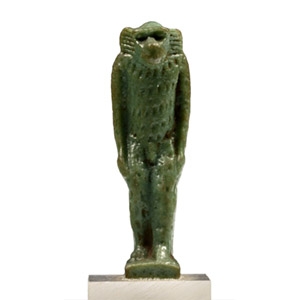
Egyptian Green Glazed Faience Amulet of a Monkey
Third Intermediate Period, circa 1069-735 B.C.Sold for (Inc. bp): £520
Modelled in the round with dorsal pillar and loop, small base. 6.1 grams total, 43 mm including stand
Collection of Monsieur M.; Etude Tajan, Paris, 26 February 1996, no.101. Private collection, London, UK, acquired from the above sale. Accompanied by a copy of a French cultural passport, dated 21 March 1996. This lot is accompanied by an illustrated lot declaration signed by the Head of the Antiquities Department, Dr Raffaele D'Amato.
The vervet monkey was a symbol of love and sexual fulfilment. -
.jpg)
Egyptian Painted Wooden Mask
Ptolemaic Period, circa 3rd century B.C.Estimate: £2,500 - 3,500 (‡+bp*)
Opening Bid: £1,250
D-shaped in plan with carved facial detailing, thick nose and full lips; painted bands to brow pierced in three places for attachment. 1.04 kg, 30 cm
Swiss private collection, Zurich, assembled in the 1950s. Private collection. Acquired on the Zurich art market in 2013. This lot has been checked against the Interpol Database of stolen works of art and is accompanied by a search certificate number no.12847-241680. This lot has been cleared against the Art Loss Register database, and is accompanied by an illustrated lot declaration signed by the Head of the Antiquities Department, Dr Raffaele D'Amato.
