
Loading, please wait...
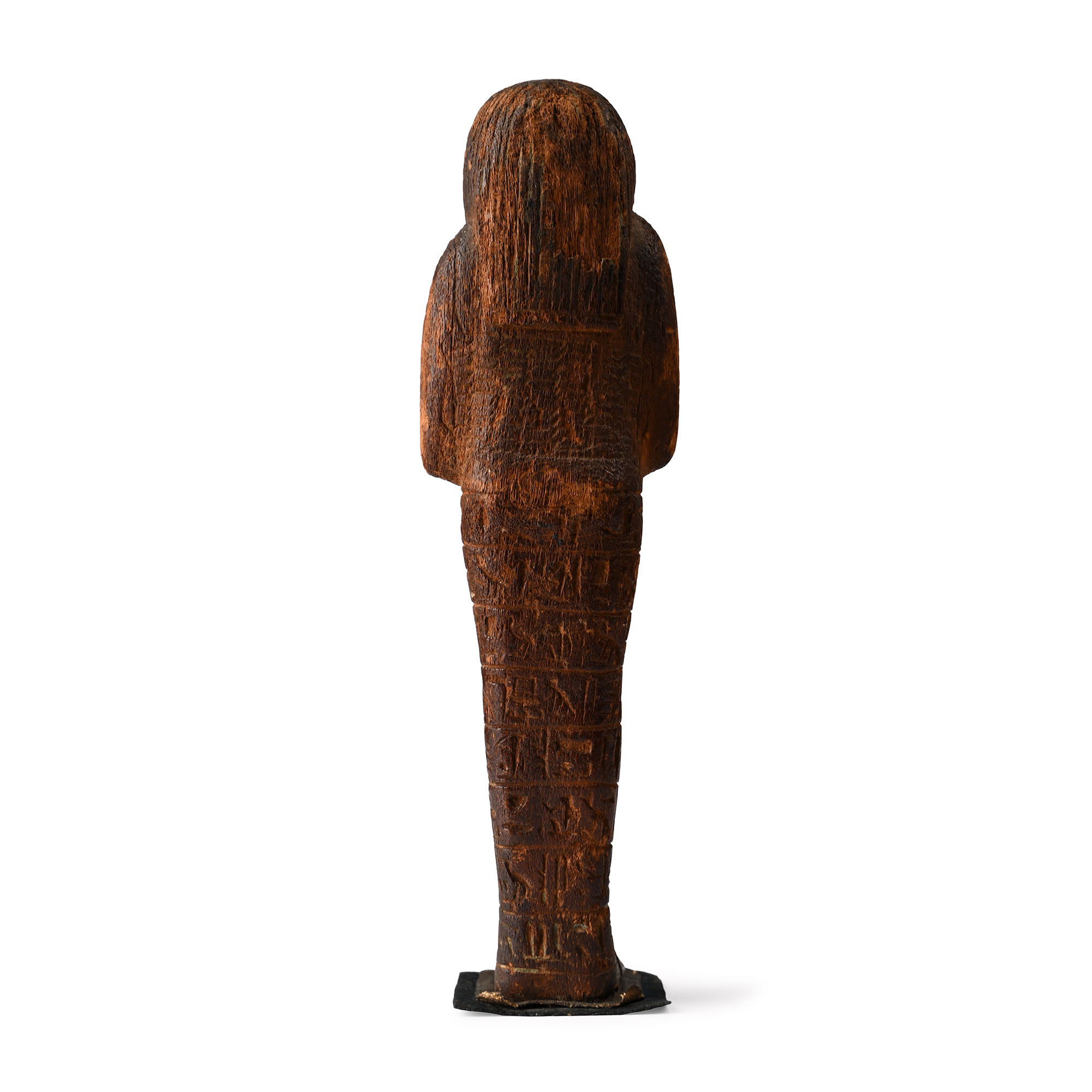
LOT 0001
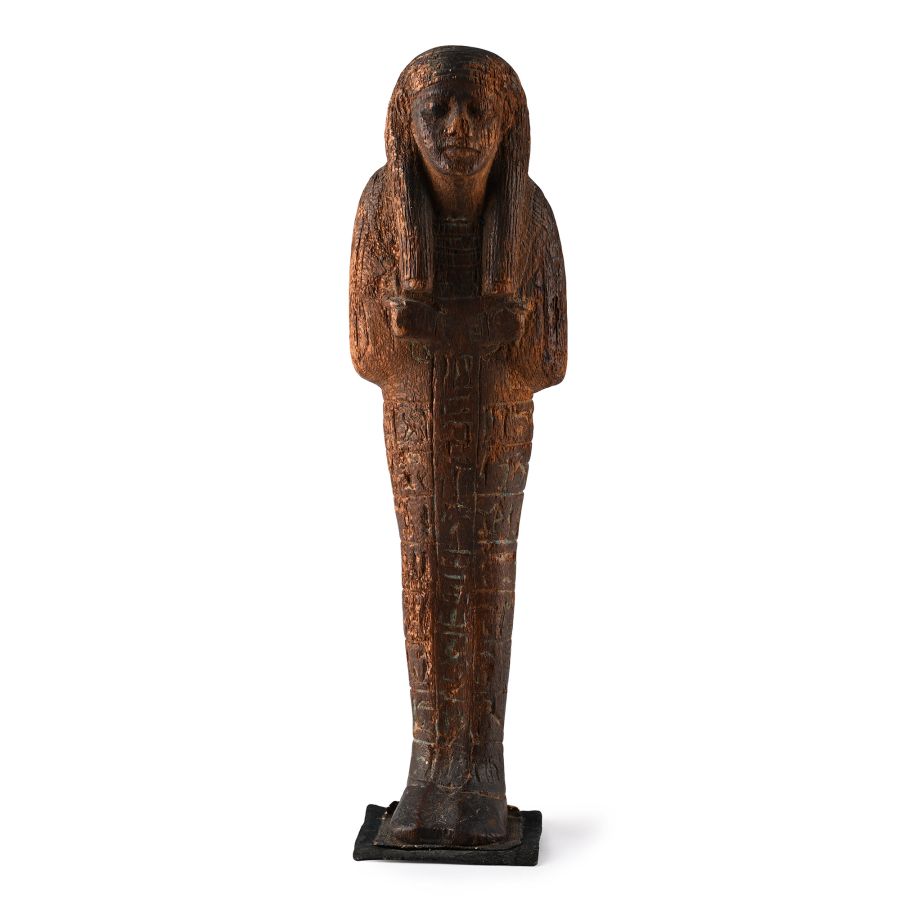
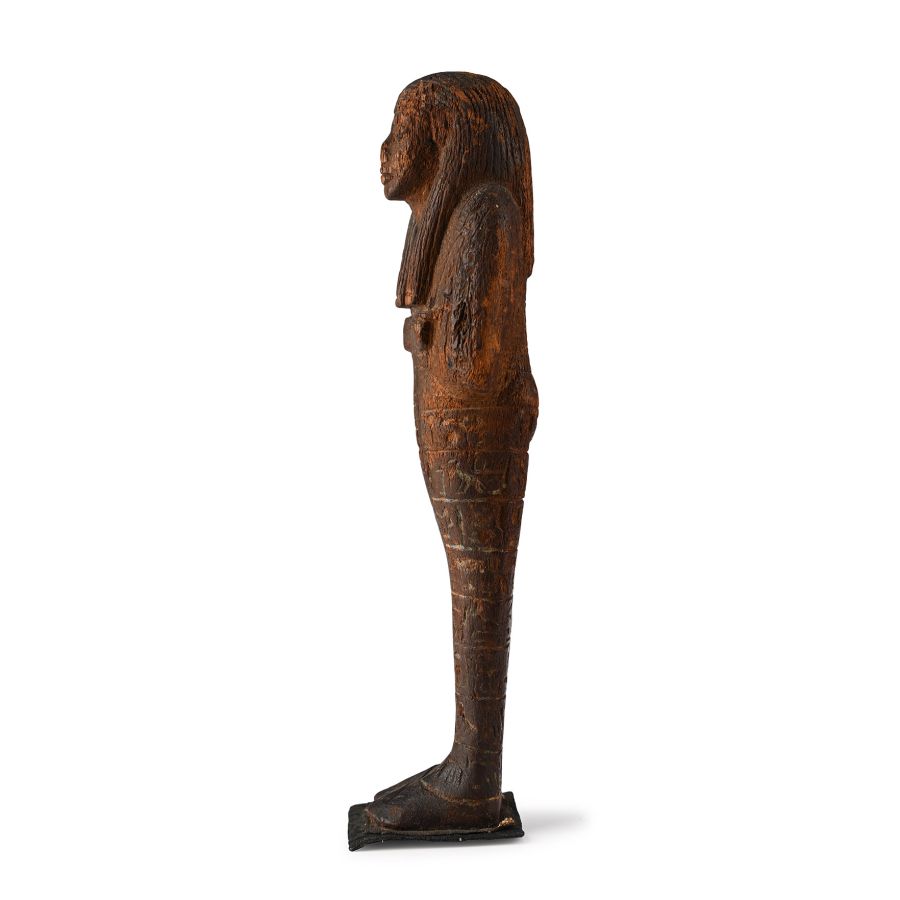
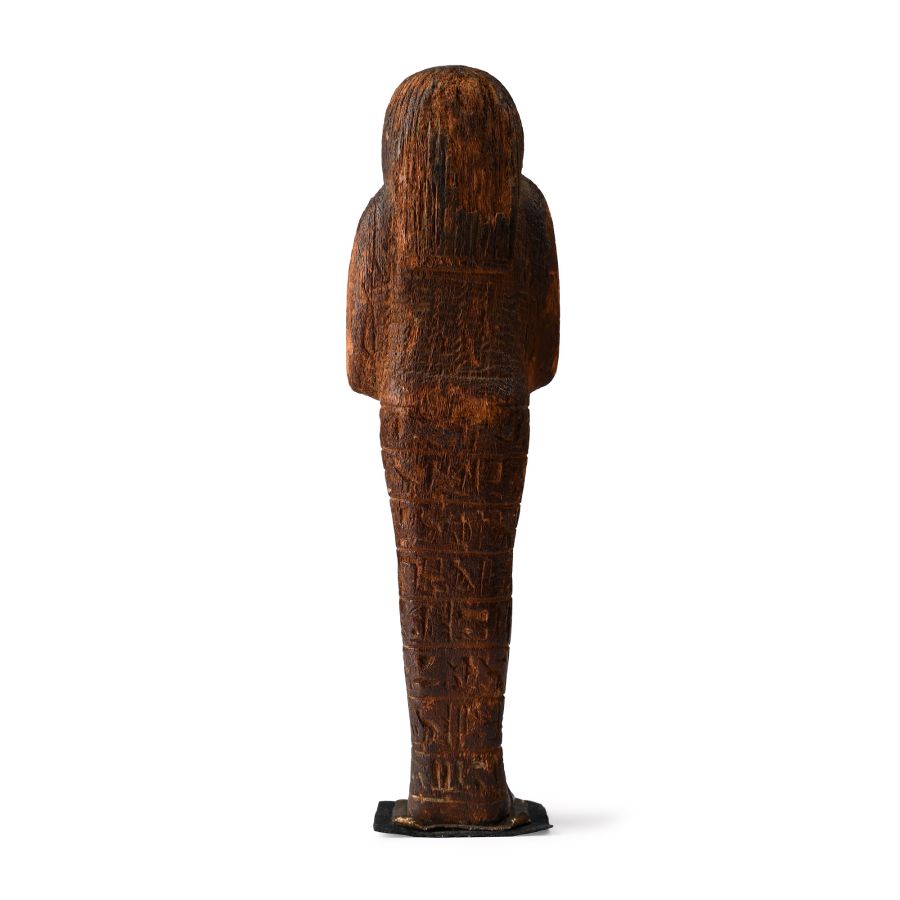
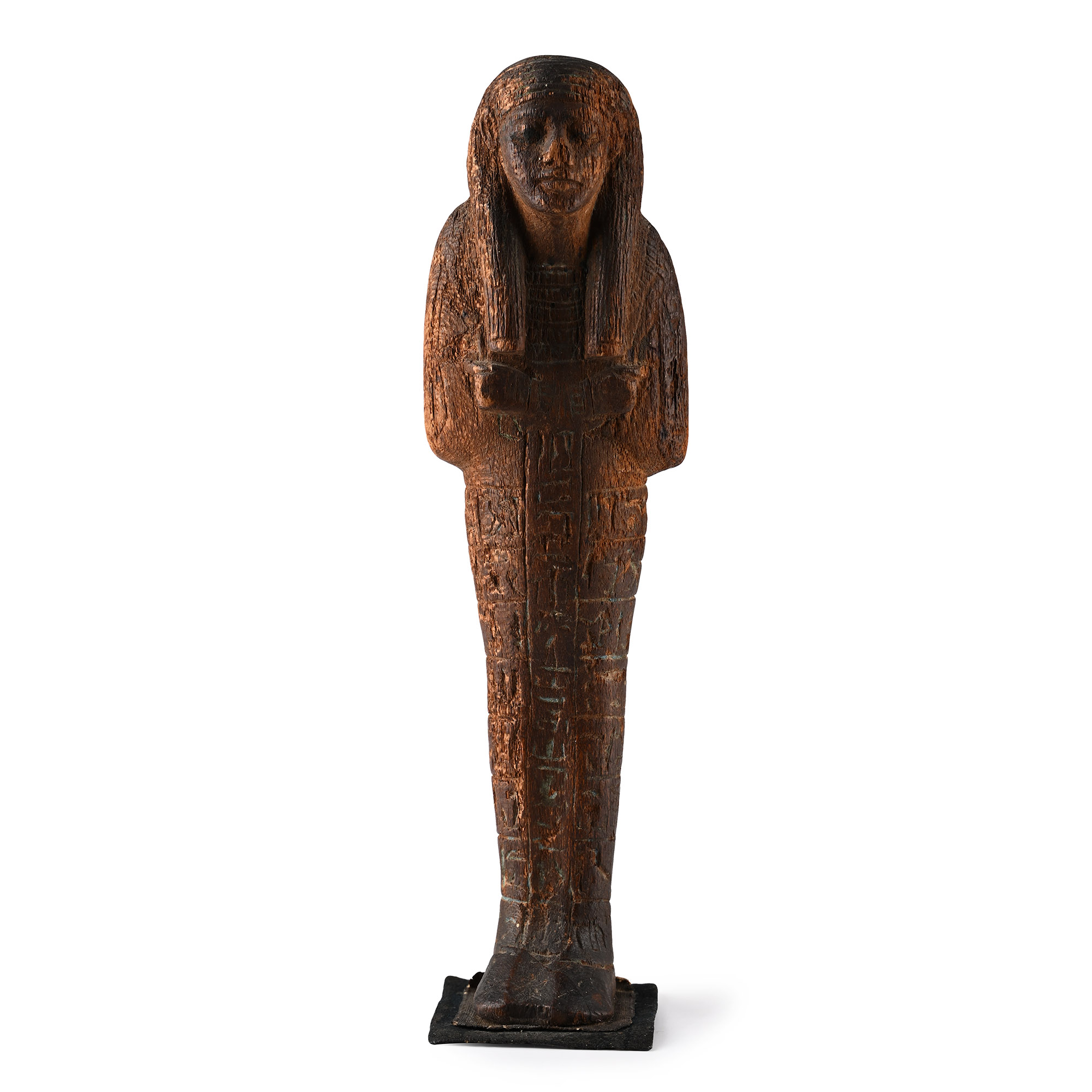
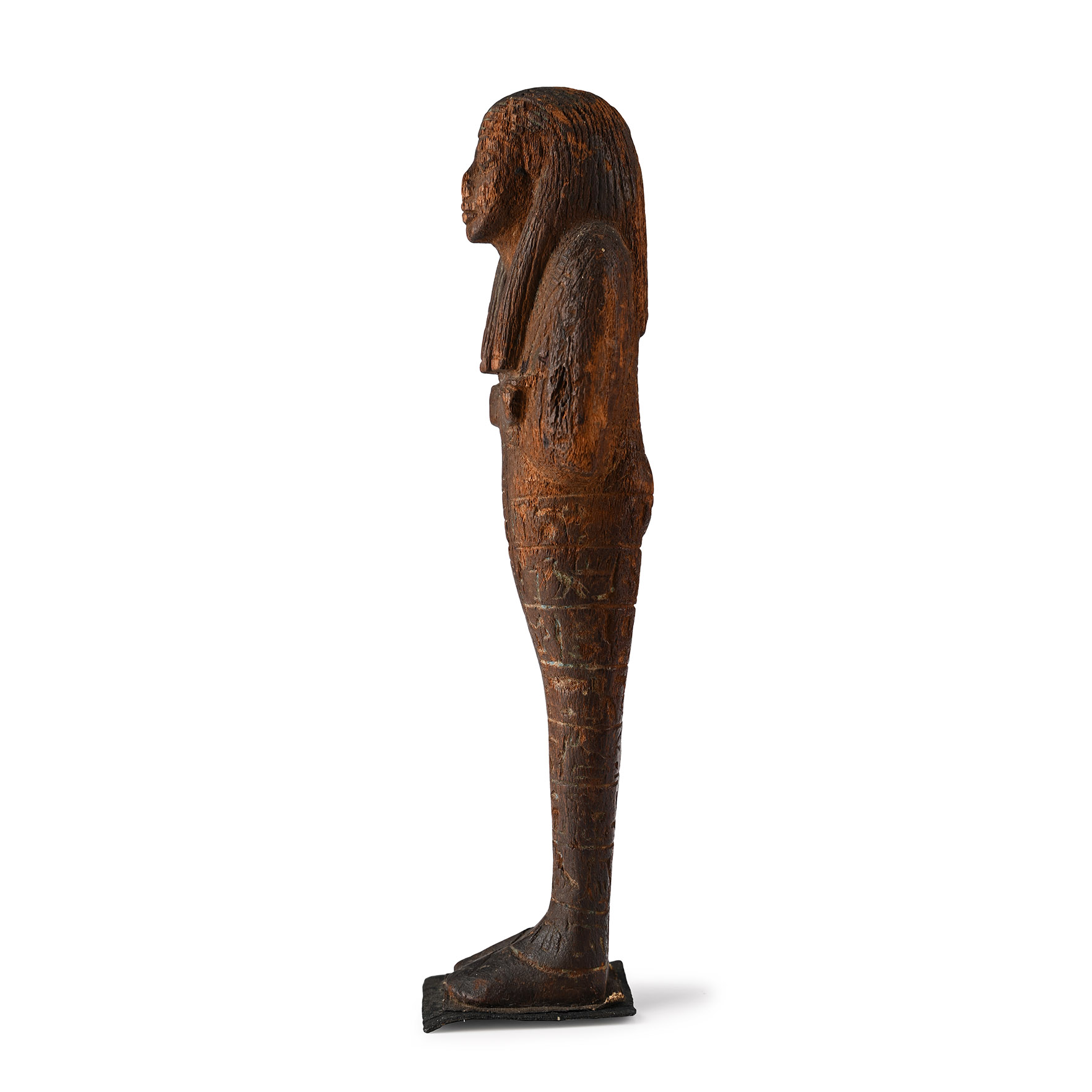
Egyptian Wooden Shabti with Hieroglyphic Inscription
NEW KINGDOM, LATE 18TH-19TH DYNASTY, CIRCA 1350-1200 B.C.
9 in. (147 grams, 23 cm).
Carved in the round with a detailed tripartite wig, segmented collar, and seed bag across the back, the figure has hands crossed at the chest, each holding a hoe, and wrists adorned with bracelets; eight bands of hieroglyphic text encircle the lower body, interrupted by a vertical column at the front, running from midriff to feet; mounted on a later copper base.
ProvenanceFrom the collection of Mrs Kilvert, who fled from France to England during the French Revolution.
Received by gift to the Hodge family from Mrs Kilvert at Bath in 1864-1865; thence by descent to the grandchildren of Mr John Hodge, a private London tutor.
From the collection of a New Zealand family; thence by descent.
This lot has been checked against the Interpol Database of stolen works of art and is accompanied by a search certificate number no.12845-239091.
This lot has been cleared against the Art Loss Register database, and is accompanied by an illustrated lot declaration signed by the Head of the Antiquities Department, Dr Raffaele D'Amato.
Cf. Schneider, H.D., Shabtis. An Introduction to the History of Ancient Egyptian Funerary Statuettes with a Catalogue of the Collection of Shabtis in the National Museum of Antiquities at Leiden, Vol. 3, Leiden, 1977, p. 12, no. 3.1.1.25, for a shabti of similar style and text arrangement.
CONDITIONTimeLine Auctions follows a vetting process to ensure the authenticity and legality of all items, reinforcing our commitment to integrity and responsible trading. Each antiquity, antique, and coin lot undergoes thorough examination by a vetting committee of at least ten external specialists, professional trade association members, scientists, and archaeologists: Our Vetting Process
AUCTIONS:
TimeLine is a leading auction house specialising in antiquities, ancient art, collectables, natural history, coins, medals, and books. Our auctions offer museums, collectors, historians, and enthusiasts the opportunity to acquire unique and historically significant pieces.
-
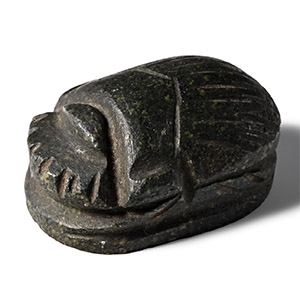
Egyptian Black Hardstone Scarab
Late Period, 664-332 B.C.Estimate: £350 - 450 (‡+bp*)
Opening Bid: £175
Dark green hardstone with paler speckles; with a boldly carved head, clypeus, prothorax and elytra, and legs indicated at the sides; plain underside. 17 grams, 29 mm
Ex Irene Newman, Birdham, Chichester, West Sussex, England. with Stride & Son Auctioneers, Chichester, West Sussex, England, 23 April 2015, no.1599 [Part]. Acquired by the present owner at the above sale. This lot is accompanied by an illustrated lot declaration signed by the Head of the Antiquities Department, Dr Raffaele D'Amato.
The scarab, which represented the dung beetle, was the most popular amulet in ancient Egypt for approximately two thousand years until the Ptolemaic Period when it gradually fell out of favour. The popularity of scarabs extended beyond the borders of Egypt, and they were also distributed and produced in other regions, such as Phoenicia and Israel. The beetle is named khepri, derived from the verb 'to come into existence', and was considered the embodiment of the creator god Khepri, who was self-engendered. The ancient Egyptians mistakenly believed that the young beetle emerging from the dung ball was the result of an act of self-creation. -
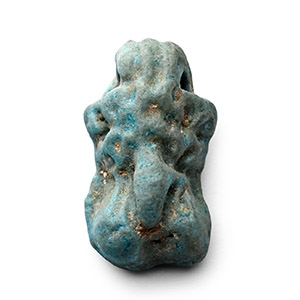
Phoenician-Egyptian Faience Phallic Amulet
Late-Ptolemaic Period, 664-30 B.C.Sold for (Inc. bp): £130
Amuletic pendant of male genitals with loop above. 1.24 grams, 17 mm
Ex early 20th century Home Counties, UK, collection. This lot is accompanied by an illustrated lot declaration signed by the Head of the Antiquities Department, Dr Raffaele D'Amato. -
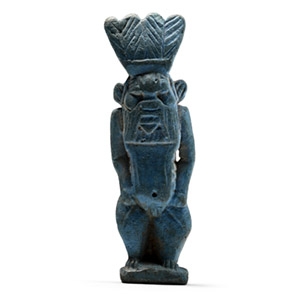
Egyptian Blue Amulet of Bes
Third Intermediate Period, circa 1069-735 B.C.Sold for (Inc. bp): £520
Modelled in the round, Bes standing nude with a lion's tail, wearing a feathered headdress. 4.13 grams, 44 mm
Archéologie; François de Ricqlès, Paris, 30 September-1 October 1996, no.322 (part). Private collection, London, UK, acquired from the above sale. Accompanied by a copy of a French cultural passport, dated 30 September 1996. Accompanied by a copy of the François de Ricqlès invoice. This lot has been checked against the Interpol Database of stolen works of art and is accompanied by a search certificate number no.12630-235074. This lot is accompanied by an illustrated lot declaration signed by the Head of the Antiquities Department, Dr Raffaele D'Amato.
From the New Kingdom onwards, Bes became one of ancient Egypt's most popular apotropaic deities. Despite his somewhat fearsome appearance, Bes served as the patron and protector of pregnant women and children, and was also believed to shield them from snakes.
